
Scissor Lift vs Boom Lift: How to Choose the Right Aerial Work Platform
Practical buyer answer: Scissor Lift vs Boom Lift: How to Choose the Right Aerial Work Platform ZGFORKLIFT / MYZG aerial lift. Shandong Zhuogong Machinery equipment Co.,Ltd
Practical buyer answer
The first question is not which lift has the greatest advertised reach, but where the worker must stand and what must be reached. A scissor lift raises a guarded platform mostly vertically and offers a broad deck for people, tools and materials within its rated capacity. A boom lift adds horizontal outreach, which can help reach over fixed equipment or around an obstruction, but requires more room to set up and a different operating plan. Sketch the work area and mark the ceiling or structure height, the exact work point, obstacles, floor condition, aisle width, doors and access route. This quickly shows whether a direct vertical approach is practical or whether outreach is genuinely required.
Compare working height with platform height carefully. Catalogs may define the figures differently, and an approximate operator reach is not a substitute for the manufacturer’s rated specification. Ask for the exact model’s platform height, maximum working height, platform dimensions, stowed height, overall width, machine weight and allowable platform load. Count every person, tool and material that will be on the deck. If a task requires reaching sideways, leaning beyond rails or placing an extension ladder on the platform, the machine or work plan is wrong; choose equipment that positions the platform at the work point while keeping the operator inside the guardrails.
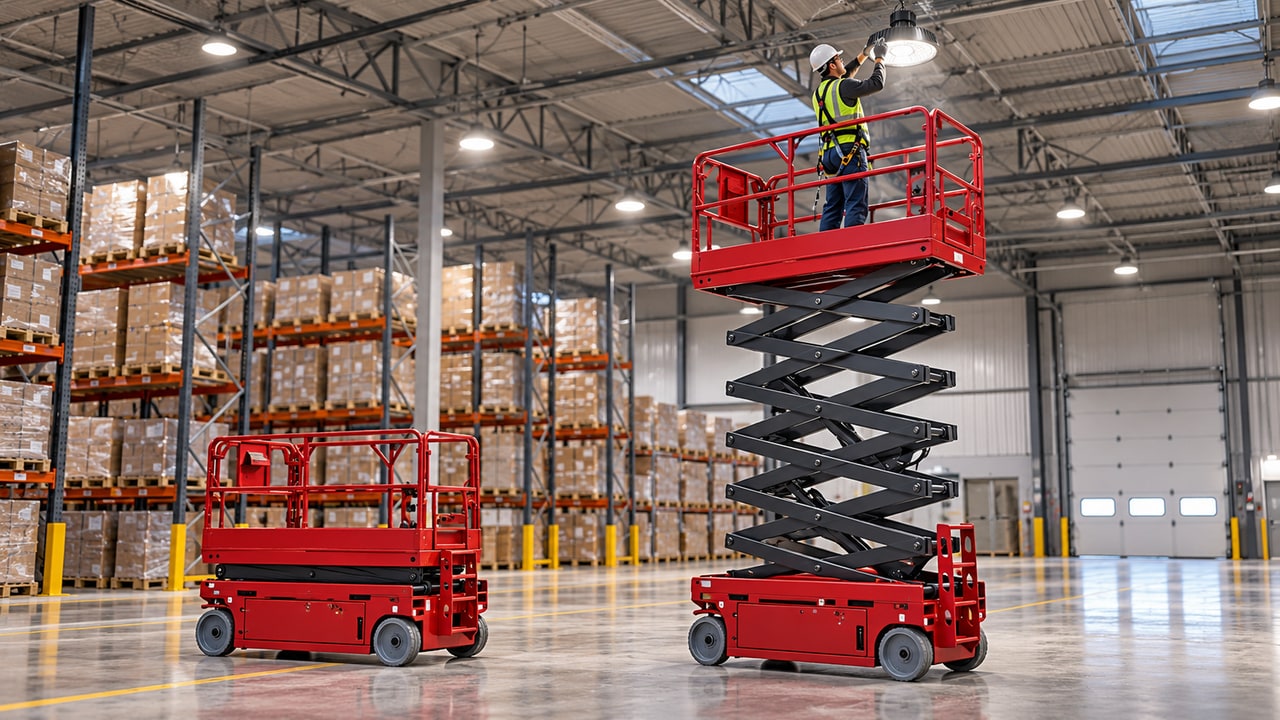
Surface and environment often decide between models. An electric slab scissor lift is generally intended for firm, level floors and indoor or other approved smooth-surface operation; it should not be treated as a rough-terrain machine. Check floor load limits, ramps, thresholds, drains, slopes and floor protection, plus ceiling clearance and ventilation. For outdoor work, verify the exact model’s approval and limits for wind, ground conditions and levelness rather than relying on the word ‘outdoor’ in a listing. A boom lift may have more reach but still needs a suitable supporting surface and the required clearance around its chassis and working envelope.
The capacity plate and operating manual control how the lift may be used. Never exceed the platform’s rated load, add unauthorized attachments, climb the guardrails or use the machine as a crane. Keep gates closed, maintain the required fall protection practices for the machine and local rules, and keep people clear of the area beneath overhead work. Do not move an elevated platform unless the manufacturer explicitly permits it for that model and the stated surface and operating conditions. A spotter can help with blind areas, but does not replace operator training, a pre-use inspection or a clear exclusion zone.
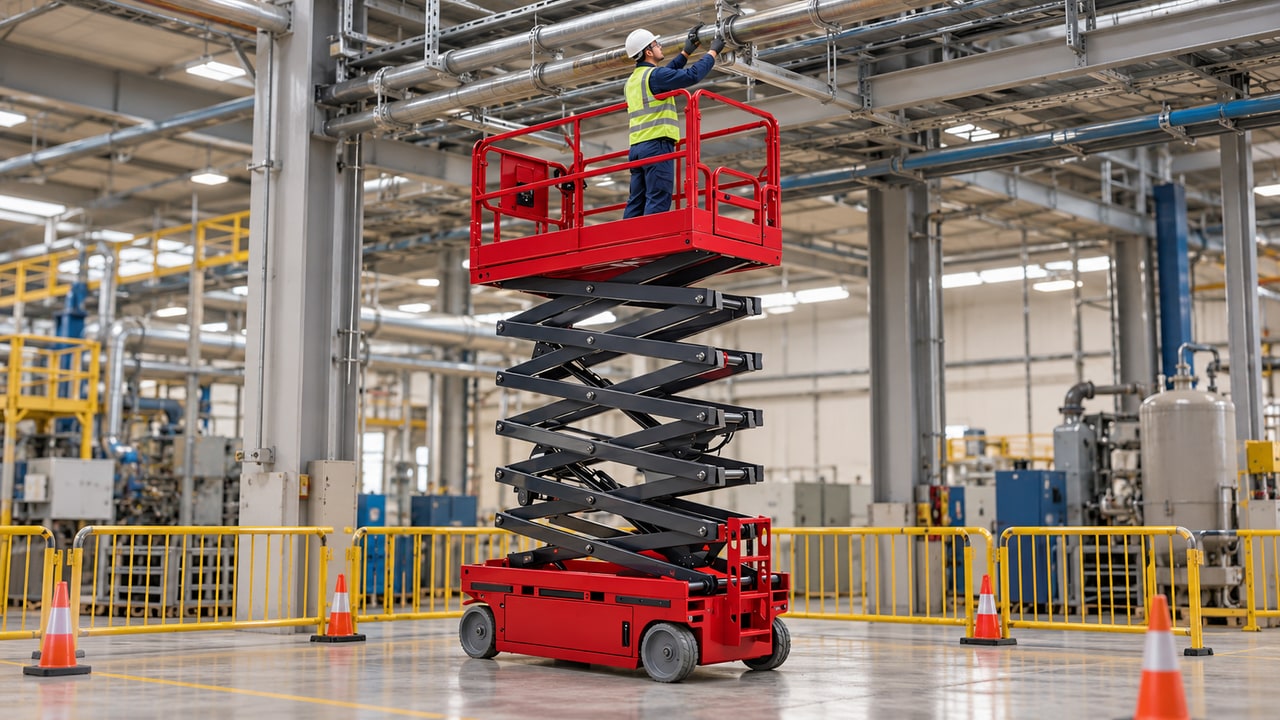
For a purchase decision, compare the complete job rather than category names alone. A scissor lift can be efficient for repeated vertical tasks across a level floor, particularly where a larger deck is useful. A boom lift can be more appropriate when the work point is offset from the machine’s position or obstacles block a straight approach. If only a small part of the schedule needs outreach, compare ownership with short-term rental of a boom lift and keep the scissor lift for routine vertical work. Include transport, charging, service access, parts, inspection intervals, operator training and the time needed to reposition between work points.
Practical buyer answer
Before each shift, inspect the platform rails and gate, emergency lowering controls, alarms, wheels and tires, scissor arms, pins, hoses, cables, batteries and visible leaks according to the manual. Confirm the floor is firm and level, the route is clear, overhead hazards are identified, and the platform is within its rated load. Stop work if the lift tilts, an alarm indicates an unsafe condition, a guardrail is damaged, controls respond irregularly or the surface changes. Lower the platform in a controlled manner and have a qualified person assess the problem. A short checklist and job briefing help prevent a reach problem from becoming a fall or crush hazard.
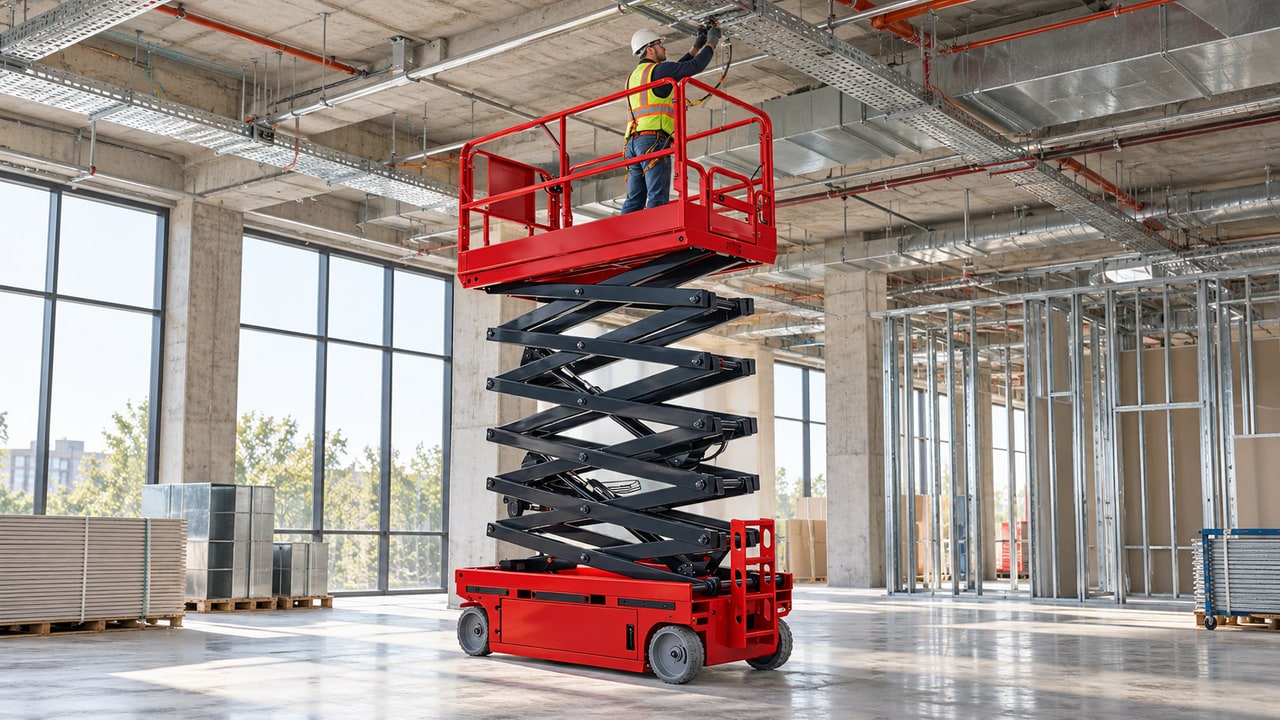
Start with the actual job cycle rather than a headline capacity. Record the load, load center, pickup height, travel route, final placement, surface, gradients, clearances and the number of cycles in a representative hour. This turns a general equipment question into a configuration that can be checked before an order is placed.
Measure the narrowest entrance, lowest overhead obstruction, turning area and stopping distance with the normal load carried. Include doors, columns, drains, ramps, parked vehicles, pedestrians and temporary barriers. A marked site drawing and current photographs help a supplier identify conflicts that are easy to miss in a specification table.
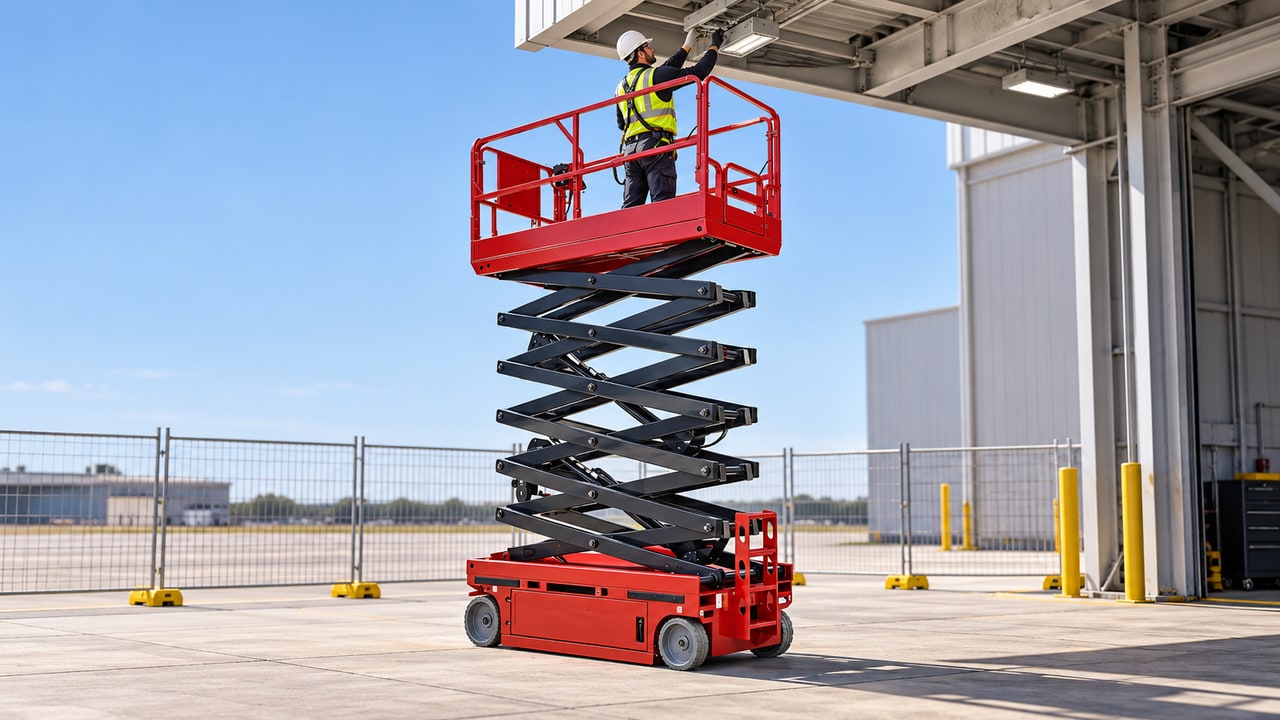
Usable performance must be confirmed in the final configuration. Attachment weight, load center, lift height, fork length, tire choice and operating surface can reduce the capacity available at the task. Ask for written confirmation of the exact machine, mast, attachment and operating condition.
A good case review separates productive movement from waiting. Time the approach, pickup, travel, alignment, loading, return and idle periods. Site layout, traffic rules, pile position or attachment selection may save more time and fuel than simply ordering a larger engine or a higher nominal capacity.
Practical buyer answer
Visibility changes with every load and attachment. Cameras, mirrors, lights, alarms and remote controls can support the operator, but they do not replace a controlled route, suitable speed, trained personnel and a spotter where direct sight is restricted. Define exclusion zones before work begins.
Surface information is essential for stability, traction, braking, tire life and floor protection. Describe concrete joints, tile, asphalt damage, gravel depth, mud, loose stone, drainage and slope. Choose tires, supports and travel procedures for the most demanding normal condition, including wet weather where relevant.
Before each shift inspect structural members, pins, hoses, wheels or tires, forks and carriage, controls, brakes, steering, warning devices, guards and visible leaks. A defect that affects control, stability or load retention must be corrected before the machine returns to service.
Plan maintenance and parts support before delivery. Confirm service intervals, filters, lubricants, battery or engine support, diagnostic steps, manuals and a practical starter stock of common parts based on annual operating hours. Accessible routine checks reduce avoidable downtime and help supervisors document service.
Compare cost per productive cycle rather than purchase price alone. Include fuel or electricity, labor, transport, attachment changes, routine service, tires, charging or cylinder handling, downtime and residual value. The economical choice is the machine that completes the real work reliably with an acceptable safety margin.
Practical buyer answer
A useful quotation request states destination, quantity, hours per day, climate, required certification, load details, route dimensions, working height, attachments and delivery schedule. This written scope gives purchasing, operators and the factory one reference and reduces costly assumptions during production and commissioning.
Shandong Zhuogong Machinery equipment Co.,Ltd
ZGFORKLIFT / MYZG
WhatsApp: +86 131 7691 0558
Email: MYZG@my-forklift.com
Website: https://www.my-forklift.com/
Post time:Oct.18.2026
