
Can a Rough-Terrain Forklift Lift Its Rated Load on Uneven Ground? 6 Checks
Practical buyer answer: Can a Rough-Terrain Forklift Lift Its Rated Load on Uneven Ground? 6 Checks ZGFORKLIFT / MYZG rough terrain forklift. Shandong Zhuogong Machinery equipment Co.,Ltd
Practical buyer answer
A rough-terrain forklift can be the right tool when loads must move over unpaved yards, compacted aggregate, farm tracks or construction-site surfaces. The word “rough” does not mean every surface or slope is safe, and the rated capacity printed on a nameplate is not permission to lift that load in every condition. Before purchasing, describe the route by surface type, soft spots, ruts, cross-fall, drainage, turning areas, travel distance and seasonal changes. Photograph the worst normal section and measure any ditch, curb, ramp or transition. A supplier can then compare the machine configuration with the actual route rather than relying on a broad “off-road” label.
rough terrain forklift ZGFORKLIFT / MYZG
Capacity must be checked against the exact mast, attachment, fork length, load center and lifting height. A long or irregular package can move the center of gravity forward even when its total mass is below the headline capacity. Request the load chart for the offered configuration and verify the intended load dimensions and pickup height with a qualified supplier. Uneven ground adds a separate stability question: it does not increase capacity, and a chart prepared for level ground should not be treated as a slope allowance. Keep the load low during travel and do not lift, turn or cross a slope with a raised load unless the manufacturer’s manual expressly permits that operation and gives the required procedure.
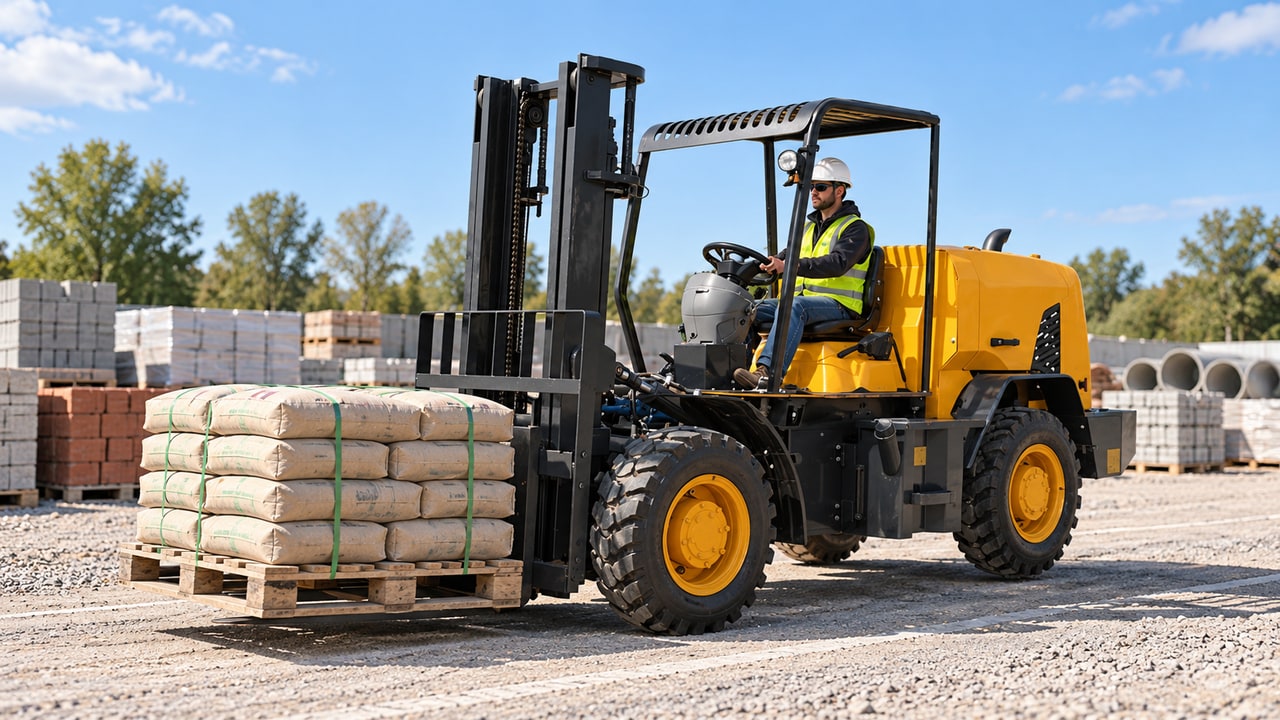
Large pneumatic tires and ground clearance can help a rough-terrain truck travel on surfaces where a warehouse forklift may lose traction or ground contact, but tires cannot compensate for weak subsoil, deep ruts or unsafe steering inputs. Identify whether the route is hard-packed, loose gravel, wet clay, sand, grass or a mixture; note sharp debris and tire-damaging materials. Ask which tire type and drive arrangement are available on the exact model, and confirm clearance at the lowest point, turning envelope and approach angle. The machine should be evaluated on the most demanding normal route, with a safe test load and trained operator, not pushed into a deliberately extreme obstacle.
rough terrain forklift ZGFORKLIFT / MYZG
A practical site review considers the ground as well as the truck. Check that the surface can support the machine and load, that water does not create hidden soft areas, and that pedestrian routes and delivery vehicles remain separated. Mark a one-way route where possible, keep clear sightlines, use a spotter for blind approaches and establish a stop-work rule for new holes, soft shoulders or unexpected settlement. If the load sways or a wheel loses contact, stop, lower the forks when safe and reassess the route. Do not attempt to recover a leaning truck by raising the load, making a sharp turn or adding improvised ballast.
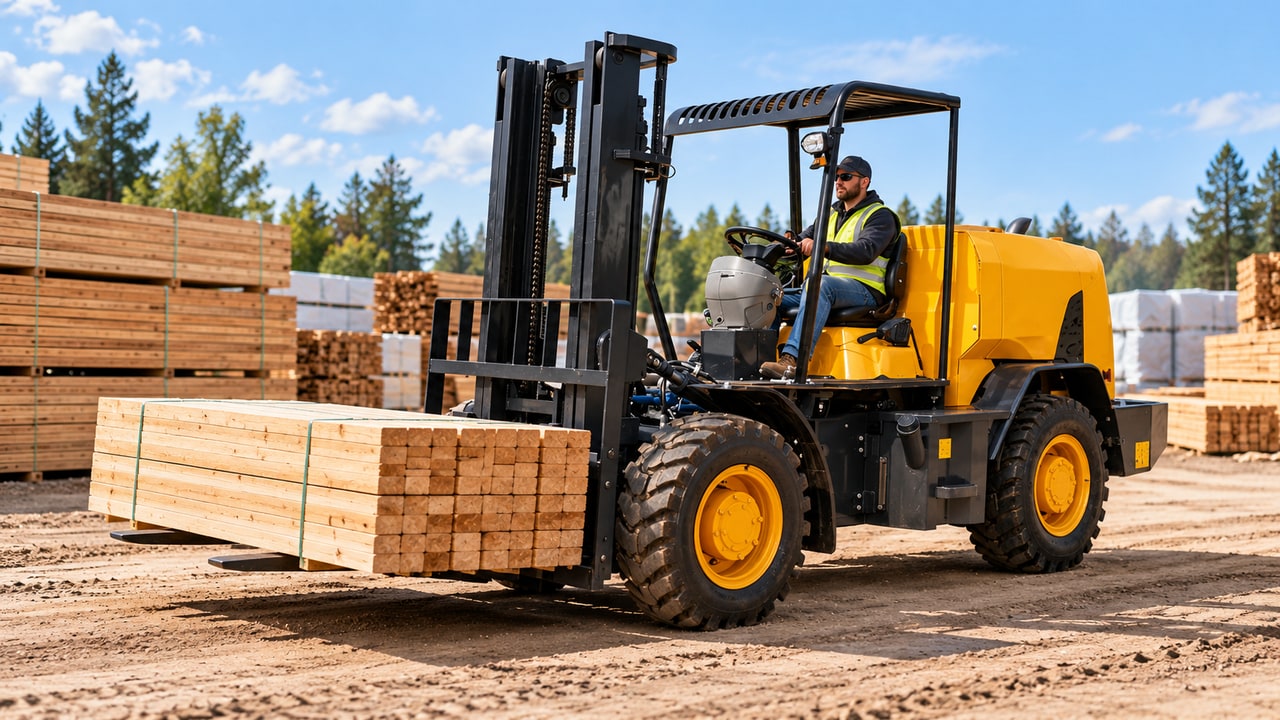
Compare a rough-terrain model with a standard forklift fitted with pneumatic tires only after reviewing how often the unpaved work occurs and how severe it is. If nearly all operations are on a sound concrete slab and outdoor use is occasional, the standard truck may be the better fit; if loads regularly cross changing, unpaved ground, a dedicated rough-terrain configuration deserves closer review. Include transport between sites, fuel, scheduled maintenance, tires, cleaning after dusty or muddy work, operator training, parts access and downtime in the ownership estimate. Ask for the operation manual, service schedule, configuration list, load chart and written confirmation of the machine’s intended surfaces before ordering.
rough terrain forklift ZGFORKLIFT / MYZG
Practical buyer answer
Before each shift, inspect tire condition and pressure according to the manual, wheel fasteners, forks, mast chains, hydraulic hoses, brakes, steering, warning devices, lights, guards and visible leaks. Remove mud and debris that can conceal damage or restrict moving parts. Do not crawl beneath a raised mast or touch hot or pressurized components. Record unusual tire cuts, looseness, hydraulic drift or braking changes and take the truck out of service if safe control is affected. A short inspection and clear route briefing are especially valuable when rain, construction traffic or ground conditions have changed since the previous shift.
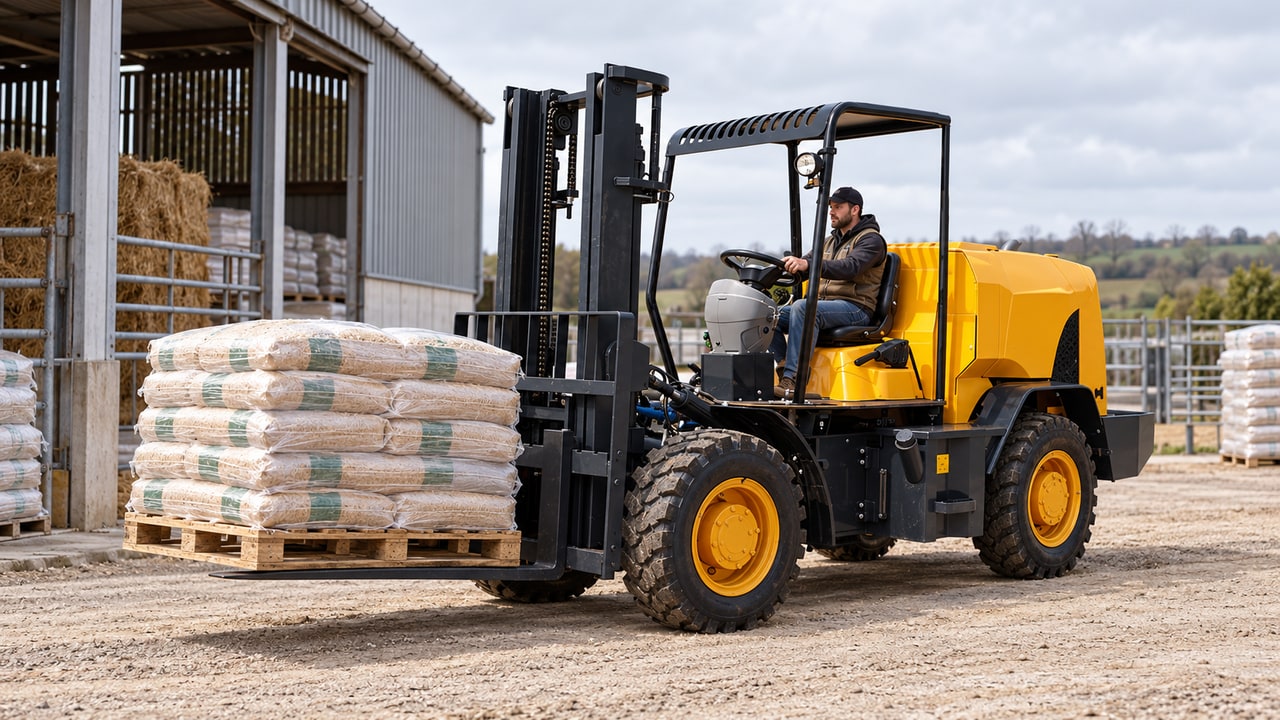
Start with the actual job cycle rather than a headline capacity. Record the load, load center, pickup height, travel route, final placement, surface, gradients, clearances and the number of cycles in a representative hour. This turns a general equipment question into a configuration that can be checked before an order is placed.
rough terrain forklift ZGFORKLIFT / MYZG
Measure the narrowest entrance, lowest overhead obstruction, turning area and stopping distance with the normal load carried. Include doors, columns, drains, ramps, parked vehicles, pedestrians and temporary barriers. A marked site drawing and current photographs help a supplier identify conflicts that are easy to miss in a specification table.
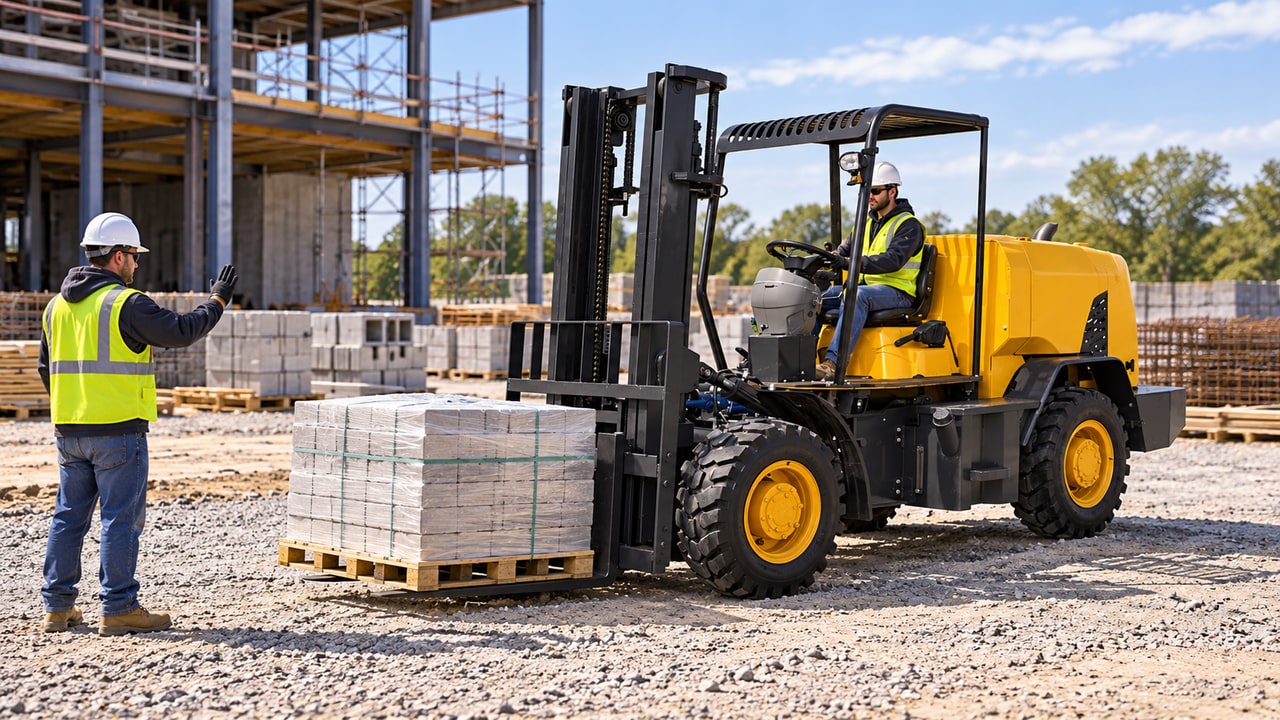
Usable performance must be confirmed in the final configuration. Attachment weight, load center, lift height, fork length, tire choice and operating surface can reduce the capacity available at the task. Ask for written confirmation of the exact machine, mast, attachment and operating condition.
A good case review separates productive movement from waiting. Time the approach, pickup, travel, alignment, loading, return and idle periods. Site layout, traffic rules, pile position or attachment selection may save more time and fuel than simply ordering a larger engine or a higher nominal capacity.
Practical buyer answer
Visibility changes with every load and attachment. Cameras, mirrors, lights, alarms and remote controls can support the operator, but they do not replace a controlled route, suitable speed, trained personnel and a spotter where direct sight is restricted. Define exclusion zones before work begins.
Surface information is essential for stability, traction, braking, tire life and floor protection. Describe concrete joints, tile, asphalt damage, gravel depth, mud, loose stone, drainage and slope. Choose tires, supports and travel procedures for the most demanding normal condition, including wet weather where relevant.
Before each shift inspect structural members, pins, hoses, wheels or tires, forks and carriage, controls, brakes, steering, warning devices, guards and visible leaks. A defect that affects control, stability or load retention must be corrected before the machine returns to service.
Plan maintenance and parts support before delivery. Confirm service intervals, filters, lubricants, battery or engine support, diagnostic steps, manuals and a practical starter stock of common parts based on annual operating hours. Accessible routine checks reduce avoidable downtime and help supervisors document service.
Compare cost per productive cycle rather than purchase price alone. Include fuel or electricity, labor, transport, attachment changes, routine service, tires, charging or cylinder handling, downtime and residual value. The economical choice is the machine that completes the real work reliably with an acceptable safety margin.
Practical buyer answer
A useful quotation request states destination, quantity, hours per day, climate, required certification, load details, route dimensions, working height, attachments and delivery schedule. This written scope gives purchasing, operators and the factory one reference and reduces costly assumptions during production and commissioning.
Shandong Zhuogong Machinery equipment Co.,Ltd
ZGFORKLIFT / MYZG
WhatsApp: +86 131 7691 0558
Email: MYZG@my-forklift.com
Website: https://www.my-forklift.com/
Post time:Oct.17.2026
