
The dilemma between purchasing a skid steer loader or a mini excavator is one of the most common and consequential decisions facing small contractors, farmers, and serious landowners. This is not merely a choice between two machines; it is a fundamental decision about how you will approach work, the types of projects you can efficiently tackle, and the long-term trajectory of your equipment investment. At first glance, both are compact, highly maneuverable pieces of machinery that have revolutionized small-scale construction, landscaping, and site development. However, their core philosophies of operation are diametrically opposed. The skid steer loader is the quintessential utility athlete: a quick, agile, and powerful platform designed for a myriad of tasks, from loading and lifting to grading and digging, primarily through a vast universe of hydraulic attachments. Its signature zero-radius turning, achieved by independently driving left and right wheels or tracks, grants it unparalleled agility in tight spaces. Conversely, the mini excavator is a dedicated digger, a master of excavation. Its design, centered around a stable undercarriage and a 360-degree rotating house, is optimized for one primary function: to excavate trenches, footings, and foundations with precision, power, and depth that a skid steer cannot match. The initial question, therefore, transforms from a simple "which machine?" to a more profound inquiry: "Is my work defined by versatile material handling and multiple tasks, or is it dominated by the need for serious, precise excavation?"
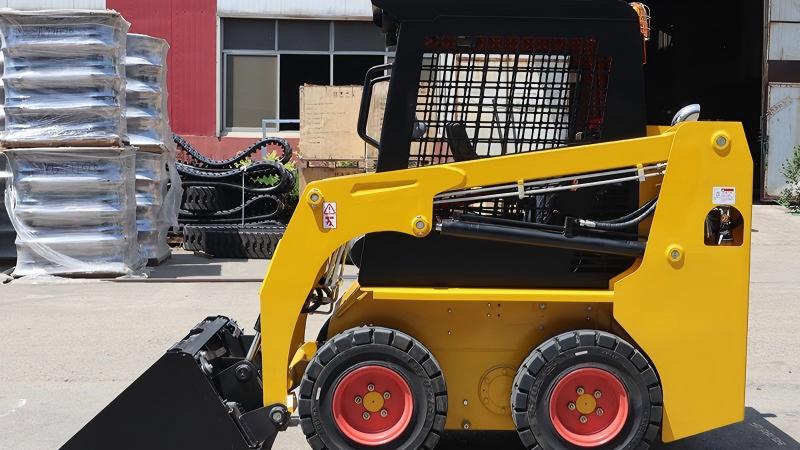
To make an informed decision, one must conduct a deep, honest assessment of the primary tasks that will define the machine's workload. Begin with the critical metric of digging. If your projects consistently require trenches deeper than 5 feet, precise vertical walls, or digging directly adjacent to foundations or fences, the mini excavator is the undisputed champion. Its long arm, powerful hydraulic system, and stable stance allow it to dig deeper and more accurately with less effort and ground disturbance. The operator's position in the excavator, facing the work directly, provides superior visibility and control for intricate digging. The skid steer, while capable of digging with a backhoe attachment (which is often an add-on), operates from a less stable platform and typically offers less digging depth and reach. Its digging motion is also less natural, often requiring the entire machine to reposition. Now, consider lifting and loading. If your daily routine involves moving pallets of material, loading trucks with gravel or dirt, or using forks for lifting, the skid steer excels. Its lift capacity, especially to height (like loading a dump truck), generally surpasses that of a similarly sized mini excavator. The quick-attach system allows you to switch from forks to bucket to grapple in minutes, making it a productivity powerhouse on diverse job sites. The mini excavator can lift with its arm or a thumb attachment, but it is slower and has more limited reach and capacity for pure loading tasks.
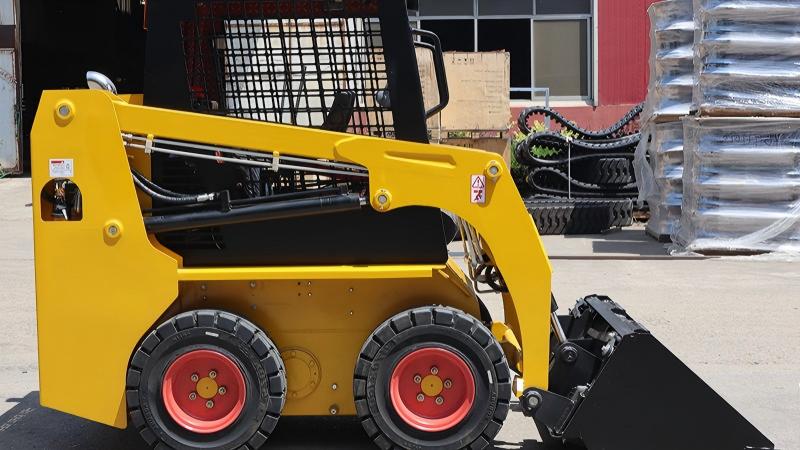
Beyond core functions, the operational environment and auxiliary capabilities become deciding factors. Terrain is a major consideration. While both machines come in track configurations (tracked skid steers, often called compact track loaders), traditional wheeled skid steers can struggle in deep mud, fine sand, or on delicate surfaces like lawns, where their tires can tear up the ground. Mini excavators, with their wider, lower-ground-pressure tracks, are gentler on landscapes and far more capable in soft, uneven, or slippery conditions. For work inside finished buildings or on sensitive surfaces, neither is ideal, but a mini excavator with rubber tracks might cause less damage than a wheeled skid steer. Attachments are the skid steer's superpower. From augers and trenchers to snow blowers, stump grinders, and hydraulic breakers, the skid steer's universal attachment plate and robust hydraulic flow make it a true mobile power plant. The mini excavator also has a rich attachment ecosystem (buckets, breakers, augers, thumbs, compactors), but changing them is often slower, and its primary role remains excavation-centric. Furthermore, consider transport. A smaller skid steer or mini excavator might fit on the same trailer, but weight distribution and height can differ. Also, for tasks requiring constant movement across a site—like clearing debris from multiple piles—the skid steer's speed and agility are a significant advantage.
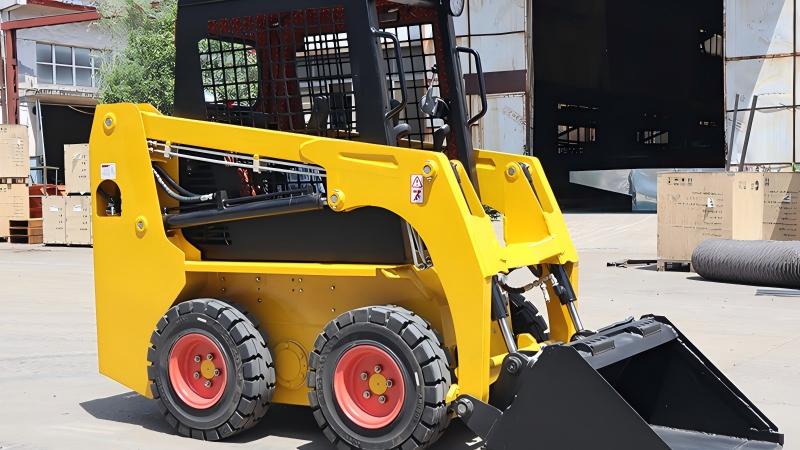
Ultimately, the choice between a skid steer and a mini excavator is not about which machine is objectively better, but about which is the better extension of your specific work. For businesses whose identity is rooted in excavation—plumbers, utility contractors, foundation specialists—the mini excavator is an indispensable and focused tool. Its productivity in the trench is unmatched. For businesses defined by diversity—landscapers who dig, grade, haul, and lift; rental yards; farm operations; or general contractors managing a wide array of site tasks—the skid steer loader's unparalleled versatility makes it the logical cornerstone of the fleet. For many, the ideal solution is not an "either/or" but a "both." A thriving small business might find that owning a skid steer for its day-to-day versatility and renting a mini excavator for the occasional deep-dig project is the most economical path. However, if you must choose one, let your most frequent, most critical tasks be your guide. Analyze your past projects and your future goals: does the work call for a Swiss Army knife or a precision scalpel? Your answer will point you clearly toward the machine that will become your most trusted partner on the job site.
Post time:Feb.03.2026
