
A "free lift" on a forklift mast refers to the capability of the forks and the carriage to be raised to a certain height without increasing the overall extended height of the mast itself. In simpler terms, it is the vertical distance the forks can travel before the inner sections of the mast begin to telescope outward. This feature is integral to the design of many forklifts, particularly those operating in environments with low overhead clearances, such as inside standard shipping containers, multi-story buildings with low doorways, or warehouses with restricted ceiling heights. The mechanics involve a hydraulic cylinder dedicated to moving the carriage independently of the inner mast rails during the initial phase of the lift. This functionality is a critical differentiator in forklift mast selection, as it directly impacts the machine's versatility and the types of environments it can operate in effectively. Without free lift, any upward movement of the forks would immediately cause the mast to increase in height, which could pose a risk of colliding with overhead obstacles like door frames, lighting fixtures, or ventilation systems. Therefore, understanding and specifying the correct free lift dimension is a fundamental aspect of forklift procurement and operational planning, ensuring that the equipment matches the physical constraints of its intended workspace. The concept, while technical, is fundamental to efficient material handling, forming the basis for more complex mast designs and capabilities that enhance productivity in modern logistics operations.
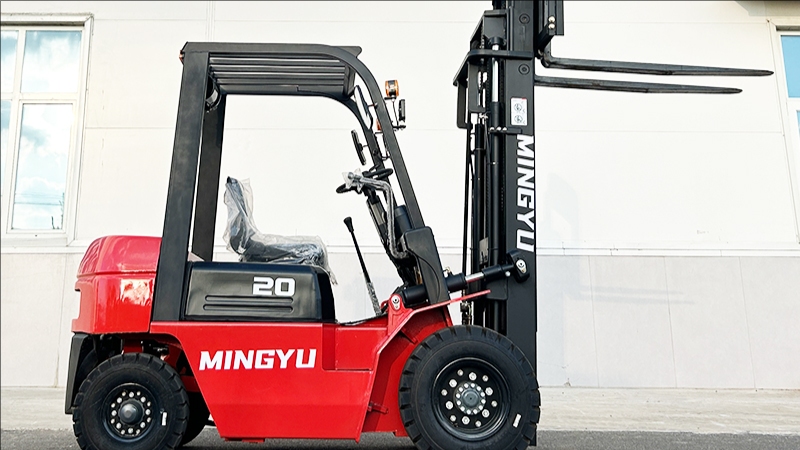
The operational benefits of a forklift equipped with free lift are substantial and multifaceted. Primarily, it allows for seamless operation in confined spaces. For instance, when loading or unloading a standard shipping container, the overhead clearance is extremely limited. A forklift with sufficient free lift can raise its forks to the necessary height to stack or retrieve pallets without the mast extending into the roof of the container, thereby preventing costly damage and enabling efficient cargo handling. Similarly, in multi-level warehouses or buildings with low interior doorways, a forklift can transport a load at an elevated height—for visibility or to clear floor-level obstacles—while moving through a doorway, only extending the mast fully once inside the more open area. This capability significantly reduces downtime and maneuvering challenges. Furthermore, free lift enhances safety. By allowing the operator to lift a load for inspection or positioning without the mast protruding into an unseen overhead hazard, it mitigates the risk of collisions. It also contributes to load stability during travel, as the load can be lifted slightly off the ground for transit while keeping the machine's center of gravity lower, compared to traveling with a fully extended mast. From an efficiency standpoint, it speeds up operation cycles because the operator doesn’t have to meticulously negotiate overhead clearances with every single lift, especially for lower stacking levels. This feature, therefore, is not merely a technical specification but a direct contributor to throughput, safety culture, and operational flexibility in dynamic material handling environments.
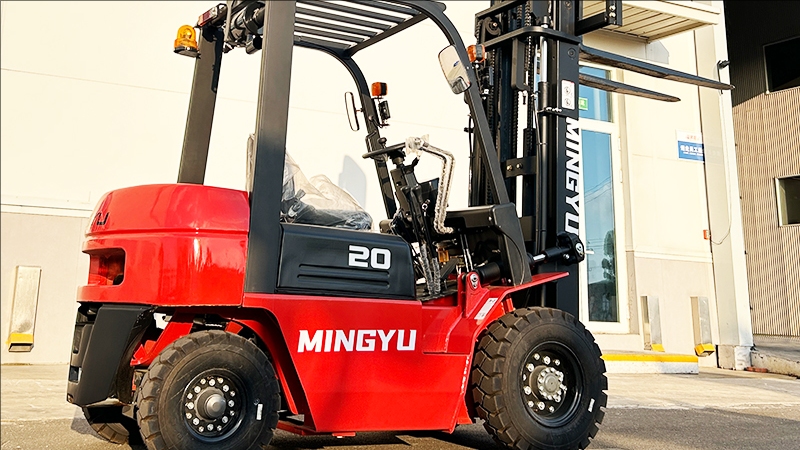
Forklift masts come in various types, classified partly by their free lift capabilities, which are suited to different applications. The most basic type is the Simplex or Single-Stage Mast, which typically has no free lift; the entire mast telescopes upward as one unit. This design is common on forklifts used outdoors or in very high-ceilinged spaces. The Duplex or Two-Stage Mast is the most common configuration and often includes a free lift cylinder. The free lift function operates within the first stage, after which the inner stage extends. This is the workhorse of many warehouses. The Triplex or Three-Stage Mast offers full free lift—meaning the forks can achieve their maximum lift height before the inner sections begin to extend—providing the greatest versatility in tight spaces and the highest possible lifting heights for a given collapsed mast height. For specialized applications, there are also Quad or Four-Stage Masts for exceptional height in confined spaces. The choice between these masts involves a trade-off between maximum lift height, overall collapsed height, visibility (as more mast stages can create more blind spots), and cost. When specifying a forklift, the required free lift is determined by measuring the lowest overhead obstruction (doorway, pipe, light) from the ground and subtracting the height of the load. This calculation ensures the forklift can operate effectively without restriction. Understanding these mast types and their free lift characteristics is crucial for facility managers and logistics planners to optimize their material handling infrastructure and avoid costly mismatches between equipment and facility layout.
Post time:Feb.04.2026
