
The image of demolition often conjures up scenes of towering wrecking balls or massive high-reach excavators pulverizing concrete structures. However, in the realm of smaller-scale deconstruction, site preparation, and selective teardowns, a common piece of equipment frequently enters the fray: the backhoe loader. The central question, "Can a backhoe be used for demolition?" is met with a resounding yes, but with significant caveats and a clear understanding of its designated role. A backhoe loader, with its familiar rear-mounted digging arm and front-mounted loader bucket, is fundamentally a versatile tool designed for digging, trenching, loading, and backfilling. Its foray into demolition is an exercise in applied versatility rather than dedicated function. For tasks such as demolishing single-story masonry sheds, breaking up concrete slabs or sidewalks, removing non-load-bearing interior walls in small structures, or carefully dismantling wood-frame additions, a backhoe can be remarkably effective. The key lies in the use of specialized attachments. Replacing the standard bucket with a hydraulic breaker (jackhammer), a compact shear, or a grapple transforms the machine's capability. The operator's skill is paramount, as precision and controlled force are necessary to avoid unintended structural collapses or damage to adjacent properties. This makes the backhoe a valuable asset in rural settings, on residential properties, or in confined spaces where larger equipment cannot maneuver, offering a cost-effective solution for projects that fall between manual labor and the need for a full-sized demolition excavator.
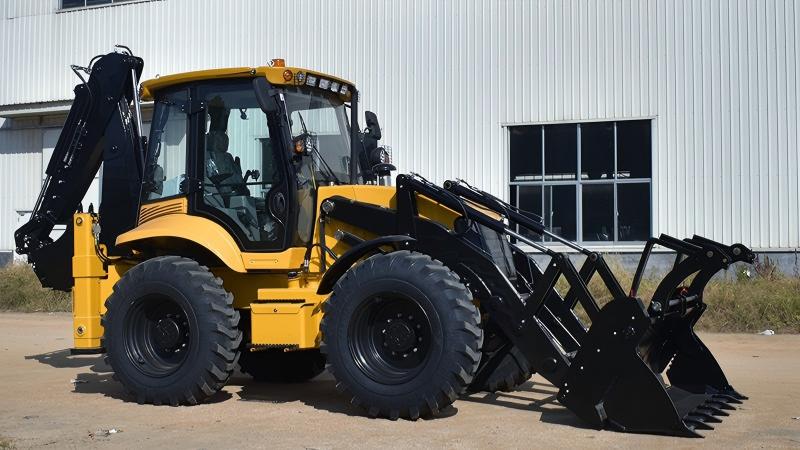
However, the employment of a backhoe in demolition is strictly governed by the scope and scale of the project. Its primary limitations are rooted in its size, reach, power, and stability when compared to purpose-built demolition machines. Standard backhoe loaders are relatively lightweight, often ranging from 7 to 10 tons, and lack the mass and hydraulic force of a 30-ton or larger dedicated excavator. This makes them unsuitable for tackling reinforced concrete structures, multi-story buildings, or any element that requires sustained, high-impact force. Their reach is limited, confining them to ground-level or slightly elevated work, unlike high-reach demolition excavators that can methodically deconstruct structures from the top down. Furthermore, the backhoe's design, with its swing axis behind the operator, can present stability challenges when applying heavy sideloads with a breaker or shear, increasing the risk of tipping. Therefore, while a backhoe can be the hero of a DIY farm shed removal or a patio replacement, it is unequivocally not the tool for demolishing a commercial warehouse or a residential block. Understanding this boundary is crucial for safety and project efficacy. Contractors must conduct a thorough engineering assessment to determine if the structure's size, materials, and proximity to other assets align with the backhoe's safe working parameters.
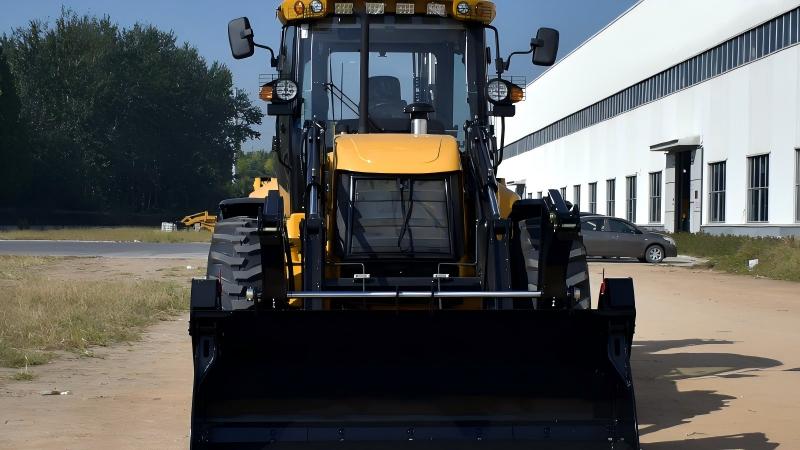
To utilize a backhoe for demolition safely and efficiently, adherence to stringent protocols and techniques is non-negotiable. The process begins with securing all necessary permits and conducting a comprehensive site inspection, identifying utilities, hazardous materials like asbestos, and potential structural hazards. The machine itself must be equipped with enhanced protection, including falling object protection (FOPS) and rollover protection (ROPS) canopies, and possibly additional guarding for the windshield and hydraulic lines. The choice of attachment is critical: a hydraulic breaker for concrete slab work, a shear for cutting through steel beams or pipes in small dismantling projects, or a grapple for sorting and clearing debris. The operator must employ methodical, controlled strategies, such as working from the edges inward on a slab or deconstructing a wooden structure piece by piece, rather than attempting to push it over. Continuous attention to the machine's stability, ensuring it is on firm, level ground, and maintaining a safe perimeter are essential. Furthermore, dust and noise suppression measures, such as using water sprays during concrete breaking, are often required in residential areas. This operational discipline transforms the backhoe from a simple digger into a precise deconstruction tool, minimizing risks to the operator, bystanders, and surrounding property.
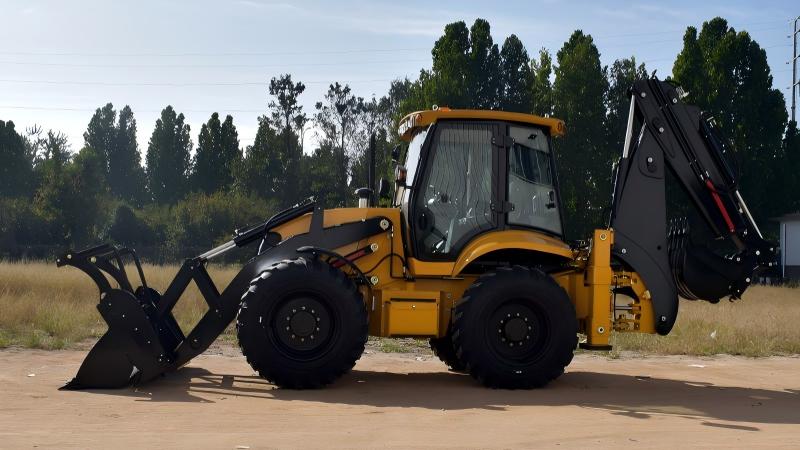
In conclusion, the backhoe loader occupies a specific and valuable niche within the demolition industry. It is not a replacement for specialized demolition machinery but rather a highly adaptable supplement for a well-defined category of projects. Its economic advantage is clear for small contractors and property owners, as it eliminates the need to rent a larger, more expensive machine for tasks within its capacity. The very versatility that defines the backhoe—its ability to dig, load, lift, and, with attachments, break and shear—makes it a multi-tool on a demolition site, often used for the initial site prep, the selective demolition phase, and the final debris loading and cleanup. For demolishing a garden wall, a small garage, an interior partition, or a driveway, a skilled operator with a properly equipped backhoe is often the most efficient and practical solution. Ultimately, the answer to whether a backhoe can be used for demolition is a qualified yes, emphasizing that its successful application hinges on a realistic assessment of the task, meticulous planning, superior operator skill, and an unwavering commitment to safety protocols, ensuring this ubiquitous machine continues to prove its worth beyond the excavation trench.
Post time:Feb.03.2026
