
How to Choose the Right Bucket Size for a Wheel Loader?
1. Introduction
Choosing the correct bucket size is one of the most important decisions when configuring a wheel loader. The bucket directly affects how much material the machine can move in each cycle, how quickly trucks can be loaded, fuel consumption, machine stability, and overall productivity. A bucket that is too small may reduce production because the loader needs more cycles to move the same amount of material. A bucket that is too large, however, can overload the machine, increase fuel consumption, reduce stability, or cause excessive wear.
The right bucket size depends on much more than the physical dimensions of the wheel loader. Operators need to consider the material being handled, material density, bucket fill factor, rated operating capacity, tipping load, working conditions, truck size, and the specific application. For example, a bucket suitable for loading lightweight materials such as wood chips may not be appropriate for dense gravel or rock.
This article explains the main factors involved in selecting the right wheel-loader bucket size. By understanding bucket capacity, material density, machine limits, and application requirements, operators can choose a bucket that provides a practical balance between productivity, safety, durability, and operating cost.
2. Understanding Wheel Loader Bucket Capacity
Wheel-loader buckets are normally described according to their volume, such as 1.5 m³, 2 m³, 3 m³, or 5 m³. Bucket capacity indicates how much material the bucket can theoretically contain, but it does not automatically represent the actual weight of the material that the loader can safely carry.
Two capacity measurements are commonly discussed: struck capacity and heaped capacity. Struck capacity refers to the volume measured with the material level with the top of the bucket. Heaped capacity includes additional material piled above the bucket's normal top edge according to the applicable measurement method.
For example, a 3 m³ bucket does not mean that every type of material loaded into it will weigh the same. Three cubic meters of lightweight material can weigh considerably less than three cubic meters of wet gravel.
Therefore, bucket volume should always be considered together with material density and the loader's rated capacity.
3. Match Bucket Size to Wheel Loader Capacity
The bucket must be compatible with the wheel loader's operating capabilities. Important specifications include rated operating capacity, tipping load, hydraulic capacity, engine power, machine weight, and attachment compatibility.
A bucket that is too large can place excessive weight on the front of the machine. This can increase the risk of reaching the loader's stability limits and may reduce performance during lifting and transport.
A smaller bucket may be safer and easier to control, but if it is significantly undersized, productivity can suffer because the operator must complete more loading cycles.
Manufacturers normally provide recommended bucket ranges for each wheel-loader model. These recommendations are an important starting point because they take into account the machine's hydraulic system, linkage, tipping load, and structural design.
4. Consider the Material Being Handled
Material type is one of the most important factors in bucket selection.
Light materials such as mulch, wood chips, snow, or certain agricultural products have relatively low density. A larger bucket can often be used because the material does not reach the loader's weight limit as quickly.
Dense materials such as gravel, crushed rock, wet soil, and certain minerals weigh considerably more. Using an oversized bucket for these materials can cause the loader to reach its rated capacity or stability limit before the bucket is completely full.
Abrasive materials also require attention to bucket construction. Rock, gravel, and other abrasive materials may require reinforced buckets, stronger cutting edges, and appropriate teeth.
Therefore, the ideal bucket size for one material may not be appropriate for another, even when using the same wheel loader.
5. Calculate the Required Bucket Payload
A basic calculation can help estimate the weight of material carried by a bucket:
Bucket payload ≈ Bucket volume × Material density × Fill factor
For example, assume a wheel loader uses a 2.5 m³ bucket, the material has a bulk density of 1.6 tonnes/m³, and the expected fill factor is 90%.
The estimated payload would be:
2.5 × 1.6 × 0.90 = 3.6 tonnes
This calculation gives an approximate material payload. The actual result can vary depending on material conditions, bucket shape, operator technique, moisture content, and the measurement standard used.
The calculated payload should then be compared with the wheel loader's rated operating capacity and other relevant specifications.
6. Understand Bucket Fill Factor
Bucket fill factor describes how completely the bucket is filled relative to its rated volume.
A bucket may not reach its theoretical capacity during every loading cycle. Material characteristics, pile shape, bucket design, digging technique, and operator experience can all influence the actual fill.
Loose, easy-to-load materials may allow a high fill factor. Sticky, irregular, or difficult-to-dig materials may result in a lower fill factor.
For this reason, simply selecting a bucket based on its nominal volume can produce inaccurate productivity estimates.
When comparing different bucket sizes, operators should consider the expected real-world fill factor rather than assuming that every bucket will be filled to 100% on every cycle.
7. Consider the Loader's Tipping Load
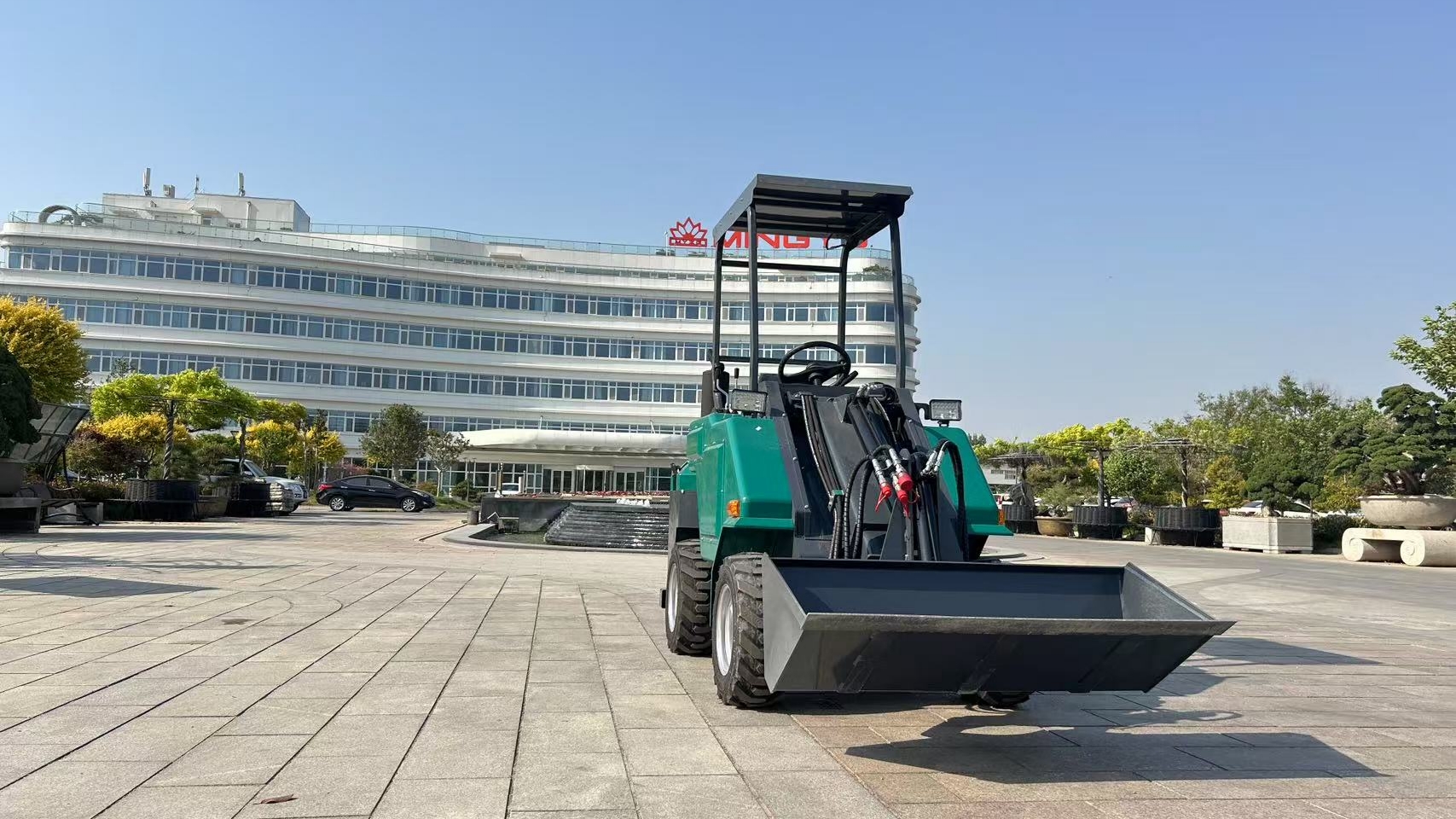
Tipping load is another important consideration when selecting a bucket.
The tipping load represents the load at which the machine approaches a specified tipping condition under a defined test configuration. It is related to the loader's geometry, counterweight, linkage, load center, and operating configuration.
As the load moves farther forward from the machine, its leverage increases. This means that a bucket carrying a certain weight may have a different effect depending on the bucket position and load center.
An oversized bucket filled with dense material can approach the loader's limits quickly. Operators should therefore avoid selecting a bucket solely because the machine physically has enough hydraulic power to lift it.
The manufacturer's rated operating capacity and bucket recommendations should always be considered when determining the practical working load.
8. Match Bucket Size to the Application
Different applications require different bucket configurations.
For general construction and material handling, a general-purpose bucket can provide a useful balance between digging ability and capacity.
Quarries and aggregate operations often require heavy-duty buckets designed to handle abrasive materials. These buckets may have reinforced structures and wear-resistant components.
For snow removal or lightweight materials, high-capacity buckets may be useful because the material has relatively low density.
Waste and recycling applications may require specialized bucket shapes or larger volumes to efficiently handle lightweight bulk materials.
Agricultural operations may also benefit from larger buckets when handling materials such as grain, feed, manure, or other relatively lightweight products.
The bucket should therefore be selected according to the actual material and working cycle rather than simply the size of the machine.
9. Standard vs. Specialized Buckets
General-purpose buckets are suitable for a wide range of common loading tasks. They are often used for soil, sand, gravel, and general construction materials.
Light-material buckets are designed with greater volume and are intended for materials with lower density. Their larger capacity can improve productivity when the loader's weight limits are not reached.
Heavy-duty rock buckets are reinforced for demanding applications involving rock, quarry materials, and abrasive aggregates.
High-capacity buckets provide more volume and can be particularly useful for lightweight materials.
4-in-1 buckets provide additional functionality because the bucket can open and close for different tasks, including loading, grading, grabbing, and leveling.
Side-dump buckets can be useful where conventional forward dumping is difficult or where material needs to be placed to one side.
The correct bucket type can sometimes improve productivity more than simply increasing bucket volume.
10. Bucket Width and Loader Maneuverability
Bucket width is another factor that should not be overlooked.
A bucket that is wider than necessary can make the loader more difficult to maneuver in confined areas. It can also increase the risk of contact with structures, racks, walls, or other equipment.
In general, the bucket should be compatible with the loader's dimensions and the working environment.
For loading trucks, bucket width can also influence how easily the operator can distribute material across the truck body.
For narrow construction sites, stockyards, or industrial facilities with limited space, a slightly smaller or narrower bucket may provide better overall efficiency than a very large bucket.
11. Bucket Size and Truck Loading Efficiency
Wheel-loader productivity is closely related to truck loading efficiency.
If the bucket is too small for the truck, the loader may need many cycles to reach the truck's target payload. This increases loading time and can cause trucks to wait longer.
If the bucket is too large, the operator may risk overloading the truck or exceeding the loader's capacity.
Ideally, the bucket size should work efficiently with the payload capacity of the transport trucks. For example, if a truck requires approximately four loader passes to reach its target payload, the operation may be easier to manage than if it requires a much larger number of cycles.
The goal is to find a practical balance between bucket capacity, loader stability, truck capacity, and cycle time.
12. Bucket Size and Fuel Consumption
Bucket size can influence fuel consumption because larger loads can require more engine and hydraulic power.
A larger bucket can increase productivity when the machine has sufficient capacity and the material is lightweight enough. More material moved per cycle can reduce the number of cycles required to complete a job.
However, an excessively large bucket can increase the load on the machine without producing a proportional productivity benefit.
The most efficient configuration is not necessarily the bucket with the greatest volume. Instead, it is the bucket that allows the loader to move the required amount of material efficiently while remaining within its recommended operating range.
Fuel efficiency should therefore be evaluated together with tonnes per hour, cycle time, material density, and operating conditions.
13. Bucket Design and Cutting-Edge Options
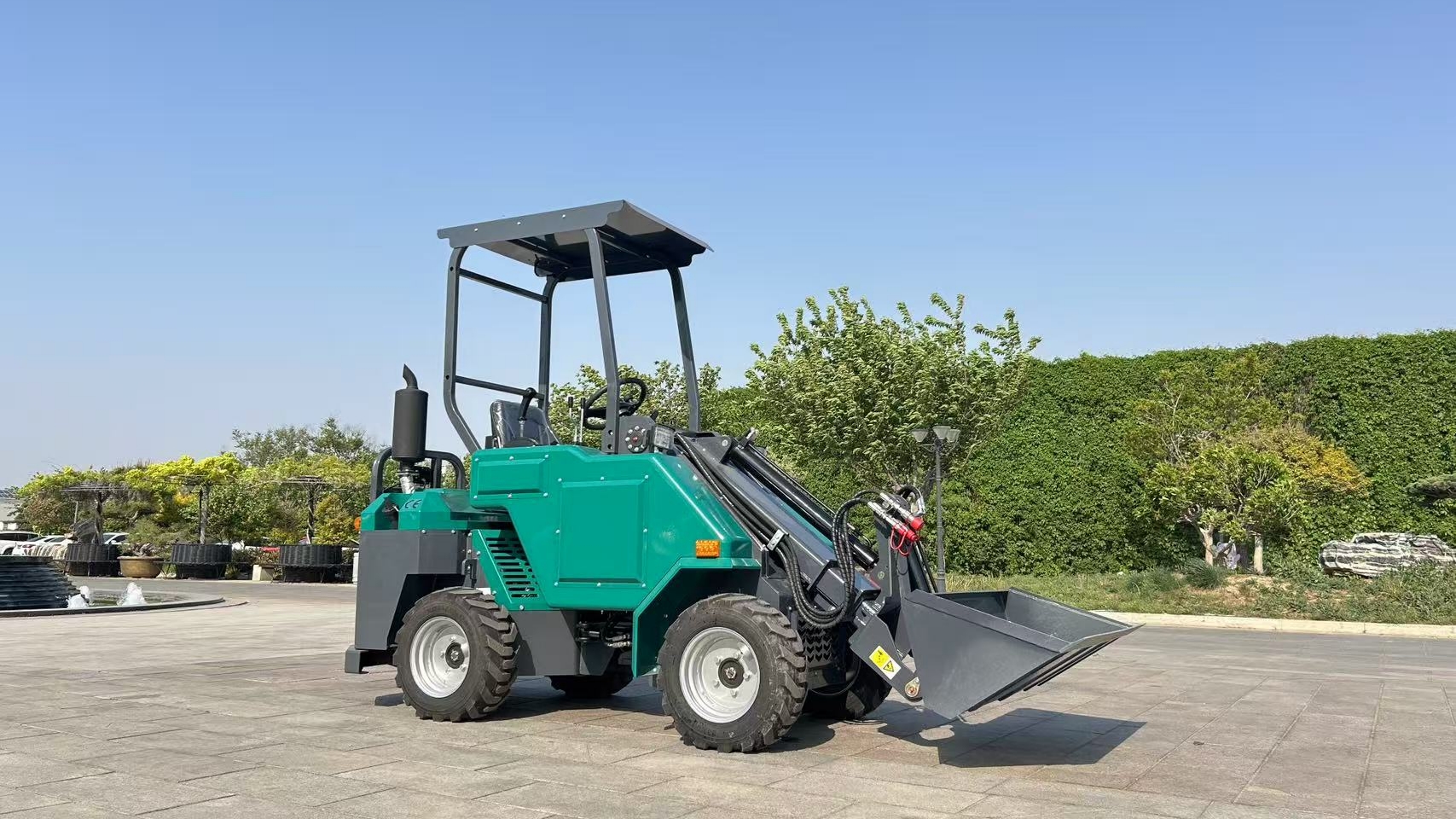
Bucket design affects both loading performance and durability.
The bucket shape determines how easily material enters the bucket and how effectively it can be retained during lifting and transport. The cutting edge or teeth affect digging performance.
Buckets equipped with teeth can be useful when penetrating compacted soil, gravel, or other difficult materials. Straight cutting edges may be more suitable for certain loading and grading applications.
Bolt-on cutting edges can simplify replacement when the cutting edge becomes worn.
For highly abrasive materials, reinforced side plates, wear strips, stronger cutting edges, and other wear-resistant components may increase bucket service life.
Therefore, bucket selection should consider not only volume but also construction, materials, teeth, cutting edge, and expected working conditions.
14. Common Mistakes When Choosing a Bucket
One common mistake is choosing the largest bucket available simply because it appears to offer higher productivity.
A larger bucket does not necessarily mean more useful production. If the bucket is too large for the material or machine, it may increase fuel consumption, reduce stability, accelerate component wear, or prevent the operator from filling it effectively.
Another mistake is ignoring material density. A 3 m³ bucket filled with lightweight material can have a very different payload from the same bucket filled with dense wet aggregate.
Some buyers also focus only on bucket volume and overlook the machine's tipping load, rated operating capacity, hydraulic performance, and dimensions.
Choosing a general-purpose bucket for highly abrasive rock can also result in excessive wear.
Finally, the bucket should always be selected according to the manufacturer's recommended specifications rather than relying solely on visual size comparisons.
15. Practical Example: Selecting the Right Bucket
Consider a medium-sized wheel loader with a recommended bucket range of approximately 2.0–3.0 m³.
Suppose the machine will mainly handle material with a bulk density of approximately 1.5 tonnes/m³.
With a 2.0 m³ bucket and an assumed 90% fill factor:
2.0 × 1.5 × 0.90 = 2.7 tonnes
With a 2.5 m³ bucket:
2.5 × 1.5 × 0.90 = 3.375 tonnes
With a 3.0 m³ bucket:
3.0 × 1.5 × 0.90 = 4.05 tonnes
The largest bucket is not automatically the correct choice. The operator must compare these estimated payloads with the loader's rated operating capacity, tipping load, hydraulic performance, and the transport truck's capacity.
If the 3.0 m³ bucket approaches or exceeds the recommended operating range, the 2.5 m³ option may provide a better balance between productivity and machine performance.
This example also demonstrates why the material being handled must be known before selecting a bucket.
16. Step-by-Step Checklist for Choosing the Right Bucket
A practical bucket-selection process can follow these steps:
Step 1: Identify the wheel-loader model.
Check the machine's rated operating capacity, tipping load, hydraulic specifications, and manufacturer's recommended bucket range.
Step 2: Identify the material.
Determine whether the machine will handle soil, sand, gravel, rock, snow, agricultural materials, waste, or another type of material.
Step 3: Determine material density.
Use an appropriate bulk-density value for the actual material and its working condition.
Step 4: Estimate the bucket payload.
Use bucket volume, material density, and an expected fill factor to estimate the actual material weight.
Step 5: Check the loader's limits.
Make sure the estimated payload remains within the manufacturer's recommended operating parameters.
Step 6: Consider the working environment.
Check the available space, aisle width, stockpile conditions, loading height, and truck dimensions.
Step 7: Choose the bucket design.
Decide whether a general-purpose, light-material, heavy-duty, rock, high-capacity, 4-in-1, or another specialized bucket is appropriate.
Step 8: Compare productivity and operating costs.
Consider cycle time, tonnes moved per hour, fuel consumption, wear, and maintenance.
17. Conclusion
Choosing the right bucket size for a wheel loader requires more than simply selecting the largest bucket that can be attached to the machine. The ideal bucket depends on the loader's capacity, material density, fill factor, tipping load, working conditions, and application.
A larger bucket can increase productivity when handling lightweight materials and when the machine has sufficient capacity. However, an oversized bucket filled with dense material can negatively affect stability, fuel efficiency, component life, and safety.
The best approach is to calculate the expected payload, compare it with the wheel loader's specifications, and consider the actual working environment. Bucket width, design, cutting edge, teeth, durability, and compatibility with transport trucks should also be evaluated.
By selecting a bucket that matches the machine, material, and application, operators can achieve a better balance between productivity, safety, fuel efficiency, and equipment life.
Post time:Sep.28.2026
