
Electric vs. Gas/Diesel Forklift: Which One Is Better for Indoor Use?
1. Introduction
Choosing the right forklift power source is an important decision for warehouses, factories, distribution centers, and other indoor workplaces. Forklifts are commonly available with electric, LPG/gas, or diesel power systems, and each type has different advantages in terms of emissions, operating costs, performance, maintenance, and working environment. The best choice depends not only on the forklift's lifting capacity but also on how long it operates each day, the ventilation conditions, the type of loads, and the available charging or refueling facilities.
For indoor applications, electric forklifts have become increasingly popular because they produce no tailpipe exhaust during operation and generally operate more quietly than internal-combustion models. This can be particularly useful in enclosed warehouses where air quality and noise are important considerations. LPG forklifts can also be used in some indoor applications, especially where continuous operation and quick refueling are important, but adequate ventilation is still necessary. Diesel forklifts, meanwhile, are usually associated with outdoor or well-ventilated heavy-duty applications because their exhaust emissions make them less suitable for enclosed spaces.
This article compares electric, gas/LPG, and diesel forklifts for indoor use. It examines emissions, noise, performance, operating costs, charging and refueling, maintenance, safety, and typical applications to help businesses understand which power system may fit their specific working environment.
2. Electric Forklifts for Indoor Use
Electric forklifts use rechargeable batteries to power an electric motor and hydraulic system. Traditional electric forklifts commonly use lead-acid batteries, while newer models increasingly use lithium-ion or LiFePO4 battery technology.
One of the biggest advantages of electric forklifts indoors is the absence of tailpipe emissions. Since there is no combustion engine producing exhaust gases during operation, electric forklifts can be particularly suitable for enclosed warehouses and facilities where maintaining indoor air quality is important.
Electric forklifts are also relatively quiet. This can improve communication between workers and reduce the overall noise level in a warehouse. Their smooth acceleration and precise control can also make them convenient for handling pallets in narrow aisles.
However, businesses need to consider charging requirements. Lead-acid batteries generally require longer charging periods and may require battery maintenance. Lithium-ion forklifts can offer faster charging and opportunity-charging capabilities, depending on the battery and charger configuration. For operations running multiple shifts, companies should carefully calculate battery capacity and charging infrastructure before purchasing.
3. Gas/LPG Forklifts for Indoor Use
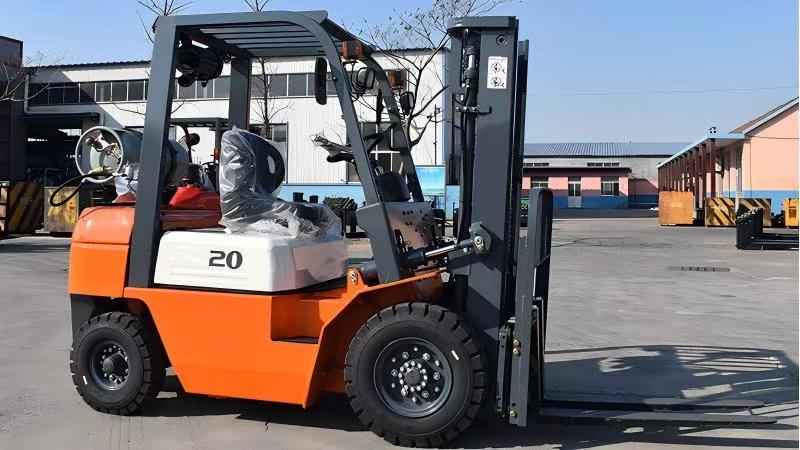
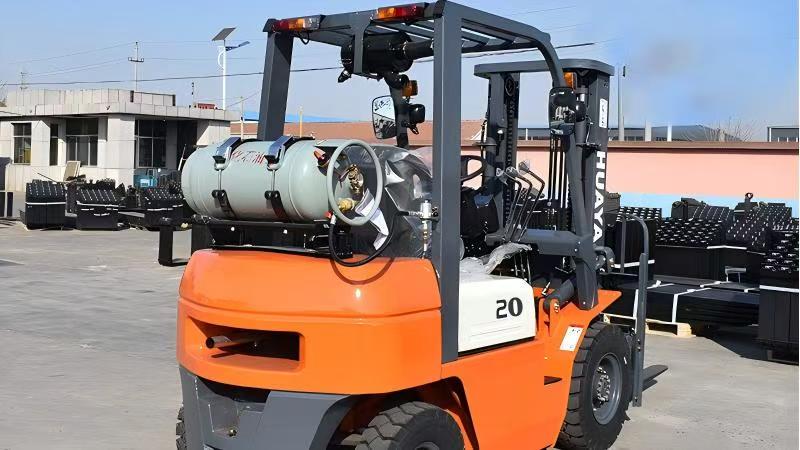
LPG forklifts are powered by an internal-combustion engine using liquefied petroleum gas. They are commonly used in warehouses, manufacturing plants, loading areas, and other applications where both indoor and outdoor operation may be required.
One advantage of LPG forklifts is fast refueling. A depleted LPG cylinder can generally be replaced relatively quickly, allowing the forklift to return to work without waiting for a long battery charging cycle. This can be useful for operations with long working hours or multiple shifts.
LPG forklifts can also provide strong performance and are available in a wide range of capacities. However, because LPG is burned in an engine, the forklift produces exhaust emissions. Indoor facilities therefore need appropriate ventilation and must consider applicable workplace requirements.
For facilities that have large doors, good ventilation, or a combination of indoor and outdoor operations, LPG forklifts may provide a practical balance between flexibility and productivity.
4. Diesel Forklifts for Indoor Use
Diesel forklifts are designed primarily for demanding material-handling applications. They provide strong torque and are widely used for heavy loads, construction materials, steel products, timber, and other industrial applications.
However, diesel forklifts are generally less suitable for enclosed indoor environments. Their combustion engines produce exhaust emissions, including carbon monoxide and nitrogen oxides, so adequate ventilation and workplace controls are important.
Diesel engines can also generate more noise and vibration than electric drivetrains. For this reason, diesel forklifts are often better suited to outdoor yards, open-sided warehouses, and other areas where ventilation is naturally available.
In situations where a forklift must regularly move between an indoor warehouse and an outdoor yard, a diesel model may still be considered if the operating environment and applicable requirements allow it.
5. Emissions and Indoor Air Quality
Indoor air quality is one of the most important differences between electric and combustion-powered forklifts.
Electric forklifts have no tailpipe emissions during operation. This makes them particularly attractive for enclosed warehouses, food-processing facilities, pharmaceutical operations, and other workplaces where controlling exhaust emissions is important.
LPG forklifts produce combustion emissions, although their emissions profile differs from diesel engines. They should therefore be used in accordance with the facility's ventilation and workplace requirements.
Diesel forklifts generally require the greatest attention to exhaust management when used indoors. Poor ventilation can allow exhaust pollutants to accumulate, creating an undesirable working environment.
Businesses should therefore consider the size and ventilation of the building, operating hours, number of forklifts, and applicable occupational-safety requirements before choosing a combustion-powered forklift for indoor work.
6. Noise and Operator Comfort
Noise is another important consideration in an indoor warehouse.
Electric forklifts generally produce less operating noise because they do not have a conventional combustion engine. The lower noise level can make it easier for operators and pedestrians to communicate, especially in busy facilities.
LPG and diesel forklifts use internal-combustion engines, which generate engine noise and vibration. Modern models can reduce these effects through improved engine and cab design, but they generally remain louder than comparable electric models.
Operator comfort also depends on seat design, steering system, visibility, vibration isolation, mast design, and control layout. Therefore, power type is only one factor in evaluating the overall operator experience.
7. Performance and Load Capacity
Electric forklifts are available in a wide range of capacities, from small warehouse trucks to heavy-duty models. Modern electric forklifts can provide strong acceleration, precise control, and sufficient hydraulic performance for many indoor applications.
LPG forklifts are also available in different capacities and can be particularly useful when the same machine needs to work indoors and outdoors. Refueling can be completed quickly, which is useful for intensive operations.
Diesel forklifts are often selected for heavier-duty applications because diesel engines provide high torque and are well established in demanding industrial environments.
However, load capacity alone should not determine the choice. Businesses should also consider lift height, load center, working hours, travel distance, floor conditions, aisle width, and required hydraulic attachments.
8. Operating Costs
Operating costs include energy or fuel consumption, maintenance, battery expenses, and other routine costs.
Electric forklifts can benefit from relatively efficient electric drivetrains and lower routine engine-related maintenance. They do not require engine oil changes, fuel filters, spark plugs, or many other components associated with combustion engines.
LPG forklifts require regular engine maintenance and ongoing fuel purchases. Diesel forklifts also have engine-related maintenance and fuel costs, and modern diesel engines may have additional emissions-control systems.
Battery cost is an important part of the total cost of ownership for electric forklifts. Lead-acid batteries may require periodic maintenance and eventual replacement, while lithium-ion batteries generally have different charging and maintenance characteristics.
Instead of comparing only the purchase price, businesses should calculate the total cost over the expected service life of the forklift.
9. Charging, Refueling, and Downtime
The energy-management strategy can have a major impact on forklift productivity.
Electric forklifts need a suitable charging system. Lead-acid batteries may require several hours for charging and may need cooling time before certain handling procedures. Lithium-ion batteries can support opportunity charging in many applications, allowing operators to charge during scheduled breaks.
LPG forklifts have an advantage when rapid refueling is important. A trained operator can replace the fuel cylinder according to the facility's procedures, reducing downtime.
Diesel forklifts can also be refueled relatively quickly, making them suitable for long operating cycles. However, fuel storage and handling requirements must be considered.
For a warehouse operating one shift per day, charging may be relatively simple. A three-shift operation may require multiple batteries, opportunity charging, battery swapping, or carefully planned charging infrastructure.
10. Maintenance Requirements
Electric forklifts generally have fewer moving mechanical components than internal-combustion forklifts. Routine maintenance may include inspection of the battery, electrical connections, tires, brakes, steering, hydraulic system, mast, and other components.
Lithium-ion batteries can reduce some battery-maintenance tasks compared with traditional lead-acid systems, depending on the battery design and manufacturer's requirements.
LPG and diesel forklifts require engine-related maintenance such as oil and filter changes, cooling-system checks, fuel-system maintenance, and other periodic service.
Maintenance schedules should always follow the manufacturer's recommendations. Regular inspections are also important regardless of power type because tires, brakes, forks, chains, hydraulic components, and safety systems directly affect forklift operation.
11. Maneuverability and Indoor Space
Warehouse space is expensive, so forklift dimensions and maneuverability are important.
Electric forklifts are often popular in indoor warehouses because they can be designed for relatively compact operation and precise low-speed control. Three-wheel electric forklifts, for example, can provide a small turning radius for certain warehouse layouts.
Four-wheel electric forklifts generally provide greater stability and can be suitable for heavier loads.
LPG and diesel forklifts can also be highly maneuverable, but businesses should carefully compare overall length, width, turning radius, mast height, and counterweight dimensions.
Before purchasing, operators should measure aisle width and consider the largest pallet dimensions, turning requirements, rack configuration, and required lift height.
12. Safety Considerations
Safety requirements apply to every forklift power type.
For electric forklifts, charging areas should be properly designed and managed. Battery charging requires appropriate procedures, and damaged batteries or electrical components should be inspected by qualified personnel.
LPG forklifts require proper fuel-cylinder handling, storage, inspection, and ventilation. Operators should follow the manufacturer's procedures when connecting or replacing cylinders.
Diesel forklifts require particular attention to exhaust ventilation when used in enclosed or partially enclosed spaces.
Regardless of power source, operators need appropriate training, and forklifts should receive regular inspections and maintenance. Load capacity must never be exceeded, and forks, brakes, tires, steering, warning devices, and safety systems should be kept in proper working condition.
13. Electric vs. LPG vs. Diesel: Direct Comparison
|
Factor |
Electric |
LPG/Gas |
Diesel |
|
Tailpipe emissions |
None during operation |
Yes |
Yes |
|
Indoor suitability |
Generally very suitable |
Suitable with appropriate ventilation |
More limited in enclosed areas |
|
Noise |
Generally low |
Medium |
Generally higher |
|
Refueling/charging |
Charging required |
Fast refueling |
Fast refueling |
|
Maintenance |
Generally lower mechanical maintenance |
Engine maintenance required |
Engine maintenance required |
|
Heavy-duty capability |
Available across many capacities |
Strong |
Strong |
|
Narrow-aisle use |
Excellent options available |
Depends on model |
Depends on model |
|
Outdoor/indoor flexibility |
Good, depending on model |
Very good |
Very good |
|
Main consideration |
Charging infrastructure |
Ventilation and fuel handling |
Exhaust and ventilation |
The table shows that there is no single forklift configuration that fits every operation. The working environment and duty cycle are critical factors.
14. Which Forklift Is Suitable for Different Indoor Applications?
For a typical enclosed warehouse, an electric forklift may be a particularly practical choice because of its zero tailpipe emissions, low noise, and precise operation.
In a distribution center where forklifts operate for long periods and need quick refueling, LPG may be considered if the facility has suitable ventilation and fuel-handling procedures.
For heavy industrial operations involving very large loads and significant outdoor work, diesel forklifts may be more appropriate, particularly when the operating environment is open or well ventilated.
Food, beverage, pharmaceutical, and other sensitive indoor operations may place additional emphasis on controlling exhaust emissions and maintaining a clean working environment. Electric forklifts can be advantageous in these applications, subject to the specific facility requirements.
Cold-storage applications require additional consideration because low temperatures can affect battery performance and charging strategy. The forklift and battery should therefore be selected according to the actual temperature and operating conditions.
15. How to Choose the Right Indoor Forklift
The first step is to determine the required capacity. A forklift should have sufficient rated capacity for the heaviest load at the required load center and lifting height.
Next, measure the available aisle width and warehouse space. A forklift that is too large can reduce productivity and increase the risk of contact with racks or other equipment.
Operating hours are also critical. A forklift used for two or three hours per day has very different energy requirements from one operating continuously across multiple shifts.
Businesses should then compare charging or refueling infrastructure, energy costs, maintenance requirements, expected service life, and purchase price.
Finally, consider the actual workplace environment. If the forklift will operate almost entirely inside an enclosed building, emissions and ventilation should be important factors. If the forklift frequently moves outdoors, flexibility and weather conditions may become more significant.
16. Conclusion
Electric, LPG, and diesel forklifts each have specific advantages and limitations. For many enclosed indoor warehouses, electric forklifts offer significant benefits because they produce no tailpipe emissions during operation, operate relatively quietly, and require less engine-related maintenance.
LPG forklifts can be useful when quick refueling and indoor/outdoor flexibility are important, but ventilation and fuel-handling requirements need to be considered. Diesel forklifts provide strong heavy-duty performance but are generally better suited to outdoor, open-sided, or well-ventilated environments than fully enclosed warehouses.
Ultimately, the right forklift depends on the specific application. Businesses should evaluate load capacity, lift height, aisle width, operating hours, ventilation, charging or refueling facilities, maintenance, and total cost of ownership before making a purchase. For a predominantly enclosed indoor operation, these factors can help determine whether an electric, LPG, or diesel forklift is the appropriate fit.
Post time:Sep.28.2026
