
Can High-Reach Platform Lifts Be Used Indoors on Smooth Floors?
1. Introduction
High-reach platform lifts are widely used for elevated maintenance, installation, inspection, construction, and facility management tasks. While these machines are often associated with outdoor construction sites, certain models can also be used indoors. Warehouses, factories, shopping centers, logistics facilities, exhibition halls, and large commercial buildings may require elevated access equipment for lighting, ventilation systems, electrical installations, ceiling structures, and other high-level work.
A common question is whether a high-reach platform lift can safely operate indoors on smooth floors. The answer depends on several factors rather than the floor surface alone. The machine must be specifically suitable for indoor operation, and the floor must be strong, sufficiently level, clean, and capable of supporting the machine's weight and wheel loads.
Electric-powered platform lifts are often considered for indoor applications because they do not produce direct exhaust emissions during operation. However, even an electric machine can create hazards if it is too large for the building, exceeds the floor's load capacity, has unsuitable tires, or is operated near pedestrians and overhead structures.
Before using a high-reach platform lift indoors, operators should evaluate the machine specifications, floor conditions, ceiling clearance, doorway dimensions, ventilation, working height, platform capacity, and emergency procedures. Proper training and compliance with the manufacturer's instructions are also essential.
2. What Is a High-Reach Platform Lift?
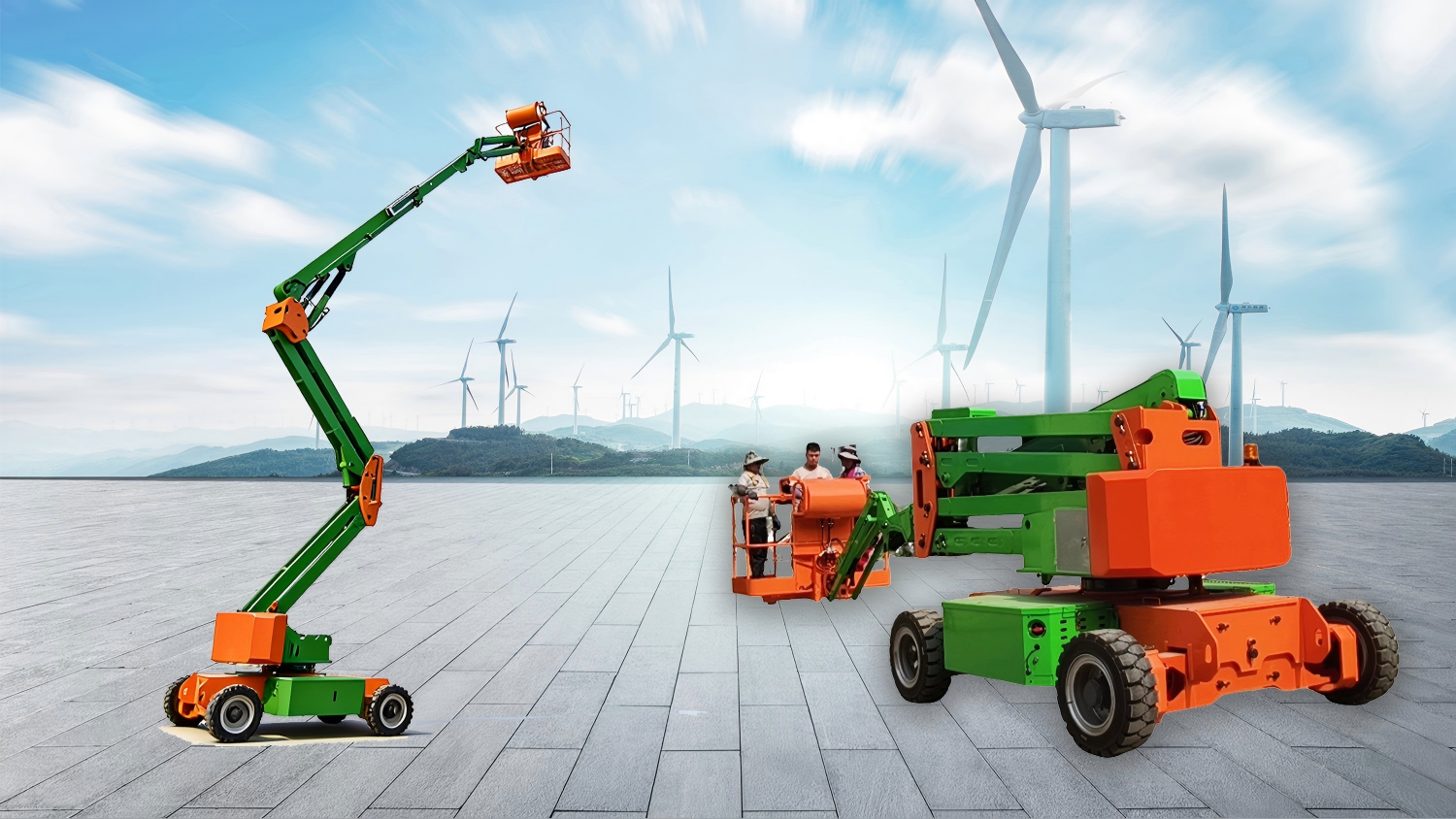
A high-reach platform lift is an aerial work platform designed to raise workers and equipment to elevated positions. Depending on the model, the machine may use a telescopic boom, articulating boom, vertical mast, or another lifting configuration.
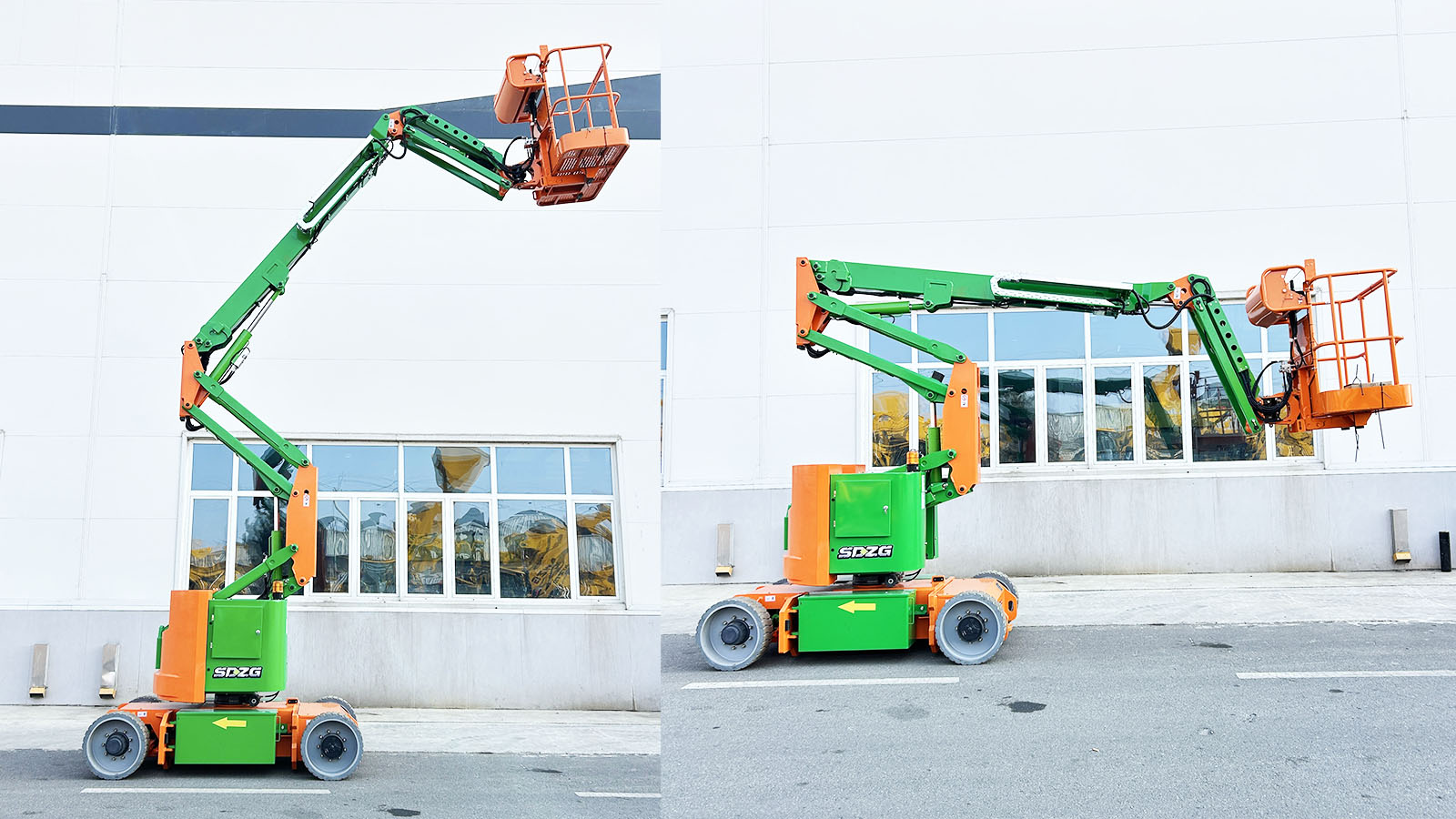
A typical high-reach boom platform consists of a chassis, drive system, lifting boom, platform, hydraulic or electric lifting system, and operator controls. Some models are designed primarily for outdoor construction, while compact electric versions may be intended for indoor applications.
The working height and horizontal outreach are important characteristics. A machine with a high maximum working height may also require more space for positioning and boom movement.
Compared with a scissor lift, a boom-type platform generally provides greater horizontal outreach and flexibility when accessing locations that cannot be reached directly from below. However, this additional flexibility means that operators must pay close attention to the machine's stability limits and surrounding obstacles.
3. Can High-Reach Platform Lifts Be Used Indoors?
Yes, some high-reach platform lifts can be used indoors, but not every model is suitable for enclosed environments.
The first consideration is the manufacturer's intended application. The operator should check whether the machine is approved or designed for indoor operation and understand any restrictions.
Electric or battery-powered models are often more suitable for enclosed spaces because they do not produce engine exhaust during normal operation. This can be particularly important in warehouses, factories, and commercial buildings with limited ventilation.
Combustion-engine-powered equipment may require additional ventilation and emissions controls. Operating an engine-powered machine inside an enclosed building without adequate ventilation can create serious air-quality hazards.
Indoor operation also requires consideration of noise, floor loading, dimensions, turning radius, and overhead clearance. Therefore, the decision should be based on the complete operating environment rather than simply whether the floor is smooth.
4. Why Smooth Floors Can Be an Advantage
Smooth, level concrete floors can provide favorable conditions for certain aerial work platforms. A relatively flat surface can make it easier to position the machine accurately and move around a facility.
Smooth floors may also reduce vibration compared with heavily uneven outdoor terrain. This can be useful when working in warehouses, production areas, commercial buildings, and other facilities with finished flooring.
However, a smooth appearance does not necessarily mean that the floor is suitable. The floor must have adequate structural strength to support the machine and the loads generated by its wheels or other support components.
A floor may look strong while still having limitations regarding point loading or maximum allowable equipment weight. Operators and site managers should therefore verify the floor requirements rather than judging suitability only by appearance.
5. Key Floor Conditions to Check
Several floor characteristics should be evaluated before operating a high-reach platform lift indoors.
Floor load capacity
The floor must be capable of supporting the machine's total weight and the loads imposed through its wheels. The manufacturer's specifications should be compared with the building's floor-loading information.
Levelness
The machine should only be operated on surfaces permitted by the manufacturer. Excessive slopes or uneven areas can affect stability.
Cleanliness
Oil, water, dust, loose materials, and other contaminants can reduce traction and increase the risk of slipping.
Floor joints and transitions
Expansion joints, drains, ramps, thresholds, and changes in floor elevation can affect the machine's movement and stability.
Floor condition
Cracked, damaged, or weakened sections should be identified before work begins. Special attention may be necessary in older buildings or areas with underground structures.
6. Tire and Traction Considerations
The tires are another important consideration for indoor operation. High-reach platform lifts may be equipped with different tire configurations depending on their intended application.
Non-marking tires can be useful in warehouses, shopping centers, factories, and other facilities where protecting finished floors is important. They can reduce the risk of leaving visible marks during normal operation.
The tire type must also be compatible with the machine and the manufacturer's requirements. Operators should not replace approved tires with an unsuitable alternative simply because the replacement appears suitable for smooth flooring.
Tire condition is equally important. Check for damage, abnormal wear, and appropriate inflation where applicable.
Smooth floors can provide good traction when they are clean and dry, but water, oil, dust, or other contaminants can significantly change the surface conditions.
7. Indoor Space and Clearance Requirements
A high-reach platform lift needs more than enough floor space. The entire machine and boom must have sufficient clearance during movement and operation.
Before bringing the machine into a building, check:
Doorway width and height
Ceiling height
Aisle width
Turning radius
Overhead pipes
Lighting fixtures
Sprinkler systems
Electrical cables
Ventilation ducts
Beams and other structural elements
The machine's transport dimensions should be compared with the building entrance dimensions.
The operator must also consider the boom's movement after the platform is raised. A machine may fit through a doorway while fully lowered but still encounter overhead structures when the boom is extended.
8. Stability and Safe Operation on Indoor Floors
A smooth floor does not eliminate stability risks. The machine's center of gravity changes as the boom extends, retracts, raises, or moves laterally.
The operator must remain within the manufacturer's specified operating envelope. Platform capacity should never be exceeded.
The machine should also be positioned according to the manufacturer's requirements. If the model requires level ground within a specified tolerance, that requirement must be followed.
Sudden movements can also affect stability. Operators should avoid aggressive acceleration, braking, and turning, particularly when the platform is elevated.
Where the manufacturer specifies restrictions regarding slope, wind, load, or boom position, those restrictions must be observed.
9. Choosing the Right Power System for Indoor Use
Power source is particularly important when choosing equipment for indoor applications.
Battery-electric models
Battery-electric platform lifts are commonly considered for indoor work because they do not produce direct exhaust emissions during operation. They can be suitable for warehouses, factories, commercial buildings, and other enclosed areas when the model is designed for such use.
Charging requirements
The battery capacity should be sufficient for the planned work period. Operators should also consider charging time, available electrical supply, charging location, and battery maintenance.
Charging should be performed according to the manufacturer's instructions and in an appropriate area.
Combustion-powered models
Diesel or gasoline-powered equipment may require adequate ventilation and specific site controls. The building's ventilation system and applicable workplace requirements should be evaluated before operation.
The correct power system therefore depends on both the machine and the characteristics of the indoor facility.
10. Safety Features for Indoor High-Reach Platform Lifts
Safety systems are essential when operating at height. Depending on the model, a high-reach platform lift may include several protective features.
These can include emergency-stop buttons, emergency lowering systems, ground controls, platform controls, overload protection, tilt alarms, travel alarms, guardrails, platform gates, and other warning systems.
Operators should understand how these systems work before starting the job.
Emergency procedures should also be established in advance. Workers on the ground should know how to communicate with the operator and how emergency lowering or ground controls are used according to the manufacturer's instructions.
Safety features are not a substitute for proper operation. They should be treated as part of a complete safety system.
11. Pre-Operation Inspection for Indoor Use
A pre-operation inspection should be completed before each shift or according to the manufacturer's specified procedure.
Check the tires, wheels, chassis, boom, platform, guardrails, and access gate. Inspect hydraulic hoses and electrical components for visible damage.
Check the battery condition for electric models and look for signs of damage or abnormal leakage.
Test the controls and emergency systems according to the manufacturer's instructions. Confirm that warning alarms and indicators function properly.
The operator should also verify that the machine is appropriate for the planned indoor work area, including its maximum height, width, weight, platform capacity, and floor requirements.
12. Safe Operating Practices on Smooth Floors
Even on a clean and smooth floor, operators should use controlled movements.
Drive at an appropriate speed and avoid sudden acceleration or braking. Maintain sufficient distance from walls, machinery, shelving, and other obstacles.
When the platform is elevated, operators should pay particular attention to overhead structures and nearby equipment.
Pedestrians should be kept away from the machine's operating area. In busy facilities, barriers or designated exclusion zones may be necessary.
If the operator's visibility is restricted, appropriate communication procedures or a trained spotter may be required according to site rules.
13. Common Indoor Hazards
Indoor facilities can contain hazards that are different from those found outdoors.
Common hazards include low ceilings, overhead electrical equipment, narrow aisles, pipes, sprinkler systems, lighting fixtures, forklifts, pedestrians, wet floors, floor openings, ramps, and limited emergency access.
Ventilation is another important consideration when using equipment with combustion engines.
Falling objects are also a potential hazard when workers are elevated. Tools and materials should be properly controlled according to the worksite's safety procedures.
Before beginning work, operators should identify these hazards and determine how they will be controlled.
14. High-Reach Platform Lift vs. Other Indoor Access Equipment
A high-reach boom platform is not necessarily the best machine for every indoor application.
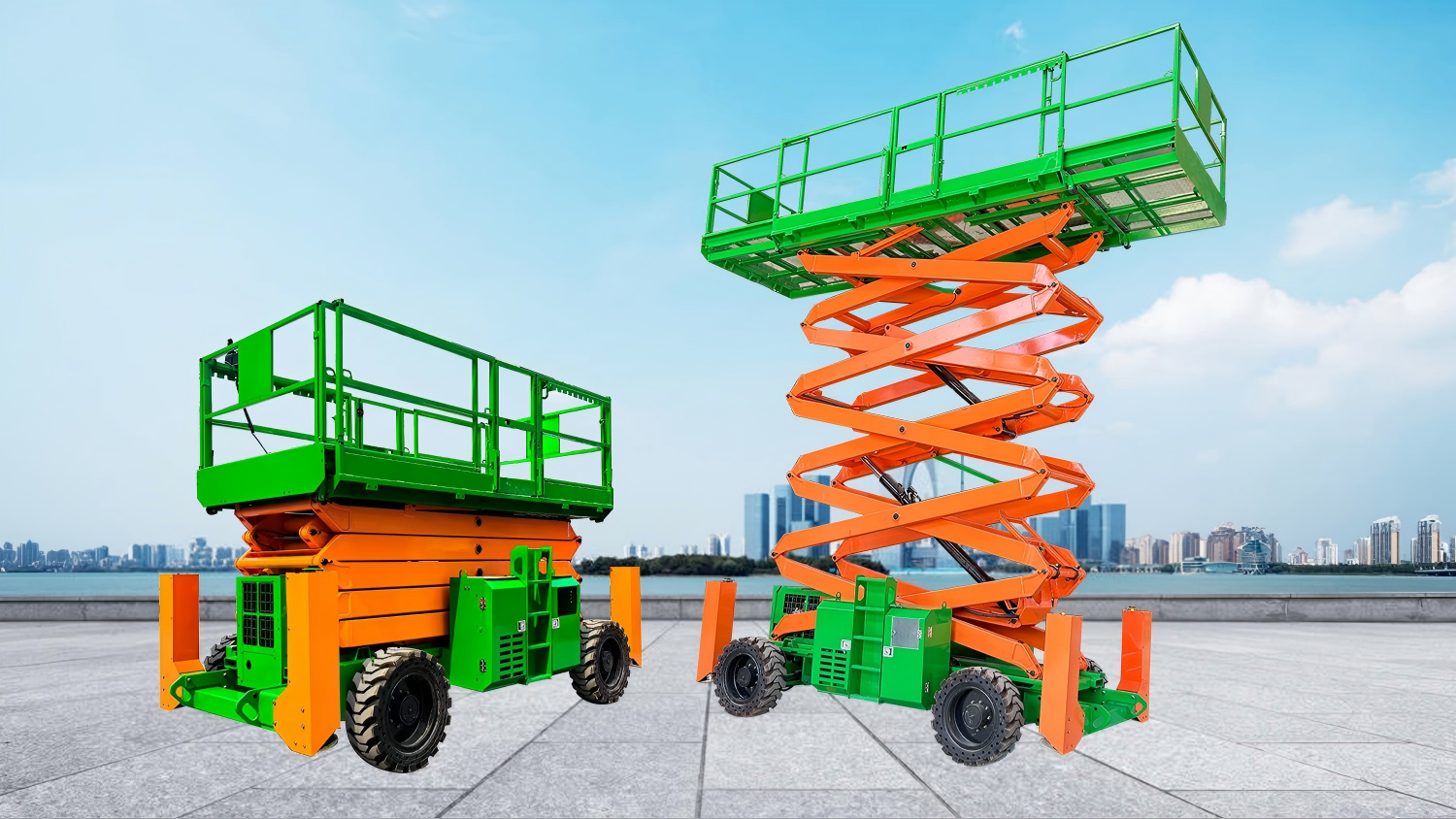
Electric scissor lifts are often useful when workers need vertical access over a relatively large platform area. Vertical mast lifts can be suitable for compact work areas where only limited horizontal outreach is required.
A boom-type platform can provide greater horizontal reach and access around obstacles, but it may also require more space and careful stability management.
The appropriate equipment should therefore be selected based on the required working height, horizontal reach, platform capacity, floor conditions, available space, and work environment.
15. Maintenance and Floor Protection
Regular maintenance helps keep an aerial platform safe and reliable.
Inspect tires, wheels, hydraulic systems, electrical components, batteries, controls, and safety systems according to the manufacturer's maintenance schedule.
For indoor use, floor protection can also be important. Clean wheels and tires regularly to prevent oil, mud, or other contaminants from being transferred onto finished flooring.
If non-marking tires are required by the facility, ensure that the machine is equipped with the appropriate approved tires.
Battery charging, hydraulic maintenance, and other servicing should be performed according to the manufacturer's procedures and in designated areas.
16. Indoor Operation Safety Checklist
Before using a high-reach platform lift indoors, confirm the following:
The machine is approved or suitable for indoor operation
The floor has sufficient load-bearing capacity
The floor is reasonably level and in suitable condition
The floor is clean and free from significant contamination
Doorways and aisles are wide enough
Ceiling and overhead clearance are sufficient
The machine's working height is appropriate
The platform capacity will not be exceeded
The tires are suitable for the floor
The battery or power system is appropriate
Safety systems have been inspected and tested
Pedestrian traffic has been controlled
Overhead hazards have been identified
Emergency procedures are understood
Operators have received appropriate training
Manufacturer instructions and workplace requirements are being followed
17. Conclusion
High-reach platform lifts can be used indoors on smooth floors when the machine, floor, building, and working conditions are suitable. A smooth concrete floor can provide a favorable operating surface, but smoothness alone does not guarantee safety.
Before operation, the floor's load capacity, levelness, cleanliness, and condition should be evaluated. The machine's dimensions, tire configuration, power source, working height, platform capacity, and safety systems must also match the requirements of the facility.
For enclosed environments, electric or battery-powered models may be suitable when the manufacturer permits indoor operation and the machine meets the site's requirements. Regardless of the power system, operators must follow the manufacturer's instructions, complete the required inspections, control pedestrian access, and remain aware of overhead and floor-level hazards.
With the correct machine selection, proper site assessment, appropriate training, and disciplined operating procedures, high-reach platform lifts can be effectively used for many indoor elevated-access applications.
Post time:Sep.29.2026
