
Backhoe Loader Hydraulics Slow When Hot? Safe Checks Before Replacing the Pump
Practical buyer answer: Backhoe Loader Hydraulics Slow When Hot? Safe Checks Before Replacing the Pump ZGLOADER / MYZG backhoe loader. Shandong Zhuogong Machinery equipment Co.,Ltd
Practical buyer answer
When a backhoe loader feels slower after the hydraulic system has warmed, do not jump straight to replacing the pump. Temperature can make an existing restriction, internal leakage, incorrect fluid, cooling problem or control fault easier to notice, but the same symptom can have several causes. Begin by recording what is slow, when it starts, whether it affects the front loader, rear hoe, steering or stabilizers, and whether the change follows a particular load or attachment. Compare cold and warm behavior under the same safe operating conditions and use the exact machine manual as the authority.
backhoe loader ZGLOADER / MYZG
Separate a single-function complaint from a machine-wide change. If only one cylinder or one control responds slowly, the issue may be localized to that circuit, linkage, valve section, hose or cylinder. If several functions weaken together, note engine speed, warning messages, hydraulic temperature indication and whether functions improve when demand is reduced. Avoid repeated full-pressure cycling to reproduce the problem. A short, written symptom log with time, ambient conditions, work cycle and recent service is much more useful than the conclusion that the machine simply feels weak.
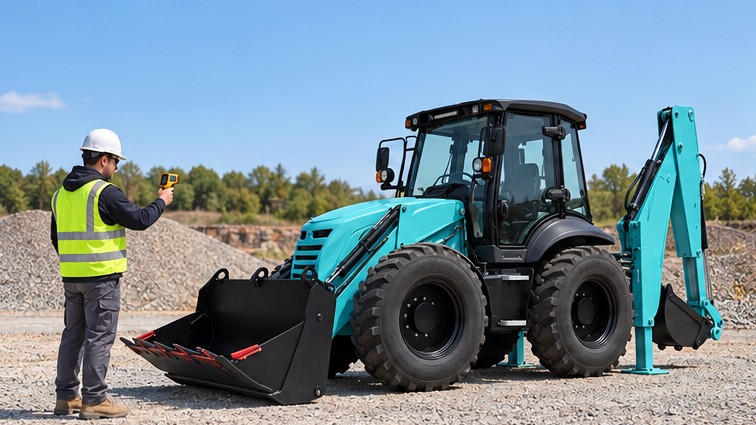
Park on firm, level ground, lower the front bucket and rear attachment, apply the parking brake, shut down and follow the manual's cool-down and isolation steps before checking fluid. Hydraulic level is read only in the position and condition specified for that model; a reservoir can show a different level when cylinders are extended or the oil is hot. Look for obvious foaming, milky appearance, burnt odor or visible contamination, but do not open a hot pressurized system. Do not add a different oil grade or mix products based on a generic online recommendation.
backhoe loader ZGLOADER / MYZG
Check the cooling path visually after shutdown. Packed dust, chaff or debris around the cooler, radiator screen or fan area can reduce heat rejection, while damaged guards or a fan-control issue may also matter. Clean only by the method permitted by the manufacturer; high-pressure water or air can bend fins, force dirt deeper or damage wiring and seals. Record whether the slowdown coincides with a rising temperature display, hot ambient conditions or unusually long simultaneous hydraulic cycles. A technician can then decide whether the cooling package, fan operation or operating procedure needs closer testing.
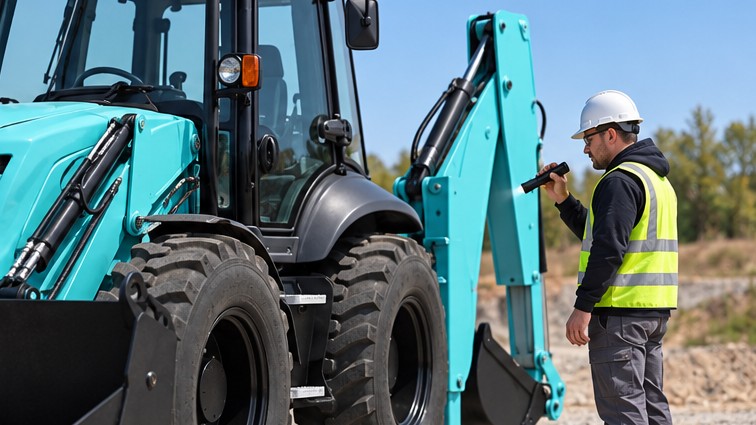
Review service history before disturbing components. Confirm the specified hydraulic oil, filter part numbers, service intervals and whether recent work introduced a leak, wrong element, loose suction connection or contamination. A restricted filter or suction-side air leak can affect flow, but replacing parts without confirming the correct specification may create another fault. Never bypass a filter, alter a relief setting or open a line to test flow. Pressure and flow checks require model-specific ports, calibrated equipment, a defined oil temperature and trained personnel following the service procedure.
backhoe loader ZGLOADER / MYZG
Practical buyer answer
Inspect visible hoses, fittings, cylinders, valve areas and the ground for fresh oil only with the machine safely parked. A pinhole hydraulic leak can inject fluid through skin; never search by hand and never tighten or disconnect a pressurized connection. Keep clear of raised arms and the rear boom unless the attachment is lowered or mechanically supported according to the manual. If a hose is damaged, a cylinder drifts unexpectedly, or the machine cannot hold a function safely, isolate it and arrange qualified service rather than continuing production.
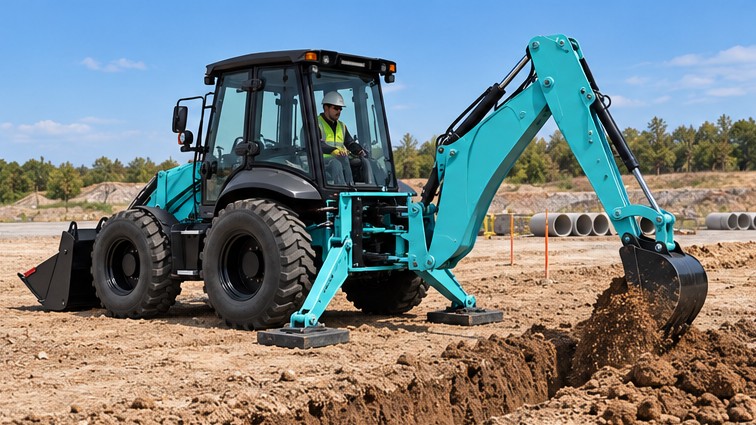
A qualified technician should compare the symptom with the machine's prescribed diagnostic sequence. Depending on the model, this may include checking oil condition and temperature, filter restriction, pump inlet conditions, engine speed, control linkage, valve operation, relief behavior and measured flow or pressure at specified test points. Results must be compared with the exact service data; there is no universal pressure or temperature threshold that applies to every backhoe loader. Component replacement should follow evidence from those checks, not a guess based on one warm-up event.
backhoe loader ZGLOADER / MYZG
Stop work and park safely if an over-temperature warning appears, the hydraulic system becomes unusually noisy, a function becomes unpredictable, a leak develops, or steering or braking behavior changes. Do not continue lifting or digging to see whether the condition clears. Keep people outside the attachment and travel zones, lower equipment where it is safe to do so, and report the warning and operating conditions. The operator should follow the machine manual and site emergency plan; repair work on pressurized hydraulics belongs to trained service personnel.
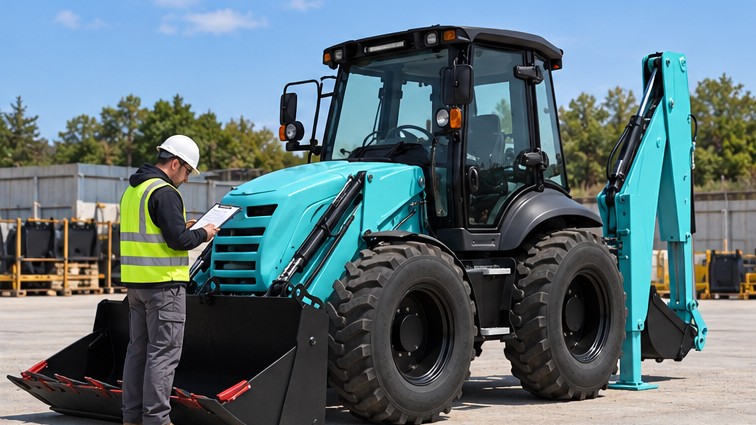
For a service review or new-machine inquiry, provide the model and serial identification, oil type and service dates, hours, temperature or warning indication, affected functions, load and attachment, ambient conditions, and a short cold-versus-warm timeline. The ZGLOADER / MYZG 388H product page can help identify the machine family, but troubleshooting limits must come from the delivered unit's manual. Shandong Zhuogong Machinery equipment Co.,Ltd can help route configuration questions. Contact WhatsApp +86 131 7691 0558 or MYZG@my-forklift.com. This buyer guide is not a claim about a specific customer incident and does not replace the manufacturer's diagnostic procedure.
Shandong Zhuogong Machinery equipment Co.,Ltd
ZGLOADER / MYZG
WhatsApp: +86 131 7691 0558
Email: MYZG@my-forklift.com
Website: https://www.my-forklift.com/
Post time:Oct.21.2026
