
The debate between electric and manual pallet stackers is a pivotal consideration for warehouse managers, logistics operators, and small business owners seeking to optimize their material handling processes. At its core, the question of which is "better" depends entirely on operational scale, frequency of use, budget constraints, and specific workflow requirements. A manual pallet stacker, powered solely by human effort via a hydraulic pump mechanism, represents the most fundamental and cost-effective entry point into mechanized lifting. It excels in environments with sporadic lifting needs, light-duty applications, or extremely tight budgets where infrastructure for charging isn't available. Conversely, an electric pallet stacker, powered by a rechargeable battery and operated via a control handle, introduces a new dimension of power-assisted efficiency, reduced operator fatigue, and enhanced productivity for medium to high-intensity tasks. The initial price tag is significantly higher, but this investment must be weighed against the total cost of ownership and the tangible returns in speed and labor savings. This analysis aims to dissect these two technologies across four critical domains: operational performance and efficiency, economic impact and total cost of ownership, ergonomics and workplace safety, and finally, suitability for specific applications and future scalability.
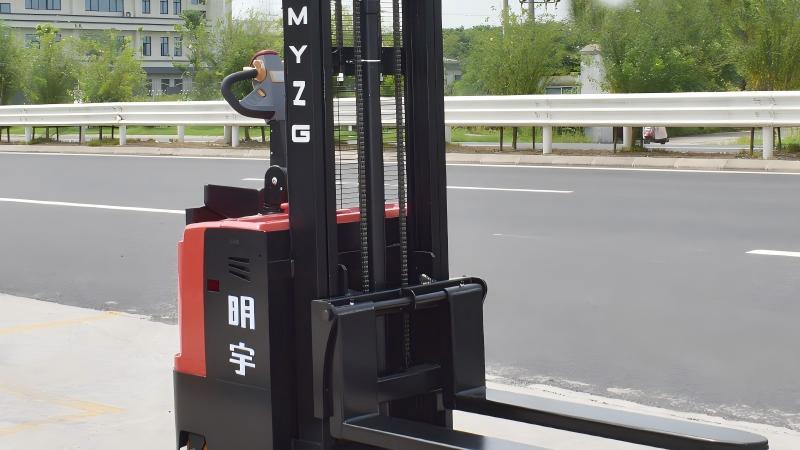
Delving into operational performance, electric pallet stackers clearly outperform their manual counterparts in tasks requiring frequent movement, higher lifting speeds, or transportation over longer distances. The electric drive system allows for smooth travel and lifting at the push of a button, enabling operators to move heavier loads with consistent speed and far less physical exertion. This translates directly into more pallets moved per hour, faster cycle times, and the ability to handle loads up to 2,000 kg or more with ease, depending on the model. Manual stackers, while capable of handling similar weights, rely entirely on the operator's strength to pump the handle for lifting and to push/pull the entire laden unit. This makes them inherently slower and more suitable for tasks involving a few lifts per hour, very short travel distances (e.g., within a single truck or a small storage area), or where silence is paramount. The electric model's advantage extends to precision, as its controlled lowering function prevents load damage, whereas manual stackers rely on a hydraulic release valve that requires careful operator control. Therefore, in an environment demanding high throughput, the electric stacker's superior performance in speed, consistency, and reduced physical demand makes it the objectively "better" tool for pure productivity.
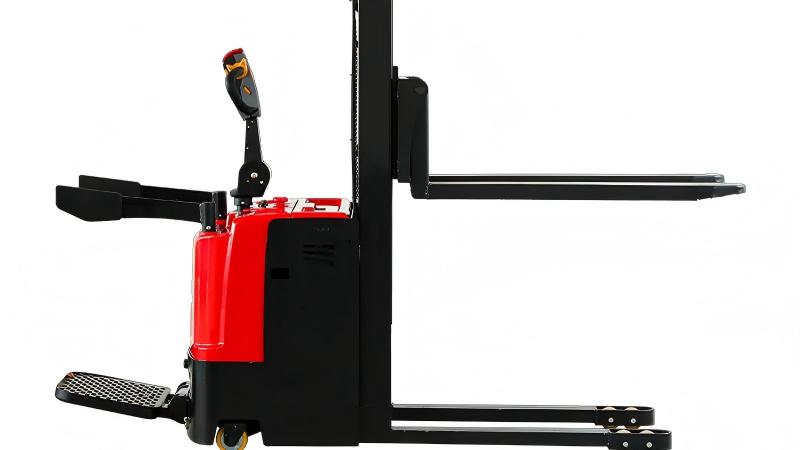
The economic comparison extends far beyond the simple purchase price. A manual pallet stacker boasts a very low acquisition cost, minimal maintenance (primarily hydraulic oil and wheel checks), and zero energy expenses, making it an attractive capital-light asset. However, the true cost must factor in labor productivity and the physical limits of human labor. Over an 8-hour shift, operator fatigue from constantly pumping and pushing a manual stacker can lead to a significant drop in afternoon productivity, increased risk of strain injuries, and potentially higher labor turnover. The electric stacker, with its higher upfront investment and additional costs for batteries, chargers, and periodic electrical maintenance, offsets these expenses through dramatic gains in output per operator and the ability to utilize a wider demographic of workers, as less physical strength is required. The Total Cost of Ownership (TCO) over 3-5 years often favors the electric stacker in moderate to high-use scenarios due to these labor efficiency gains. For a business with very low, intermittent use—perhaps just a few lifts per day—the manual stacker remains the economically sound choice, as the higher efficiency of an electric model would not be utilized enough to justify its cost.
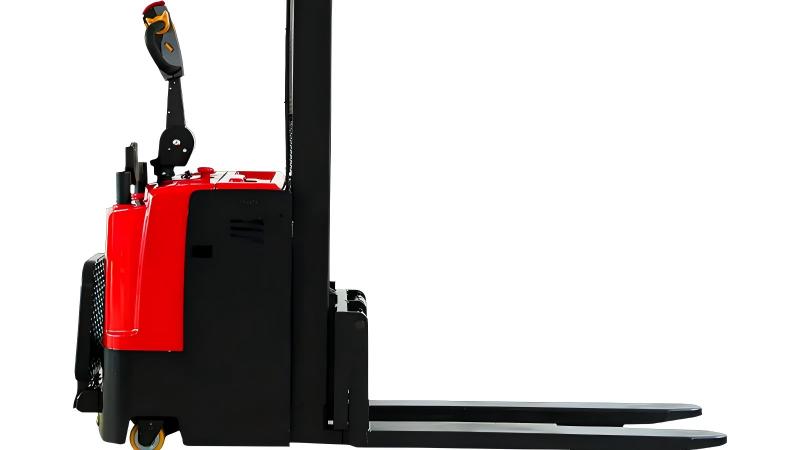
Finally, the decision matrix must incorporate ergonomics, safety, and application-specific needs. Electric pallet stackers are undeniably superior from an ergonomic standpoint. They eliminate the repetitive strain of pumping and reduce the force needed to maneuver, directly addressing musculoskeletal disorder risks—a leading cause of workplace injury. Features like powered travel, often with multiple speed settings, and intuitive controls significantly enhance operator comfort and control, especially on inclines or uneven floors. Manual stackers, while simple, place a higher physical burden on the operator, which can be a liability in terms of health, safety compliance, and worker satisfaction. In terms of application, manual stackers are ideal for quiet environments (like libraries or retail stockrooms), ultra-clean spaces where battery emissions are a concern (though modern electrics are emission-free on-site), or operations with absolutely no electrical infrastructure. Electric stackers are the definitive choice for high-bay storage, frequent loading/unloading of trucks, assembly line feeding, and any operation aligned with Industry 4.0 principles, as they can be integrated into more automated workflows. In conclusion, while the manual pallet stacker wins on initial cost and simplicity for very light duties, the electric pallet stacker is generally the "better," more productive, and more sustainable choice for modern, efficiency-driven logistics and warehouse operations, offering a compelling return on investment through enhanced performance, improved worker well-being, and operational scalability.
Post time:Dec.22.2025
