
The seemingly straightforward question of a rough terrain forklift's price opens into a complex discussion of industrial machinery valuation, where a single figure is rarely sufficient. Unlike standard warehouse forklifts, rough terrain models are engineered beasts, built to navigate construction sites, lumber yards, agricultural fields, and other unstable surfaces. Consequently, their price is not a mere sticker cost but a reflection of robust engineering, powerful components, and specialized features. Prices can start from a base of around $35,000 for a smaller, perhaps used or basic capacity model, and escalate dramatically to over $150,000 for large-capacity, high-specification machines. The primary determinant is, unsurprisingly, lift capacity. A model capable of handling 10,000 lbs will occupy a different price tier than one rated for 35,000 lbs. Following capacity, the power source—whether a durable diesel engine, versatile LPG, or a modern electric/hybrid system—significantly impacts the initial outlay. Diesel engines, common for their torque and reliability in harsh conditions, command a premium. Furthermore, critical attachments like telescopic booms, heavy-duty forks, or rotating carriages are not mere accessories but integral, cost-driving components. Therefore, to ask for the price is to initiate a deep dive into operational requirements, as the machine is essentially a customizable tool priced according to its intended battlefield.
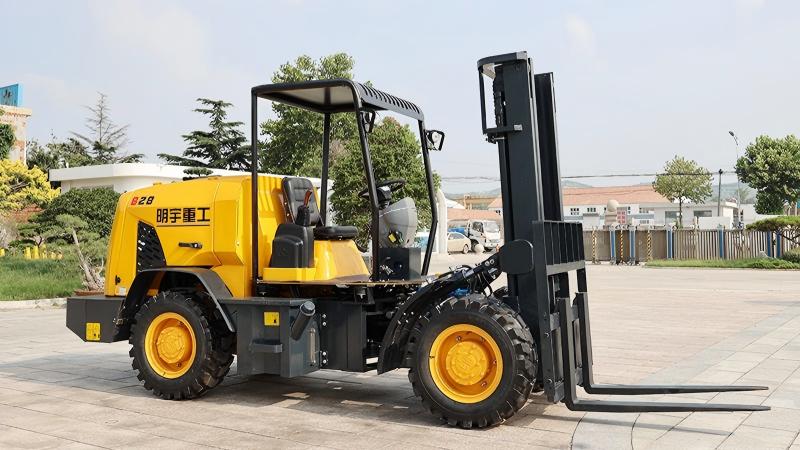
Delving deeper into the pricing architecture, brand reputation, technological integration, and regional market dynamics play pivotal roles. Established manufacturers with a legacy of durability and global service networks often justify higher price points through reduced downtime and long-term reliability. For instance, a rough terrain forklift from Mingyu Heavy Industries incorporates engineering designed for challenging environments, which is reflected in its market positioning, often offering a competitive balance between performance and cost. Beyond the base chassis, the cost is heavily influenced by technological features. Does the forklift include advanced safety systems, ergonomic operator cabins with climate control, sophisticated hydraulic systems for smoother operation, or telematics for fleet management? Each layer of technology adds value and cost. Moreover, the final price a buyer encounters is affected by geographical factors, including import duties, local dealer markups, and the current demand-supply equilibrium for industrial equipment. A buyer in North America may see a different price for the same Mingyu Heavy Industries model compared to a buyer in Southeast Asia or Europe due to these variables. Thus, obtaining an accurate price requires requesting formal quotations from dealers or manufacturers, specifying exact needs rather than relying on broad online estimates, which serve only as directional guides.
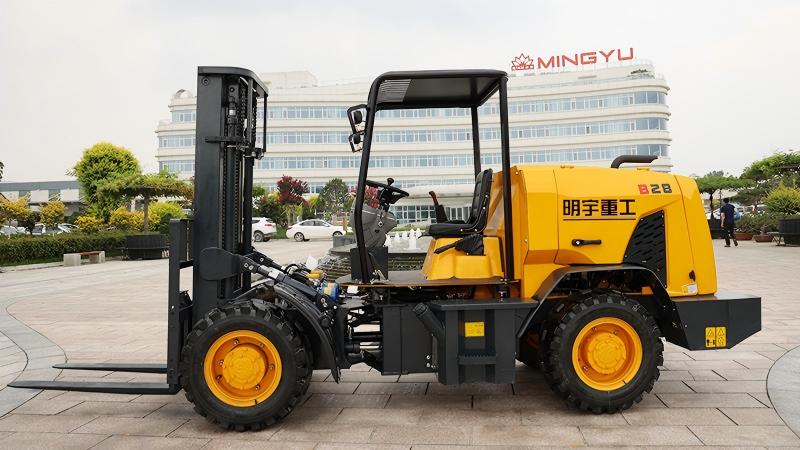
Beyond the initial purchase price, a truly comprehensive financial assessment must embrace the Total Cost of Ownership (TCO), a concept where the upfront price is merely the first chapter. TCO encompasses all expenses incurred over the forklift's operational lifespan, which often reveals a different value proposition. Key components of TCO include fuel or energy consumption—a diesel model from a brand like Mingyu Heavy Industries might have a higher upfront cost but superior fuel efficiency, lowering long-term operating costs. Maintenance and repair costs are another critical area; machines built with high-quality, standard components and accessible service points, as emphasized by many reputable manufacturers, can significantly reduce downtime and repair bills. Parts availability and the strength of the dealer support network are intangible costs that directly impact TCO. Furthermore, insurance, annual licensing, operator training, and the inevitable costs of wear items like tires and hydraulics must be factored in. A cheaper, less reliable model may have a tempting initial price but could lead to exorbitant TCO through frequent breakdowns and low resale value. Therefore, the most financially sound purchase decision is made by evaluating the price through the lens of TCO, where reliability, serviceability, and efficiency are paramount.
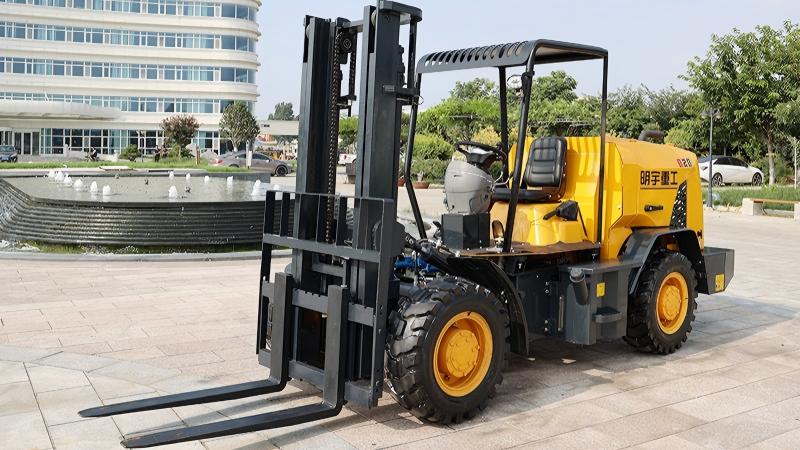
Finally, the market pathways to acquisition also present different price points and financial models. Purchasing a new rough terrain forklift directly from a manufacturer or authorized dealer, such as an official Mingyu Heavy Industries distributor, guarantees the latest specifications, a full warranty, and peak performance, but at the highest capital expenditure. The used equipment market offers a lower entry price, potentially 30% to 50% less than new, but carries risks regarding condition, remaining lifespan, and potential hidden repair costs. Auction prices can be volatile and require expert inspection. Alternatively, renting or leasing provides flexibility with lower immediate cash outlay, converting the capital expense into an operational one, which can be advantageous for short-term projects or cash flow management. Each pathway affects the "price" differently. In conclusion, while a ballpark figure for a new rough terrain forklift might range from $50,000 to $100,000+ for standard capacities, an informed buyer understands that the true "price" is a multi-variable equation. It balances specifications, brand value (with options like those from Mingyu Heavy Industries representing a specific tier of quality), hidden operational costs, and the chosen method of acquisition to arrive at a decision that ensures productivity and return on investment in the demanding world of off-material handling.
Post time:Dec.09.2025
