
What is the difference between a standard forklift and a rough terrain forklift?
1. Introduction
Forklifts are essential material-handling machines used across logistics, construction, agriculture, manufacturing, and many other industries. As global supply chains expand and outdoor construction activity increases, the demand for different types of forklifts has become more specialized. In 2026, buyers are no longer just choosing a forklift based on price or brand—they are selecting machines based on working environment, terrain conditions, load requirements, and long-term operating efficiency.
The two most commonly compared types are standard forklifts and rough terrain forklifts. While both are designed to lift and transport heavy loads, they are engineered for very different environments. A standard forklift is optimized for smooth indoor surfaces such as warehouses and factories. In contrast, a rough terrain forklift is built to operate outdoors on uneven, muddy, or unstable ground such as construction sites and farms.
Understanding the difference between these two machines is critical for safety, productivity, and cost control. Choosing the wrong type can lead to reduced efficiency, higher maintenance costs, and even safety risks. This article provides a detailed comparison of standard and rough terrain forklifts, covering design, performance, applications, advantages, and how to choose the right one for your operation.
2. What Is a Standard Forklift?
A standard forklift is a material-handling vehicle designed primarily for indoor or smooth-surface operations. It is widely used in warehouses, distribution centers, factories, and shipping docks where flooring is flat and controlled.
Key features of standard forklifts:
Compact design for narrow aisles
Cushion or pneumatic tires (depending on model)
Electric, LPG, or diesel power options
Vertical mast for lifting and stacking
Lower ground clearance
Tight turning radius for indoor maneuverability
Advantages:
High efficiency in indoor environments
Lower fuel or energy consumption (especially electric models)
Easier maintenance and lower operating costs
Excellent precision for pallet handling
Standard forklifts are ideal for repetitive lifting tasks in structured environments where terrain is predictable.
3. What Is a Rough Terrain Forklift?
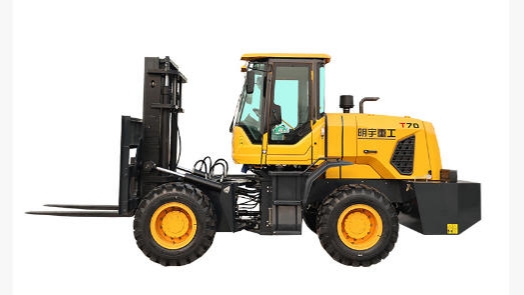
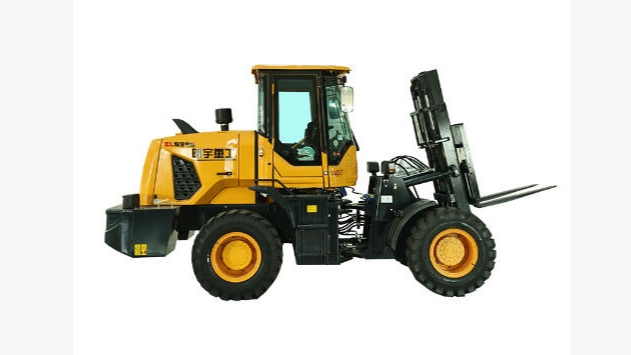
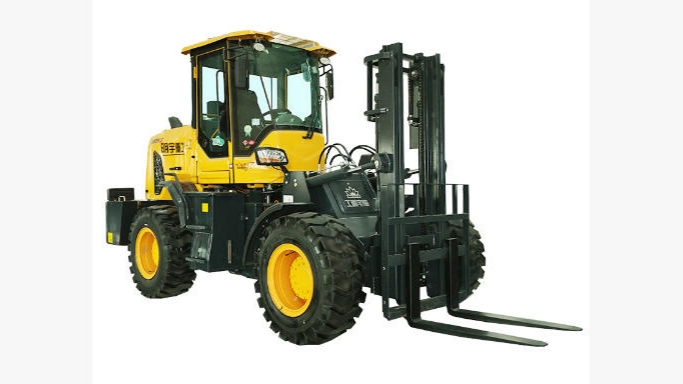
A rough terrain forklift is designed specifically for outdoor environments where ground conditions are uneven, unstable, or unpaved. These machines are commonly used in construction, agriculture, mining, and forestry.
Key features of rough terrain forklifts:
Large, heavy-duty pneumatic tires with deep tread
High ground clearance for obstacles
Four-wheel drive (4WD) systems
Strong diesel engines with high torque
Reinforced chassis and suspension
Improved stability on slopes and rough surfaces
There are also two main types:
Vertical mast rough terrain forklifts
Telehandler-style forklifts (telescopic boom forklifts)
Advantages:
Excellent performance on mud, gravel, sand, and slopes
High load stability in outdoor environments
Strong lifting capability for heavy materials
Versatility across multiple job sites
4. Key Differences Between Standard and Rough Terrain Forklifts
4.1 Working Environment
Standard forklifts are designed for indoor use on smooth, flat floors. Rough terrain forklifts are built for outdoor use where surfaces are uneven, unpaved, or unstable.
4.2 Tire Design and Traction
Standard forklifts use cushion or small pneumatic tires optimized for flat surfaces. Rough terrain forklifts use large, deep-tread tires designed for maximum grip on dirt, mud, and gravel.
4.3 Power and Engine Type
Standard forklifts often use electric or LPG systems for clean indoor operation. Rough terrain forklifts rely mainly on powerful diesel engines to generate high torque for difficult terrain conditions.
4.4 Lift Capacity and Height
Standard forklifts focus on precise lifting and stacking in confined spaces. Rough terrain forklifts typically handle heavier loads and can lift materials in unstable outdoor environments.
4.5 Stability and Frame Design
Standard forklifts have a lighter frame optimized for balance on flat ground. Rough terrain forklifts feature reinforced frames and wider wheelbases to improve stability on slopes and uneven surfaces.
4.6 Maneuverability
Standard forklifts offer tight turning radius, making them ideal for narrow warehouse aisles. Rough terrain forklifts are larger and less agile but more stable on rough ground.
4.7 Cost Differences
Standard forklifts are generally more affordable and cheaper to operate. Rough terrain forklifts cost more due to stronger engines, reinforced structures, and specialized components.
5. Advantages of Standard Forklifts
Ideal for indoor logistics operations
Lower emissions (especially electric models)
High precision in pallet handling
Lower maintenance requirements
Easier operator training
6. Advantages of Rough Terrain Forklifts
Ability to operate on unstable and uneven ground
High durability in harsh environments
Better performance in construction and agriculture
Strong lifting capacity for heavy outdoor materials
7. Limitations of Each Type
Standard Forklift Limitations:
Not suitable for rough or outdoor terrain
Limited ground clearance
Reduced performance on slopes or gravel
Rough Terrain Forklift Limitations:
Higher fuel consumption
Larger size limits indoor use
Higher purchase and maintenance costs
8. Applications and Industry Use Cases
Standard Forklifts:
Warehousing and logistics
Retail distribution centers
Manufacturing facilities
Shipping and loading docks
Rough Terrain Forklifts:
Construction sites
Agricultural farms
Timber and forestry operations
Mining and oil industry sites
9. Safety Considerations
Risk of tipping increases on uneven terrain for standard forklifts
Rough terrain forklifts require careful load balance on slopes
Visibility challenges in outdoor environments
Operator training is essential for both types
10. How to Choose the Right Forklift
Key factors include:
Work environment (indoor vs outdoor)
Ground conditions (smooth or rough terrain)
Load weight and lifting height requirements
Fuel type preference (electric, LPG, diesel)
Budget and long-term operating costs
11. Market Trends in 2026
Growing demand for electric standard forklifts in warehouses
Increasing use of telehandler-style rough terrain forklifts
Integration of smart sensors and safety systems
Rising automation and semi-autonomous forklift technology
12. Conclusion
Standard forklifts and rough terrain forklifts are designed for completely different working conditions. Standard forklifts excel in indoor environments with smooth floors, offering efficiency, precision, and lower operating costs. Rough terrain forklifts are built for outdoor, demanding environments where stability, power, and durability are essential.
Choosing the right forklift depends on understanding your working environment and operational needs. In 2026, with increasing specialization in material-handling equipment, selecting the correct machine type is more important than ever for safety, productivity, and cost efficiency.
Post time:May.12.2026
