
What does “free lift” (free lift height) mean on a forklift mast?
The term “free lift” is a fundamental concept in the design and operation of a forklift mast. It refers to the height that the forks or carriage can be raised without the outer mast section extending upward. In other words, during the free lift phase, the carriage moves up inside the inner rails of the mast while the external structure remains at the same height. This feature is especially important in environments with limited overhead clearance, such as inside containers, trucks, trailers, or warehouses with low ceilings. Understanding the meaning of free lift helps both operators and logistics managers select the appropriate mast type for their operations, preventing structural damage, improving safety, and increasing material handling efficiency. Although many users focus only on the maximum lift height, free lift is an equally important parameter when working in confined spaces.
To better understand free lift, it is first necessary to understand what a forklift mast is and how it works. The mast is the vertical assembly of rails, hydraulic cylinders, chains, and rollers that allows the load to be raised and lowered. It is typically composed of one fixed section and one or more moving sections. When the operator activates the hydraulic system, the cylinders push the moving sections upward and, through chains, raise the fork carriage. In a mast without free lift, the carriage and the outer mast rise at the same time. In contrast, in a mast with free lift, the carriage rises first within the inner rails without changing the overall height of the mast. This design allows loads to be placed or removed at low levels without increasing the total mast height, which is critical when there are overhead obstacles such as ceilings, doors, or steel structures.
The technical definition of free lift is the vertical distance the forks can be raised before the mast begins to extend. For example, if a forklift has a maximum lift height of 4.8 meters and a free lift of 1.5 meters, this means the forks can be raised 1.5 meters without the outer mast changing height. This movement is achieved by means of an additional central cylinder and a chain system that prioritizes carriage movement over mast extension. In practice, the operator perceives that the forks rise smoothly while the top of the mast remains stationary. This is especially useful when a load needs to be lifted slightly to position it on a low rack or to clear it from the ground without risking contact with the ceiling.
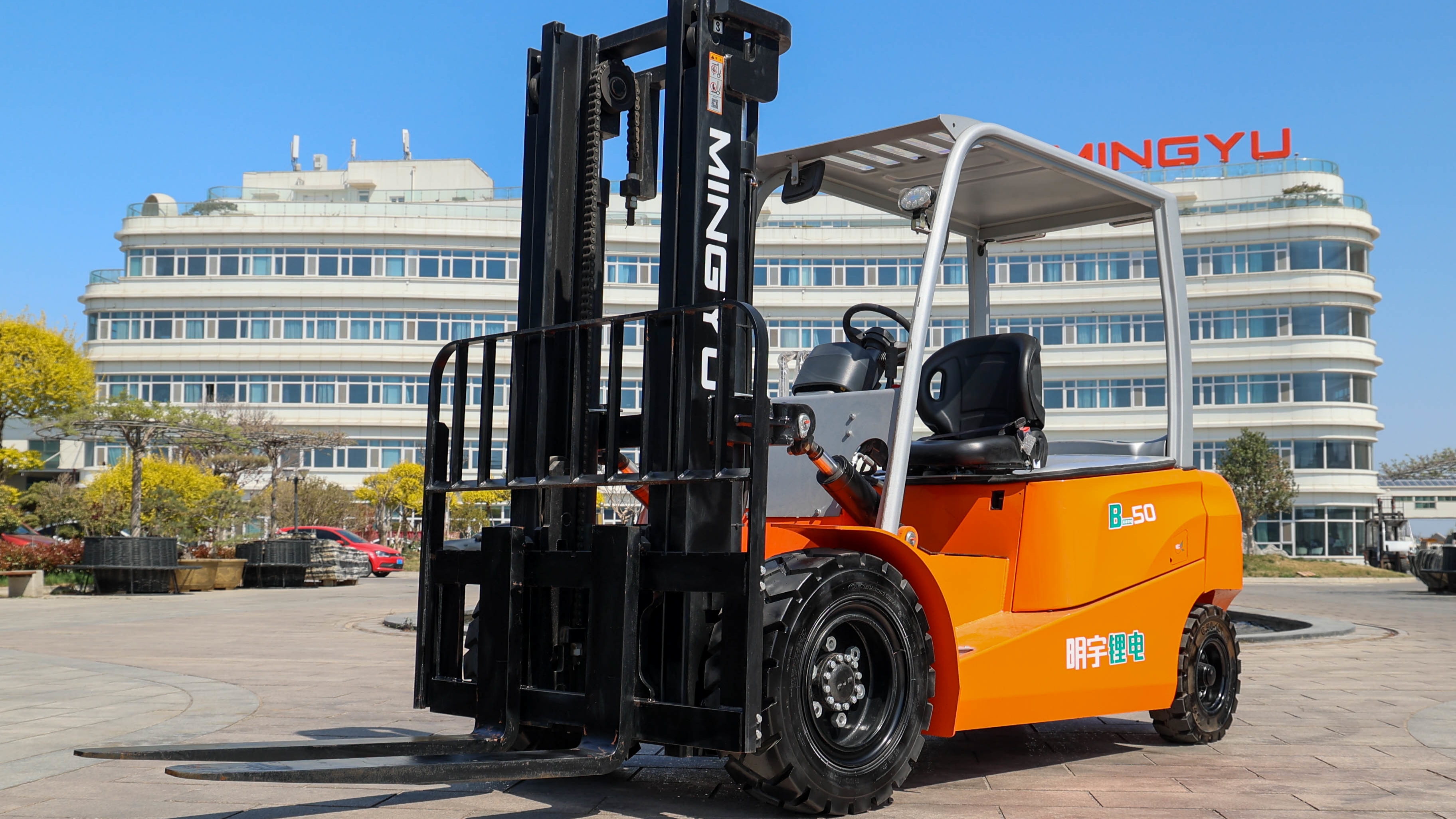
There are different types of masts, and each offers different levels of free lift. A duplex (two-stage) mast may have limited or no free lift if it is a standard design, although some models include partial free lift. A triplex (three-stage) mast is the most common option when full free lift is required, as it allows significant carriage travel without increasing the overall mast height. There are also quad masts for special applications with extreme lift heights. The difference between a standard mast and a full free lift mast lies in the fact that the latter allows the forks to be raised almost to the first mast stage before the mast itself extends. Choosing the correct type depends on the combination of ceiling height, rack height, and the nature of the loads being handled.
The importance of free lift is clearly seen in operations inside trucks and containers. In these spaces, the roof height is usually less than three meters, which limits the use of masts that extend quickly. Without free lift, the operator could strike the vehicle roof even when lifting the load slightly, causing damage to both the equipment and the structure. A similar situation occurs in low-ceiling warehouses, especially in receiving and shipping areas. In addition, free lift improves operator visibility because the mast does not immediately rise into the operator’s field of view. This increases safety, reduces the risk of collisions, and allows more precise maneuvering in tight spaces.
Identifying and measuring free lift is relatively simple by consulting the forklift data plate or the manufacturer’s specifications. These documents indicate three key values: collapsed mast height, maximum lift height, and free lift height. The difference between the collapsed height and the height during free lift is minimal, since the mast does not extend; what changes is the position of the carriage. Typically, free lift values range from a few hundred millimeters on small models to more than 1.5 meters on forklifts designed for indoor use. Understanding these numbers allows operations to be planned safely, ensuring that the forklift can work within the available height limits without compromising stability or structural integrity.
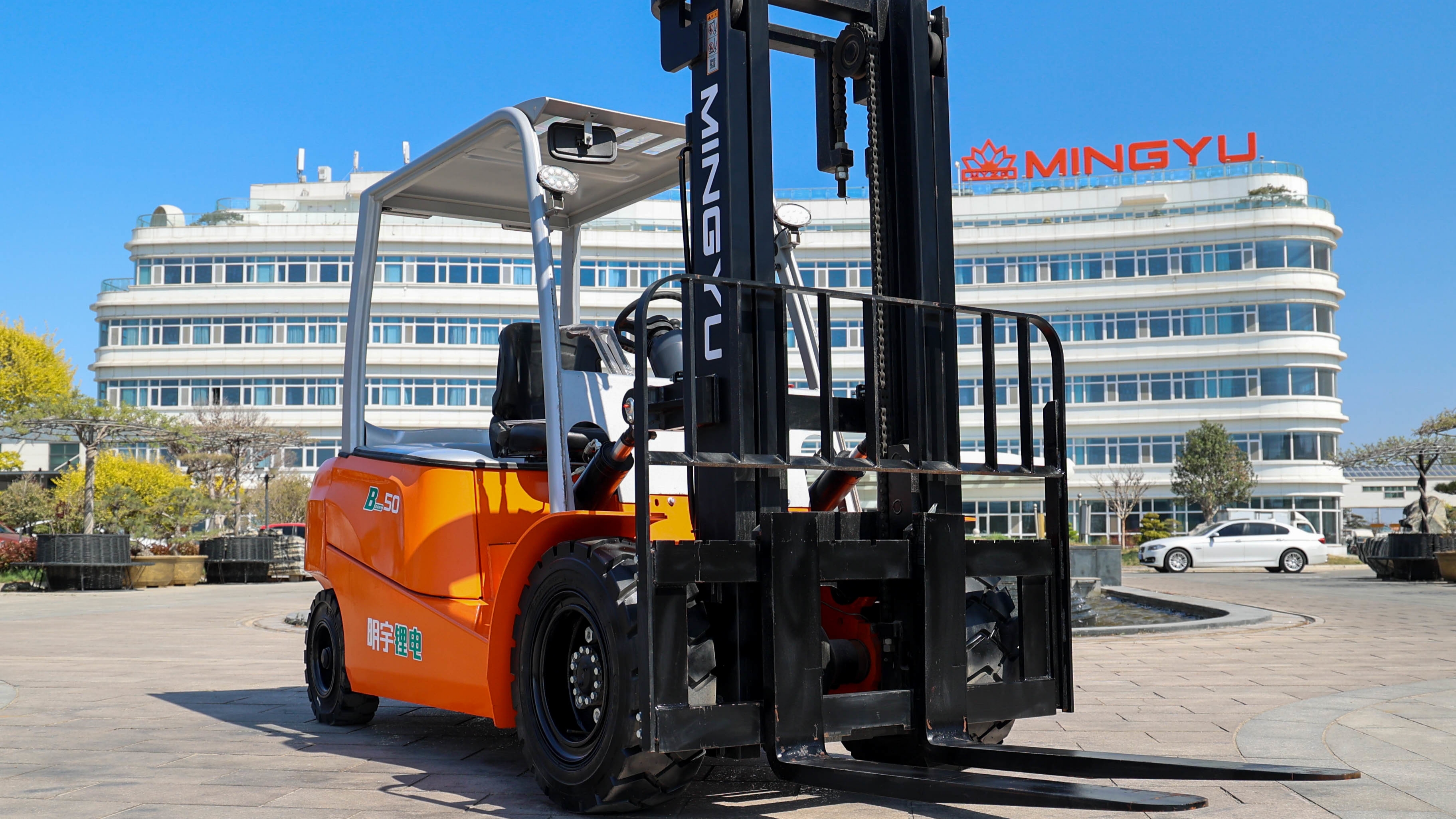
Among the main advantages of free lift are operational flexibility, increased safety, and reduced risk of damage. It allows loads to be lifted in height-restricted areas, facilitates precise positioning on low racks, and decreases the likelihood of collisions with beams, doors, or lighting systems. However, there are also some technical trade-offs. Masts with free lift are usually more complex and therefore slightly more expensive. They also require greater attention to maintenance of chains, rollers, and additional cylinders. In some cases, mast weight may be higher, which can marginally affect residual load capacity. Even so, for most indoor applications, the benefits far outweigh these limitations.
From a safety perspective, free lift requires proper operator training. Although it reduces overhead impact risks, it does not eliminate the need to monitor the environment. The operator must be aware of the available height, load stability, and the dynamic behavior of the mast during lifting. Regular inspections of the chain and cylinder systems are also essential, since failure of these components can cause sudden drops or irregular movements. It is also a common mistake to confuse free lift height with total mast height, which can lead to selecting equipment that is unsuitable for a specific warehouse. Incorrect interpretation of technical specifications is one of the main causes of compatibility problems between forklifts and workspaces.
In conclusion, free lift is an essential feature of a forklift mast that defines how high the forks can rise without the outer mast extending. This function is indispensable in low-ceiling operations, inside trucks and containers, and in areas where precision and safety are priorities. Understanding the difference between total lift height and free lift, as well as between different mast types, allows better decisions when purchasing or operating a forklift. As technology evolves, mast designs are becoming more compact, lighter, and safer, incorporating improved hydraulic systems and better operator visibility. Therefore, knowing what “free lift” really means is not just a technical issue, but a practical tool for improving productivity and reducing risks in daily material handling.
Post time:Mar.02.2026
