
The European Union's construction and mining sectors are standing at a pivotal crossroads, driven by the relentless march of the Green Deal and escalating carbon emission targets. The humble wheel loader, a ubiquitous workhorse on job sites from Berlin to Barcelona, has become an unexpected protagonist in this sustainability narrative. The fundamental choice between its traditional diesel-powered heart and an emerging, electrically driven alternative is no longer a speculative exercise but a pressing operational and strategic decision. Diesel loaders, with their deeply entrenched legacy, offer a compelling case of raw power, logistical simplicity, and a well-understood total cost of ownership. Their robust internal combustion engines deliver high power output and torque, essential for the most demanding tasks like heavy excavation and high-volume material handling. The existing infrastructure is tailor-made for them; refueling is a matter of minutes, and a dense network of service technicians and parts suppliers ensures minimal downtime. This operational familiarity, combined with a typically lower initial capital expenditure, makes diesel a seemingly safe and reliable bet for many fleet managers, particularly for smaller enterprises or those operating in remote locations where energy access is a challenge. However, this proven capability comes with a significant and growing list of liabilities. The most prominent is their environmental impact, emitting not only CO2 but also nitrogen oxides (NOx) and particulate matter (PM), directly contravening the EU's stringent Stage V emissions standards and exposing companies to potential carbon taxes and reputational damage. Furthermore, the volatile and often rising cost of diesel fuel injects a high degree of financial uncertainty into long-term planning, while noise pollution restrictions can limit their operational hours in urban or noise-sensitive environments.
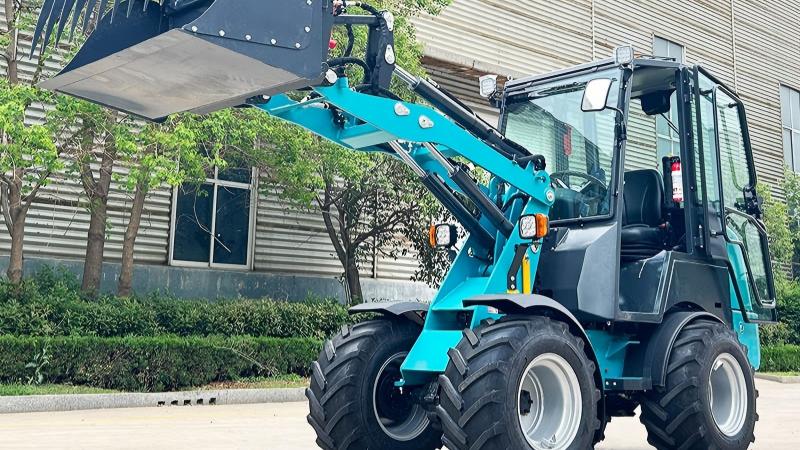
In stark contrast, electric wheel loaders represent the vanguard of zero-emission machinery, promising a cleaner, quieter, and potentially more economical future. Their most lauded advantage is their direct contribution to corporate Environmental, Social, and Governance (ESG) goals, completely eliminating tailpipe emissions on-site. This not only helps companies comply with current and anticipated EU regulations but also allows them to bid for "green" contracts and enhance their public image. From an operational cost perspective, the mathematics is increasingly persuasive. Electricity, especially from a company's own solar installations or during off-peak hours, is significantly cheaper and more price-stable than diesel per unit of work performed. The drivetrain of an electric loader, with vastly fewer moving parts—no engine oil, filters, complex transmissions, or exhaust after-treatment systems—translates to dramatically reduced maintenance requirements. This means fewer fluid changes, fewer component failures, and substantially lower scheduled maintenance costs, leading to higher machine availability and productivity over the asset's lifetime. The reduction in noise is not merely an environmental benefit; it enables 24/7 operation in residential areas, inside warehouses, or on sensitive sites like hospitals and schools without causing a disturbance. However, the electric revolution is not without its formidable hurdles, primarily centered on the initial investment and energy logistics. The purchase price of an electric wheel loader can be double that of its diesel counterpart, a significant capital outlay despite potential government subsidies. The heart of the machine, its battery pack, represents a substantial portion of this cost and brings with it concerns about longevity, degradation over time, and eventual replacement expenses.
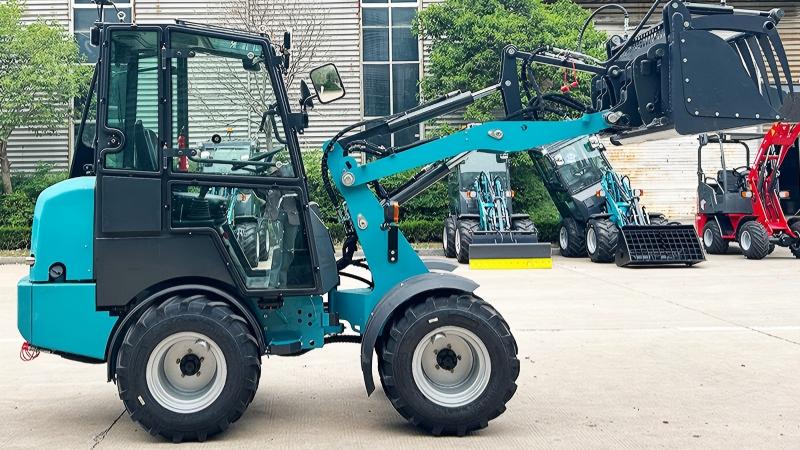
The economic comparison, therefore, shifts from upfront price to a more holistic Total Cost of Ownership (TCO) analysis, a calculation heavily influenced by the specific operational context within the EU. For a diesel loader, the TCO is dominated by fluctuating diesel fuel costs, which can constitute up to 40-50% of the lifetime expense, alongside recurring outlays for AdBlue, engine oil, filters, and more frequent, labor-intensive maintenance schedules. The electric loader's TCO profile is inverted. It is characterized by a high initial capital outlay but is then offset by remarkably low "refueling" costs (electricity) and minimal maintenance. For high-utilization applications—such as a multi-shift operation in a quarry or a busy waste management facility—the savings on energy and maintenance can allow the electric loader to reach TCO parity with diesel within a few years, after which it becomes significantly cheaper to operate. The business case is further strengthened by national and EU-level subsidies for zero-emission vehicle purchases and potential carbon credit mechanisms. However, this favorable TCO is contingent on robust operational planning. The limitations of current battery technology manifest in operational range and charging times. While rapid charging systems are evolving, a full charge can still take hours compared to a 15-minute diesel refill, necessitating meticulous job site scheduling, potential investment in opportunity charging during breaks, or the procurement of additional machines or swappable battery systems to maintain continuous productivity, all of which add layers of complexity and cost.
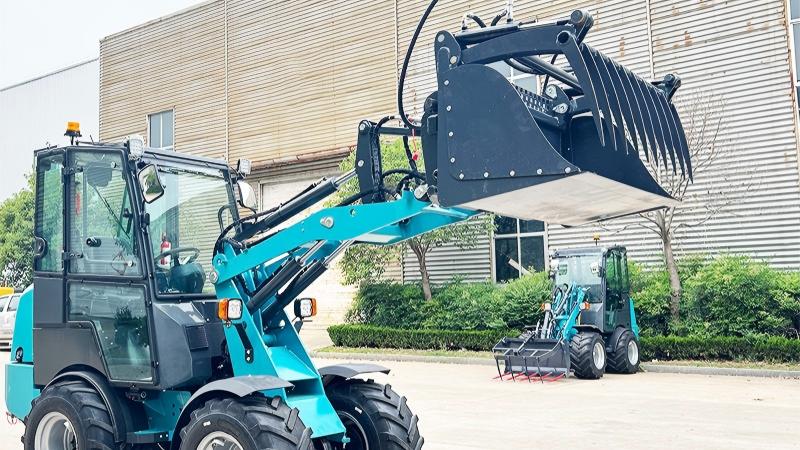
Ultimately, the decision between electric and diesel in the EU is not a simple binary choice but a strategic alignment with a company's specific operational profile, financial capacity, and sustainability commitments. Diesel wheel loaders currently retain the upper hand in applications demanding extreme power, maximum operational flexibility in remote or infrastructure-poor areas, and where the capital budget is the primary constraint. Their proven technology and ubiquitous support network provide a safety net that is hard to ignore. Conversely, electric wheel loaders are unequivocally the future and are already the present-day optimal solution for companies with high-usage cycles, fixed-site operations like ports and recycling centers, and those operating within strict urban emission and noise zones. As EU policy continues to tighten the noose on emissions through mechanisms like the Emissions Trading Scheme (ETS) and potential bans on fossil fuel machinery in cities, and as battery technology advances to offer longer range and faster charging, the economic and operational scales will tip irrevocably in favor of electric. For forward-thinking businesses in the European market, the transition to an electric fleet is no longer just an environmental statement but a calculated investment in long-term resilience, cost-control, and competitive advantage in an increasingly carbon-conscious economy.
Post time:Nov.12.2025
