
What are the common safety features on rough terrain forklifts?
Rough terrain forklifts are designed to operate under much more demanding conditions than conventional warehouse forklifts. They work on uneven, loose, or sloped surfaces such as construction sites, agricultural fields, quarries, and unpaved port areas. These conditions significantly increase the risk of rollovers, collisions, load loss, and mechanical failures. For this reason, manufacturers integrate a wide range of safety functions aimed at protecting the operator, nearby workers, and the machine itself. Understanding these features is essential for choosing the right model, properly training operators, and establishing safer work procedures. In environments where terrain is unstable and weather conditions change frequently, safety is not an optional add-on but a structural component of machine design.
One of the most important areas of safety is direct operator protection. Rough terrain forklifts usually incorporate rollover protection structures (ROPS) and falling object protection structures (FOPS), forming a strong protective cage around the operator’s position. These structures are designed to absorb impacts and prevent the operator from being crushed in the event of a rollover or falling materials from above. In addition, many units feature enclosed or semi-enclosed cabs that protect against dust, rain, wind, and sunlight, improving both comfort and concentration. Seat belts and restraint systems are equally essential, as they keep the operator within the protected zone during sudden movements. Suspension or adjustable seats reduce fatigue and help maintain machine control over long or uneven travel paths, which also contributes to preventing human error.
Stability is one of the greatest challenges for rough terrain forklifts, so many of their safety functions focus on reducing rollover risk. These machines usually have a wide wheelbase and a low center of gravity, which improves basic stability. The oscillating rear axle allows the wheels to maintain ground contact even on uneven terrain, preventing the machine from losing support at one corner. Some models include electronic stability control systems that monitor tilt, speed, and load weight and automatically intervene by reducing speed or limiting mast movement when a risky situation is detected. Load moment indicators may also be installed to warn the operator when approaching safe limits, helping them make safer decisions when handling heavy materials.
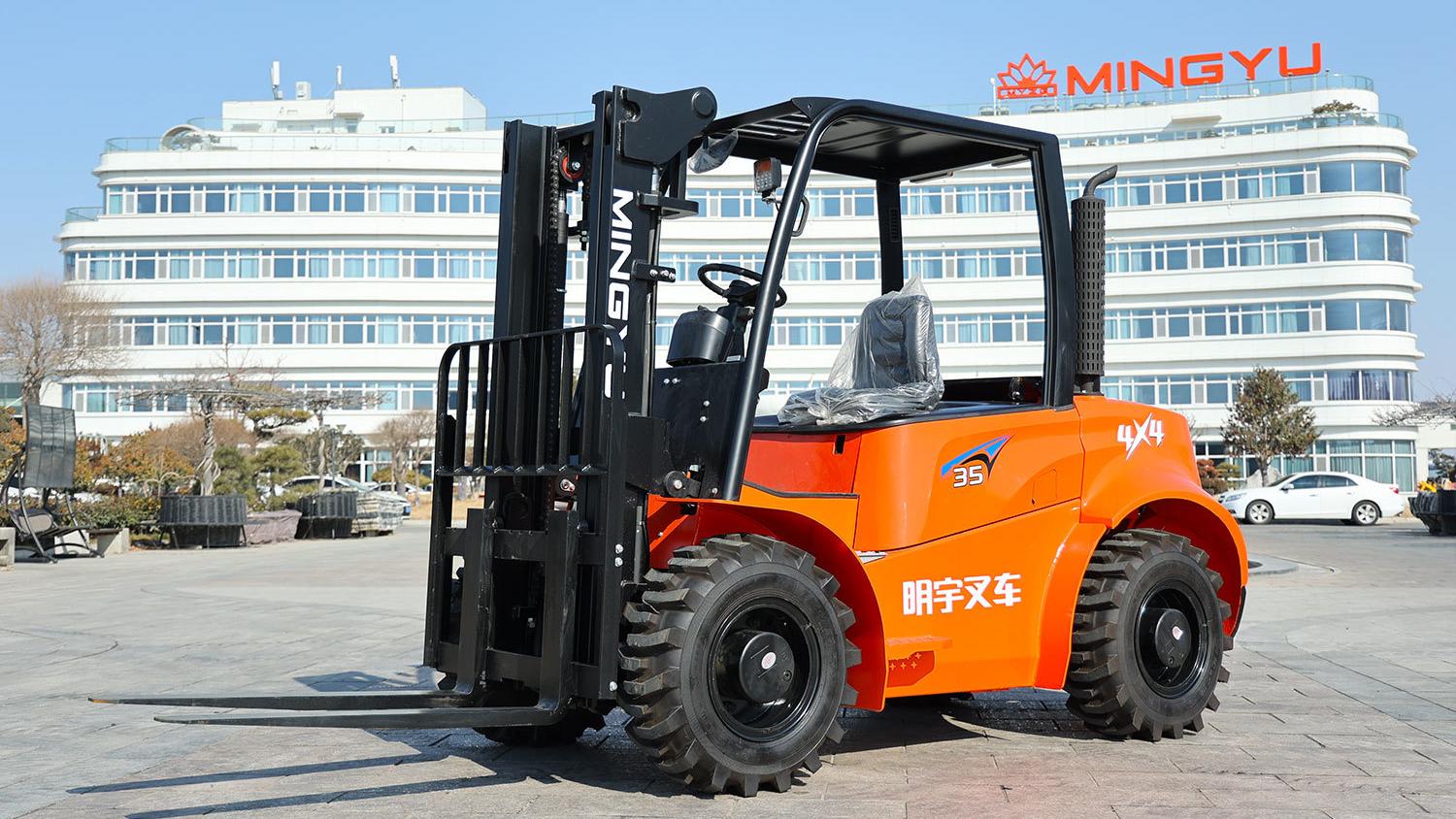
Braking and traction systems are another pillar of safety on rough terrain forklifts. Four-wheel drive is common on these machines because it improves grip on soft, muddy, or loose gravel surfaces. Differential lock distributes power evenly between wheels when one loses traction, preventing sudden slipping. Service brakes are typically heavy-duty and designed to stop the machine even when fully loaded on slopes. The parking brake ensures that the forklift does not move unintentionally when stopped. On inclined terrain, some machines are equipped with hill-hold systems that prevent rollback when the brake pedal is released, reducing the risk of collisions or rollovers during uphill starts.
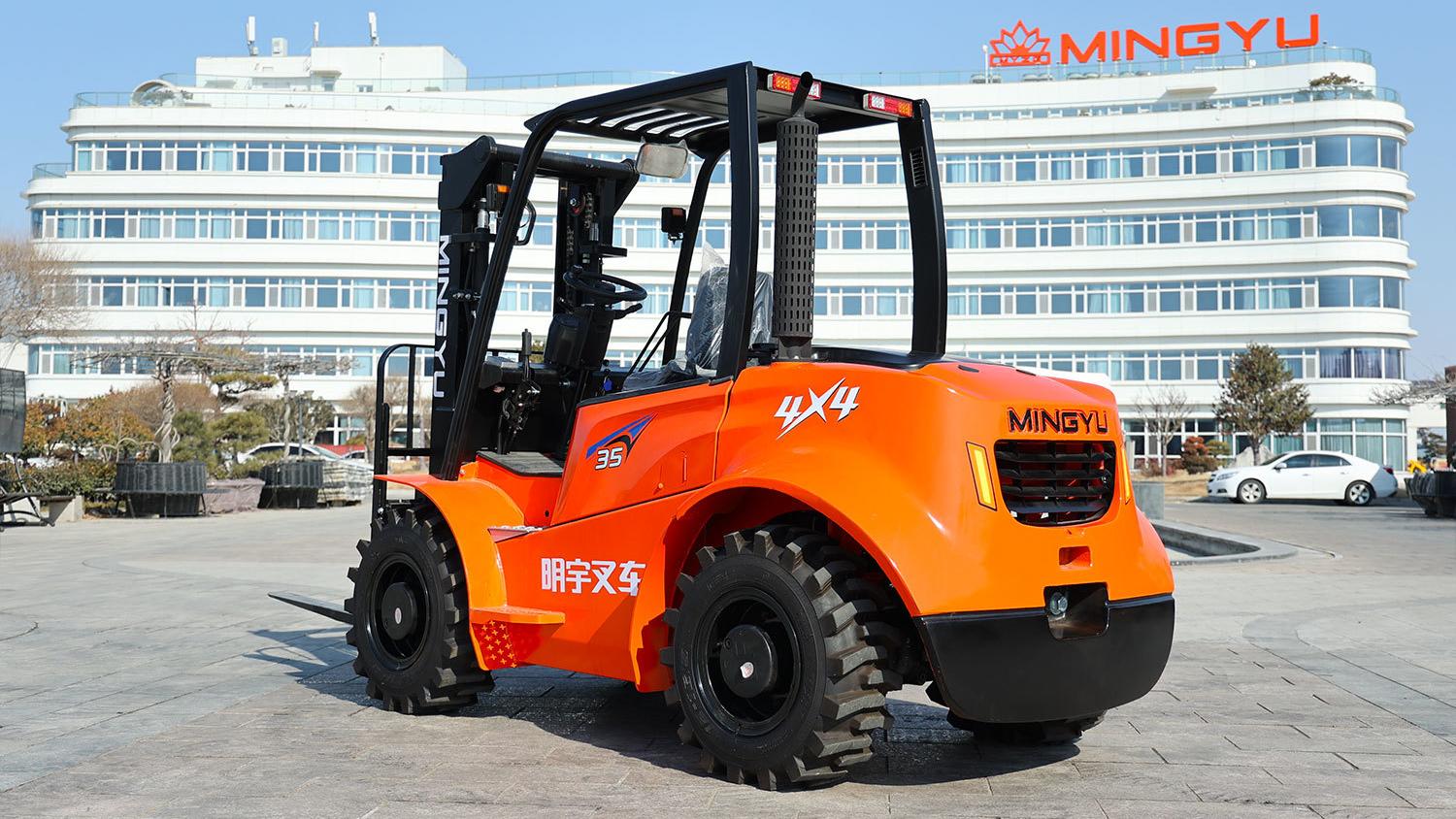
Visibility and warning systems are essential for accident prevention in environments where people, vehicles, and obstacles coexist. Rough terrain forklifts often have an elevated driving position that allows the operator to see the terrain and load more clearly. For low-light conditions or large outdoor areas, LED work lights, headlights, and rear lights are installed. Rearview mirrors and backup cameras help eliminate blind spots, especially when driving in reverse. Audible alarms such as horns and reverse alarms warn nearby workers of the machine’s presence. In addition, many forklifts use flashing beacons or warning lights to indicate that they are operating, increasing situational awareness on construction sites or outdoor yards.
Load handling safety depends on both mechanical design and the hydraulic system. Components such as load backrests prevent materials from shifting backward and striking the operator. Fork locking systems ensure that the forks remain properly positioned during operation. At the hydraulic level, hose burst protection valves prevent sudden load drops in case of a hose failure or leak. Smooth lift and tilt controls reduce abrupt movements that could destabilize the machine or displace the load. In some models, hydraulic overload protection automatically limits lifting when the rated capacity is exceeded, preventing critical situations for mast structure and overall stability.
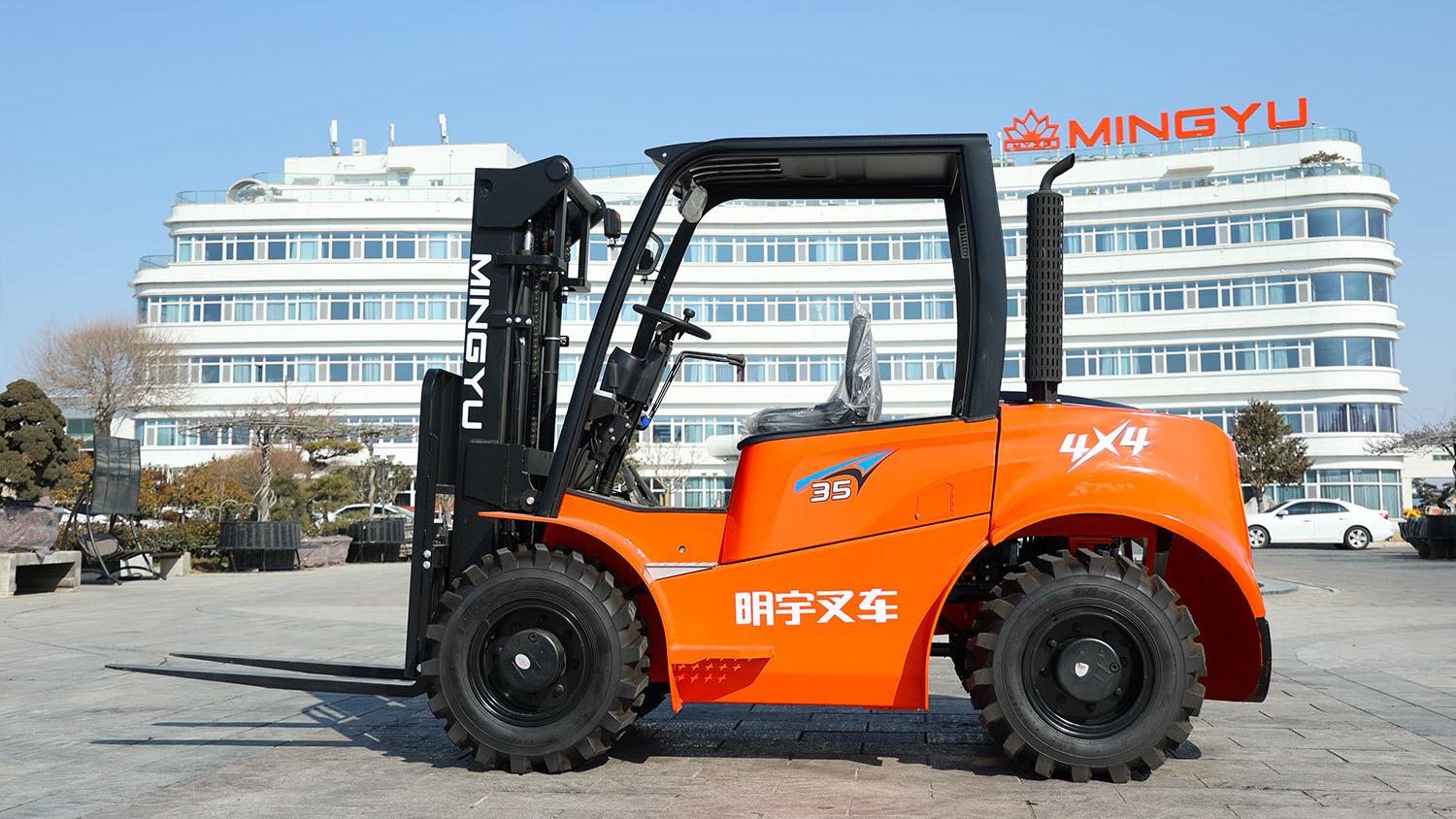
The structure and mechanical components also play a major role in safety. Rough terrain forklifts are built with reinforced frames capable of withstanding impacts, torsion, and constant vibration. Axles, masts, and lift arms are generally stronger than those on standard forklifts, reducing the likelihood of structural failure. Tires, usually large-diameter with deep tread, provide better traction and absorb terrain irregularities. Many models also include protective guards for the engine, radiator, and hydraulic components, preventing damage from stones, branches, or debris. These protections not only extend machine life but also reduce the risk of fires, oil leaks, or unexpected breakdowns that could cause accidents.
In recent years, technology has introduced new electronic and intelligent safety functions. Some machines include configurable speed limiters depending on the work zone, preventing excessive travel speeds in hazardous areas. Operator presence sensors ensure that the forklift can only move when the driver is properly seated and the seat belt is fastened. Telematic systems allow monitoring of machine condition, early fault detection, and recording of driving behavior, which supports accident prevention through predictive maintenance and targeted training. Automatic shutdown systems may also stop the engine if abnormal conditions are detected, such as overheating or excessive hydraulic pressure. These solutions do not replace human responsibility, but they add an extra layer of protection against errors or unexpected conditions.
In conclusion, safety functions on rough terrain forklifts range from physical protection for the operator to advanced electronic control systems. Their main purpose is to reduce the risks associated with working on uneven surfaces, handling heavy loads, and operating in changing environments. However, no safety feature can compensate for lack of training, poor maintenance, or undisciplined operation. To achieve maximum benefit, these technologies must be combined with daily inspections, continuous training, and proper assessment of terrain and loads. When choosing a rough terrain forklift, considering its safety features not only protects people but also improves productivity and reduces costs related to accidents and equipment damage. In an environment where every movement presents an additional challenge, integrated safety becomes the foundation of efficient and sustainable operation.
Post time:Mar.02.2026
