
What Is a Backhoe Loader Used For?
1. Introduction
A backhoe loader is one of the most versatile machines used in construction, agriculture, road maintenance, landscaping, and infrastructure projects. It combines two major functions in one machine: a loader at the front and an excavator at the rear. This combination allows operators to dig, excavate, load, move, backfill, and level materials without needing to switch between several different machines.
Backhoe loaders are particularly useful for small and medium-sized projects where flexibility, mobility, and operating efficiency are important. They can travel between work areas under their own power and are generally easier to transport than larger excavators and wheel loaders. With different attachments, a backhoe loader can perform even more specialized tasks, making it a practical choice for contractors, farmers, utility companies, municipalities, and property developers.
Understanding what a backhoe loader is used for can help buyers choose the right machine and configuration for their projects. From digging foundations and utility trenches to moving soil and maintaining roads, this machine can handle a surprisingly wide range of jobs.
2. What Is a Backhoe Loader?
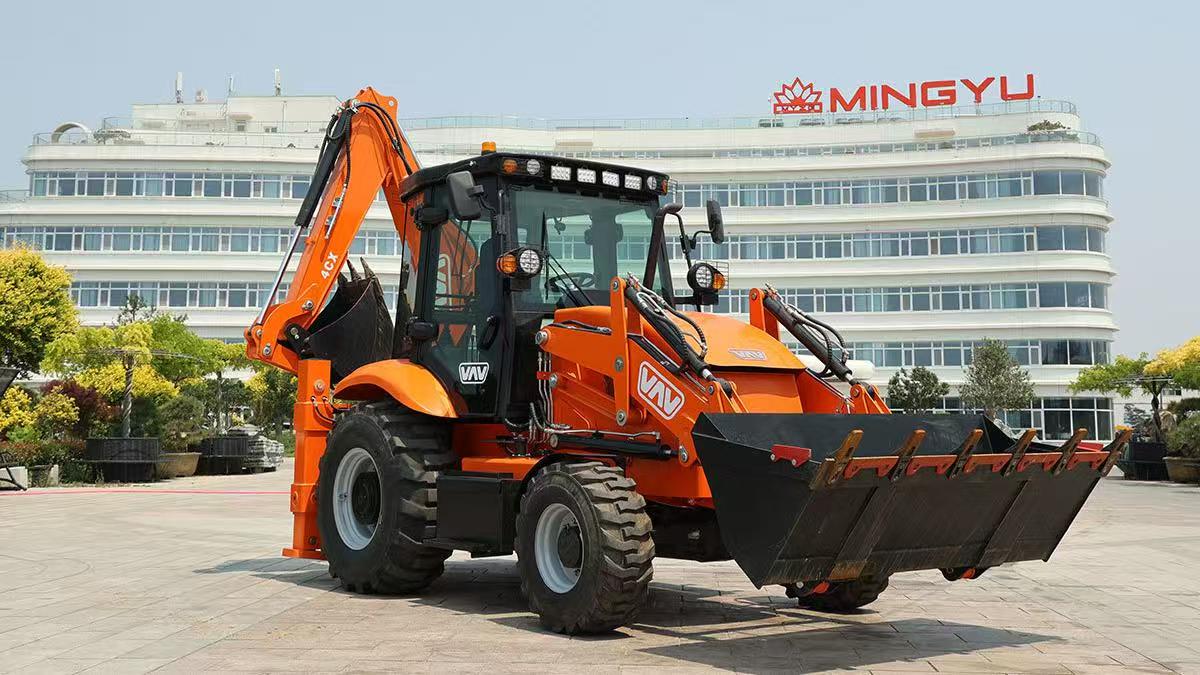
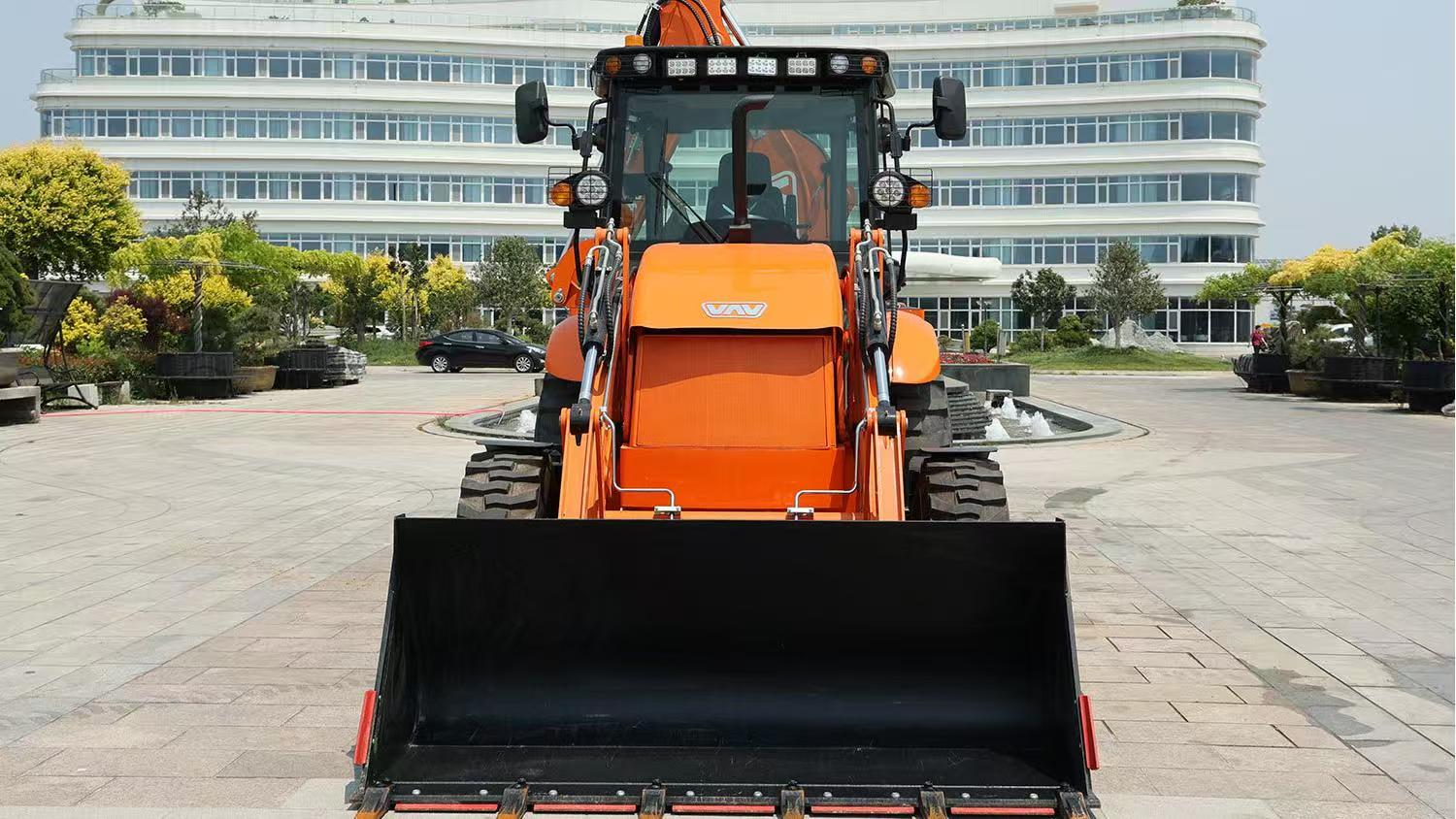
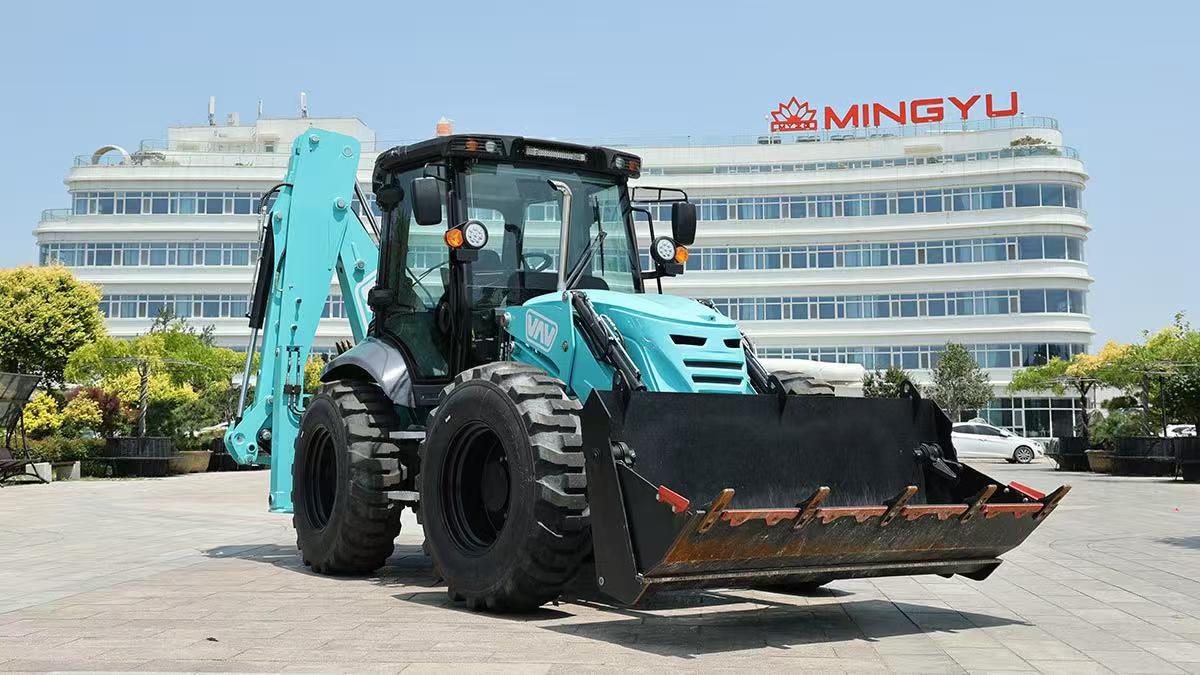
A backhoe loader is a self-propelled construction machine equipped with a front loader bucket and a rear-mounted backhoe. The front loader is mainly designed for scooping, lifting, transporting, and loading materials, while the rear backhoe is used for excavation.
The front bucket can move materials such as soil, sand, gravel, stones, construction debris, and agricultural materials. It can also be used for grading and leveling relatively large areas.
The rear excavator consists mainly of a boom, dipper arm, and bucket. It provides the digging capability needed for trenches, foundations, drainage channels, and other excavation work. Stabilizer legs are normally installed at the rear to improve machine stability during excavation.
Other important components include the engine, transmission, hydraulic system, axles, tires, operator cabin, and control system. The hydraulic system is especially important because it powers the loader, backhoe, steering, and many attachments.
Unlike a dedicated excavator, a backhoe loader can perform both digging and loading operations. This makes it particularly valuable when a project requires several different tasks at the same location.
3. Main Uses of a Backhoe Loader
The most common use of a backhoe loader is excavation. The rear bucket can dig trenches, holes, drainage channels, and foundations. Depending on the machine's digging depth and configuration, it can handle a wide range of small and medium excavation jobs.
Another major application is material handling. After excavating soil, the front loader can collect and move the material to another location. It can also load trucks with sand, gravel, soil, and other loose materials.
Backhoe loaders are also frequently used for backfilling. After underground pipes, cables, or foundations have been installed, the machine can move excavated soil back into the trench.
Grading and leveling are additional applications. By controlling the front bucket carefully, operators can spread and level soil, gravel, and other materials to prepare surfaces for roads, buildings, driveways, and landscaping.
With suitable attachments, a backhoe loader can also perform breaking, drilling, lifting, trenching, and material-handling operations.
4. Construction and Building Projects
Backhoe loaders are widely used in general construction because many building projects require both excavation and material handling.
During foundation preparation, the rear backhoe can excavate soil for foundations, footings, and drainage systems. The front loader can then move excavated material or bring construction materials around the site.
For smaller construction projects, using one backhoe loader can reduce the need for separate excavators and loaders. This can simplify transportation, operator requirements, and job-site organization.
Backhoe loaders are also useful for preparing building sites. Operators can remove unwanted soil, level surfaces, dig drainage systems, and clean up construction debris.
For contractors working on residential buildings, commercial developments, or small infrastructure projects, the machine's versatility can make it an efficient multi-purpose solution.
5. Road Construction and Maintenance
Road construction and maintenance are another important application for backhoe loaders.
They can excavate drainage ditches alongside roads, remove damaged material, and prepare areas for repairs. The front loader can then move gravel, soil, or other materials needed for road maintenance.
Backhoe loaders are particularly useful for roadside repair because they can travel relatively easily between different work areas. Instead of transporting a dedicated excavator and loader for every small repair task, a contractor can use one machine for multiple operations.
They can also be used for cleaning roadside drainage channels, repairing shoulders, preparing small access roads, and handling materials during maintenance work.
For larger highway construction projects, specialized equipment may be more productive. However, for smaller roadwork and maintenance operations, the flexibility of a backhoe loader can be a major advantage.
6. Agriculture and Farm Applications
Backhoe loaders are not limited to construction. They are also useful on farms and agricultural properties.
One common application is digging irrigation and drainage channels. The rear excavator can create trenches for water management systems, while the front bucket can move excavated soil.
Farmers can also use backhoe loaders to maintain farm roads, clean drainage ditches, move soil, and handle agricultural materials.
The front loader can transport materials around the farm, including soil, gravel, compost, and other loose materials. Depending on the attachment, the machine may also be used for clearing vegetation or handling materials.
For larger agricultural operations, specialized tractors and loaders may be more appropriate for certain tasks. However, when excavation is also required, a backhoe loader provides additional versatility.
7. Utility and Infrastructure Work
Utility installation is one of the most common applications for the rear backhoe.
Water pipes, sewer lines, electrical cables, telecommunications cables, and drainage systems often require trenches. A backhoe loader can excavate these trenches and then use the front bucket to move or replace excavated material.
Its relatively compact design is useful when working in urban or confined environments. Contractors can use the same machine for excavation, material handling, backfilling, and site cleanup.
Utility contractors also frequently need to perform repair work rather than large-scale construction. In these situations, machine flexibility can be more important than maximum excavation capacity.
However, operators must always identify underground utilities before excavation. Proper planning and safe operating procedures are essential when working around existing infrastructure.
8. Landscaping and Property Development
Backhoe loaders are also useful for landscaping and property preparation.
They can dig planting areas, remove unwanted soil, create drainage systems, prepare foundations for small structures, and move landscaping materials.
The front bucket can be used to spread soil and gravel, while the rear bucket can perform more precise excavation.
For driveway construction, garden development, drainage improvements, and property renovation, a backhoe loader can often perform several stages of the project with one machine.
This versatility makes it attractive to landscaping contractors and property maintenance companies that need equipment capable of handling different types of work.
9. Demolition and Material Handling
Backhoe loaders can perform certain small-scale demolition tasks when equipped with appropriate attachments.
For example, a hydraulic breaker can be installed on the rear arm to break concrete or other hard materials. A suitable bucket or grapple can then be used to move the resulting debris.
The front loader is useful for collecting and loading loose demolition materials. This combination allows the machine to perform demolition and cleanup operations on smaller sites.
However, backhoe loaders are generally not intended to replace large excavators on major demolition projects. The appropriate machine should always be selected according to the size, structure, and requirements of the project.
10. Common Attachments for Backhoe Loaders
One of the biggest advantages of a backhoe loader is its ability to use different attachments.
Common attachments include:
Hydraulic breaker: Used for breaking concrete, masonry, and other hard materials.
Auger: Used for drilling holes in soil.
Grapple: Useful for handling logs, branches, debris, and irregular materials.
Hydraulic thumb: Helps grip and control materials during excavation and handling.
Fork attachment: Allows the loader to handle pallets and other packaged materials.
Trencher: Designed for producing narrow trenches.
General-purpose bucket: Used for digging, loading, and material handling.
Specialized buckets: Different bucket widths and designs can be selected for specific excavation requirements.
Choosing the right attachment can significantly expand the range of work that a backhoe loader can perform.
11. Why Choose a Backhoe Loader?
The main reason to choose a backhoe loader is versatility. Instead of purchasing separate machines for excavation and loading, contractors can use one machine for both functions.
Mobility is another advantage. Backhoe loaders can travel between nearby work areas without always requiring a transport vehicle.
Their relatively compact size also makes them suitable for many small and medium-sized projects. They can work in locations where larger equipment may be difficult to maneuver.
Another advantage is operational flexibility. A contractor can use the rear attachment for excavation and then immediately switch to the front loader for material handling or site cleanup.
For companies that need one machine to perform many different tasks, a backhoe loader can provide a practical balance between capability, mobility, and operating cost.
12. Backhoe Loader vs. Other Construction Equipment
A backhoe loader and an excavator both provide digging capabilities, but they are designed for somewhat different applications. Excavators generally offer greater digging performance and are better suited to large-scale excavation. Backhoe loaders, meanwhile, provide the additional advantage of a front loader.
Compared with a wheel loader, a backhoe loader offers much greater excavation capability because of its rear digging arm. A wheel loader is generally more suitable when the primary task is loading and transporting loose materials.
A skid steer loader is smaller and highly maneuverable, making it useful in confined spaces. However, a backhoe loader usually provides greater digging depth and reach.
Therefore, the best machine depends on the project. If a job requires frequent switching between excavation and loading, a backhoe loader can be an excellent choice.
13. How to Choose the Right Backhoe Loader
Before purchasing a backhoe loader, buyers should consider the machine's specifications and the type of work it will perform.
Engine power affects overall machine performance and productivity. However, higher horsepower does not automatically mean that a machine is better for every application.
Maximum digging depth is important for trenching and foundation work. Buyers should make sure the backhoe can reach the required depth.
Loader bucket capacity determines how much material can be handled during each cycle. Larger buckets can improve productivity when moving loose materials, provided the machine has sufficient lifting capacity.
Other important specifications include operating weight, hydraulic flow, maximum reach, breakout force, lifting capacity, travel speed, transmission type, tire configuration, and attachment compatibility.
Buyers should also consider local emissions regulations and certification requirements, especially when purchasing machines for export markets.
14. Safety Considerations When Using a Backhoe Loader
Safe operation is essential when using a backhoe loader.
Before starting work, operators should inspect the tires, hydraulic hoses, attachments, fluid levels, brakes, lights, and other important components.
When excavating, the machine should be positioned on stable ground, and stabilizer legs should be properly deployed according to the manufacturer's instructions.
Operators should also check for underground utilities before digging. Water pipes, gas lines, electrical cables, and communication lines may be located beneath the work area.
The machine should never be operated beyond its rated capacity. Loads should be handled carefully, and people should remain outside hazardous operating areas.
Proper operator training and following the manufacturer's operating manual are essential for safe and productive operation.
15. Maintenance and Operating Costs
Regular maintenance helps keep a backhoe loader reliable and productive.
Daily inspections should include checking engine oil, hydraulic oil, coolant, tires, hydraulic hoses, attachment connections, and other key components.
The hydraulic system deserves particular attention because the backhoe and loader depend heavily on hydraulic power. Leaks, damaged hoses, or insufficient hydraulic fluid can reduce performance and potentially cause equipment problems.
Wear components such as buckets, cutting edges, pins, and bushings should also be inspected regularly.
Preventive maintenance can reduce unexpected downtime and help extend the machine's service life. Fuel consumption is another important consideration when comparing different models, particularly for machines that operate many hours per day.
A machine with suitable specifications, good maintenance, and appropriate attachments can provide better long-term value than simply choosing the lowest initial purchase price.
16. Conclusion
A backhoe loader is a highly versatile machine designed to combine excavation and loading functions in one unit. It can dig trenches and foundations, move soil and gravel, backfill excavations, grade surfaces, maintain roads, support utility installation, and perform many agricultural and landscaping tasks.
Its ability to use different attachments makes it even more flexible. For contractors and businesses that need one machine to handle multiple types of work, a backhoe loader can be a practical and productive choice.
When selecting a backhoe loader, buyers should look beyond engine power and purchase price. Digging depth, loader capacity, hydraulic performance, operating weight, attachments, safety features, emissions requirements, and after-sales support should all be considered.
Ultimately, the best backhoe loader is not necessarily the largest or most powerful model—it is the model whose specifications match the actual work requirements.
Post time:Aug.28.2026
