
What Is a Pallet Stacker and How Does It Differ From a Forklift?
1. Introduction
Efficient material handling is essential for warehouses, distribution centers, manufacturing facilities, retail stores, and logistics operations. As businesses handle increasing volumes of palletized goods, choosing the right equipment can have a significant impact on productivity, operating costs, and workplace safety. Two common types of equipment used for moving and stacking pallets are pallet stackers and forklifts.
At first glance, these machines may appear similar because both use forks to lift and transport palletized loads. However, they are designed for different working conditions and applications. A pallet stacker is generally more compact and is particularly suitable for indoor warehouse operations, narrow aisles, and light-to-medium-duty pallet handling. A forklift, on the other hand, is usually more powerful and can handle heavier loads, greater operating demands, and a wider range of applications.
Understanding the differences between a pallet stacker and a forklift is important when purchasing material-handling equipment. The best choice depends on factors such as load capacity, lifting height, aisle width, floor conditions, operating environment, power source, and budget.
This guide explains what a pallet stacker is, how it works, how it differs from a forklift, and which machine may be more suitable for different material-handling requirements.
2. What Is a Pallet Stacker?
A pallet stacker is a material-handling machine designed primarily to lift, move, stack, and retrieve pallets. It has two forks that slide underneath a pallet and a vertical mast that raises the load to the required height.
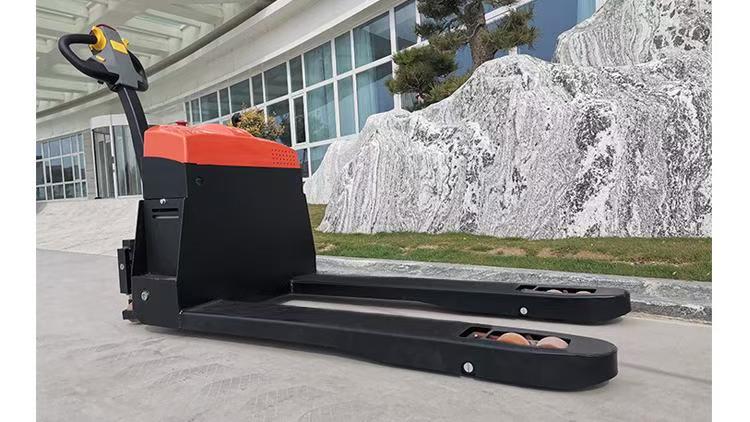
Unlike a conventional forklift, many pallet stackers are designed with a compact body and an electric drive system. Depending on the model, the operator may walk behind the machine, stand on an operator platform, or use another compact operating configuration.
The main components of a pallet stacker include the forks, mast, hydraulic lifting system, drive wheel, steering system, battery, controller, and operator controls.
Pallet stackers are available in different configurations and lifting capacities. Some are designed for basic pallet transportation and low-level stacking, while others can lift pallets to considerable heights for warehouse racking.
Because of their compact design and electric power, pallet stackers are particularly common in warehouses, factories, supermarkets, distribution centers, and other indoor environments.
3. How Does a Pallet Stacker Work?
The basic operating process of a pallet stacker is relatively simple.
First, the operator positions the machine in front of the pallet. The forks are then aligned with the pallet openings and inserted underneath the pallet.
Once the forks are correctly positioned, the hydraulic lifting system raises the forks and pallet. The operator can then move the machine to the desired location.
When the pallet reaches the storage position, the forks are raised to the required height. The pallet is placed onto the rack or another designated storage area, and the forks are carefully lowered and withdrawn.
The reverse process is used when retrieving a pallet.
The actual performance of a pallet stacker depends on factors such as rated load capacity, lifting height, battery capacity, hydraulic performance, mast design, and floor conditions.
Operators should always ensure that the load remains within the machine's rated capacity and that the pallet is properly positioned before lifting or transporting it.
4. What Is a Forklift?
A forklift is a powered industrial vehicle designed to lift, transport, and position loads using forks or other attachments.
Forklifts are available in many different configurations. Common types include diesel forklifts, LPG forklifts, electric forklifts, and rough-terrain forklifts.
Compared with pallet stackers, forklifts are generally larger and can offer higher lifting capacities. Many forklifts are equipped with counterweights at the rear to balance the load carried by the front forks.
Forklifts are widely used in warehouses, factories, construction sites, ports, logistics centers, and outdoor industrial environments.
Depending on the model, forklifts can handle pallets, machinery, steel products, construction materials, containers, and other loads. Different attachments can further expand their capabilities.
Therefore, a forklift is generally considered a more heavy-duty and versatile material-handling machine, while a pallet stacker focuses more specifically on pallet movement and stacking.
5. Pallet Stacker vs. Forklift: Main Differences
Although pallet stackers and forklifts perform similar basic functions, several important differences exist.
Size: Pallet stackers are generally more compact, making them easier to operate in narrow spaces. Forklifts are typically larger and require more operating space.
Load capacity: Forklifts generally offer a wider range of load capacities, including models designed for very heavy loads. Pallet stackers are commonly used for light and medium pallet loads.
Lifting height: Both machines can be used for pallet stacking, but forklifts generally provide a broader selection of configurations for demanding lifting applications.
Operator position: Many pallet stackers use a walk-behind or stand-on operating configuration, while conventional forklifts normally have a seated operator cabin.
Turning radius: The compact structure of a pallet stacker allows it to maneuver efficiently in narrow aisles.
Power source: Electric power is very common for pallet stackers, while forklifts can use electric batteries, diesel fuel, LPG, or other power systems depending on the model.
Working environment: Pallet stackers are especially suitable for indoor warehouses. Forklifts can be configured for both indoor and outdoor applications.
Cost: Pallet stackers generally have a lower purchase and operating cost for basic pallet-handling applications, while forklifts offer greater capability at a higher investment.
6. Pallet Stacker vs. Forklift: Load Capacity
Load capacity is one of the most important factors when choosing material-handling equipment.
Pallet stackers are primarily designed for light- and medium-duty pallet handling. Their capacity is sufficient for many warehouse operations involving standard palletized goods.
Forklifts are available in a much wider range of capacities. Smaller electric forklifts can handle warehouse loads, while larger diesel and specialized forklifts can handle significantly heavier industrial materials.
When selecting equipment, the buyer should consider not only the average load but also the maximum actual load that the machine will need to handle.
It is also important to remember that lifting capacity can change depending on the lifting height, load center, mast configuration, and attachments.
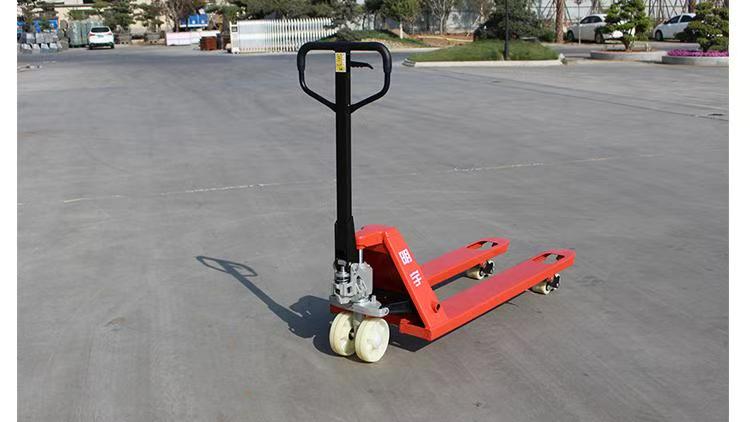
A machine should never be selected based solely on the nominal capacity listed in promotional material. Buyers should check the manufacturer's rated capacity specifications for the intended operating conditions.
7. Lifting Height and Stacking Applications
Lifting height is another major consideration.
Some pallet stackers are designed for low-level stacking and simple material transportation, while higher-lift models can be used with warehouse racking systems.
For example, a warehouse may use a compact stacker to move pallets from the receiving area to low or medium-height storage positions. A high-lift stacker can provide greater vertical storage capability while still maintaining a relatively compact footprint.
Forklifts are also available with different mast configurations and lifting heights. They are commonly used for stacking pallets on warehouse racks and for loading or unloading trucks.
When choosing between the two, businesses should determine the maximum rack height and the required lifting height before purchasing the equipment.
It is also important to consider overhead clearance, building height, rack design, and load stability when selecting a mast configuration.
8. Working Environment and Space Requirements
The working environment is one of the areas where pallet stackers have a particularly strong advantage.
Warehouses often contain narrow aisles, densely arranged storage racks, and limited turning space. A compact pallet stacker can maneuver through these areas more easily than a larger forklift.
Pallet stackers are also well suited to smooth indoor floors. Electric models produce relatively low noise and do not generate exhaust emissions at the point of operation, which makes them suitable for many indoor facilities.
Forklifts are more versatile when working conditions are demanding. Depending on their design, they can operate indoors and outdoors and can handle a wider range of loads and surfaces.
Rough-terrain forklifts, for example, are specifically designed for construction sites, agricultural operations, and other environments where conventional warehouse equipment may not be suitable.
Therefore, the floor condition, aisle width, available operating space, and indoor or outdoor environment should all be considered before making a decision.
9. Power Sources: Electric Stacker vs. Forklift
Electric power is very common for pallet stackers because many of them are designed primarily for indoor warehouse use.
Battery-powered stackers provide quiet operation and produce no direct exhaust emissions during operation. They are therefore suitable for warehouses, factories, supermarkets, and other enclosed environments.
Electric forklifts provide similar advantages and are increasingly popular in indoor material-handling applications.
However, forklifts are also available with diesel and LPG power systems. Diesel forklifts are commonly used for heavy-duty outdoor applications, while LPG forklifts can provide a practical solution for certain indoor and outdoor applications where permitted and properly ventilated.
The choice of power source depends on operating hours, indoor or outdoor use, load requirements, charging infrastructure, fuel availability, local regulations, and total operating costs.
For operations that primarily take place inside a warehouse, an electric pallet stacker or electric forklift may be more appropriate than an internal-combustion forklift.
10. Maneuverability and Operator Experience
Maneuverability is another major difference between pallet stackers and conventional forklifts.
Because pallet stackers are generally compact, they can operate in narrower spaces. This can be especially valuable in warehouses where every meter of floor space is important.
Many walk-behind stackers are controlled using a tiller, allowing the operator to steer and control lifting functions from behind the machine.
Stand-on models can provide a different balance between operator convenience and compactness. The exact design varies according to the manufacturer and model.
Forklifts normally provide a seated operating position, which can be more comfortable for longer operating periods. They also typically provide greater stability and capability for heavier loads.
Operator visibility, control layout, steering response, and ergonomic design should all be considered when comparing equipment.
Regardless of the machine type, operators should receive appropriate training and understand the equipment's operating limitations.
11. Cost Comparison
Purchase price is an important consideration, but it should not be the only factor.
A pallet stacker generally requires a smaller initial investment than a full-sized forklift when both are compared for basic pallet-handling tasks.
Operating costs can also be lower because electric stackers typically consume relatively little energy and require less routine mechanical maintenance than internal-combustion equipment.
However, battery-related costs should also be considered. Depending on the battery technology and usage pattern, businesses may need to account for charging equipment, battery maintenance, and eventual battery replacement.
Forklifts generally cost more because they offer greater load capacity, lifting capability, and versatility. However, the additional investment can be justified when the machine is required to handle heavy loads, outdoor work, frequent truck loading, or specialized attachments.
The best approach is to compare the total cost of ownership, including purchase price, energy or fuel, maintenance, tires, batteries, operator requirements, and expected service life.
12. Safety Considerations
Safety should always be a priority when operating pallet stackers or forklifts.
Operators need to understand the rated capacity of the machine and avoid exceeding it. Loads should be properly positioned on the forks and kept stable during transportation.
When stacking pallets at height, operators should make sure the load is secure and that the storage rack is suitable for the intended load.
Pedestrian safety is particularly important in warehouses where equipment and workers share the same space. Clearly defined traffic routes, appropriate speed control, visibility measures, and operator awareness can help reduce risks.
Ramps and uneven surfaces also require additional caution, particularly when transporting elevated loads.
Battery-powered equipment requires proper charging procedures, while internal-combustion forklifts require appropriate ventilation and fuel-handling practices.
Regular inspections and preventive maintenance are essential for both pallet stackers and forklifts.
13. Advantages of Pallet Stackers
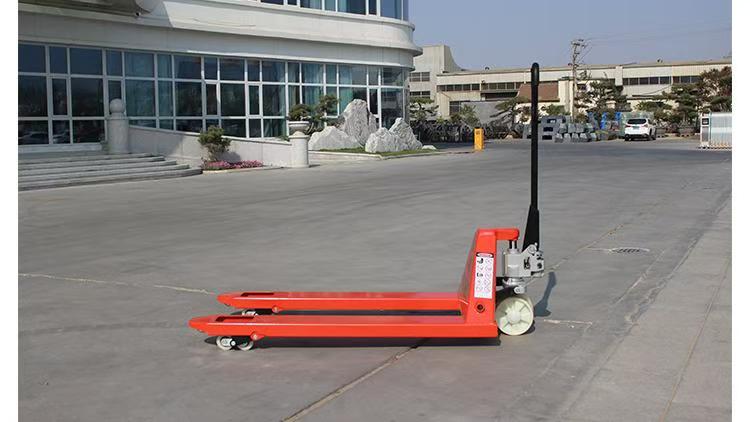
Pallet stackers offer several important advantages for warehouse operations.
First, their compact design makes them suitable for narrow aisles and limited working areas.
Second, their maneuverability allows operators to position pallets efficiently in confined spaces.
Third, electric pallet stackers can provide quiet and clean operation, making them suitable for many indoor environments.
Another advantage is their relatively simple operating structure. For businesses that mainly need to move and stack pallets, a pallet stacker can provide the required functions without the additional capacity of a larger forklift.
Pallet stackers can also be an economical choice for small and medium-sized warehouses that do not regularly handle very heavy loads.
Overall, they are particularly suitable when the primary requirements are pallet transportation, short-distance handling, and warehouse stacking.
14. Advantages of Forklifts
Forklifts offer several advantages when applications require higher capacity and greater versatility.
They are available in many different capacity ranges and configurations, allowing businesses to select equipment for warehouse, industrial, construction, agricultural, and outdoor applications.
Forklifts can generally handle heavier loads than pallet stackers. They can also be equipped with various attachments for handling specialized materials.
Another advantage is their ability to load and unload trucks efficiently. A conventional forklift can lift pallets directly from the ground or truck bed and transport them to storage areas.
Different power systems also allow forklifts to adapt to different working environments.
For companies with heavy-duty material-handling requirements, long operating hours, outdoor applications, or specialized loads, a forklift may provide capabilities that a pallet stacker cannot match.
15. When Should You Choose a Pallet Stacker?
A pallet stacker is a good choice when the main requirement is efficient pallet handling in a warehouse or other controlled environment.
It may be suitable for:
Small and medium-sized warehouses
Narrow aisles
Indoor pallet stacking
Short-distance material movement
Light and medium pallet loads
Retail and distribution facilities
Manufacturing plants
Operations that prioritize low noise and compact equipment
If the maximum load is within the stacker's rated capacity and the required lifting height is suitable, purchasing a larger forklift may not be necessary.
In these situations, a pallet stacker can provide the required performance while reducing equipment size and investment.
16. When Should You Choose a Forklift?
A forklift is generally the better option when the application requires higher capacity, greater lifting capability, or more operating flexibility.
A forklift may be preferred for:
Heavy pallet handling
Loading and unloading trucks
Outdoor material handling
Construction sites
Industrial manufacturing
Long operating periods
High-capacity warehouse operations
Specialized attachments
Rough or uneven working conditions
For businesses that need to handle different types of loads and work in multiple environments, the greater versatility of a forklift can justify the additional investment.
17. How to Choose the Right Equipment
The first step is to determine the maximum load weight. Equipment should be selected based on the heaviest load that will actually be handled, not just the average load.
Next, determine the required lifting height. Measure the height of the highest storage location and consider the required clearance.
The aisle width should also be measured. If the available space is limited, a compact pallet stacker may be more appropriate.
The working environment is another key factor. Consider whether the equipment will operate indoors, outdoors, on smooth floors, on ramps, or on uneven terrain.
Businesses should also evaluate the power source. Electric equipment is often suitable for indoor applications, while diesel or LPG forklifts may be appropriate for certain heavier-duty applications.
Finally, consider purchase price, energy or fuel costs, maintenance, battery requirements, spare parts availability, warranty, and after-sales service.
Choosing equipment based on the actual working conditions will usually provide better long-term value than simply selecting the largest or cheapest machine.
18. Conclusion
Pallet stackers and forklifts both play important roles in modern material handling, but they are designed for different requirements.
A pallet stacker is generally compact, maneuverable, economical, and particularly suitable for indoor pallet handling and stacking in warehouses with limited space. An forklift typically offers higher capacity, greater lifting performance, and broader versatility for heavy-duty, outdoor, and industrial applications.
The right choice depends on several factors, including load weight, lifting height, aisle width, working environment, power source, operating frequency, and budget.
For businesses that mainly move and stack standard pallets indoors, a pallet stacker can be an efficient and economical solution. For operations involving heavier loads, truck loading and unloading, outdoor work, or specialized material handling, a forklift may be the better choice.
Ultimately, the best material-handling equipment is not necessarily the largest or most powerful machine. It is the machine whose capacity, dimensions, lifting performance, and configuration match the actual requirements of the workplace.
Post time:Aug.28.2026
