
How Much Does a Full Electric Pallet Stacker Cost in 2026?
1. Introduction
As warehouses, distribution centers, and manufacturing facilities continue to modernize their material handling operations, full electric pallet stackers have become one of the most popular and cost-effective alternatives to traditional forklifts. These compact machines are designed to lift, transport, and stack pallets efficiently while reducing labor costs and improving workplace productivity. Compared with manual pallet stackers and semi-electric models, full electric pallet stackers offer powered driving and powered lifting functions, allowing operators to move heavy loads with minimal physical effort.
In 2026, the demand for full electric pallet stackers is growing rapidly due to the expansion of e-commerce, warehouse automation, and increasing labor costs worldwide. Businesses are investing in electric material handling equipment not only to improve efficiency but also to meet sustainability goals through reduced emissions and lower energy consumption. Furthermore, advancements in lithium-ion battery technology have made modern pallet stackers more reliable, easier to maintain, and capable of operating for longer periods between charges.
One of the most common questions among warehouse managers and equipment buyers is: How much does a full electric pallet stacker cost in 2026? The answer depends on several factors, including lifting capacity, lifting height, battery type, brand, safety features, and intended application. Entry-level models may cost as little as $2,500, while heavy-duty and high-lift versions can exceed $15,000. Understanding these factors is essential for selecting the right machine and achieving the best return on investment.
This article provides a detailed breakdown of electric pallet stacker prices, cost factors, ownership expenses, and purchasing considerations to help buyers make informed decisions in 2026.
2. What Is a Full Electric Pallet Stacker?
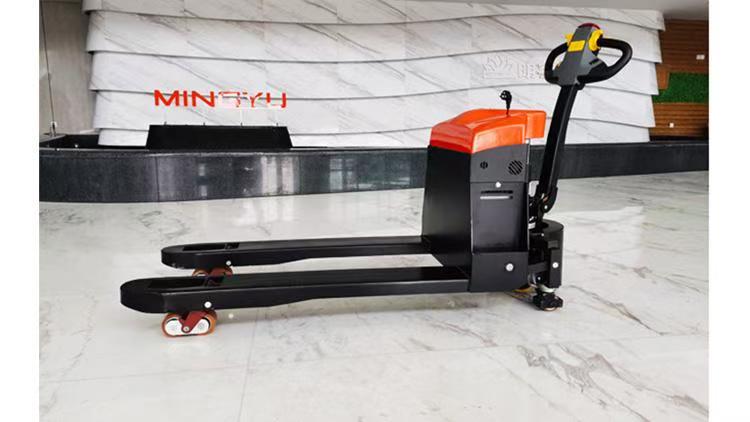
A full electric pallet stacker is a battery-powered material handling machine that performs both lifting and driving operations electrically. Unlike manual stackers, which require physical pushing and pumping, or semi-electric models that only provide electric lifting, full electric stackers allow operators to move and lift loads entirely through electric power.
These machines are widely used for transporting and stacking palletized goods in warehouses, logistics centers, retail facilities, and manufacturing plants.
Common applications include:
Warehouse inventory management
Loading and unloading trucks
Pallet stacking
Retail stock handling
Cold storage operations
Manufacturing production lines
Key advantages include:
Reduced operator fatigue
Higher productivity
Improved workplace safety
Lower labor requirements
Better maneuverability in narrow aisles
Lower operating costs than forklifts
Because of their compact design and ease of operation, electric pallet stackers have become an essential tool in modern warehouse environments.
3. Average Full Electric Pallet Stacker Prices in 2026
The price of a full electric pallet stacker varies depending on capacity, lift height, battery technology, and brand.
Entry-Level Models (1.0–1.2 Ton Capacity)
Typical specifications:
Capacity: 1,000–1,200 kg
Lift height: 2.5–3.0 m
Lead-acid battery
Price range:
Chinese brands: $2,500–$4,000
International brands: $4,000–$5,500
Mid-Range Models (1.5 Ton Capacity)
Most commonly used in warehouses.
Typical specifications:
Capacity: 1,500 kg
Lift height: 3.0–4.5 m
Price range:
Chinese brands: $4,000–$6,500
International brands: $6,000–$8,000
Heavy-Duty Models (2.0 Ton Capacity)
Designed for industrial environments and heavier loads.
Price range:
Chinese brands: $6,000–$9,000
International brands: $9,000–$12,000
High-Lift Models (4–6 Meter Lift Height)
Used for high-racking warehouse operations.
Price range:
Chinese brands: $8,000–$12,000
International brands: $12,000–$15,000+
4. Key Factors That Affect Full Electric Pallet Stacker Prices
Load Capacity
Higher-capacity machines require stronger masts, larger motors, reinforced chassis, and more powerful hydraulic systems.
Typical capacities include:
1.0 ton
1.2 ton
1.5 ton
2.0 ton
As capacity increases, equipment costs rise accordingly.
Lift Height
Higher lift heights require:
Stronger mast construction
Enhanced stability systems
Additional hydraulic components
A 6-meter stacker can cost significantly more than a standard 3-meter model.
Battery Technology
Battery type has a major influence on pricing.
Available options include:
Lead-acid batteries
AGM batteries
Lithium-ion batteries
Lithium battery models generally cost more upfront but offer lower lifetime ownership costs.
Motor Performance
Machines equipped with more powerful drive motors and lift motors often provide faster travel speeds and higher productivity.
Safety Features
Additional safety systems may include:
Emergency stop switches
Electromagnetic braking
Automatic speed reduction
Anti-roll back protection
Operator presence sensors
These features improve safety but increase equipment cost.
5. Lithium Battery vs Lead-Acid Battery Stackers
Initial Investment
Lead-acid models typically cost 15–30% less than lithium-powered versions.
Charging Time
Lead-acid batteries:
6–8 hours charging
Additional cooling period required
Lithium batteries:
2–4 hours charging
Opportunity charging possible
Maintenance
Lead-acid batteries require:
Water refilling
Cleaning terminals
Equalization charging
Lithium batteries are largely maintenance-free.
Service Life
Lead-acid batteries:
Approximately 1,200–1,500 cycles
Lithium batteries:
Approximately 3,000–4,000 cycles
Total Ownership Cost
Although lithium stackers have higher purchase prices, lower maintenance costs and longer battery life often result in lower overall ownership expenses.
6. Chinese Manufacturers vs International Brands
Chinese Manufacturers
Advantages:
Lower purchase costs
Competitive technology
Fast delivery
Expanding dealer networks
Popular export-oriented suppliers offer excellent value for money.
International Brands
Major brands include:
Toyota
Jungheinrich
Crown
Linde
Hyster
Advantages:
Strong reputation
Extensive support networks
High resale value
Proven durability
However, these brands typically command significantly higher prices.
7. New vs Used Full Electric Pallet Stackers
Benefits of Buying New
Manufacturer warranty
Latest technology
Maximum battery life
Lower maintenance costs
Benefits of Buying Used
Lower initial investment
Immediate availability
Risks of Used Equipment
Potential concerns include:
Battery degradation
Hydraulic wear
Electrical issues
Limited warranty coverage
A thorough inspection is essential before purchasing used equipment.
8. Additional Costs Beyond the Purchase Price
Shipping Costs
Domestic transportation:
$200–$1,000
International shipping:
$500–$3,000+
Battery Replacement
Replacement batteries may cost:
Lead-acid: $500–$2,000
Lithium-ion: $1,500–$5,000
Maintenance
Annual maintenance expenses may include:
Hydraulic servicing
Tire replacement
Electrical inspections
Operator Training
Training improves workplace safety and reduces equipment damage.
Spare Parts
Maintaining essential spare parts helps minimize downtime.
9. How to Choose the Right Full Electric Pallet Stacker
Determine Load Capacity
Choose a machine based on your maximum pallet weight.
Evaluate Lift Height
Select a mast height that matches warehouse racking requirements.
Consider Daily Usage
High-utilization operations benefit greatly from lithium battery technology.
Analyze Warehouse Layout
Factors include:
Aisle width
Floor quality
Turning space
Storage configuration
Assess Future Growth
Purchasing a slightly larger-capacity machine may accommodate future business expansion.
10. Is Buying a Full Electric Pallet Stacker Worth It?
Increased Productivity
Electric stackers allow faster material movement and stacking operations.
Reduced Labor Costs
Fewer workers can handle larger volumes of goods.
Improved Safety
Powered controls reduce manual handling injuries.
Faster Return on Investment
Many warehouses recover the purchase cost within one to three years through labor savings and increased efficiency.
Comparison with Manual Stackers
Manual stackers remain suitable for low-volume operations, but electric models provide substantial advantages for frequent use.
11. Future Market Trends in 2026 and Beyond
Growth of Lithium Battery Adoption
Lithium technology is rapidly becoming the industry standard.
Smart Fleet Management
Telematics systems provide:
Real-time monitoring
Maintenance alerts
Usage tracking
Increased Warehouse Automation
Electric stackers are increasingly integrated into automated logistics systems.
E-Commerce Expansion
Growing online retail demand continues driving warehouse equipment investments.
Sustainability Initiatives
Businesses are prioritizing energy-efficient equipment to meet environmental goals.
12. Conclusion
The cost of a full electric pallet stacker in 2026 varies widely depending on capacity, lift height, battery type, and brand. Buyers can expect to pay approximately $2,500–$5,000 for entry-level models, $4,000–$8,000 for mid-range units, $6,000–$12,000 for heavy-duty versions, and up to $15,000 or more for high-lift warehouse stackers.
While purchase price is important, buyers should also evaluate battery technology, maintenance requirements, productivity benefits, warranty coverage, and long-term ownership costs. For most warehouses and logistics operations, a full electric pallet stacker provides excellent value by improving efficiency, reducing labor costs, and enhancing workplace safety.
As battery technology and warehouse automation continue to evolve, electric pallet stackers will remain one of the most cost-effective material handling solutions available in 2026 and beyond.
Post time:Jun.12.2026
