
ZGLOADER / MYZG ZG1160 Compact Wheel Loader: Application Selection and Service Planning
Choose for the next site as well as today
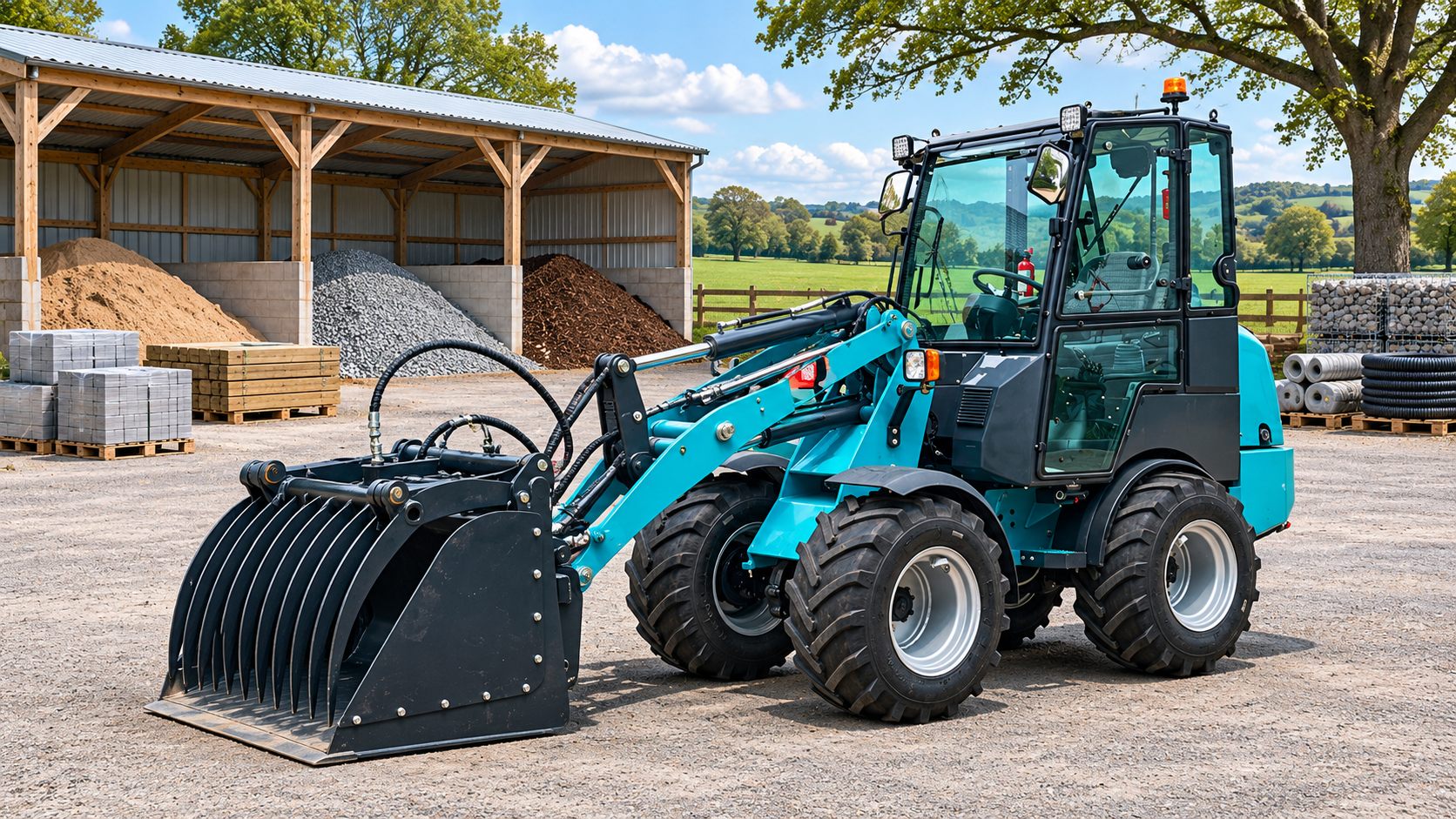
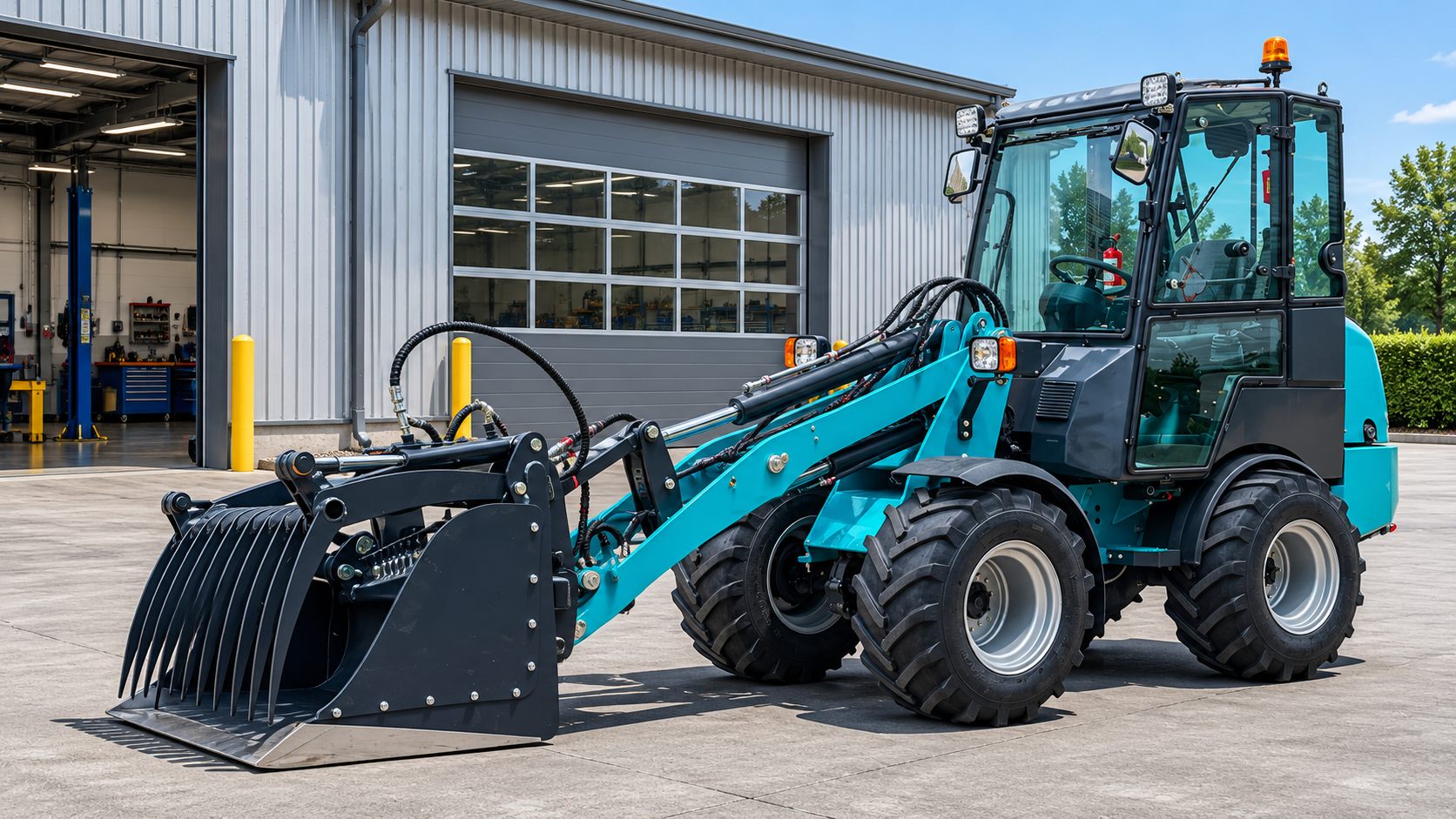
The ZGLOADER / MYZG ZG1160 compact wheel loader should be selected around a documented daily workflow. Describe the material arriving at the site, the storage bays, the receiving point and the people who share the yard. This makes it possible to compare the proposed machine with real access and handling needs rather than an assumed capacity from the model number. Ask for the exact supplied configuration before making a purchase decision. The application images are newly generated illustrations based on the website product photograph, not customer project photographs.
Build a site information sheet
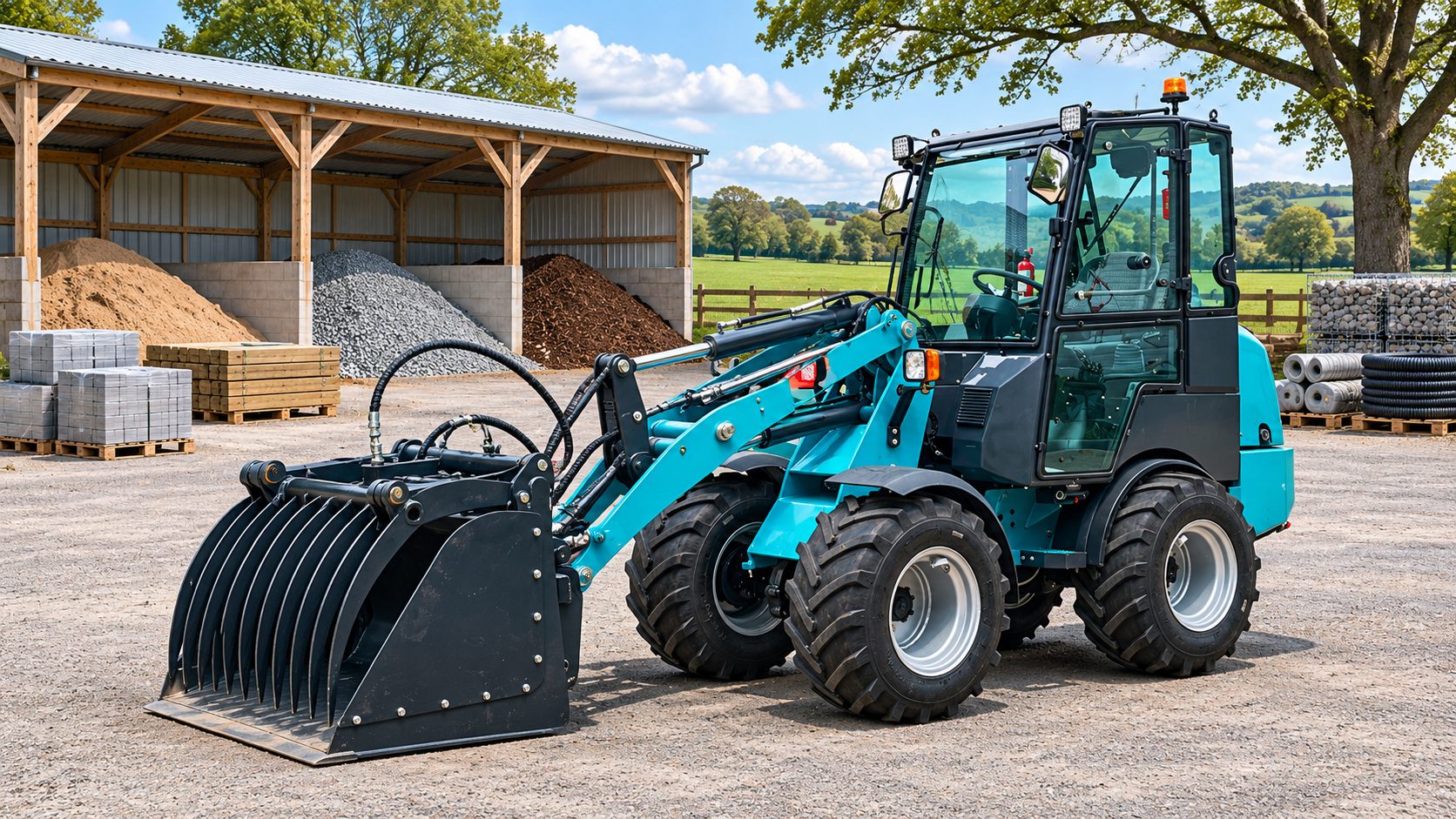
Create a short information sheet for each likely work location. Include the entrance width and height, surface condition, turning space, pedestrian routes, delivery position and material receiving point. Photographs should show the whole route, not only the open yard. Ask the supplier for dimensions with the proposed bucket or other approved attachment fitted. Where clearances are tight, confirm the measurement method and allow the space needed for operation rather than treating the machine width as the only requirement. Recheck the route whenever stored materials or temporary barriers change.
For ZG1160, compare the attachment shown with the equipment actually included in the quotation. The visible enclosed operator compartment does not establish a protection rating or climate-control specification. Request the approved attachment limits, connection details and operating documentation. Where a powered attachment is proposed, confirm hydraulic compatibility and the necessary controls. Keep the attachment weight in the load assessment, and do not assume an illustrated accessory is standard supply.
Compare European-style mini wheel loader options
Plan transport before committing
A transport plan should identify the actual operating weight, attachment weight and overall dimensions of the supplied combination. Compare these with the vehicle and loading arrangements through a competent transport provider. Confirm approved loading procedures and securing points from the machine documentation; do not improvise lifting points from visible holes or brackets. Include time and cost for delivery, unloading and access restrictions in the purchase comparison. A compact loader is not automatically suitable for any small trailer, and transport feasibility should be resolved before the order is finalized.
Specify the task and attachment together
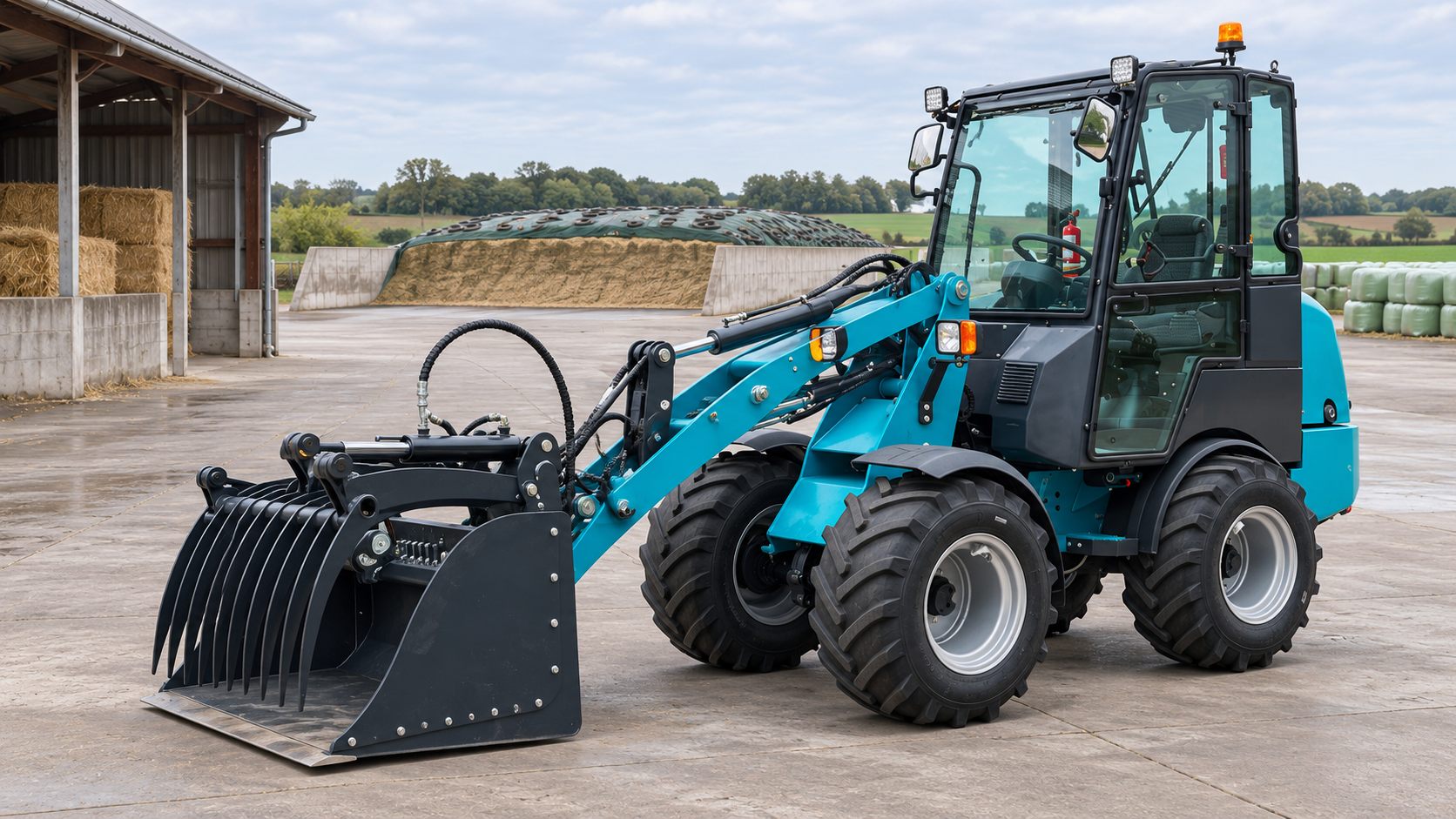
Explain whether the main work is moving loose soil, loading light landscaping material or transferring another specified material. Bucket volume alone cannot determine a safe load because density and moisture vary. Ask for the permitted limits for the exact machine and attachment combination. If forks or a powered tool are proposed, request compatibility information covering mounting, controls and any hydraulic requirements. Do not assume all accessories pictured elsewhere fit this model. The supplier should identify the approved configuration and any restrictions before the buyer compares quotations.
Explore the complete equipment range
Organize delivery and the first work period
For a new site, plan a controlled handover followed by a familiarization period in a suitable clear area. Check the delivered configuration against the order, confirm that the manual is available and identify who will operate and maintain the machine. This is a planning approach, not a claim about a completed customer project. Separate visitors and pedestrians from equipment movements and keep loading areas visible. The operator must follow the supplied instructions for travel, loading and ground conditions. A demonstration does not replace training or site-specific assessment.
Keep maintenance information with the machine
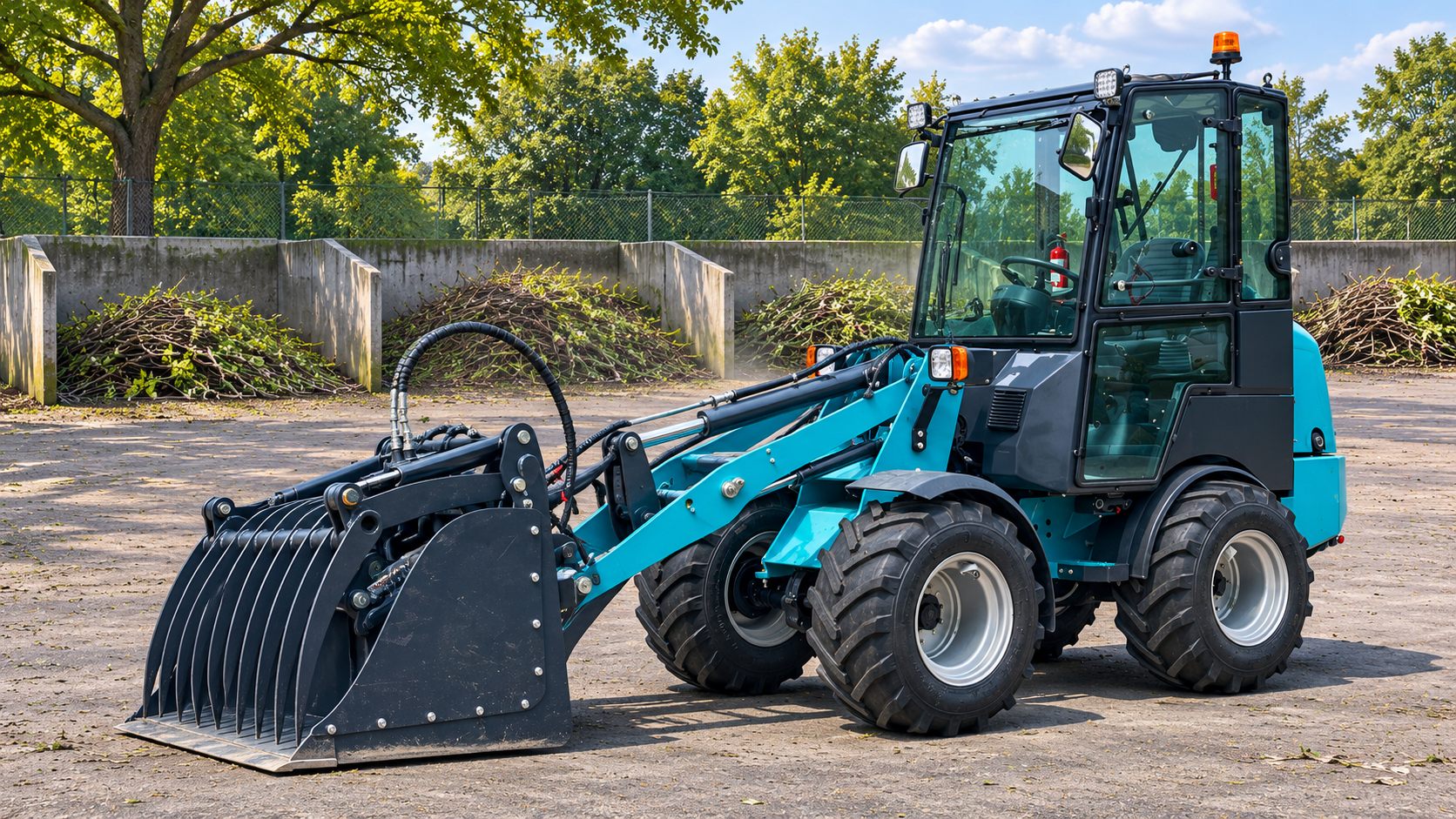
Keep a service record that follows the loader when it changes location. Record inspections, reported faults, maintenance dates and replacement parts, using the schedule and procedures for the supplied unit. Check visible hoses, tires, guards and attachment locking parts before use, and stop if a defect needs assessment. Do not work beneath raised components without the specified mechanical support and isolation. Ask how parts can be identified from the serial number and configuration. Clear records help the owner and service provider avoid repeating diagnosis when a machine is used by more than one team.
Read equipment application and buying articles
Make dealer support part of the comparison
A dealer proposal should describe support as clearly as the machine itself. Compare manuals, parts identification, warranty conditions, technical contact arrangements and the availability of routine wear items. Discuss the customer industries you serve and the demonstrations needed for those applications. A dealer should not promise a universal production rate or fixed return on investment without evidence from the intended duty. Where equipment will travel between customers or projects, agree a practical inspection and handover checklist so condition and supplied accessories remain traceable.
Discuss attachments, parts and site requirements
Agree the final purchase scope
Confirm the exact model, configuration, included bucket, optional equipment, documentation, packing and delivery responsibilities in writing. Where CE conformity or engine-related EPA requirements apply, request documentation matching the offered configuration and destination; a brand name or a generic certificate image is not a substitute. Discuss export paperwork and after-sales arrangements before shipment. The generated scene images illustrate possible surroundings based on the product appearance and are not customer case photographs. Final ratings, dimensions and options must follow the accepted specification and quotation.
Request a site-specific quotation
Shandong Zhuogong Machinery equipment Co.,Ltd
ZGLOADER / MYZG
WhatsApp: +86 131 7691 0558
Email: MYZG@my-forklift.com
Products categories
-
ZGFORKLIFT / MYZG CDDH All-Terrain Electric Pallet Stacker for Workflow Survey and Labor Efficiency
-

zl-906-807 wheel loader
-

ZGFORKLIFT / MYZG CPD25 2.5 Ton Lithium Electric Forklift
-
ZGFORKLIFT / MYZG CDDA Walkie Electric Pallet Stacker for Workflow Survey and Labor Efficiency
-

ZGLOADER / MYZG G38 Grain Wheel Loader with High-Capacity Bucket
-
ZGLOADER / MYZG E20 Electric Wheel Loader Industry Solutions and TCO Guide
