
Against the backdrop of the continuous recovery and growth of the global logistics industry, the demand for efficient utilization of warehousing space has become increasingly prominent, making the maximum lifting height of pallet stackers, a key equipment for material handling, a focus of industry attention. According to the latest data released by the China Federation of Logistics and Purchasing, the China Warehousing Index in December 2025 reached 52.4%, an increase of 2 percentage points month-on-month, hitting a new high since February 2025 . Driven by the recovery of market demand, warehousing business volume maintained rapid growth, with the business volume index reaching 53.6% and the facility utilization rate index rising to 54%, indicating that the warehousing industry is operating in an increasingly sound trend . This positive development momentum has further boosted the demand for high-performance pallet stackers. Enterprises are increasingly pursuing high-rise storage solutions to reduce land occupation costs. The maximum lifting height of pallet stackers, which directly determines the storage density of warehouses, has thus become a core indicator affecting the operational efficiency of logistics enterprises. From small and medium-sized retail warehouses to large-scale automated three-dimensional warehouses, there are clear demand gradients for the maximum lifting height of pallet stackers, promoting continuous innovation and upgrading of products in the industry.
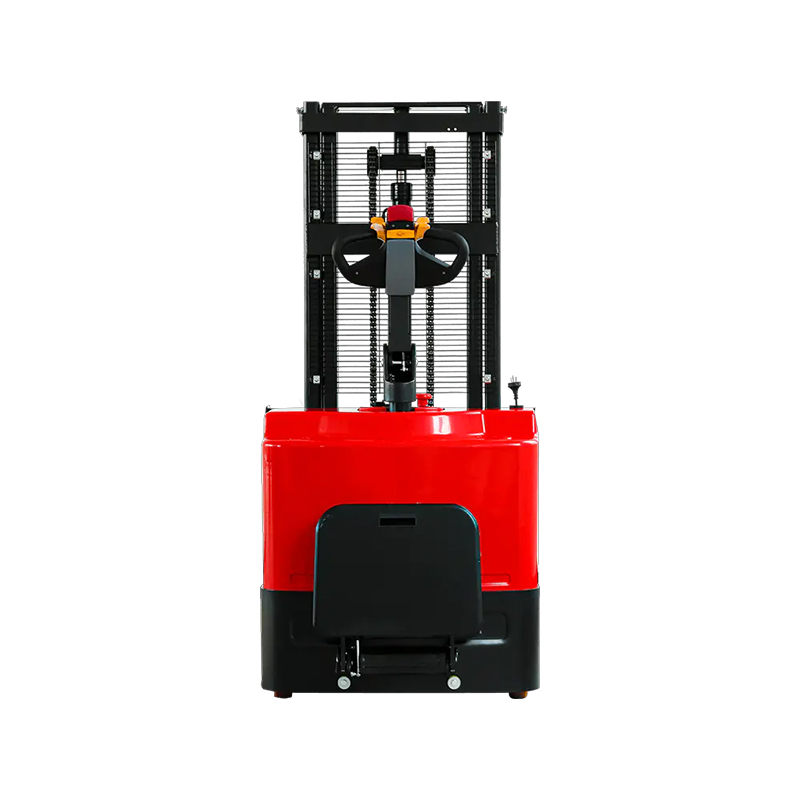
From the current global market supply pattern, the maximum lifting height of pallet stackers shows obvious hierarchical characteristics, which are closely related to product types, rated load capacities and application scenarios, forming a diversified product matrix to meet the needs of different industries. For general logistics and warehousing scenarios, the maximum lifting height of mainstream electric walk-behind stackers is concentrated between 3.3 meters and 5.4 meters. For example, the ERB series electric stackers launched by Chinese manufacturer LTMG have a maximum lifting height of up to 4 meters, with load capacities of 1.5 tons and 2 tons, which are widely used in production workshops and retail logistics links . In the field of medium and high lifting heights, Hangcha Group's A-series high-range stand-on pallet stacker has become a benchmark product. Equipped with a lithium iron phosphate battery, it not only ensures stable operation in low-temperature environments, but also has a maximum lifting height that can meet the high-rise storage needs of most standard warehouses . For large-scale automated three-dimensional warehouses, ultra-high stackers have achieved a leap in lifting height. The UnitLoad-Zhufeng™ pallet stacker independently developed by Lan Jian Intelligence has a maximum lifting height of 45 meters and a rated load of 1500 kg, which can realize high-density storage and automatic in-out warehouse operations . In contrast, small semi-electric stackers for light-load scenarios such as convenience stores and small workshops have a relatively low maximum lifting height, generally between 1.6 meters and 2.5 meters, focusing on flexibility and economy.
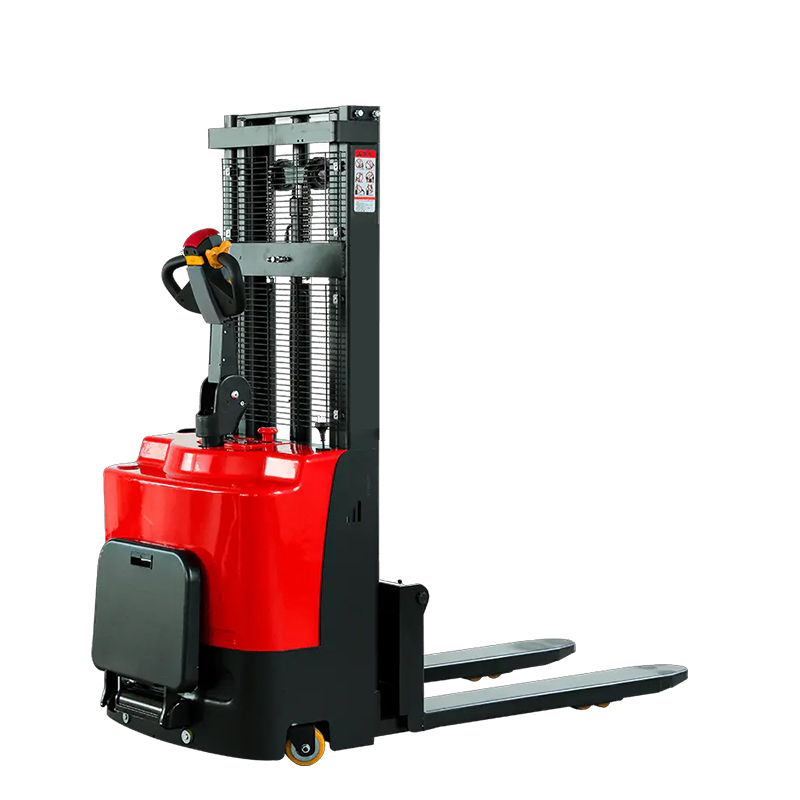
The maximum lifting height of pallet stackers is not only determined by product positioning, but also restricted by multiple core factors such as load capacity, mast structure, power system and operating environment. There is a clear inverse proportional relationship between rated load capacity and maximum lifting height. Taking the standard electric stacker as an example, when the lifting height increases from 3 meters to 5 meters, the safe load capacity will generally decrease by 15%-25% to ensure the overall stability of the equipment . The mast structure is the core component supporting the lifting height. Two-stage or three-stage reinforced steel masts are widely used in medium and high lifting height products. The mast adopts an integrated welding process, which can effectively resist bending and deformation during high-altitude operation while extending the lifting stroke . The performance of the power system directly affects the stability of high-lifting operations. The lithium-ion battery technology popular in the market has become a key support. The lithium iron phosphate battery used in Hangcha's A-series stackers has a charging efficiency of up to 98%, can be fully charged in 2 hours, and has a thermal runaway temperature of more than 600°C, providing reliable power guarantee for long-term high-lifting operations . In addition, the operating environment also has an impact. For example, in low-temperature environments below -20°C, special low-temperature-resistant stackers are required. These products are equipped with electric heating functions to ensure that the lifting system operates normally.
Post time:Jan.09.2026
