
Fuel consumption in diesel rough terrain forklifts is a critical consideration for industries reliant on heavy material handling in challenging outdoor environments. Unlike their indoor electric counterparts, these robust machines are engineered to operate on uneven, unpaved, or sloped terrain, commonly found in construction sites, lumber yards, and agricultural settings. The fuel consumption is primarily measured in liters or gallons per hour of operation, as the dynamic nature of outdoor work makes distance-based metrics less practical. On average, a standard diesel rough terrain forklift with an engine power ranging from 50 to 100 horsepower may consume between 2.5 to 4.5 liters of diesel per hour under typical working conditions. However, this figure is not static; it fluctuates significantly based on several intrinsic and extrinsic factors. Key determinants include the engine's size and technology, the forklift's load capacity, and the intensity of the work cycles. Modern engines with advanced fuel injection systems and turbocharging tend to offer better fuel efficiency compared to older models. Understanding these baseline consumption rates is essential for fleet managers to estimate operational costs, plan fuel logistics, and assess the environmental impact of their equipment. Moreover, with rising fuel prices and increasing emphasis on sustainability, optimizing fuel efficiency has become both an economic and ecological imperative for businesses utilizing this indispensable machinery.
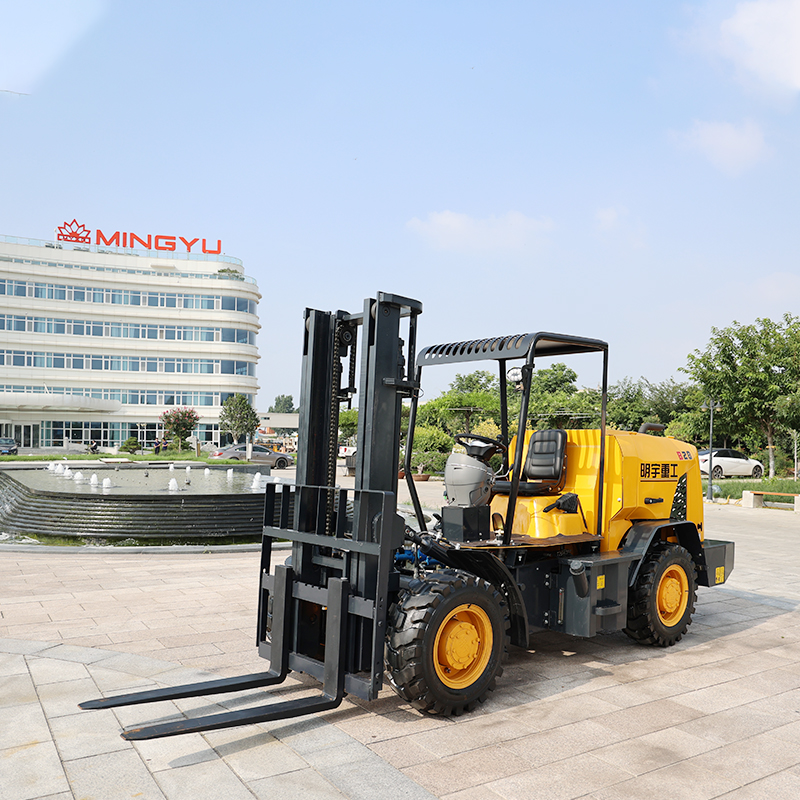
The technical specifications and operational parameters of a diesel rough terrain forklift play a pivotal role in determining its fuel consumption. Engine displacement, rated power, and torque characteristics are fundamental; a larger, high-horsepower engine required for lifting heavy loads to significant heights or navigating steep gradients will inherently consume more fuel. For instance, a forklift with a 74 kW engine might use around 3.8 liters per hour during moderate use, whereas a more powerful 90 kW model could exceed 4.5 liters. The type of work cycle is equally crucial. Intensive, non-stop operations involving frequent lifting, lowering, and long travel distances with full loads will drive consumption toward the higher end of the spectrum. Conversely, machines used intermittently for lighter duties will exhibit lower hourly fuel use. The hydraulic system also contributes to fuel usage; complex attachments like rotating clamps or booms increase the hydraulic pump's workload, drawing more power from the engine. Furthermore, transmission type—whether manual, automatic, or hydrostatic—affects efficiency. Hydrostatic transmissions, common in rough terrain models, provide excellent control and torque but can be less fuel-efficient under certain conditions compared to modern torque-converter automatics. Tire selection is another often-overlooked factor; large, heavy-tread tires necessary for ground clearance and traction increase rolling resistance, thereby requiring more engine power and fuel to overcome, especially on soft ground like mud or sand.
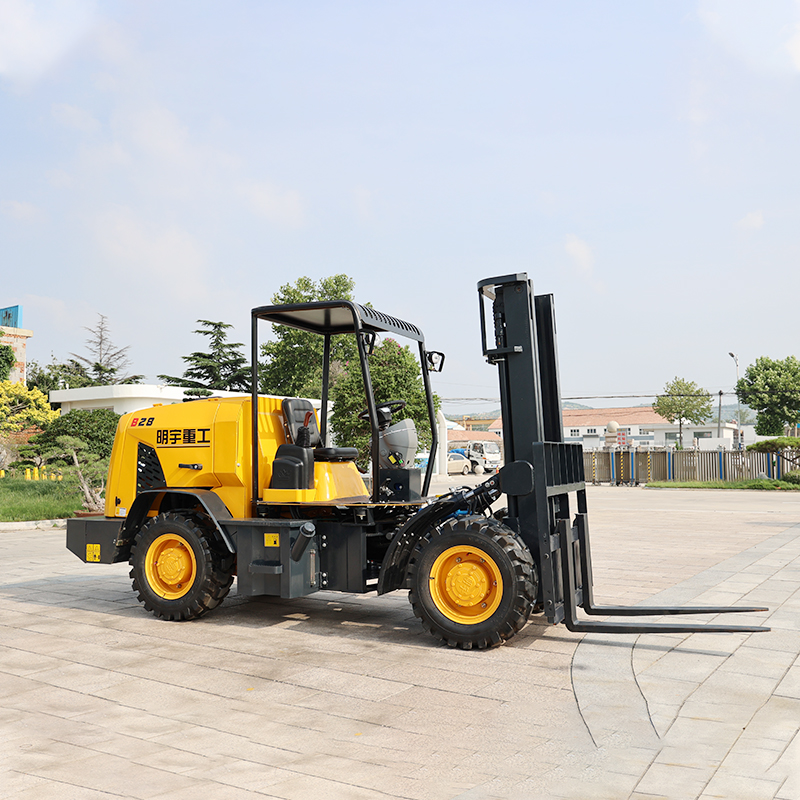
External working conditions and operator behavior are equally influential in the fuel consumption equation of a diesel rough terrain forklift. The very terrain these machines are built for—uneven, rough, or sloped—poses a constant challenge. Operating consistently on inclines or over obstacles forces the engine to work harder, significantly increasing fuel burn. Ambient temperature also plays a role; cold starts in winter require longer idle times for the engine to reach optimal operating temperature, while extreme heat can lead to reduced engine efficiency. Operator skill and habits are perhaps the most variable factor. Practices such as aggressive acceleration, unnecessary high-revving, prolonged idling during breaks, and improper shifting can inflate fuel consumption by 20% or more. Training operators in efficient techniques, like gentle throttle control, minimizing idle time, and planning routes to reduce empty travel, can yield substantial fuel savings. Additionally, the state of the worksite impacts efficiency; a well-organized, flat, and firm site allows for smoother operation compared to a cluttered, muddy, or excessively rutted area. These environmental and human factors underscore that fuel consumption is not merely a product of machine specification but a dynamic outcome of how, where, and by whom the equipment is used.
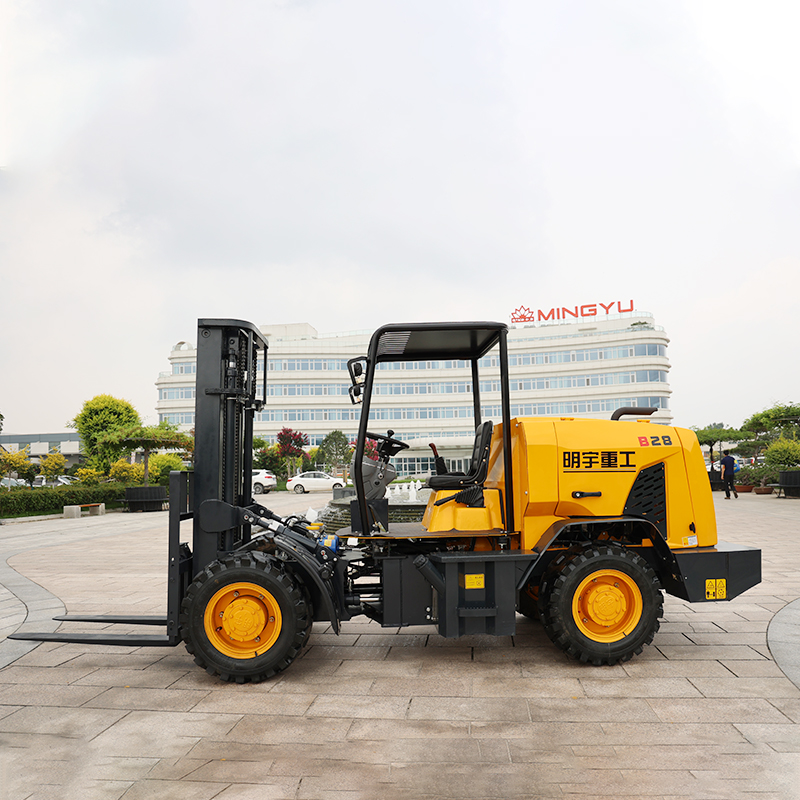
Regular maintenance and technological advancements are key strategies for managing and reducing the fuel consumption of diesel rough terrain forklifts. A well-maintained machine operates at peak efficiency. This includes timely replacement of air filters, fuel filters, and engine oil to ensure clean combustion and reduce internal friction. Properly inflated tires reduce rolling resistance, while regular tuning of the fuel injection system and engine calibration ensures optimal fuel-air mixture. Neglecting maintenance can lead to a gradual but significant increase in fuel usage, along with higher long-term repair costs. On the technological front, manufacturers are continuously innovating to improve fuel economy. Features like automatic engine shutdown systems that turn off the engine after a period of idling, advanced common-rail fuel injection for more precise combustion, and eco-mode settings that limit engine speed without compromising necessary power are becoming more common. Hybrid diesel-electric systems are also emerging, using a smaller diesel engine to generate electricity for electric drive motors, potentially offering significant fuel savings, especially in applications with frequent stop-start cycles. For fleet managers, investing in modern, fuel-efficient models and adhering to a strict preventive maintenance schedule is not just about reducing the fuel bill; it's about enhancing overall productivity, extending equipment lifespan, and reducing the carbon footprint of their operations.
Post time:Dec.24.2025
