
What Is the Maximum Lifting Capacity and Height of a Standard Forklift?
1. Introduction
Forklifts are essential material-handling machines used in warehouses, factories, construction sites, logistics centers, ports, and many other industrial environments. Among the specifications buyers consider, lifting capacity and lifting height are two of the most important. They determine what type of loads a forklift can safely handle and how high those loads can be placed.
When people ask about the maximum lifting capacity and height of a “standard forklift,” there is no single answer. Forklifts are available in many different configurations. A small electric forklift may have a capacity of around 1.5 tons, while a heavy-duty diesel forklift can lift 10 tons or more. Similarly, a conventional forklift may lift loads to approximately 3–6 meters, while a specialized high-lift machine can reach considerably higher.
It is also important to understand that maximum lifting capacity and maximum lifting height are not independent specifications. A forklift's rated capacity can decrease when the load is lifted higher or when the load center becomes farther from the mast. Mast type, load center, attachment weight, counterweight, hydraulic system, and overall stability all influence the actual capacity of a forklift.
Therefore, when selecting a forklift, buyers should not simply choose a machine based on its largest advertised lifting capacity or maximum mast height. Instead, they should consider the actual load weight, load dimensions, required lifting height, load center, working environment, and operating conditions.
This article explains the typical lifting capacity and height of standard forklifts, the factors that affect these specifications, and how to select the right forklift for a particular application.
2. What Is the Lifting Capacity of a Standard Forklift?
The lifting capacity of a forklift is the maximum load that the machine is designed to lift safely under specified conditions. It is usually expressed in kilograms or tons.
Common standard forklift capacities include:
1.0–1.5 tons for light-duty applications
1.5–2.5 tons for general warehouse operations
3–3.5 tons for medium-duty industrial applications
4–5 tons for heavier loads
6–10 tons for heavy-duty applications
More than 10 tons for specialized industrial forklifts
For example, a forklift advertised as a 2-ton forklift normally has a rated capacity of 2,000 kg under a specified load center and configuration. It does not necessarily mean that the machine can lift 2,000 kg regardless of the load dimensions or lifting height.
The capacity plate on the forklift provides the most important information. It normally specifies the rated capacity under particular conditions, such as a 500 mm or 600 mm load center and a particular lifting height.
3. What Is the Maximum Lifting Height?
Lifting height refers to how high the forks can raise a load. It is usually measured from the ground to the top surface of the forks or another defined reference point, depending on the manufacturer's specification.
For conventional forklifts, common lifting heights include approximately:
3 m
3.5 m
4 m
4.5 m
5 m
6 m
Triplex and other specialized mast configurations can provide greater lifting heights when required.
It is important to distinguish lifting height from overall mast height. A forklift with a 4.5 m lifting height may have a mast that extends much higher when the forks are raised. The collapsed mast height is also important when the forklift must pass through doors or operate inside buildings.
For indoor warehouse applications, buyers should consider both the required rack height and the available overhead clearance.
4. Typical Capacity and Height by Forklift Type
Different forklift types are designed for different applications.
Electric Forklifts
Electric forklifts are widely used in warehouses, factories, and logistics facilities. Typical capacities range from about 1.5 to 5 tons, although larger models are available.
They can be equipped with duplex or triplex masts and are suitable for applications requiring relatively high lifting heights while maintaining good maneuverability.
Diesel Forklifts
Diesel forklifts are commonly used for outdoor and heavy-duty operations. Typical models range from approximately 2 to 10 tons, with specialized machines offering substantially greater capacities.
They are suitable for construction materials, steel products, timber, machinery, and other heavy loads.
LPG or Gasoline Forklifts
LPG and gasoline forklifts are commonly used in warehouses, factories, and distribution facilities. Typical capacities are approximately 1.5–5 tons.
Their lifting heights depend primarily on the selected mast configuration rather than the fuel type.
Rough-Terrain Forklifts
Rough-terrain forklifts are designed for construction sites, farms, yards, and uneven surfaces. They typically have larger tires, higher ground clearance, and stronger chassis designs.
Their lifting capacities can range from around 2.5 tons to more than 5 tons, depending on the model.
Heavy-Duty Forklifts
Heavy-duty forklifts are designed for demanding industrial applications. Capacities can reach 10 tons, 16 tons, 25 tons, or more.
These machines generally have specialized chassis, large counterweights, reinforced masts, and powerful hydraulic systems.
5. How Load Center Affects Forklift Capacity
One of the most important concepts in forklift operation is the load center.
The load center is the horizontal distance from the front face of the forks to the load's center of gravity. Many standard forklifts are rated at a 500 mm load center, while some larger forklifts may use 600 mm or another specified distance.
For example, suppose a forklift has a rated capacity of 2,000 kg at a 500 mm load center. If the actual load is much longer and its center of gravity moves farther away from the mast, the forklift may no longer be able to safely lift 2,000 kg.
This happens because the load creates a greater overturning moment as the distance increases.
Therefore, a buyer should provide not only the load weight but also the load dimensions and center of gravity when selecting a forklift.
6. How Mast Design Affects Lifting Height
The mast is the vertical structure responsible for raising and lowering the forks.
Simplex Mast
A simplex mast has a relatively simple design and is often used when moderate lifting heights are sufficient.
Duplex Mast
A duplex mast has two stages and can provide greater lifting height while maintaining reasonable overall dimensions.
Triplex Mast
A triplex mast has three stages and is widely used when higher lifting heights are required. It is particularly useful in warehouses with high storage racks.
Quadruplex Mast
Quadruplex masts have four stages and are designed for applications requiring particularly high lifting heights while maintaining a relatively low collapsed height.
The choice of mast depends on both the required lifting height and the available operating space.
7. Factors That Limit Maximum Lifting Capacity
Several factors determine how much a forklift can safely lift.
Counterweight
The counterweight balances the load carried in front of the front axle. A heavier load generally requires an appropriately designed counterweight and chassis.
Load Center
As the load center increases, the effective lifting capacity can decrease.
Mast Strength
The mast must be strong enough to support the load at the required height. Higher lifting heights place additional demands on the mast structure.
Hydraulic System
The hydraulic pump, cylinders, valves, hoses, and other components determine whether the forklift has sufficient lifting force.
Forks and Attachments
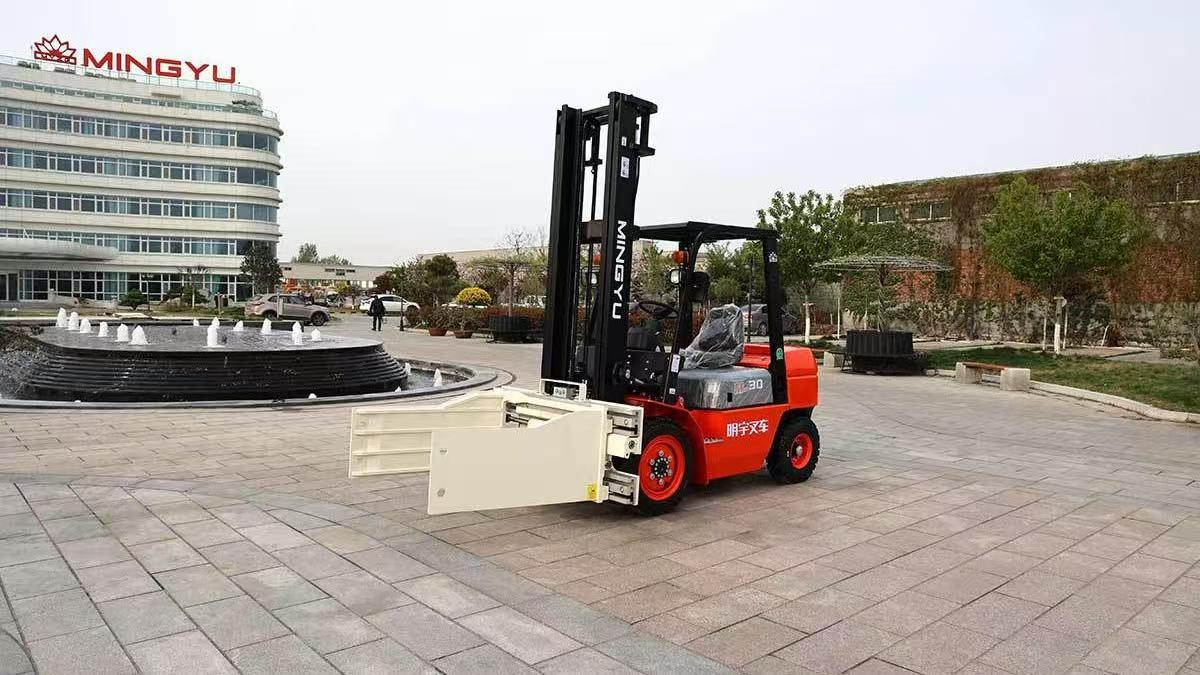
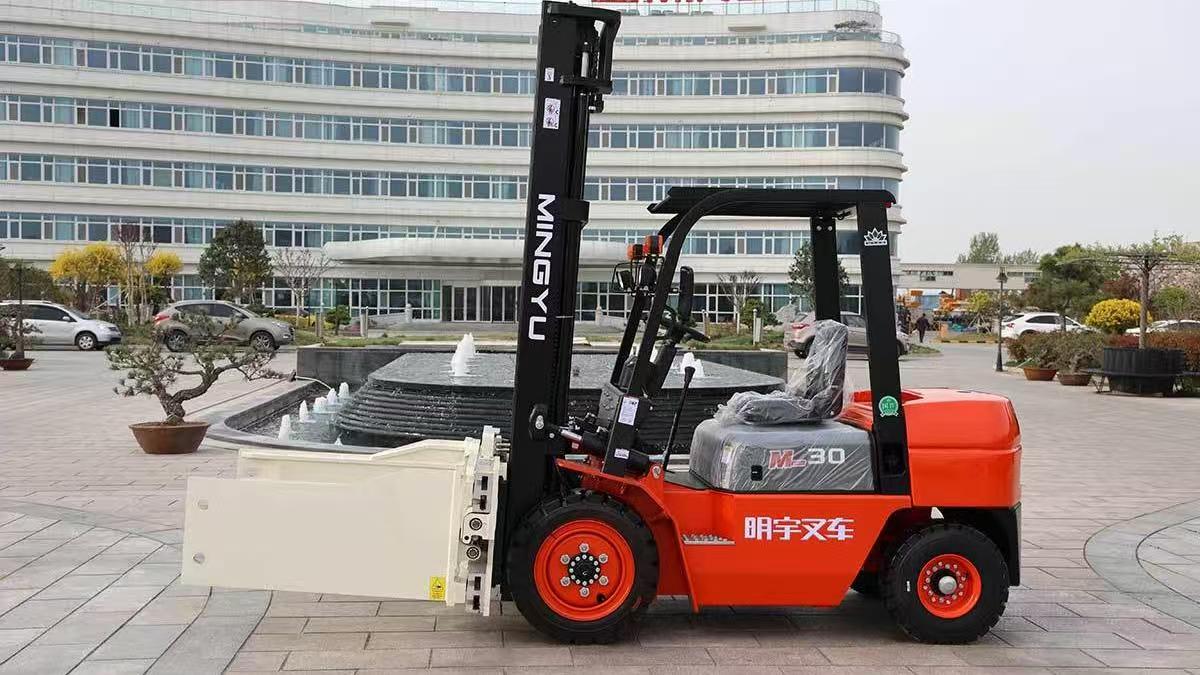
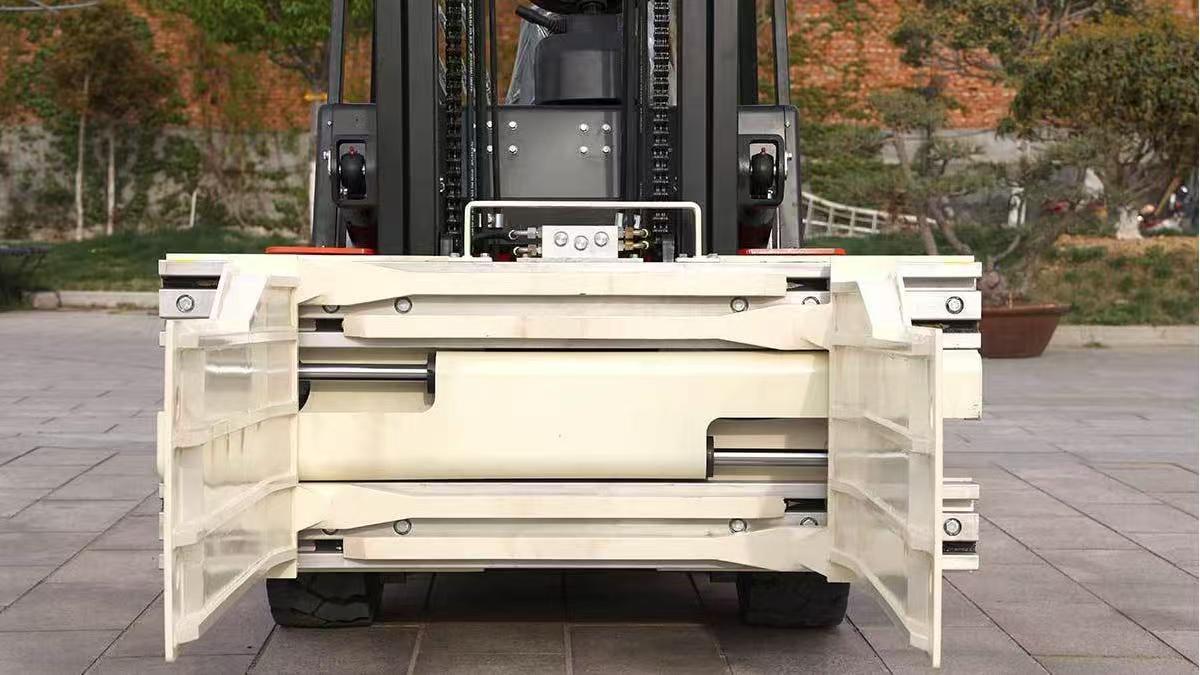
Forks and attachments have their own weight and can also move the effective load center forward. For this reason, using an attachment can reduce the forklift's usable capacity.
Ground Conditions
Uneven or unstable ground can significantly affect forklift stability, especially when carrying elevated loads.
8. Factors That Limit Maximum Lifting Height
Maximum lifting height is influenced by more than the mast itself.
The forklift's overall design, mast strength, hydraulic system, load capacity, overhead clearance, and stability all matter.
For example, a forklift might technically be capable of lifting its forks to 6 m, but its rated capacity at that height may be lower than its nominal capacity at a lower lifting height.
Warehouse users should also consider beams, sprinkler systems, ceilings, lighting, doors, and other overhead obstacles.
9. Can a Standard Forklift Lift Its Rated Capacity to Maximum Height?
Not necessarily.
This is one of the most important points for forklift buyers. A forklift's nominal rated capacity does not automatically apply at every lifting height and load center.
As the load is raised, the center of gravity of the combined forklift-load system changes. The higher the load is lifted, the greater the stability requirements.
Manufacturers therefore provide capacity ratings based on specific conditions. A forklift might have a nominal capacity of 3,000 kg but have a lower allowable capacity at a particular lifting height or load center.
The correct approach is to check the manufacturer's capacity plate and load chart rather than assuming that the nominal capacity applies to every situation.
10. Choosing the Right Forklift Capacity and Lift Height
The first step is to determine the heaviest load the forklift needs to handle.
Next, determine the load's dimensions and load center. A 2,000 kg compact pallet and a 2,000 kg long steel component may require very different forklift specifications.
Then determine the required lifting height. If the highest rack position is 4.5 m, the forklift should have sufficient lifting height to place the load safely at that level.
Buyers should also consider:
Indoor or outdoor operation
Floor conditions
Aisle width
Door height
Ceiling height
Load dimensions
Working hours
Fuel or battery requirements
Attachments
Required turning radius
Choosing a forklift with an appropriate capacity and height provides better safety and efficiency than simply selecting the largest available machine.
11. Common Mistakes When Selecting Forklift Capacity and Height
A common mistake is selecting a forklift based only on its tonnage. For example, someone may choose a 3-ton forklift because the heaviest load weighs 3 tons, without checking the load center or lifting height.
Another mistake is confusing maximum lifting height with overall mast height.
Buyers may also overlook the weight of attachments. A sideshifter, fork positioner, clamp, or other attachment can affect the remaining lifting capacity.
Another important mistake is assuming that a forklift can lift its full rated capacity to maximum height. Actual capacity must always be confirmed using the manufacturer's capacity plate.
12. Practical Examples
Consider a warehouse that handles pallets weighing up to 2,000 kg. If the load center is within the forklift's rated specification and the required lifting height is approximately 3–4 m, a standard 2-ton forklift may be suitable.
For heavier industrial loads of around 3,000–5,000 kg, a medium- or heavy-duty diesel or electric forklift may be more appropriate.
If the warehouse has high storage racks, a triplex mast may be preferable to a standard duplex mast because it can provide greater lifting height while maintaining a relatively low collapsed height.
For outdoor construction applications, however, lifting height is not the only consideration. Ground clearance, tire type, traction, stability, and rough-terrain capability can be equally important.
13. Safety Considerations
Forklift capacity should never be treated as a target that operators can exceed.
Operators should always:
Check the capacity plate before operation
Keep loads properly positioned on the forks
Avoid exceeding the rated load
Keep the load as low as practical while traveling
Avoid sudden turns with elevated loads
Check ground conditions
Inspect forks, chains, mast, tires, and hydraulic components
Use only approved attachments
Follow the manufacturer's operating instructions
When a load is unusually long, tall, heavy, or irregularly shaped, the operator should confirm the appropriate capacity before lifting it.
14. Conclusion
There is no universal maximum lifting capacity or lifting height for a standard forklift. Common forklifts may have capacities from approximately 1.5 to 5 tons, while heavy-duty models can lift substantially more. Typical lifting heights range from around 3 to 6 meters, with specialized high-lift configurations capable of reaching greater heights.
However, the most important point is that lifting capacity depends on operating conditions. Load center, lifting height, mast configuration, attachments, counterweight, hydraulic system, and ground conditions can all affect the forklift's actual safe capacity.
For this reason, buyers should select a forklift based on the complete application rather than one specification alone. By matching load weight, load center, lifting height, mast type, and operating environment, businesses can choose a forklift that provides the right combination of safety, productivity, and reliability.
Post time:Oct.08.2026
