
Is LPG Forklift Cheaper to Operate Than Diesel Forklift?
1. Introduction
When businesses need a forklift for material handling, LPG and diesel forklifts are two popular choices, especially for applications that require reliable performance, long operating hours, and relatively high lifting capacity. Both types of forklifts use internal combustion engines, but they have significant differences in fuel cost, maintenance, emissions, operating environment, and overall productivity. This makes the question “Is an LPG forklift cheaper to operate than a diesel forklift?” more complicated than simply comparing the price of LPG and diesel fuel.
In some applications, LPG forklifts can provide lower overall operating costs because they offer relatively clean combustion, convenient refueling, and good performance for indoor and outdoor material handling. Diesel forklifts, on the other hand, can be highly economical when used for heavy-duty outdoor operations because diesel engines provide strong torque and good fuel efficiency under demanding loads.
The actual operating cost depends on several factors, including annual working hours, average load, fuel prices, maintenance requirements, operator habits, working environment, and local emission regulations. A forklift operating only a few hundred hours per year may have a very different cost structure from one working several thousand hours annually.
Therefore, businesses should not make a purchasing decision based solely on fuel price. Instead, they should consider the total cost of ownership (TCO), including fuel, maintenance, downtime, purchase price, productivity, and expected service life. This article compares LPG and diesel forklifts in detail and explains which option can be more economical for different working conditions.
2. LPG Forklift vs. Diesel Forklift: Basic Differences
LPG forklifts use liquefied petroleum gas as their fuel. The LPG is stored in a replaceable cylinder mounted on the forklift and is supplied to the engine through a fuel system designed for gaseous fuel. LPG engines are generally smooth-running and can provide sufficient power for many warehouse, manufacturing, logistics, and general material-handling applications.
Diesel forklifts use diesel fuel and are typically designed for applications requiring high torque and continuous heavy-duty operation. Diesel engines are particularly common in construction sites, ports, industrial yards, outdoor warehouses, and other demanding environments.
One of the biggest differences is the operating environment. LPG forklifts can be used in some indoor applications where adequate ventilation and applicable workplace requirements are met. Diesel forklifts generally produce more exhaust emissions, making them less suitable for poorly ventilated indoor environments.
Diesel forklifts also tend to be favored for heavy outdoor work. Their strong low-speed torque makes them suitable for moving heavy loads and operating on uneven surfaces. LPG forklifts can also perform demanding work, but the most economical choice depends on the specific workload and operating conditions.
3. Fuel Cost Comparison
Fuel is one of the most important components of forklift operating costs. However, comparing LPG and diesel requires more than simply looking at the price per liter or kilogram.
Fuel consumption depends on engine size, forklift capacity, load weight, operating hours, driving speed, lifting frequency, terrain, and operator behavior. A forklift carrying heavy loads continuously will consume more fuel than one performing light-duty work with frequent idle periods.
For example, an LPG forklift may consume fuel differently from a diesel forklift even when both machines have similar rated capacities. LPG may have a lower or higher cost per operating hour depending on local fuel prices and actual consumption.
A simple calculation can help businesses compare the two:
Hourly fuel cost = Fuel consumption per hour × Fuel price
For annual operating costs:
Annual fuel cost = Hourly fuel consumption × Annual operating hours × Fuel price
Suppose a forklift operates 2,000 hours per year. Even a small difference in hourly fuel cost can become significant over several years. For this reason, companies should use their actual local LPG and diesel prices when making purchasing decisions.
Fuel prices also vary significantly between countries and regions. A forklift that is economical with LPG in one market may have a different cost advantage in another market where LPG infrastructure is limited or diesel is significantly cheaper.
4. Maintenance and Service Costs
Maintenance is another important part of forklift operating expenses.
LPG forklifts generally require routine engine oil changes, oil-filter replacement, air-filter maintenance, cooling-system inspections, ignition-system maintenance, and LPG-system inspections. Depending on the engine design, components such as spark plugs and related ignition parts may also require periodic replacement.
Diesel forklifts require engine oil and filter changes, fuel-filter replacement, air-filter maintenance, cooling-system maintenance, and diesel fuel-system inspections. Diesel engines can be extremely durable, but their fuel systems and emission-control systems may require professional maintenance depending on the engine and applicable regulations.
The actual maintenance cost depends heavily on the forklift brand, engine model, working environment, maintenance schedule, and availability of spare parts.
Dusty construction sites, for example, can increase air-filter maintenance requirements. Heavy-duty applications can also increase tire wear, brake wear, hydraulic-system stress, and other maintenance expenses regardless of fuel type.
Therefore, it is difficult to say that LPG forklifts are always cheaper to maintain than diesel forklifts. Businesses should compare the recommended maintenance intervals and spare-parts prices of specific forklift models rather than relying only on fuel type.
5. LPG Forklift Operating Efficiency
LPG forklifts are popular because they offer a good balance between performance, refueling convenience, and emissions for many applications.
One major advantage is that replacing an LPG cylinder can be relatively quick compared with waiting for a battery-powered forklift to recharge. This allows the forklift to return to work quickly during multi-shift operations.
LPG engines can also provide smooth acceleration and consistent performance. This can be useful in warehouses and manufacturing facilities where forklifts frequently stop, start, lift, lower, and transport loads over relatively short distances.
However, efficiency depends on the application. If the forklift spends most of its time performing extremely heavy-duty outdoor work, a diesel model may provide better overall efficiency and productivity.
Operator behavior is also important. Excessive idling, aggressive acceleration, unnecessary high-speed driving, and carrying loads above the normal operating range can increase fuel consumption.
6. Diesel Forklift Operating Efficiency
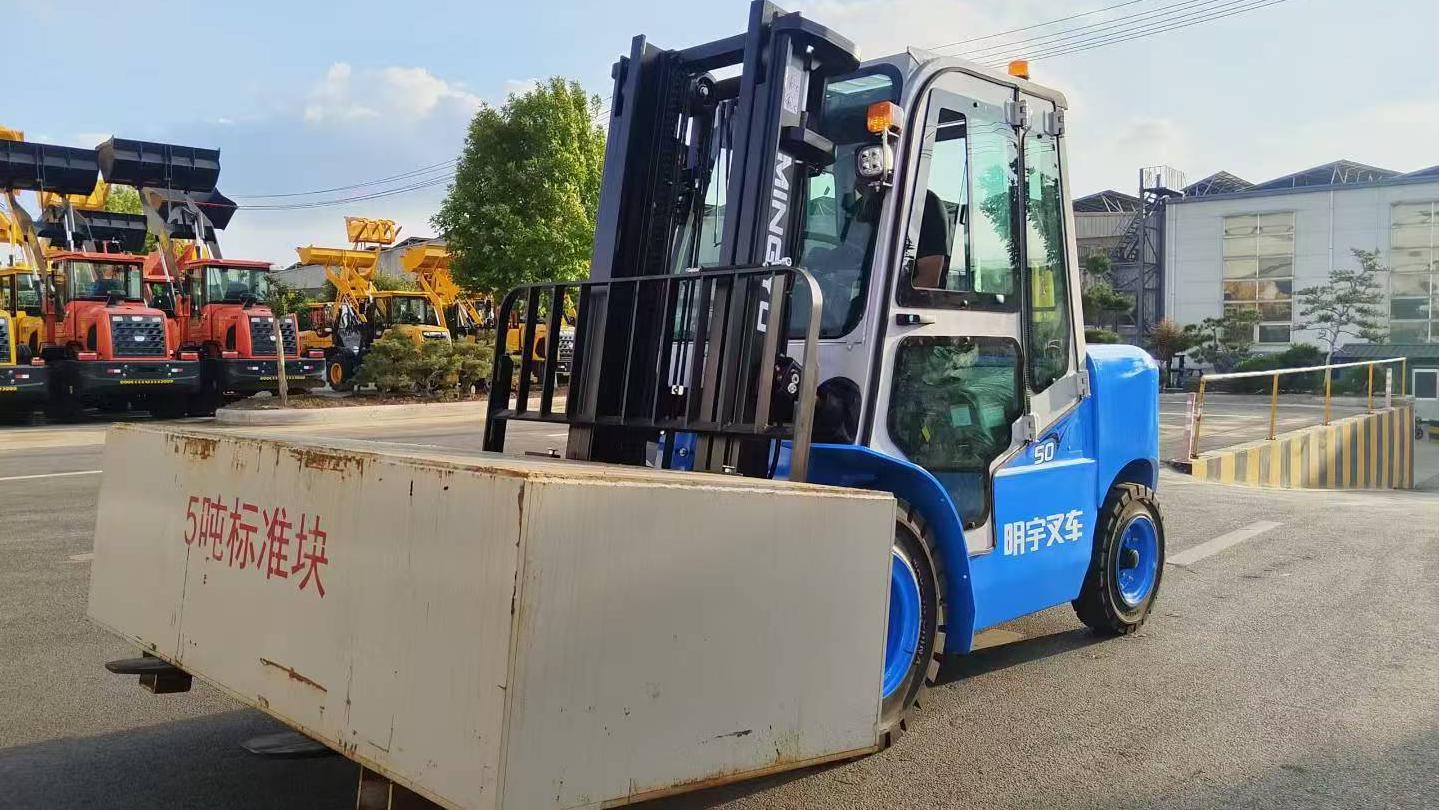
Diesel forklifts are known for strong torque and durability. These characteristics make them particularly suitable for demanding applications where forklifts regularly handle heavy loads or operate on rough and uneven surfaces.
For example, construction material yards may require forklifts to move heavy steel products, building materials, pallets, or other loads over outdoor surfaces. In these conditions, diesel forklifts can provide strong and reliable performance.
Diesel engines can also be efficient when operating continuously under substantial loads. Their fuel consumption characteristics can make them attractive for businesses with high annual operating hours.
However, diesel forklifts generally produce more exhaust emissions than LPG forklifts. This can create additional ventilation and regulatory considerations, particularly in indoor environments.
Therefore, diesel may offer excellent value for outdoor heavy-duty applications, while LPG may be more practical for businesses that need a balance between indoor usability and strong performance.
7. Initial Purchase Price vs. Long-Term Operating Cost
The purchase price is only one component of forklift ownership cost.
A lower-priced forklift is not necessarily cheaper over five or ten years. If it consumes significantly more fuel or requires more frequent maintenance, the initial savings may eventually disappear.
A useful approach is to calculate the total cost of ownership:
TCO = Purchase Price + Fuel Costs + Maintenance Costs + Repair Costs + Downtime Costs − Residual Value
For example, a company operating a forklift 2,500 hours per year will place much more importance on fuel consumption than a company using the forklift only 500 hours per year.
Annual operating hours therefore have a major impact on the economic calculation.
Businesses should also consider expected service life and resale value. A well-maintained forklift with a strong reputation in the local market may retain useful resale value after several years.
8. LPG Cylinder and Fuel Handling Costs
LPG forklifts use fuel cylinders that must be refilled or exchanged. This creates a different fuel-management system compared with diesel forklifts.
One advantage is the speed of fuel replacement. When properly managed, an LPG cylinder can be replaced relatively quickly, allowing the forklift to return to operation without the longer charging process associated with some alternative power systems.
However, businesses need a reliable LPG supply. If LPG is difficult or expensive to obtain locally, the operating-cost advantage may disappear.
Fuel storage and cylinder handling should also follow applicable safety requirements. Employees responsible for changing or handling LPG cylinders should receive appropriate training, and the cylinders, connections, hoses, and fuel systems should be inspected regularly.
Diesel fuel is usually easier to store in large quantities for operations with dedicated fuel infrastructure. However, diesel storage also involves safety, environmental, and regulatory requirements.
9. Indoor Air Quality and Workplace Considerations
The working environment can significantly influence the choice between LPG and diesel.
LPG forklifts generally produce lower particulate emissions than traditional diesel engines, which is one reason they have historically been used in various indoor material-handling applications. Nevertheless, LPG combustion still produces exhaust gases, so indoor operation requires appropriate ventilation and compliance with local workplace regulations.
Diesel forklifts can generate higher levels of particulate matter and other exhaust pollutants, particularly older models without modern emission-control systems. As a result, they are generally better suited to outdoor environments or facilities specifically designed to manage engine exhaust.
For businesses operating in enclosed warehouses, factories, or manufacturing plants, emission requirements should be checked before purchasing an internal-combustion forklift.
Noise is another consideration. LPG forklifts can provide a relatively smooth engine operation, while diesel engines may be louder depending on the model and operating conditions.
10. Productivity and Downtime
Operating cost is not limited to fuel and maintenance. Productivity and downtime can have an even greater financial impact.
If a forklift is unavailable because of maintenance or repair, workers may have to wait or use another machine. This can reduce warehouse productivity and increase labor costs.
LPG forklifts have an advantage in applications where rapid refueling is important. An operator can replace an empty cylinder and return the machine to work relatively quickly, subject to proper procedures.
Diesel forklifts can also be refueled quickly, especially when a company has its own fuel station or storage system.
Reliability is therefore more important than fuel type alone. A well-maintained forklift from a reputable manufacturer can minimize unexpected downtime and reduce long-term operating expenses.
11. Environmental and Regulatory Factors
Environmental regulations are becoming increasingly important when businesses select industrial vehicles.
Diesel engines are subject to increasingly strict emission standards in many markets. Depending on the engine generation and local regulations, diesel forklifts may require advanced emission-control systems.
LPG forklifts also produce emissions, but their emission profile can be more suitable for certain applications. However, LPG should not automatically be considered a zero-emission or environmentally neutral solution.
Businesses should check the regulations that apply to their specific location and workplace. Some facilities may have restrictions on internal-combustion forklifts altogether, while others may allow LPG or modern low-emission diesel equipment under specific conditions.
Future regulatory requirements should also be considered when purchasing a forklift expected to operate for many years.
12. Real-World Cost Example
Consider a company comparing a 2.5-ton LPG forklift with a similar 2.5-ton diesel forklift.
Assume both forklifts operate approximately 2,000 hours per year. The company should collect the following information:
LPG consumption per hour
Diesel consumption per hour
Local LPG price
Local diesel price
Annual maintenance cost
Purchase price
Expected service life
Estimated residual value
Expected repair costs
For example, if the LPG forklift has a lower calculated fuel cost per hour, the annual fuel savings can be calculated by multiplying the difference by 2,000 operating hours.
If the LPG forklift saves $0.80 per operating hour:
$0.80 × 2,000 hours = $1,600 annual fuel savings
Over five years, this would represent approximately $8,000 in fuel savings before considering changes in fuel prices, maintenance, repairs, and other expenses.
However, this example is only an illustration. Actual fuel consumption and fuel prices vary, so businesses should use real data from their local market and specific forklift models.
13. Which Forklift Is Better for Different Applications?
LPG forklifts may be a good choice for:
Warehouses with appropriate ventilation
Manufacturing facilities
Distribution centers
Logistics operations
Mixed indoor and outdoor applications
Applications requiring frequent refueling
Businesses looking for a balance between performance and emissions
LPG can be particularly attractive when the forklift frequently moves between indoor and outdoor areas and needs quick refueling.
Diesel forklifts may be better for:
Construction sites
Ports and industrial yards
Heavy outdoor material handling
Rough or uneven terrain
Heavy-load applications
Long continuous operating periods
Operations where diesel fuel is readily available and economical
Diesel remains a strong option when high torque, durability, and outdoor performance are the main priorities.
14. Key Factors to Consider Before Choosing
Before purchasing an LPG or diesel forklift, businesses should evaluate several factors.
Annual operating hours: Higher utilization makes fuel efficiency increasingly important.
Average load: Heavy loads can significantly affect fuel consumption and machine performance.
Working environment: Indoor, outdoor, dusty, wet, hot, cold, and uneven environments can require different forklift configurations.
Fuel availability: Local LPG and diesel prices and supply infrastructure can have a major impact on operating costs.
Maintenance capability: Check whether qualified technicians and spare parts are readily available.
Emission requirements: Make sure the forklift meets the regulations applicable to the workplace.
Purchase budget: Consider both initial investment and long-term ownership costs.
Expected service life: A forklift intended for long-term use should be evaluated based on its total cost over its entire operating life.
15. Final Verdict: Is LPG Cheaper Than Diesel?
So, is an LPG forklift cheaper to operate than a diesel forklift?
There is no universal answer.
LPG forklifts can be more economical in applications where fuel prices are favorable, rapid refueling is valuable, indoor operation is required, and the workload is moderate to heavy. Their combination of performance, refueling convenience, and relatively favorable emissions can make them an attractive choice for warehouses, factories, and logistics operations.
Diesel forklifts can be more economical when the machine is used primarily outdoors, handles heavy loads, works continuously, or operates in environments where diesel fuel is readily available at a competitive price. Their strong torque and durability can provide excellent productivity in demanding applications.
The most reliable way to make the decision is to calculate the total cost of ownership, rather than comparing fuel prices alone.
16. Conclusion
Choosing between an LPG forklift and a diesel forklift requires a careful analysis of the complete operating environment. Fuel consumption is important, but it is only one part of the equation. Maintenance, downtime, productivity, purchase price, emissions, fuel availability, and expected service life can all influence the final cost.
For indoor and mixed-use applications, an LPG forklift can provide an attractive combination of performance, convenient refueling, and manageable operating costs. For heavy-duty outdoor applications, diesel forklifts continue to offer strong torque, durability, and reliable performance.
Ultimately, the cheapest forklift to operate is the one that best matches the actual working conditions. Before purchasing, businesses should compare real fuel prices, estimated hourly consumption, maintenance schedules, annual operating hours, and local regulations for specific forklift models.
By calculating these factors together, buyers can make a more accurate decision and choose the forklift that provides the best long-term value rather than simply selecting the machine with the lowest purchase price or cheapest fuel.
Post time:Aug.17.2026
