
Best Eco-Friendly European-Style Wheel Loaders for Urban Emission Zones
1. Introduction
Urban construction is changing rapidly as cities introduce stricter environmental regulations to improve air quality and reduce greenhouse gas emissions. Low Emission Zones (LEZs), Ultra-Low Emission Zones (ULEZs), and Zero Emission Zones (ZEZs) are becoming increasingly important in many European cities. These regulations do not only affect passenger cars and trucks. Construction equipment, including wheel loaders, is also facing growing pressure to reduce exhaust emissions and noise.
For contractors working in urban areas, choosing the right wheel loader has therefore become more complicated. A machine needs to provide sufficient lifting capacity, hydraulic performance, maneuverability, and productivity while also meeting the emission requirements of the specific worksite.
European-style wheel loaders are particularly attractive for urban applications because they are often designed with compact dimensions, good operator visibility, efficient hydraulic systems, comfortable cabins, and configurations suitable for construction and municipal work. Depending on the application, an eco-friendly model may use a modern Stage V diesel engine, an electric powertrain, or a hybrid system.
However, “eco-friendly” does not necessarily mean that every machine is completely emission-free. A Stage V diesel wheel loader significantly reduces regulated exhaust emissions compared with older diesel equipment, while an electric wheel loader can produce zero tailpipe emissions during operation. These technologies serve different purposes and have different advantages.
This article explains the main characteristics of eco-friendly European-style wheel loaders and examines which technologies are best suited to urban emission zones. It also compares diesel, electric, and hybrid solutions and provides practical guidance for contractors choosing equipment for European urban projects.
2. What Is a European-Style Wheel Loader?
A European-style wheel loader generally refers to a wheel loader designed with characteristics commonly expected in European construction and municipal markets. These machines often focus on compact dimensions, operator comfort, safety, visibility, fuel efficiency, and compliance with European regulations.
Many European-style wheel loaders feature enclosed cabins with excellent visibility, ergonomic controls, comfortable seats, efficient lighting systems, and safety features designed for frequent operation in populated areas.
Compact wheel loaders are especially useful in urban environments. Narrow streets, restricted construction sites, pedestrian areas, parking facilities, and municipal projects can make maneuverability more important than maximum machine size.
Another important characteristic is attachment flexibility. European-style wheel loaders may be equipped with buckets, pallet forks, sweepers, snow blades, hydraulic breakers, grapples, and other attachments.
This allows one machine to perform multiple tasks throughout the year, potentially reducing the number of specialized machines required on a project.
3. Understanding Urban Emission Zones
Urban emission zones are areas where vehicles and machinery may be subject to specific environmental requirements.
A Low Emission Zone generally restricts or charges vehicles that do not meet certain emission standards. A Zero Emission Zone can impose much stricter requirements, potentially requiring equipment operating within the designated area to produce no direct exhaust emissions.
The exact rules vary by country, city, vehicle category, and type of equipment. Contractors should therefore never assume that a machine approved for one European city will automatically be permitted in every other city.
For construction companies, this means emission requirements should be checked before purchasing or renting equipment.
The contractor should determine:
The location of the project
Whether construction equipment is covered by local regulations
Applicable emission standards
Whether Stage V equipment is accepted
Whether zero-emission equipment is required
Operating-hour restrictions
Noise restrictions
Documentation and certification requirements
This information can prevent costly problems after equipment has already been purchased.
4. Key Emission Standards for Wheel Loaders
For modern diesel construction equipment in Europe, EU Stage V is an important emissions standard.
Stage V regulations are designed to reduce pollutants from non-road mobile machinery, including particulate matter and nitrogen oxides. Modern engines may use several technologies to control emissions.
Common emission-control components include:
Diesel Oxidation Catalyst (DOC): Helps reduce certain exhaust pollutants.
Diesel Particulate Filter (DPF): Captures particulate matter from diesel exhaust.
Selective Catalytic Reduction (SCR): Uses a urea-based solution such as AdBlue/DEF to help reduce nitrogen oxide emissions.
These technologies allow modern diesel wheel loaders to achieve significantly cleaner exhaust performance than older machines.
However, Stage V compliance should not be confused with zero emissions. A Stage V diesel wheel loader still burns fuel and produces exhaust gases.
If a project specifically requires zero tailpipe emissions, an electric wheel loader may be a more appropriate solution.
5. What Makes a Wheel Loader Eco-Friendly?
An eco-friendly wheel loader is not defined only by its engine type. Several factors can influence its overall environmental performance.
Low fuel consumption
A machine that uses less fuel to complete the same amount of work can reduce operating costs and fuel-related emissions.
Efficient hydraulics
Hydraulic efficiency is particularly important because lifting, bucket loading, dumping, and attachment operation consume significant amounts of energy.
Engine management
Modern electronic engine management can optimize fuel injection and engine operation according to workload.
Automatic idle reduction
Automatic idle-control systems can reduce unnecessary fuel consumption when the machine is stationary.
Eco operating modes
Some wheel loaders offer different operating modes that allow operators to prioritize fuel economy, normal productivity, or maximum performance.
Electric power
Battery-electric wheel loaders eliminate direct tailpipe emissions during operation and can significantly reduce noise.
Reduced noise
Lower noise levels are particularly valuable for urban construction because work may take place near homes, schools, offices, hospitals, and public areas.
6. Best Powertrain Options for Urban Applications
Stage V Diesel Wheel Loaders
Modern Stage V diesel wheel loaders remain an important choice for many urban construction applications.
Their main advantages include long operating time, fast refueling, high power output, and strong performance under heavy loads.
They are particularly useful when the machine needs to work for long shifts or when charging infrastructure is unavailable.
However, contractors must confirm whether Stage V diesel equipment is permitted at the specific worksite.
Electric Wheel Loaders
Electric wheel loaders are increasingly attractive for urban construction.
Their most important advantage is zero direct tailpipe emissions during operation. This makes them particularly suitable for projects with strict local air-quality requirements.
Electric machines also operate much more quietly than conventional diesel machines, which can be a major benefit for construction work near residential areas.
However, battery capacity, charging time, electricity availability, purchase price, and operating hours must be considered carefully.
Hybrid Wheel Loaders
Hybrid systems combine conventional engine technology with electric energy management.
Depending on the design, hybrid technology can recover and reuse energy, reduce fuel consumption, and improve efficiency during certain operating cycles.
Hybrid wheel loaders may be suitable for applications where work cycles include frequent acceleration, braking, lifting, and lowering.
7. Key Specifications to Compare
When selecting an eco-friendly wheel loader, buyers should compare more than just engine power.
Important specifications include:
Operating weight
Rated operating capacity
Bucket capacity
Engine power
Fuel consumption
Hydraulic flow
Hydraulic pressure
Maximum dump height
Breakout force
Turning radius
Travel speed
Tire size
Battery capacity for electric models
Charging time
Maximum operating time
Noise level
The correct specification depends on the application.
For example, a landscaping contractor may prioritize compact dimensions and maneuverability, while a construction company handling heavy aggregate may prioritize breakout force, hydraulic power, bucket capacity, and lifting performance.
8. Compact European-Style Wheel Loaders for Urban Construction
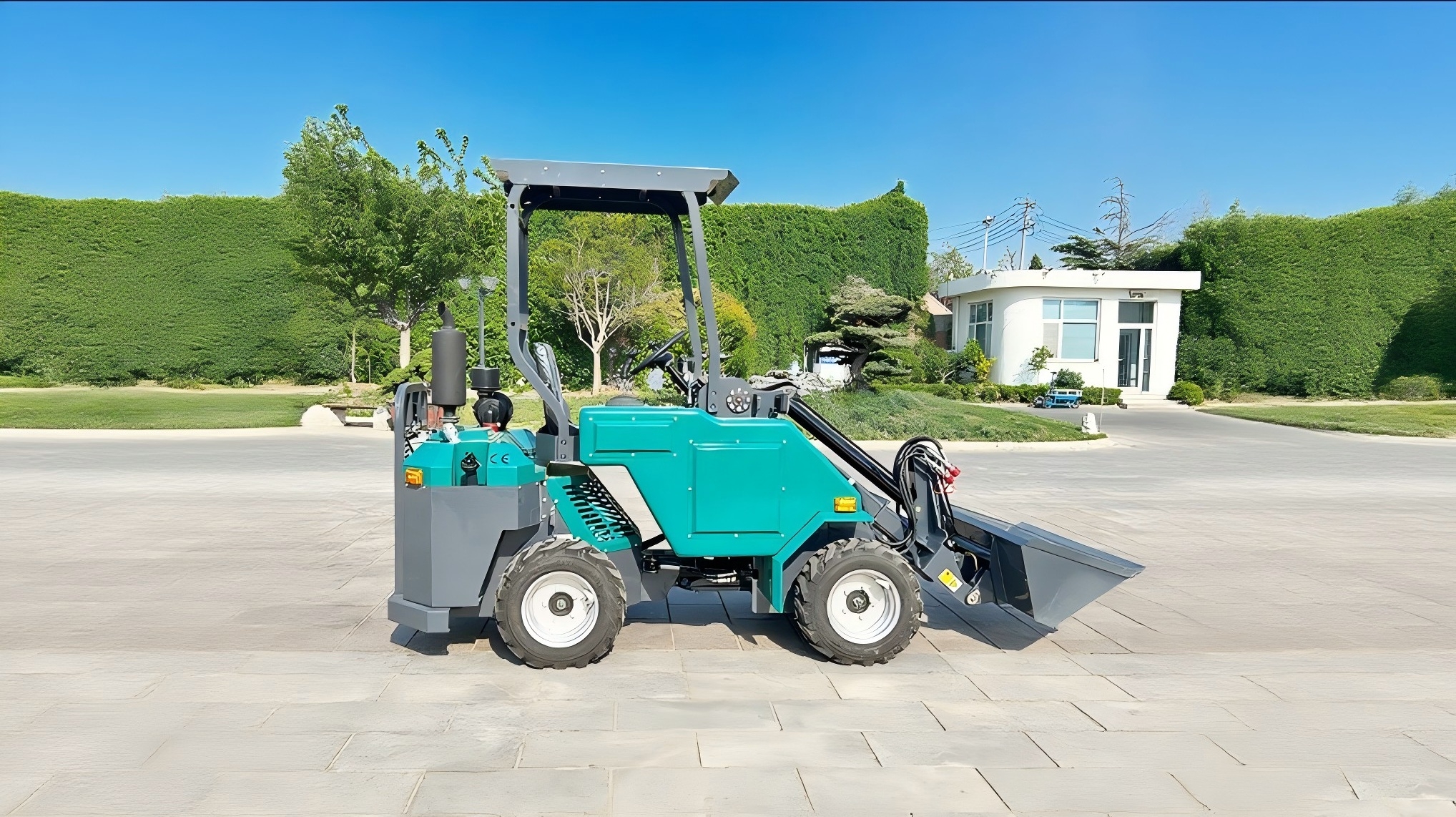
Compact wheel loaders are particularly valuable in urban environments.
Urban construction sites often have limited space. Large machines may have difficulty navigating narrow roads, tight corners, small construction zones, or areas shared with pedestrians and other vehicles.
A compact wheel loader can provide several advantages:
Smaller turning radius
Easier maneuverability
Better visibility
Lower transport requirements
Reduced impact on surrounding infrastructure
Easier operation in confined areas
These machines are suitable for many municipal and urban applications, including landscaping, road maintenance, snow removal, construction material handling, waste management, and site preparation.
Attachment compatibility is another important consideration. A compact wheel loader that can quickly change between a bucket, forks, sweeper, snow blade, and other attachments can perform multiple jobs with one machine.
9. Diesel vs. Electric Wheel Loaders
The choice between diesel and electric depends heavily on the project.
|
Factor |
Stage V Diesel |
Electric |
|
Tailpipe emissions |
Yes |
No |
|
Refueling/charging |
Fast refueling |
Requires charging |
|
Long continuous operation |
Excellent |
Depends on battery capacity |
|
Noise |
Higher |
Lower |
|
Indoor use |
Depends on regulations/ventilation |
Highly suitable |
|
Heavy-duty work |
Excellent |
Increasingly capable |
|
Charging infrastructure |
Not required |
Required |
|
Initial purchase cost |
Generally lower |
Generally higher |
|
Maintenance |
Regular engine maintenance |
Generally fewer powertrain components |
|
Zero-emission zones |
May not qualify |
Better suited |
For long shifts and remote sites, diesel may remain more practical.
For city-center construction, indoor applications, night work, and strict zero-emission projects, electric wheel loaders can provide significant advantages.
10. Top Features to Look for in an Eco-Friendly Wheel Loader
When purchasing a machine for urban work, buyers should look for the following features.
Stage V-certified engine or electric powertrain
Certification should match the regulations of the target market and project.
Efficient hydraulic system
Efficient hydraulics can reduce energy consumption without sacrificing productivity.
Automatic idle control
Reducing unnecessary idling can lower fuel consumption and operating costs.
Eco mode
An economical operating mode can be useful for lighter tasks where maximum engine output is unnecessary.
Low-noise design
Reduced noise can be valuable for urban projects with strict noise restrictions.
Telematics
Telematics systems can monitor fuel consumption, working hours, machine location, maintenance status, and operating behavior.
Good visibility
Excellent visibility helps operators work safely around pedestrians, buildings, vehicles, and other construction equipment.
Easy maintenance access
Convenient access to service points can reduce maintenance time and downtime.
11. Best Applications in Urban Emission Zones
Eco-friendly wheel loaders can be used in a wide range of urban applications.
Road construction and maintenance
Compact wheel loaders can transport aggregates, asphalt-related materials, barriers, and other materials around road projects.
Municipal projects
Municipal departments may use wheel loaders for maintenance, landscaping, material handling, and infrastructure projects.
Landscaping
Compact electric wheel loaders can be particularly useful in parks, residential developments, and public spaces where low noise and low local emissions are important.
Waste and recycling
Wheel loaders can handle waste materials and recyclable materials in municipal facilities and recycling centers.
Snow removal
Wheel loaders can be equipped with snow blades, snow blowers, and other winter attachments.
Utility projects
Their compact size and maneuverability can make them useful for urban utility construction and maintenance.
12. How to Choose the Right Eco-Friendly Wheel Loader
The first step is to determine the actual workload.
Consider:
How many hours will the machine work each day?
A machine working eight hours continuously requires a different power solution from one operating for only two or three hours.
What is the average load?
Heavy materials such as aggregate require greater breakout force and lifting capacity.
Where will the machine work?
A city-center project may have stricter emission and noise requirements than an industrial site outside the city.
Is charging infrastructure available?
Electric equipment requires a suitable charging solution and sufficient electrical capacity.
What attachments are required?
The machine should have sufficient hydraulic flow and compatibility with the necessary attachments.
Is local technical support available?
Service technicians and spare parts are important for minimizing downtime.
13. Total Cost of Ownership in Urban Applications
Purchase price alone does not determine which wheel loader is most economical.
A proper TCO calculation should include:
Initial purchase price
Fuel or electricity consumption
Maintenance
Spare parts
Tire wear
Battery considerations
Downtime
Operator productivity
Insurance and other ownership expenses
Residual value
For a diesel machine, fuel consumption can represent a significant portion of long-term operating costs.
For an electric machine, electricity costs may be lower, but the initial purchase price and charging infrastructure may be higher.
The number of operating hours is therefore critical.
A contractor working only a few hundred hours annually may prioritize initial purchase price, while a company operating equipment thousands of hours per year may benefit more from lower energy and maintenance costs.
14. Common Mistakes When Buying a Wheel Loader for an Emission Zone
One common mistake is buying equipment based only on the purchase price.
A cheaper machine may not meet the emission requirements of a particular city.
Another mistake is assuming that all Stage V machines are zero-emission machines. Stage V significantly reduces regulated emissions, but diesel engines still produce exhaust.
Some buyers also underestimate the importance of charging infrastructure when purchasing electric equipment. A battery-electric wheel loader is only practical if the site has an appropriate charging solution.
Other common mistakes include:
Ignoring local emission regulations
Choosing excessive machine capacity
Underestimating daily operating hours
Ignoring attachment requirements
Failing to calculate energy costs
Not checking service availability
Focusing only on engine power
Ignoring total cost of ownership
15. Future Trends in Eco-Friendly Wheel Loaders
The construction equipment industry is moving toward lower-emission technologies.
Battery-electric wheel loaders are expected to become increasingly common as battery technology improves.
Higher energy density can potentially increase operating time without requiring a significantly larger battery pack.
Faster charging technology can also reduce downtime.
Hybrid systems may continue to provide a transition between traditional diesel technology and fully electric equipment.
Telematics and smart energy-management systems are also becoming increasingly important. These systems can help fleet managers understand how machines are being used and identify opportunities to reduce fuel or energy consumption.
At the same time, European environmental regulations are likely to continue influencing equipment design and purchasing decisions.
For contractors, this means emission compliance should be considered not only for today's project but also for the expected operating life of the machine.
16. Final Buying Recommendations
For projects with strict zero-emission requirements, electric wheel loaders are generally the most suitable option because they produce no direct tailpipe emissions during operation.
For long shifts, heavy-duty work, and locations without reliable charging infrastructure, modern Stage V diesel wheel loaders can remain a practical solution, provided they comply with the applicable local regulations.
For mixed applications, contractors should compare operating hours, energy costs, charging availability, required performance, and total cost of ownership before making a decision.
For urban construction sites, a compact European-style wheel loader can provide an additional advantage because its smaller dimensions, maneuverability, visibility, and attachment versatility are well suited to confined working environments.
The best machine is not necessarily the most powerful or the most expensive. It is the machine that meets the project's emission requirements while providing sufficient productivity at an acceptable total operating cost.
17. Conclusion
The demand for eco-friendly construction equipment is increasing as European cities introduce stricter emission and noise requirements. Wheel loaders working in urban areas must increasingly combine high productivity with environmental performance.
Modern Stage V diesel wheel loaders offer significantly improved emission control compared with older diesel equipment and remain valuable for heavy-duty applications. Electric wheel loaders provide an even cleaner solution for projects where zero direct tailpipe emissions and low noise are priorities.
European-style wheel loaders are particularly suitable for urban projects because they can combine compact dimensions, good visibility, efficient hydraulics, operator comfort, and attachment versatility.
Before purchasing, contractors should carefully check the specific emission requirements of the city and project. They should then compare machine capacity, operating hours, fuel or electricity consumption, charging infrastructure, maintenance requirements, productivity, and total cost of ownership.
Ultimately, the best eco-friendly wheel loader is not simply the machine with the lowest emissions—it is the machine that provides the right combination of environmental compliance, productivity, reliability, operating cost, and versatility for the specific urban application.
Post time:Aug.17.2026
