
How Much Ground Clearance Does a Typical 4x4 Off-Road Forklift Have?
1. Introduction
4x4 off-road forklifts are widely used in construction sites, agriculture, forestry, mining, and outdoor logistics where standard warehouse forklifts simply cannot operate. One of the most important performance characteristics that determines whether these machines can handle rough terrain is ground clearance.
Ground clearance refers to the vertical distance between the lowest point of the forklift’s chassis and the ground. This measurement directly affects how well a machine can travel over obstacles such as rocks, mud, uneven soil, and debris. In off-road environments, insufficient ground clearance can lead to undercarriage damage, reduced mobility, and even operational failure.
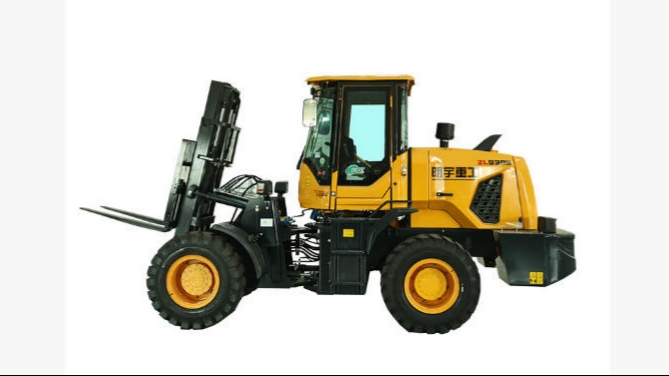
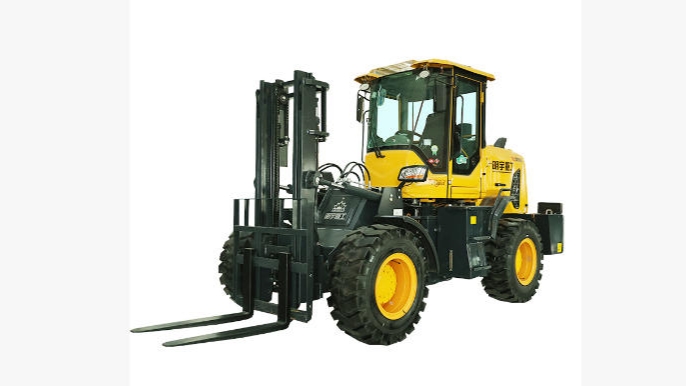
Unlike standard forklifts designed for smooth warehouse floors, 4x4 rough terrain forklifts are engineered with higher clearance, larger tires, and reinforced underbody structures. These design features allow them to maintain traction and stability in challenging environments while carrying heavy loads.
In general, a typical 4x4 off-road forklift offers ground clearance ranging from 200 mm to over 450 mm, depending on size, configuration, and application. Some heavy-duty models used in mining or forestry can exceed this range for extreme terrain capability.
This article explores typical ground clearance values, factors influencing design, performance implications, and how to choose the right specification for different job conditions.
2. What Is Ground Clearance in an Off-Road Forklift?
2.1 Definition
Ground clearance is the vertical distance between the lowest structural point of the forklift and the ground surface. This includes components such as:
Axles
Transmission housing
Undercarriage protection plates
It is a key specification in determining a machine’s off-road capability.
2.2 Why It Matters
Ground clearance plays a critical role in:
Navigating uneven terrain
Avoiding damage to underbody components
Maintaining traction in mud or sand
Ensuring operational safety and stability
A higher clearance allows the forklift to pass over obstacles more easily, but it must be balanced with stability requirements.
3. Typical Ground Clearance of 4x4 Off-Road Forklifts
3.1 Standard Range Overview
Most 4x4 rough terrain forklifts fall within the following range:
Compact models: 200–300 mm
Mid-size models: 300–400 mm
Heavy-duty models: 400–550+ mm
This variation depends on tire size, chassis design, and intended application.
3.2 Comparison by Forklift Category
Compact 4x4 Forklifts
Designed for light construction and farm use
Lower center of gravity
Ground clearance: ~200–300 mm
Mid-size Rough Terrain Forklifts
Most commonly used category
Balanced between stability and clearance
Ground clearance: ~300–400 mm
Heavy-duty Off-Road Forklifts
Used in mining, forestry, and extreme terrain
Reinforced chassis and oversized tires
Ground clearance: ~400–550+ mm
3.3 Industry Manufacturer Variations
Different manufacturers design forklifts with varying philosophies:
Some prioritize stability and safety, resulting in moderate clearance
Others focus on maximum terrain capability, increasing clearance significantly
Well-known brands such as JCB, Manitou, and Toyota Industries offer models across different clearance categories depending on application needs.
4. Factors That Influence Ground Clearance
4.1 Tire Size and Type
Larger pneumatic tires significantly increase ground clearance. Off-road tread patterns also improve grip in mud, sand, and gravel, indirectly supporting better clearance performance.
4.2 Chassis Design
High-frame chassis designs naturally provide more clearance beneath the machine. Reinforced structures are often used in off-road models to withstand impacts from uneven terrain.
4.3 Axle Configuration
Portal axles are commonly used in rough terrain forklifts because they raise the axle centerline above the wheel hub, increasing ground clearance without raising the entire machine excessively.
A full 4x4 drivetrain system also improves traction, allowing the machine to use its clearance more effectively.
4.4 Load Capacity and Stability Trade-offs
Higher ground clearance can raise the machine’s center of gravity. This may reduce stability when lifting heavy loads, especially on slopes. Manufacturers must carefully balance clearance with safe lifting performance.
5. How Ground Clearance Affects Off-Road Performance
5.1 Mud and Soft Ground Operation
Higher clearance prevents the chassis from dragging in deep mud or soft soil. This helps maintain forward movement and reduces the risk of getting stuck.
5.2 Rocky and Uneven Terrain
On rocky surfaces, ground clearance protects the underbody from impact damage. It also helps the forklift maintain smooth travel without sudden jolts.
5.3 Slope and Incline Operation
On inclined terrain, clearance alone is not enough—stability becomes critical. A higher center of gravity increases tipping risk, especially when carrying heavy loads uphill or downhill.
6. Comparison: Off-Road Forklifts vs Standard Forklifts
6.1 Ground Clearance Differences
Warehouse forklifts: ~80–150 mm
4x4 off-road forklifts: ~200–550+ mm
The difference is substantial and directly reflects their intended environments.
6.2 Use Case Differences
Warehouse forklifts: smooth indoor floors, pallets, logistics centers
Off-road forklifts: construction sites, farms, mines, forests
Ground clearance is one of the key reasons they cannot be interchanged.
7. Key Design Features That Enhance Clearance
7.1 High-Mounted Engine and Transmission Layout
Positioning heavy components higher improves clearance while protecting them from ground contact.
7.2 Reinforced Undercarriage Protection
Skid plates and steel guards prevent damage when operating over rocks or debris.
7.3 Protective Guards and Frame Design
Structural reinforcements ensure durability in harsh environments.
7.4 Suspension Systems (Where Applicable)
Some models use enhanced suspension systems to maintain clearance while improving ride comfort.
8. Trade-offs of High Ground Clearance
8.1 Stability vs Height
Higher clearance improves terrain ability but can reduce stability during lifting.
8.2 Center of Gravity Challenges
A higher center of gravity increases tipping risk if not properly designed.
8.3 Operator Comfort
More clearance can lead to increased machine movement on uneven terrain.
8.4 Cost and Maintenance
Stronger frames and specialized axles can increase production and maintenance costs.
9. Choosing the Right Ground Clearance for Your Application
9.1 Construction Sites
Moderate clearance (300–400 mm) is usually sufficient for mixed terrain.
9.2 Agriculture Use
Higher clearance helps navigate soft soil, mud, and uneven fields.
9.3 Mining and Quarry Operations
Maximum clearance is required for rocky, unpredictable surfaces.
9.4 Forestry and Rough Terrain Logistics
High clearance combined with strong traction is essential for forest floors and steep terrain.
10. Safety Considerations Related to Ground Clearance
10.1 Load Stability Risks
Improper load handling at high clearance levels can increase tipping risk.
10.2 Slope Operation Hazards
Steeper slopes require reduced speed and careful load positioning.
10.3 Proper Operating Techniques
Operators must understand terrain limitations and adjust driving behavior accordingly.
10.4 Training Importance
Proper training reduces accidents and improves machine efficiency in off-road environments.
11. Future Trends in Off-Road Forklift Design
11.1 Improved Suspension Systems
Advanced suspension technology will help balance clearance and stability.
11.2 Hybrid and Electric Models
Electric rough terrain forklifts are emerging with optimized chassis designs.
11.3 Smart Stability Control Systems
Sensors and automation will help prevent tipping and optimize load handling.
11.4 Adaptive Chassis Technologies
Future machines may dynamically adjust clearance based on terrain conditions.
12. Conclusion
A typical 4x4 off-road forklift offers ground clearance between 200 mm and 550 mm, depending on its size and application. While higher clearance improves terrain capability, it must always be balanced with stability, safety, and load-handling performance.
Choosing the right specification depends on working conditions such as construction sites, agriculture, mining, or forestry. By understanding how ground clearance affects performance, operators and buyers can select the most suitable machine for safe and efficient operation in rough terrain environments.
Post time:May.19.2026
