
The common backhoe loader, often seen as a staple on utility sites and for excavation tasks, is indeed a surprisingly capable and frequently employed tool in the field of demolition. While the public imagination might leap to towering high-reach excavators or dramatic implosions for bringing down structures, the versatile backhoe plays a crucial, if less sensational, role in a wide spectrum of demolition activities. Its primary advantage lies in its adaptability and relative accessibility. A standard backhoe combines the digging force of an excavator arm at the rear with a loading bucket at the front, making it a multi-purpose machine suited for smaller-scale projects. This dual functionality allows contractors to sequentially demolish, load debris, and even perform preliminary site grading with a single piece of equipment. Demolition with a backhoe typically involves methodical, piece-by-piece deconstruction rather than instantaneous collapse. The operator uses the backhoe’s digging arm and bucket—often fitted with specialized hydraulic breakers, compactors, or rakes—to break up concrete slabs, dismantle low-rise masonry walls, tear apart wooden structures, and separate building materials. Its use is most prevalent in residential demolitions, such as tearing down garages, single-story houses, small farm buildings, and interior walls during renovations. It is also extensively used for site clearance, removing old driveways, swimming pools, and foundation work. The machine’s mobility, thanks to its rubber tires, allows it to operate effectively in confined spaces where larger tracked machines might struggle. Thus, the backhoe serves as a fundamental and economical entry-point into mechanical demolition, providing a perfect balance of power, precision, and practicality for a multitude of deconstruction challenges that are too large for manual labor but do not necessitate the immense scale and cost of heavier dedicated demolition excavators.
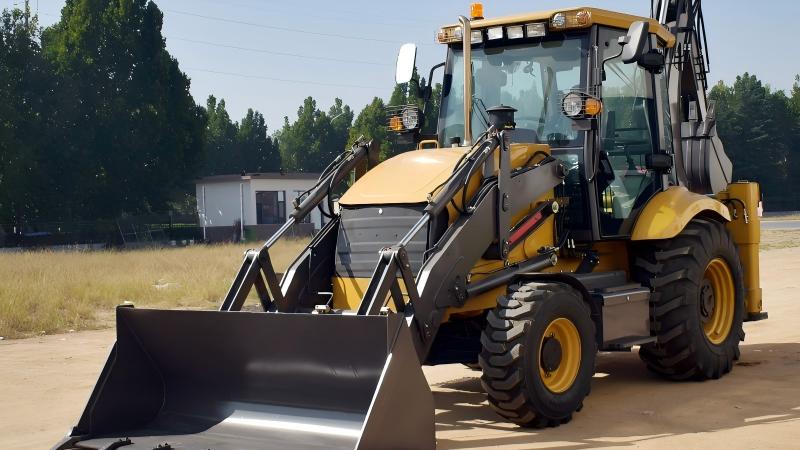
The technical application of a backhoe in demolition requires skilled operation and a systematic approach to ensure both efficiency and safety. The process begins with a thorough site assessment and hazardous material abatement (like asbestos or lead) before any mechanical work starts. Operators then often start the demolition from the top down, using the backhoe arm to carefully remove roofing materials and upper sections of walls, working progressively downward to maintain stability and control. The hydraulic breaker attachment, or "hammer," is indispensable for fracturing reinforced concrete, breaking up foundations, and reducing large chunks of masonry to manageable sizes. The front loader bucket is then used to gather and sort debris, load it into trucks, or stockpile it for recycling. One of the critical techniques is "undermining" or "selective collapse," where the machine strategically removes key support elements, allowing sections of a wall or structure to fall safely into a predetermined zone. However, this demands expert judgment to avoid unintended collapses. Safety is paramount; the operator must be protected within a reinforced cab with falling object protection (FOP) and rollover protection (ROPS). The work zone must be clearly marked and secured from unauthorized personnel, as the swing of the backhoe arm and flying debris pose significant risks. Furthermore, operators must be acutely aware of hidden utilities, unstable debris piles, and the potential for sudden structural failures. When equipped with the right attachments and operated by a trained professional following established demolition protocols, a backhoe transforms from a simple digger into a precise and powerful deconstruction tool, capable of carefully dismantling structures while maximizing material separation for recycling and minimizing dust and noise impact compared to larger, more aggressive machines.
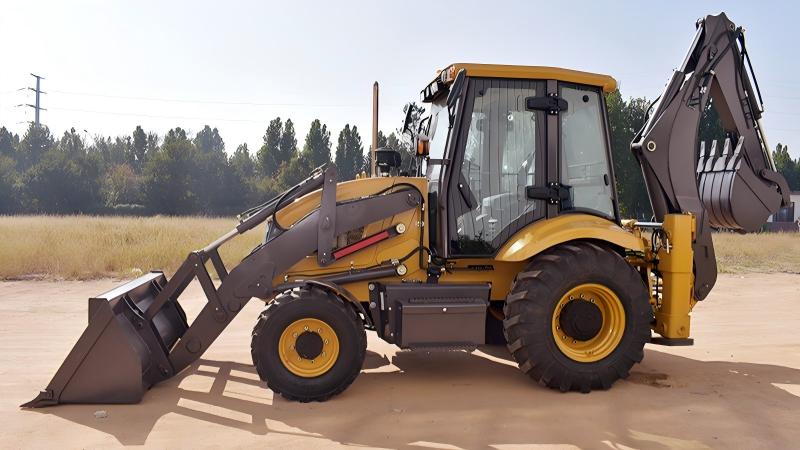
While the backhoe is highly effective for many tasks, understanding its limitations is key to planning a safe and successful demolition project. Its primary constraints are reach, sheer power, and stability compared to dedicated demolition excavators. Standard backhoes typically have a maximum digging depth of 14 to 20 feet and a limited horizontal reach, making them unsuitable for demolishing buildings taller than two stories. Attempting to tackle overly tall or structurally complex buildings risks the machine toppling or being struck by falling debris from an uncontrolled height. The weight and hydraulic power of a backhoe, though substantial, may also be insufficient for efficiently breaking down thick, heavily reinforced concrete elements like large bridge piers or industrial foundation mats. In such cases, larger excavators with dedicated demolition attachments are required. Furthermore, the rubber-tired undercarriage, while mobile, offers less stability on soft, uneven, or steep terrain than a tracked excavator. This can be mitigated with outriggers, but it remains a consideration for challenging sites. Therefore, the choice to use a backhoe hinges on a careful evaluation of the structure's size, materials, location, and the project's budget and timeline. It represents the optimal tool for a specific niche: low-rise, lightly to moderately reinforced structures, and site clearance operations. For larger commercial or industrial demolitions, a backhoe might still be used effectively as a support machine for cleanup, loading, and secondary tasks, working in tandem with heavier equipment. Recognizing these boundaries ensures that the backhoe is deployed where it shines, preventing costly accidents, project delays, and equipment damage, thereby upholding its reputation as a versatile and invaluable asset in the contractor's fleet.
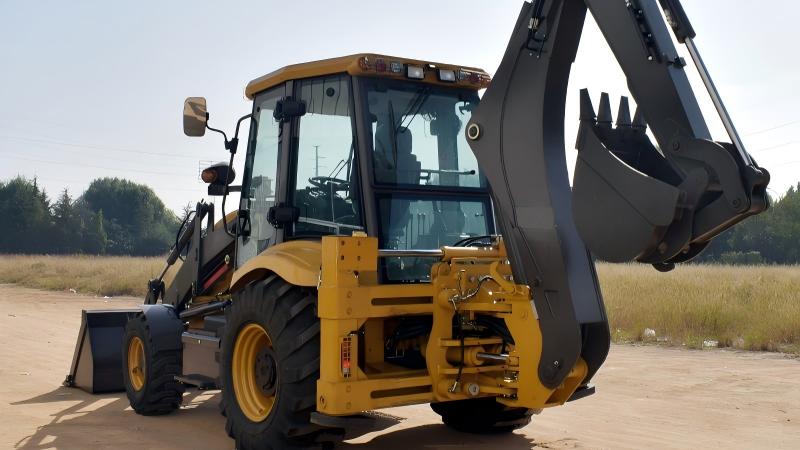
The economic and practical advantages of employing a backhoe for appropriate demolition jobs are substantial, contributing significantly to its widespread use. From a cost perspective, backhoe loaders are generally less expensive to purchase, rent, operate, and transport than large dedicated demolition excavators. Their fuel consumption is lower, and they require a smaller, often already present, operational crew. For small contractors and homeowners undertaking demolition projects, renting a backhoe for a weekend can be a financially viable solution, whereas mobilizing a large excavator would be prohibitively costly. The machine's dual functionality eliminates the need for a separate loader on site, streamlining operations and reducing labor costs. Practically, its size allows it to access backyards, narrow alleyways, and indoor spaces (with proper ventilation) that are completely off-limits to larger machinery. This accessibility is invaluable for urban demolition and renovation projects. Moreover, the piece-by-piece deconstruction method facilitated by a backhoe promotes higher rates of material salvage and recycling. Careful sorting of wood, metal, and concrete rubble is more feasible than after a total collapse, aligning with growing environmental regulations and sustainable construction practices. In summary, while not a tool for every demolition challenge, the backhoe loader stands as a testament to efficiency and adaptability in the construction industry. Its ability to economically and effectively bridge the gap between manual demolition and massive mechanical demolition makes it an unsung hero on countless job sites, turning the complex process of taking structures apart into a controlled, manageable, and profitable operation.
Post time:Jan.29.2026
