
Can LPG Forklifts Be Used Indoors Safely? (OSHA Ventilation Rules)
1. Introduction
Liquefied Petroleum Gas (LPG) forklifts are widely used across warehouses, distribution centers, manufacturing plants, and logistics hubs due to their strong performance, quick refueling, and lower fuel costs compared to diesel equipment. Unlike battery-electric forklifts, LPG models offer continuous operation without long charging downtime, making them attractive for high-intensity indoor and mixed indoor-outdoor operations.
However, their use indoors raises important safety questions. LPG forklifts burn fuel and emit exhaust gases, including carbon monoxide (CO), nitrogen oxides, and hydrocarbons. In enclosed or poorly ventilated environments, these emissions can accumulate quickly and create serious health risks for workers. This is why indoor use of LPG forklifts is tightly regulated and closely tied to ventilation requirements and air quality standards.
In the United States, the Occupational Safety and Health Administration (OSHA) provides strict guidelines for workplace air quality and ventilation. These rules do not completely prohibit LPG forklifts indoors, but they require employers to ensure that air contaminants remain below permissible exposure limits. Proper ventilation, monitoring systems, and maintenance practices are essential to keep operations compliant and safe.
This article explains whether LPG forklifts can be safely used indoors, what OSHA requires regarding ventilation, what risks are involved, and what best practices employers must follow to maintain a safe working environment.
2. What Is an LPG Forklift?
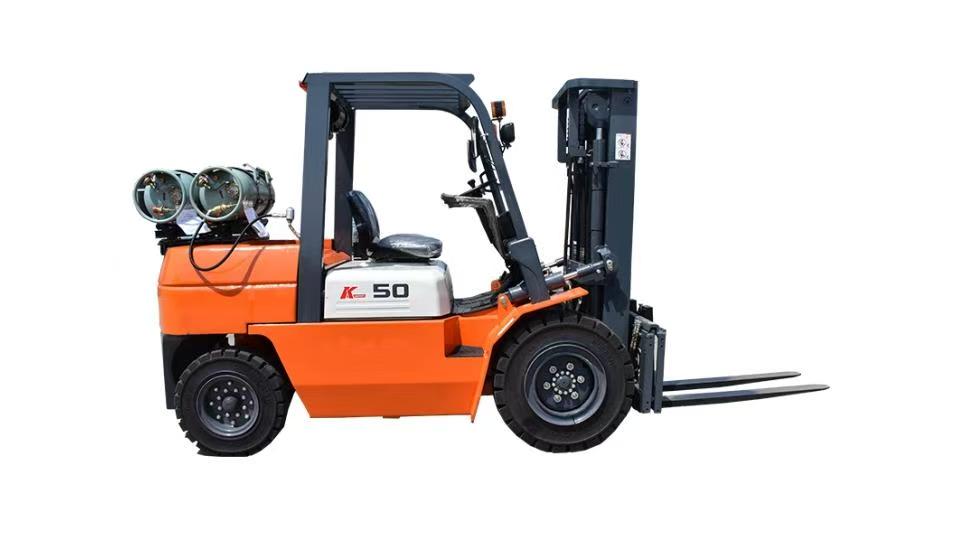
An LPG forklift is a type of internal combustion forklift powered by liquefied petroleum gas stored in a pressurized cylinder. The engine burns LPG fuel to generate power, similar to gasoline engines but with different combustion characteristics and emissions.
Compared with diesel forklifts, LPG models generally produce fewer particulates and are often considered cleaner. Compared with electric forklifts, however, they still produce exhaust gases and therefore require ventilation when used indoors.
LPG forklifts are commonly used in:
Warehouses and distribution centers
Manufacturing facilities
Shipping and logistics hubs
Agricultural processing plants
Key advantages include:
Fast refueling (tank replacement in minutes)
Consistent power output
Suitable for both indoor and outdoor use
Lower upfront cost compared to electric alternatives in some cases
Despite these advantages, exhaust emissions remain the main concern for indoor operation.
3. Are LPG Forklifts Safe for Indoor Use?
LPG forklifts can be used indoors, but only under controlled conditions. The main safety concern is not the forklift itself, but the air quality in enclosed spaces where emissions accumulate.
The most significant hazard is carbon monoxide (CO), a colorless and odorless gas produced during combustion. Even low concentrations can be harmful over time, and higher concentrations can be life-threatening.
Other emissions include:
Nitrogen oxides (NOx)
Unburned hydrocarbons
Carbon dioxide (CO₂)
Indoor safety depends on three key conditions:
Adequate ventilation
Continuous air monitoring
Proper equipment maintenance
Without these controls, indoor LPG forklift use becomes unsafe and non-compliant with OSHA standards.
4. OSHA Regulations on Indoor Forklift Operation
4.1 Air Quality Requirements
OSHA sets permissible exposure limits (PEL) for airborne contaminants, including carbon monoxide. Employers must ensure that workers are not exposed to harmful concentrations during operation.
For CO, OSHA’s limit is typically:
50 parts per million (ppm) as an 8-hour time-weighted average
If levels exceed safe limits, employers must take immediate corrective action.
4.2 Ventilation Standards
OSHA requires workplaces to maintain sufficient ventilation to prevent the accumulation of hazardous gases. This can include:
General ventilation systems (air exchange across the entire facility)
Local exhaust ventilation (removing fumes at the source)
Natural ventilation (doors, windows, open structures)
The goal is to maintain continuous air movement that prevents gas buildup in occupied zones.
4.3 Monitoring and Compliance
Employers are responsible for:
Regular air quality testing
Installing CO detectors in forklift operating areas
Maintaining monitoring logs
Taking corrective action when thresholds are exceeded
Continuous monitoring is especially important in enclosed warehouses where forklifts operate for long periods.
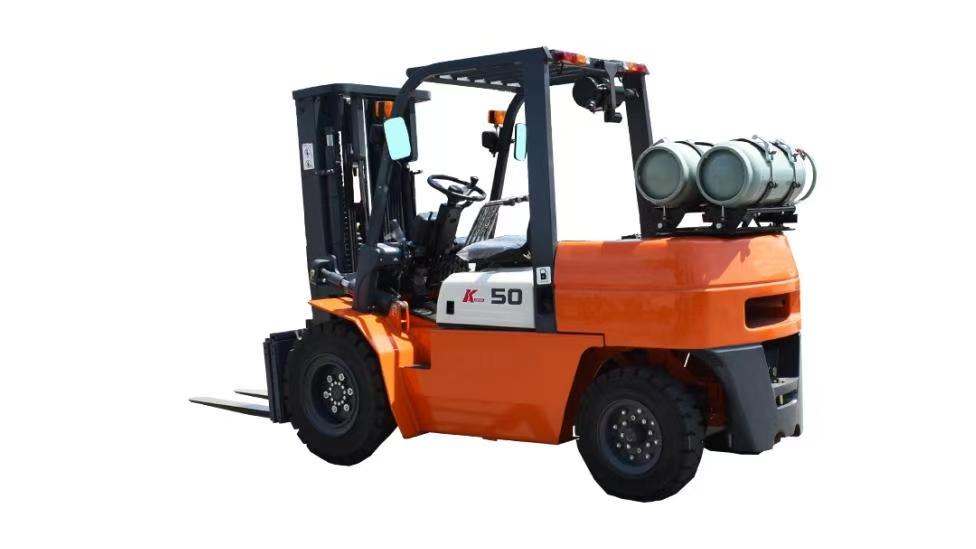
5. Ventilation Requirements in Detail
Proper ventilation is the key factor that determines whether LPG forklifts can operate safely indoors.
Natural Ventilation
Uses airflow through doors, windows, or open structures
Limited effectiveness in enclosed warehouses
Mechanical Ventilation
Uses fans and HVAC systems to control airflow
Most reliable method for compliance
High-Risk Areas
Cold storage facilities
Fully enclosed warehouses with limited airflow
Underground or semi-enclosed spaces
In these environments, LPG forklifts may require restrictions or additional engineering controls.
6. Risks of Using LPG Forklifts Indoors
Indoor use without proper ventilation can create serious hazards:
Carbon monoxide poisoning (primary risk)
Oxygen displacement in poorly ventilated areas
Respiratory irritation from NOx and hydrocarbons
Long-term exposure health effects
Fire risk from fuel leaks or improper handling
Even short-term exposure to high CO levels can cause dizziness, fatigue, and impaired judgment in operators.
7. Comparing LPG vs Diesel vs Electric Forklifts Indoors
7.1 LPG Forklifts
Moderate emissions
Acceptable indoors only with ventilation
Flexible for mixed-use environments
7.2 Diesel Forklifts
High particulate and CO emissions
Generally not recommended for indoor use
Require strong industrial ventilation if used indoors
7.3 Electric Forklifts
Zero tailpipe emissions
Preferred choice for indoor environments
Lower ventilation requirements
8. When LPG Forklifts Are Acceptable Indoors
LPG forklifts can be safely used indoors when:
The warehouse has strong mechanical ventilation
CO monitoring systems are installed and active
Forklift operation is intermittent, not continuous
Air quality remains within OSHA limits
Maintenance is regularly performed
They are often used in facilities that combine indoor and outdoor operations.
9. Best Practices for Safe Indoor LPG Forklift Operation
Install CO detectors at operator breathing height
Ensure regular ventilation system maintenance
Limit unnecessary idling of engines
Train operators on emission risks
Perform scheduled engine maintenance and tuning
Conduct routine air quality inspections
10. Engineering Controls and Safety Systems
Industrial exhaust ventilation systems
Air exchange and HVAC optimization
Local exhaust extraction near loading zones
CO sensor-linked alarm systems
Automatic shutdown systems in extreme cases
These systems significantly reduce risk when properly designed and maintained.
11. Employer Responsibilities Under OSHA
Employers must:
Assess workplace air quality risks
Provide safe operating conditions
Train forklift operators on hazards
Maintain ventilation systems
Keep compliance documentation
Conduct periodic safety audits
Failure to comply can result in OSHA citations and penalties.
12. Common Violations and Real-World Accidents
Common issues include:
Poor or insufficient ventilation systems
Lack of CO monitoring equipment
Overuse of combustion forklifts in enclosed spaces
Poor maintenance of engines leading to higher emissions
Accidents often involve:
Worker exposure to elevated CO levels
Temporary warehouse shutdowns due to unsafe air quality
Emergency evacuations in poorly ventilated facilities
13. How to Evaluate Whether Your Facility Is Safe
Key evaluation steps:
Measure air exchange rate of the building
Conduct CO concentration testing during peak operation
Review forklift usage intensity
Inspect ventilation system performance
Consult industrial safety engineers
A full risk assessment is recommended before deploying LPG forklifts indoors.
14. Future Trends in Forklift Fuel Safety
Increasing shift toward electric forklifts indoors
Stricter enforcement of OSHA air quality rules
Growth of smart CO monitoring systems
IoT-based warehouse safety analytics
Expansion of zero-emission warehouse policies
15. Conclusion
LPG forklifts can be used indoors safely, but only under strict conditions that ensure proper ventilation, continuous air monitoring, and compliance with OSHA air quality standards. Without these safeguards, emissions—especially carbon monoxide—can create serious health risks for workers.
While LPG forklifts remain useful for many mixed indoor-outdoor operations, electric forklifts are increasingly becoming the preferred solution for fully enclosed environments due to their zero-emission performance.
Ultimately, safe indoor operation depends not on the forklift itself, but on how well the facility manages ventilation, monitoring, and safety procedures.
Post time:May.13.2026
