
Can I Use a Scissor Lift Outdoors, and What Is the Wind Speed Limit?
1. Introduction
Scissor lifts have become one of the most widely used aerial work platforms for construction, facility maintenance, warehouse expansion, building installation, landscaping, and industrial projects. Their stable platform, vertical lifting capability, and ease of operation make them an excellent choice whenever workers need safe access to elevated work areas. While many people associate scissor lifts with indoor maintenance or warehouse work, outdoor applications have become increasingly common as manufacturers introduce rough-terrain models designed specifically for challenging environments.
However, using a scissor lift outdoors involves more than simply driving the machine onto a jobsite. Weather conditions, wind speed, ground stability, machine type, and operator experience all play critical roles in determining whether outdoor operation is safe. Unlike indoor environments, outdoor workplaces expose equipment to unpredictable wind gusts, uneven terrain, rain, soft soil, and other hazards that can quickly turn a routine task into a dangerous situation if proper precautions are ignored.
One of the most frequently asked questions from contractors, rental companies, and equipment buyers is: "Can I use a scissor lift outdoors, and what is the maximum wind speed?" The answer depends largely on the lift's design and manufacturer specifications. Outdoor-rated rough-terrain scissor lifts are generally engineered to withstand moderate wind conditions, while many electric slab scissor lifts are intended only for indoor use and should never be exposed to wind when elevated.
This guide explains everything you need to know about safely operating a scissor lift outdoors. We'll discuss the differences between indoor and outdoor machines, explain standard wind speed limits, examine how weather affects platform stability, explore OSHA safety recommendations, and provide practical tips for choosing the right equipment for your project. Whether you're purchasing a new scissor lift or renting one for a temporary job, understanding these safety principles will help protect workers, improve efficiency, and reduce costly accidents.
2. Can Scissor Lifts Be Used Outdoors?
Yes, scissor lifts can be used outdoors, but only if they are designed and approved for outdoor operation. Many modern scissor lifts are specifically engineered for construction sites, infrastructure projects, utility work, and other outdoor environments. These machines feature stronger frames, larger tires, higher ground clearance, and more powerful drive systems than indoor models.
The biggest distinction lies between slab scissor lifts and rough-terrain scissor lifts. Slab scissor lifts are primarily electric-powered and designed for smooth, hard surfaces such as warehouses, factories, airports, shopping centers, and commercial buildings. They typically use non-marking tires and have limited ground clearance, making them unsuitable for uneven or muddy terrain. Most importantly, many slab models carry an indoor-use-only rating and should not be elevated outdoors because they are not designed to resist wind loads.
Rough-terrain scissor lifts, on the other hand, are built specifically for outdoor jobsites. They commonly feature four-wheel drive, foam-filled or pneumatic tires, oscillating axles, high ground clearance, and powerful diesel or hybrid engines. These machines can safely travel across gravel, dirt, grass, mud, and uneven construction surfaces while providing greater stability at height.
Typical outdoor applications include steel construction, bridge maintenance, exterior building installation, roofing, stadium construction, utility maintenance, solar panel installation, highway infrastructure, and landscaping projects. These demanding environments require equipment capable of handling changing weather and rough ground conditions.
Although outdoor-rated machines are designed for these applications, operators must still follow manufacturer guidelines regarding wind speed, platform capacity, slope limitations, and weather conditions. Even the most advanced rough-terrain scissor lift should never be operated outside its rated limits.
3. Understanding Wind Speed Limits for Scissor Lifts
Wind is one of the most significant safety factors affecting aerial work platform operation. As a scissor lift rises, its center of gravity changes, making it more vulnerable to external forces. Even moderate wind can generate enough pressure to reduce stability, particularly when workers carry large materials or tools that increase the surface area exposed to the wind.
For most outdoor-rated scissor lifts, the maximum allowable wind speed is approximately 12.5 meters per second (45 km/h or 28 mph). This value is commonly referenced in international equipment standards and by many equipment manufacturers. However, it is not a universal rule. Every model has its own operating specifications, and operators should always consult the manufacturer's operator's manual before use.
Indoor-only scissor lifts generally have a wind rating of zero. This means they should never be elevated outdoors, even if the weather appears calm. Unexpected gusts can occur without warning, creating unsafe operating conditions.
Wind speed is not the only concern. Gusts are often more dangerous than steady winds because they create sudden lateral forces that are difficult for operators to anticipate. Additionally, wind conditions can change rapidly throughout the day, especially around tall buildings, hills, or open construction sites.
Professional jobsites often use portable anemometers to monitor wind speed continuously. If wind approaches the machine's maximum rated limit, work should stop immediately, and the platform should be lowered until conditions improve.
Ignoring wind ratings can result in equipment instability, tipping accidents, falling materials, and serious injuries. Therefore, understanding and respecting wind limitations is one of the most important responsibilities of every scissor lift operator.
4. How Wind Affects Scissor Lift Stability
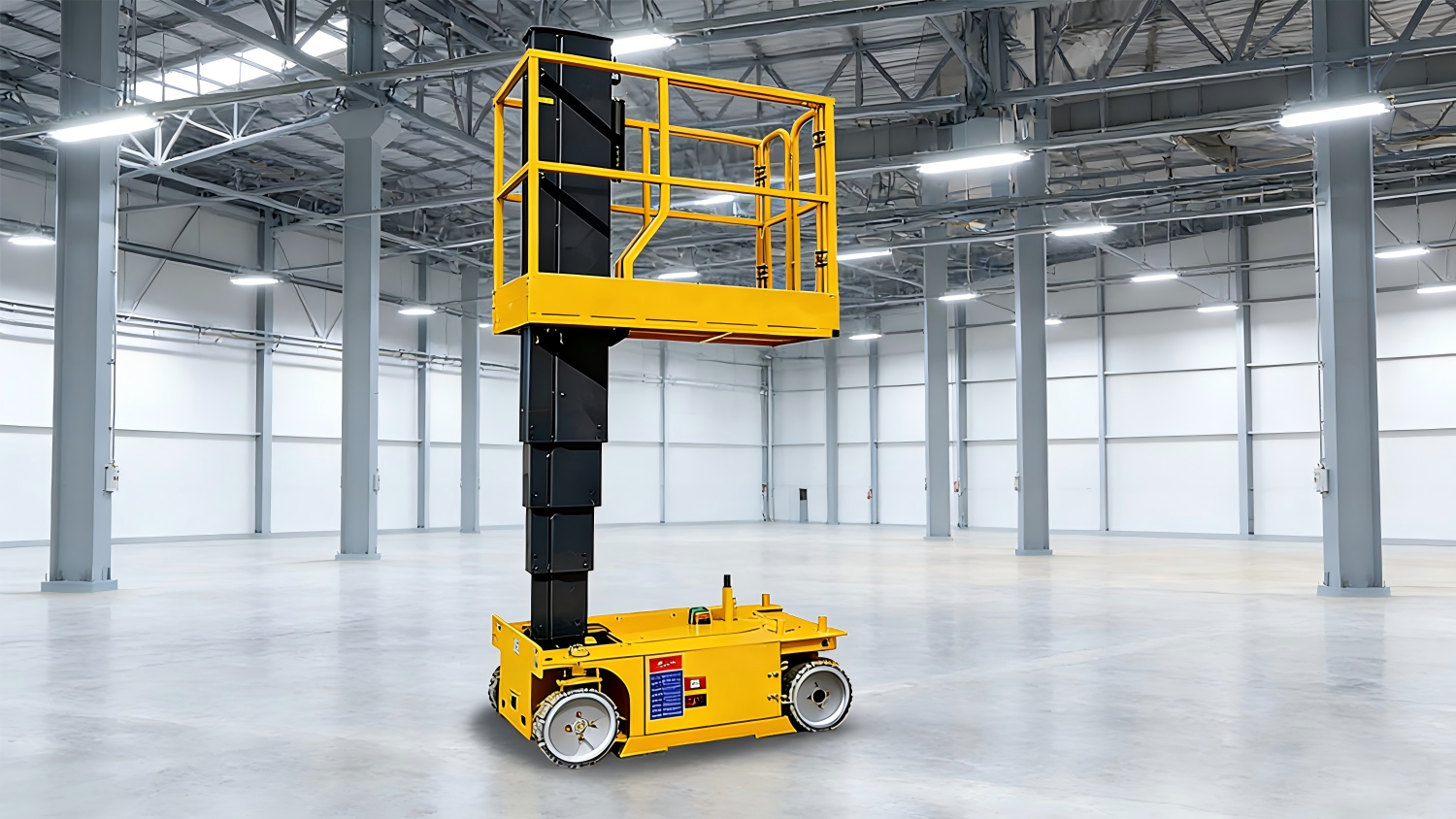
Wind applies horizontal force to both the machine and everything on the platform. As platform height increases, the leverage created by this force becomes much greater, making elevated machines significantly more sensitive to wind than those operating near ground level.
One major factor is platform height. A lift operating at 6 meters experiences far less wind force than one fully extended to 18 meters. The higher the platform rises, the larger the overturning moment created by crosswinds.
Platform size also matters. Larger platforms present more surface area to the wind, allowing stronger lateral forces to act on the machine. When workers carry plywood, glass panels, insulation boards, drywall sheets, or advertising signs, these materials function almost like sails, dramatically increasing wind resistance.
Another challenge comes from sudden wind gusts. Weather reports usually provide average wind speeds, but gusts can exceed those averages by a considerable margin. A lift operating safely under average conditions may suddenly experience dangerous side loads during an unexpected gust.
Nearby buildings can also create unpredictable wind tunnels. Air flowing between structures often accelerates, producing localized wind speeds much higher than those measured in open areas. Similarly, hillsides and open fields may experience rapidly changing wind patterns throughout the day.
Because wind conditions can change unexpectedly, operators should remain alert throughout the entire work shift instead of checking weather conditions only once before beginning work.
5. Factors That Determine Safe Outdoor Operation
Safe outdoor operation depends on much more than wind speed alone. Several environmental and equipment-related factors must be evaluated before raising the platform.
Ground stability is perhaps the most important consideration. Soft soil, mud, loose gravel, freshly backfilled trenches, or unstable surfaces can cause one side of the machine to settle unexpectedly, increasing the risk of tipping. Operators should always inspect the work area and ensure the lift is positioned on firm, level ground.
Slope limitations are equally important. Every scissor lift has a maximum allowable operating slope specified by the manufacturer. Exceeding this limit significantly reduces stability and may activate the machine's tilt alarm or automatically disable elevation functions.
Load capacity should never be exceeded. Platform ratings include workers, tools, materials, and accessories combined. Overloading the platform raises the center of gravity and reduces the machine's safety margin.
Weather conditions should be monitored continuously. Rain may reduce tire traction, snow can hide hazards beneath the surface, and lightning presents obvious risks to elevated workers. Even if wind remains below the maximum limit, poor visibility or slippery conditions may require work to stop.
Machine maintenance also affects safety. Proper tire pressure, hydraulic performance, braking systems, steering components, safety interlocks, and tilt sensors should all be inspected before operation. A well-maintained machine performs more reliably under demanding outdoor conditions.
Finally, operators should receive proper training on both the equipment model and the specific jobsite hazards they may encounter. Knowledgeable operators make better decisions when weather or site conditions change unexpectedly.
6. Choosing the Right Outdoor Scissor Lift
Selecting the appropriate scissor lift begins with understanding your project requirements. Choosing the wrong machine can reduce productivity, increase operating costs, and compromise worker safety.
For smooth concrete surfaces outdoors, certain electric rough-terrain models may provide sufficient performance while offering quiet operation and zero emissions. These are increasingly popular for hospitals, schools, airports, and environmentally sensitive construction sites.
For demanding construction environments, diesel rough-terrain scissor lifts remain the preferred choice. Their powerful engines, four-wheel drive systems, and superior climbing ability allow them to operate efficiently on uneven ground where standard slab lifts cannot travel.
Working height is another critical consideration. Projects involving warehouses, shopping centers, or low-rise commercial buildings may require platforms between 8 and 12 meters. Bridge construction, industrial plants, and large infrastructure projects often require working heights exceeding 15 meters.
Ground clearance should match site conditions. Construction sites with rocks, debris, or uneven terrain require higher ground clearance than finished commercial surfaces.
Battery technology has also expanded available options. Modern lithium-powered scissor lifts offer longer operating times, faster charging, lower maintenance requirements, and environmentally friendly operation. Hybrid machines combine engine power with electric efficiency, making them suitable for projects requiring both indoor and outdoor operation.
Additional features worth considering include automatic leveling systems, oscillating axles, proportional controls, self-diagnostic displays, onboard generators, extendable platforms, and advanced telematics for fleet management.
Selecting equipment that matches the site's terrain, weather, and working height requirements improves productivity while maintaining high safety standards.
7. Outdoor Safety Best Practices
Safe operation begins before the machine even leaves the ground. Every shift should start with a comprehensive pre-operation inspection covering tires, hydraulic hoses, controls, emergency lowering systems, guardrails, batteries or fuel systems, warning devices, and safety decals.
Operators should review the weather forecast before starting work and continue monitoring conditions throughout the day. Portable wind meters provide accurate measurements directly at platform height and should be used whenever wind conditions appear uncertain.
Personal protective equipment should include hard hats, high-visibility clothing, safety footwear, gloves, and any fall protection required by local regulations or manufacturer recommendations.
Workers should always maintain three points of contact when entering or exiting the platform and ensure guardrails remain closed during operation. Climbing on guardrails, standing on ladders inside the platform, or using boxes to gain additional height is strictly prohibited.
The platform should never exceed its rated load capacity, and materials should be evenly distributed to maintain balance. Large objects that significantly increase wind exposure should be lifted only if specifically permitted by the manufacturer.
Traveling with the platform fully elevated should only occur if the machine is designed for such operation and ground conditions remain suitable. High-speed movement while elevated greatly increases instability.
If wind begins approaching the maximum rated limit, operators should stop work immediately and lower the platform. Waiting until conditions become obviously dangerous may be too late.
Regular communication among workers, supervisors, and equipment operators ensures everyone remains aware of changing weather and site conditions.
8. Common Mistakes Operators Should Avoid
Many scissor lift accidents result from preventable operator errors rather than equipment failure.
One of the most common mistakes is using indoor slab scissor lifts outdoors simply because the weather appears calm. Even light winds can become hazardous when the platform is fully elevated.
Another frequent error is ignoring weather forecasts. Conditions that are safe in the morning may become dangerous by afternoon as storms develop or wind speeds increase.
Operating on unstable ground remains another major cause of tip-over accidents. Workers sometimes underestimate how soft soil or hidden voids can affect machine stability.
Overloading the platform is equally dangerous. Adding one extra worker or several heavy material bundles may exceed the manufacturer's rating without operators realizing it.
Carrying oversized materials such as drywall sheets, plywood, roofing panels, or metal cladding creates additional wind resistance and increases side loading beyond the machine's design limits.
Some operators also ignore warning alarms or bypass safety devices in an effort to finish work more quickly. These systems exist specifically to prevent dangerous operating conditions and should never be disabled.
Finally, inadequate operator training continues to contribute to workplace accidents. Every operator should receive formal instruction on machine operation, emergency procedures, daily inspections, and hazard recognition before using a scissor lift outdoors.
9. Frequently Asked Questions
Can electric scissor lifts be used outdoors?
Some electric models are designed for outdoor use, particularly rough-terrain or all-terrain electric lifts. However, many slab electric scissor lifts are intended for indoor use only. Always check the manufacturer's specifications.
What is the maximum wind speed for outdoor operation?
Many outdoor-rated scissor lifts are designed for operation in winds up to 12.5 m/s (28 mph or 45 km/h), but the exact limit varies by model and manufacturer.
Can I operate a scissor lift in light rain?
Light rain does not always prohibit operation, but slippery surfaces, reduced visibility, electrical hazards, and changing wind conditions must all be considered. Follow the manufacturer's recommendations.
How do I measure wind speed on-site?
A handheld digital anemometer provides accurate wind speed measurements and is commonly used on construction sites.
Do all manufacturers use the same wind limit?
No. Wind ratings vary depending on machine design, platform size, and applicable standards. Always refer to the operator's manual for the specific model.
Is a boom lift better than a scissor lift in windy conditions?
Not necessarily. Boom lifts and scissor lifts each have their own wind ratings and operating limitations. The safest choice depends on the equipment design, working height, jobsite conditions, and manufacturer guidance.
10. Conclusion
Scissor lifts can be highly effective for outdoor projects when the correct machine is selected and operated within its designed limits. Understanding the difference between indoor slab models and outdoor rough-terrain machines is essential before beginning any elevated work. Wind speed, ground conditions, platform load, working height, and weather changes all have a direct impact on stability and safety.
For most outdoor-rated scissor lifts, a maximum operating wind speed of approximately 12.5 m/s (28 mph or 45 km/h) serves as a common guideline, but the manufacturer's specified limit should always take precedence. Operators should never assume that all machines share the same rating, and indoor-only models should not be elevated outdoors, even in seemingly calm conditions.
Successful outdoor operation depends on thorough planning, proper equipment selection, regular inspections, trained operators, and continuous monitoring of weather conditions. By following OSHA requirements, manufacturer instructions, and established safety procedures, contractors can reduce accident risks, improve productivity, and complete projects efficiently while protecting both workers and equipment.
Post time:Jul.22.2026
