
Can the ZGLOADER E28 Work in Cold Weather? Winter Runtime and Charging Questions
Can the ZGLOADER E28 Work in Cold Weather? Winter Runtime and Charging Questions — ZGLOADER / MYZG. Shandong Zhuogong Machinery equipment Co.,Ltd
Short answer: an electric wheel loader may be suitable for winter work, but a buyer should not assume a fixed runtime or a below-zero operating rating without the exact machine documentation. Cold-weather performance depends on ambient temperature, battery condition, the work cycle, material, travel distance, tires, gradients, attachments, and charging conditions. The E28 product information describes the machine and its standard battery configuration, but it does not publish a verified winter runtime or a universal minimum ambient temperature. Ask for the approved operating and charging limits for the configuration you will receive.
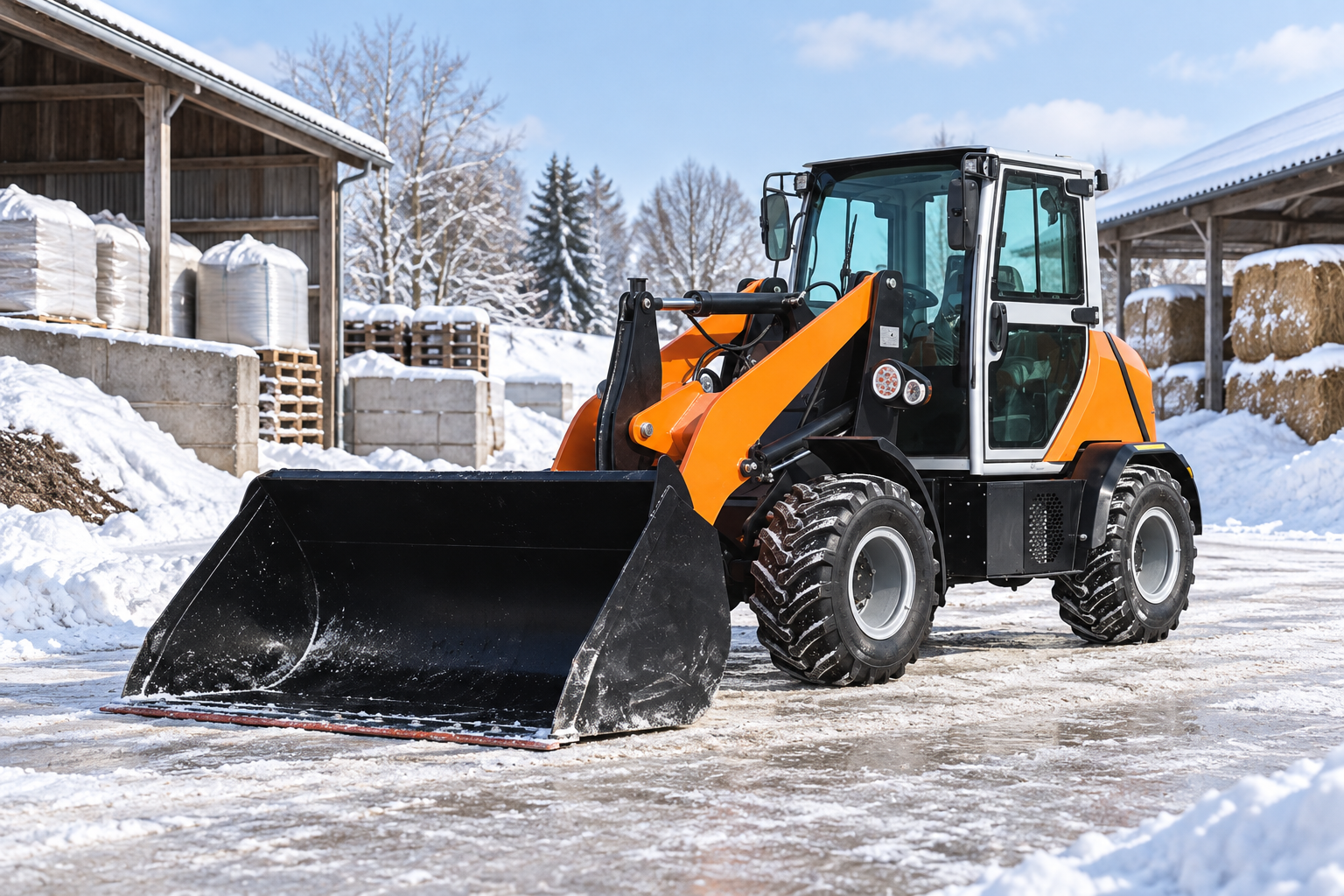
Why does winter change the plan? Lithium battery output and charging behavior can be affected by temperature, while snow, frozen material, soft shoulders, slopes, and repeated bucket cycles can increase energy demand. A loader that spends most of a shift in short, light movements may have a very different day from one that pushes dense snow continuously or travels between distant work zones. The same advertised battery capacity therefore cannot be translated into one guaranteed number of winter working hours. Treat a published capacity as a specification, not as a promise of shift duration.
check the E28 electric wheel loader specifications
The E28 listing gives a reference configuration of 153.6 V, 206 Ah and 31 kWh, and lists an external charging time of two hours. Confirm that these values match the exact machine, battery, charger, supply and market configuration being quoted. A stated charging time is not a guarantee that every cold battery will charge in that time: the approved charging window, battery temperature, state of charge, charger behavior and site power all matter. Request the current operator and charging instructions before setting a winter schedule.
A useful buyer question is not simply “How many hours will it run?” but “Can it complete my measured work cycle with reserve?” Record the start and end battery indication, outdoor temperature, hours worked, number of loaded bucket cycles, average travel distance, gradients, material type, waiting time and any accessory use. Repeat the observation across representative cold days. This turns a general estimate into evidence from your own yard. Ask your supplier which display readings should be recorded and how the machine reports battery status; do not infer remaining work time from a single indicator without checking the manual.
compare electric wheel loader options
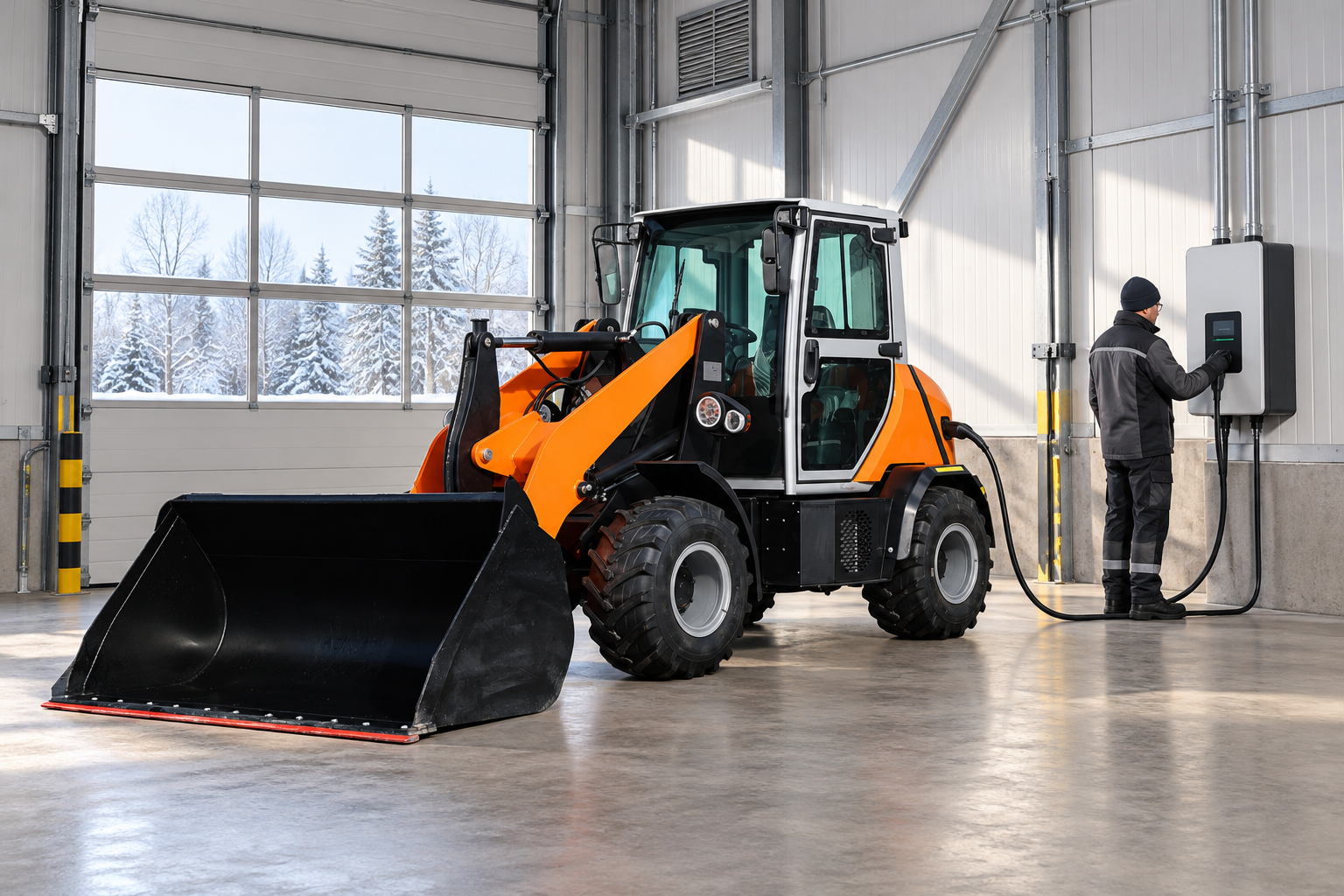
Charging deserves its own winter procedure. Confirm the battery and charger temperature limits and any required conditioning or waiting period with the manufacturer. Use the designated dry, protected charging area, approved charger and electrical supply, and follow the model-specific sequence. Do not charge a wet, damaged, frozen or otherwise abnormal battery, or bypass a warning, unless the official instructions explicitly authorize the action. Keep charging equipment protected from vehicle impact and moisture, and have trained personnel handle connectors and fault messages. A warmer location may be helpful only when it is permitted by the equipment instructions and site safety rules.
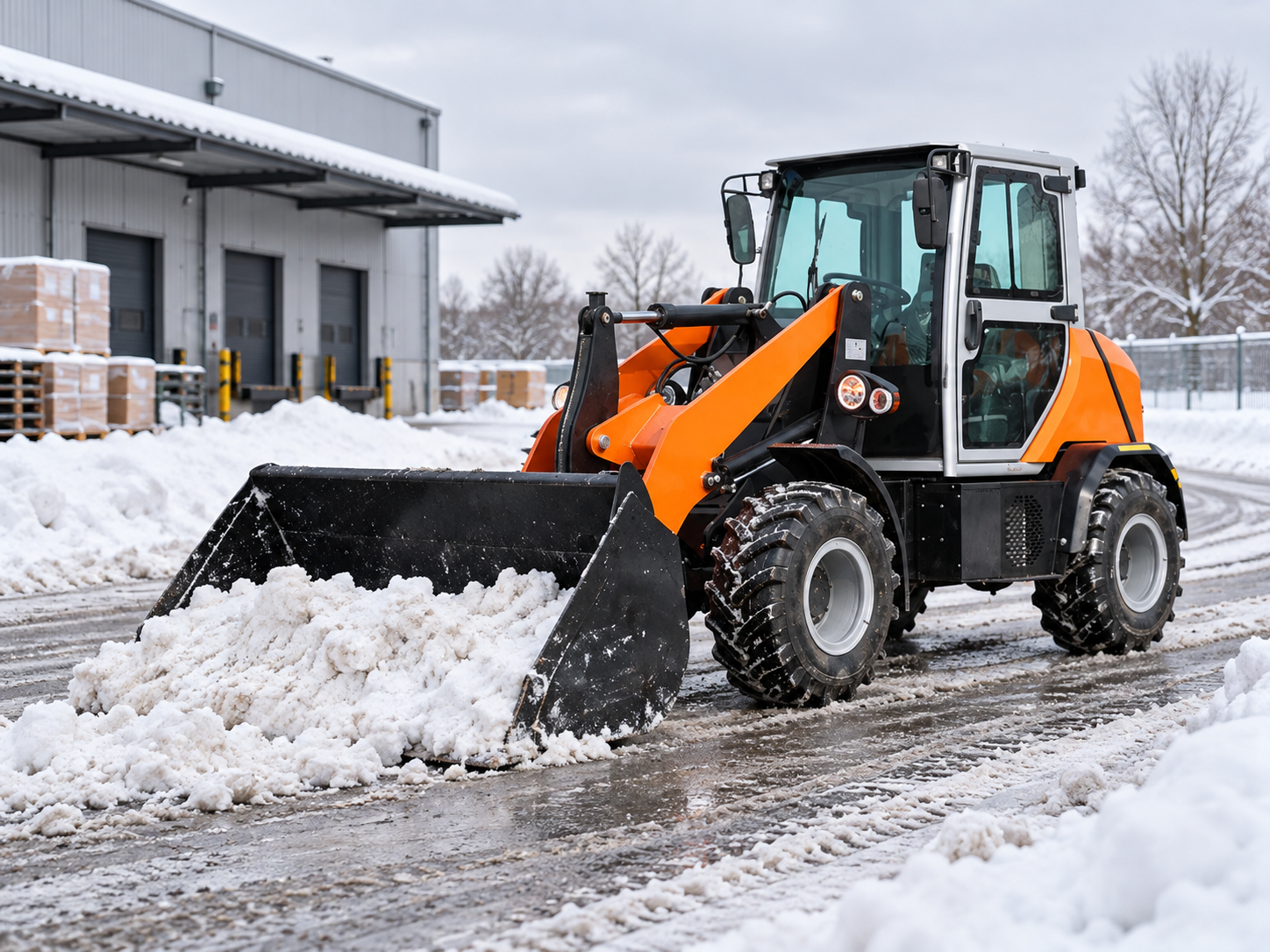
Route and attachment planning also matter. Clear snow and standing water where possible, check for ice at ramps and turning points, and maintain a route wide enough for the loader to turn without approaching pedestrians or stored goods. Verify tire selection and traction expectations for your surface. If you plan to use a snow blade, broom or other attachment, confirm compatibility, hydraulic/electrical requirements, visibility, approved capacity and the effect on the duty cycle before ordering. Do not assume an attachment shown for another loader is approved for the E28.
review the MYZG wheel loader range
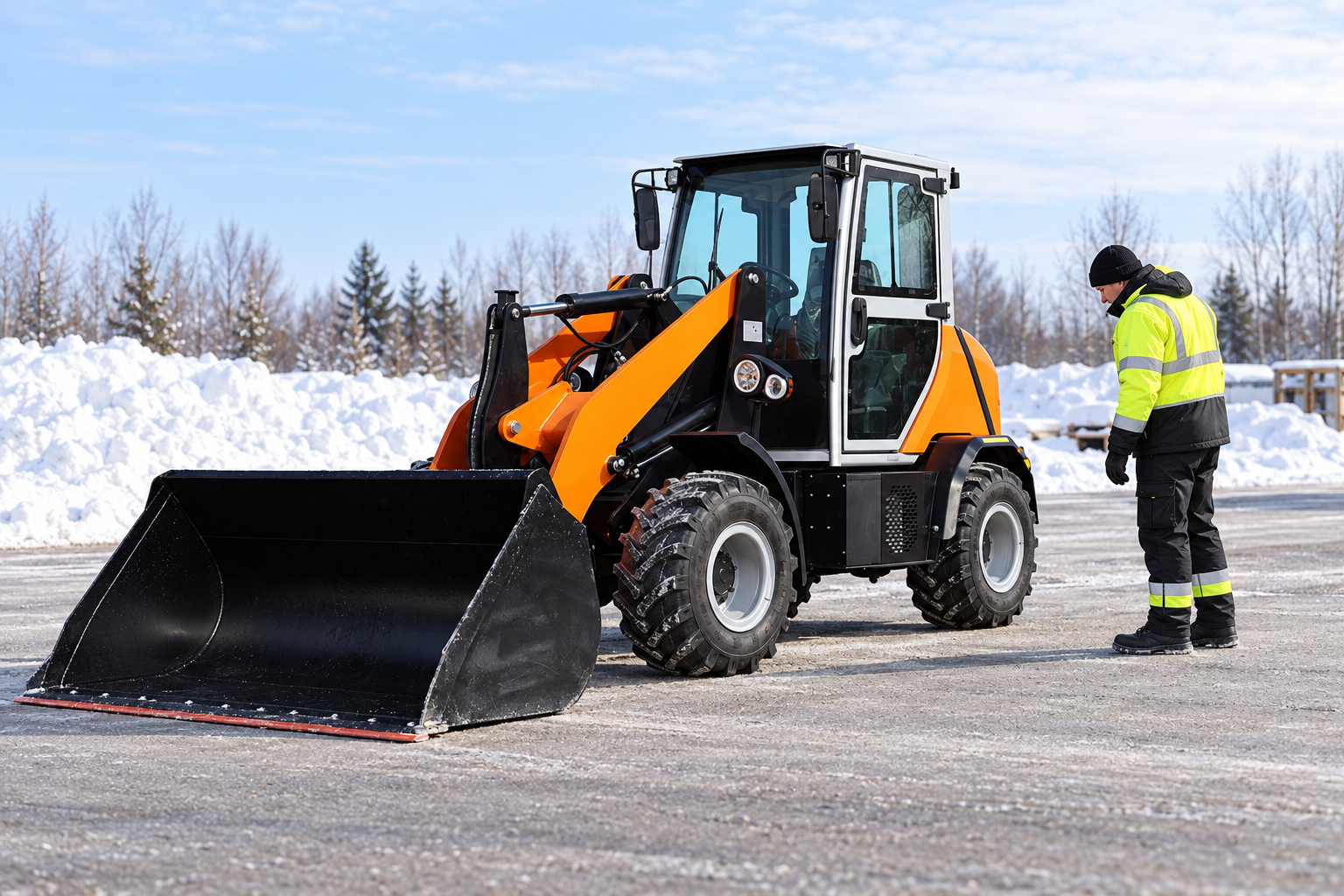
At the start of a cold shift, use the inspection steps in the operator manual. Check tires, visible cables and connectors, lights, windows, mirrors, warning devices, bucket condition and the work area. Remove ice from visibility surfaces safely; keep the operator's view clear and use a spotter where the site risk assessment calls for one. Allow the equipment to become ready only as specified by its maker. Avoid improvised heating, open flames, unauthorized battery warming or any procedure that conflicts with the manual. Stop and investigate an unexpected warning rather than trying to finish a task by overriding it.
For procurement, compare the machine against the actual winter task rather than against a generic promise. Share the lowest expected ambient temperature, hours per day, payload and material, route length, slope, indoor/outdoor proportion, charging opportunity and the attachment list. Request written confirmation of the operating envelope, battery and charger specification, charging conditions, maintenance requirements and warranty terms for that environment. If a full-shift target is essential, arrange a representative cycle test or a measured demonstration under safe, agreed conditions and keep a practical reserve plan for unusually cold days.
request a winter-duty configuration review
The E28 is presented as a compact electric wheel loader for material handling; buyers can review the official model details and compare the wider wheel-loader range before choosing a configuration. Product specifications are only one part of the decision: service access, site power, operator training, charging location and local winter conditions must fit together. A careful review before delivery helps avoid sizing the machine by battery capacity alone and makes the first cold-weather work plan more realistic.
For a configuration review, send Shandong Zhuogong Machinery equipment Co.,Ltd your expected temperatures, daily duty cycle, material, travel route, attachment requirements and available charging supply. The team can help identify which questions need confirmation against the exact E28 documentation and quotation. Contact WhatsApp +86 131 7691 0558 or email MYZG@my-forklift.com. For safety-critical limits, the supplied operator manual and written manufacturer guidance take precedence over general online advice.
Shandong Zhuogong Machinery equipment Co.,Ltd
ZGLOADER / MYZG
WhatsApp: +86 131 7691 0558
Email: MYZG@my-forklift.com
Website: https://www.my-forklift.com/
Post time:Oct.26.2026
