
Why Does a Diesel Wheel Loader Hesitate When Changing Direction? A Safe Diagnostic Guide
Why Does a Diesel Wheel Loader Hesitate When Changing Direction? A Safe Diagnostic Guide — ZGLOADER / MYZG. Shandong Zhuogong Machinery equipment Co.,Ltd
A wheel loader that pauses before moving after the operator selects forward or reverse deserves attention, but the symptom alone does not identify a failed transmission. The delay may vary with cold start, oil temperature, engine speed, interlocks, control settings, brake condition, electrical signals or the machine's specific powertrain design. Record what the machine does and when; do not adjust valves, bypass an interlock or repeatedly shift under load to reproduce the condition. The exact operator and service manuals for the serial-numbered loader take priority over generic advice.
ZGLOADER Q36 diesel wheel loader specification
First make the area safe. Stop on firm, level ground away from people, lower the bucket fully, place the controls in the prescribed safe position, apply the parking brake and follow the manual before leaving the cab. If the machine moves unexpectedly, has weak braking, shows a transmission or brake warning, leaks fluid, makes a new grinding noise or cannot hold position, take it out of service and arrange qualified inspection. Do not continue work merely because the delay disappears after several attempts. A direction-change test is not a substitute for a controlled worksite risk assessment.
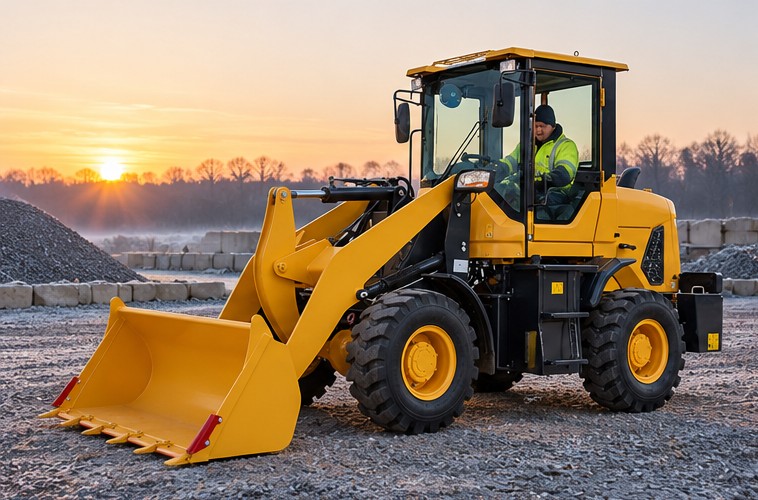
Document the symptom without inventing measurements. Note the date, ambient temperature, time since startup, engine speed indication, selected direction, approximate delay observed, whether the response is consistent, and any dashboard warning or fault code. Record whether it happens only when cold, after warming, in one direction, in both directions, at idle, or during a normal unloaded maneuver. Do not place anyone near the wheels or articulation joint while the loader is running. If safe observation is not possible from the operator position, stop and let a technician reproduce it under an approved procedure.
Compare like conditions over a small number of normal cycles only if the manual and site procedure permit it. Use the same level surface, low travel speed, clear route and no load; keep the bucket low and maintain an exclusion zone. Do not test on a ramp, near a pile, at full throttle or with a suspended load. Record the order of events rather than trying to improve the response with rapid direction changes. A repeatable cold-versus-warm pattern, or a difference between forward and reverse, is useful information for a technician; it is not proof of a particular clutch, solenoid, sensor or pressure fault.
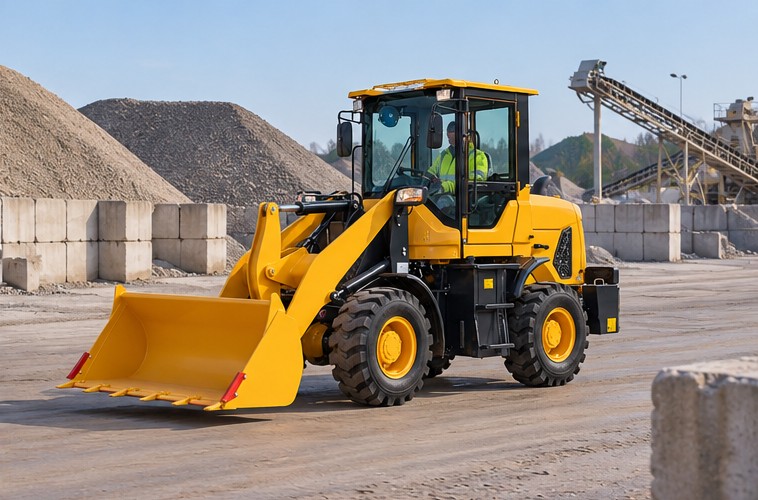
Avoid unsafe or potentially damaging checks. Do not crawl under a running loader, disconnect electrical plugs with power on, bridge a switch, loosen a hydraulic or transmission line, alter a linkage, change control calibration or add fluid without the exact level-check procedure and approved fluid specification. Hot oil can burn, pressurized fluid can penetrate skin, and an interlock may protect against crushing or unintended movement. Any pressure, flow, electronic or calibration test must be performed by trained personnel using the model-specific service manual, suitable equipment and a secured work area.
Before contacting service, gather the model and serial identification, engine and transmission information available on the machine records, operating hours, maintenance dates, fluid and filter details, warning codes, and a concise timeline of the symptom. State whether the loader was cold or warm, whether the delay affected both directions, and what safe checks were already completed. A short video taken from a safe location may help show the instrument display and operator controls, but never film from beside a moving machine. Keep the original files and do not edit out warnings or sounds.
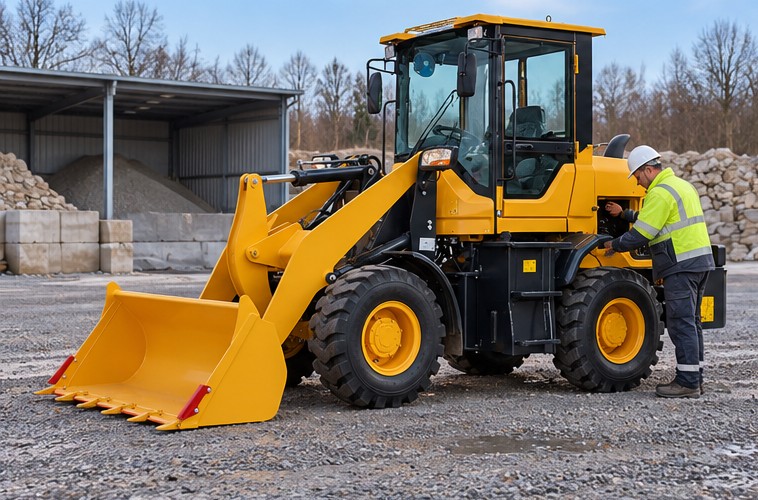
The ZGLOADER / MYZG Q36 product page lists a rated load range of 1,380–1,500 kg, bucket capacity of 0.60–0.65 m³ and an approximately 55 kW diesel engine option for the displayed configuration. These figures do not establish the transmission type or a diagnostic limit for every build. Confirm the exact delivered specification, powertrain, controls, fluids and service procedure by serial number. Buyers comparing loaders should ask what direction-control system is fitted, which checks are operator-level, what warnings are shown, and which service parts and technical support apply in the destination market.
After an authorized repair, request the technician's findings and the prescribed functional verification for the exact model. Confirm that warnings are cleared only after the underlying issue is addressed, and that the machine behaves as specified in a safe, controlled test. Update the service record with parts, fluid, software or adjustment work and the verification result. Shandong Zhuogong Machinery equipment Co.,Ltd can help buyers identify the relevant ZGLOADER / MYZG configuration and prepare a support inquiry. Send the model, serial number, operating hours and symptom notes via WhatsApp +86 131 7691 0558 or MYZG@my-forklift.com. This guide describes a diagnostic approach, not a confirmed customer repair or a substitute for professional service.
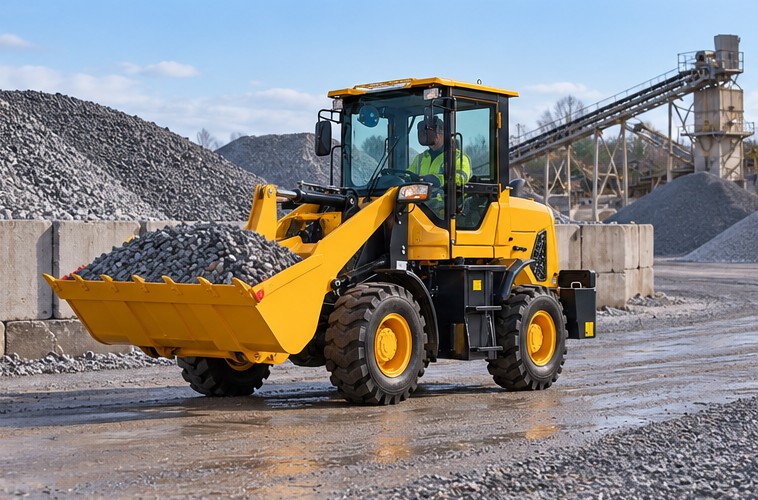
Shandong Zhuogong Machinery equipment Co.,Ltd
ZGLOADER / MYZG
WhatsApp: +86 131 7691 0558
Email: MYZG@my-forklift.com
Website: https://www.my-forklift.com/
Post time:Oct.22.2026
