
Diesel Forklift in a Coastal Yard? Plan Salt-Air Inspection and Corrosion Checks
Practical buyer answer: Diesel Forklift in a Coastal Yard? Plan Salt-Air Inspection and Corrosion Checks ZGFORKLIFT / MYZG diesel forklift. Shandong Zhuogong Machinery equipment Co.,Ltd
Practical buyer answer
A diesel forklift working near a port, fish market, coastal warehouse or exposed loading yard faces a different maintenance environment from the same truck kept in a dry inland building. Salt carried by air, condensation, rain, washdown residue and fine grit can collect on exposed metal, fasteners, electrical connections and mast components. The right response is not an improvised coating or a more aggressive wash; it is a documented inspection plan based on the exact machine manual, site exposure and qualified service advice. This guide helps buyers and fleet managers ask the right questions before delivery and build a practical routine without claiming that any standard forklift is automatically corrosion-proof.
diesel forklift ZGFORKLIFT / MYZG
Describe the environment precisely when requesting a configuration. Tell the supplier how close the machine operates to the shoreline, whether salt spray reaches the yard, how often rain or fog leaves surfaces wet, whether the floor is routinely washed, and whether the truck is stored indoors or outdoors between shifts. Include operating hours, duty cycle, the products handled, cleaning methods and any chemical exposure. A coastal port apron, a covered dock several kilometres inland and a fish-processing washdown area are not interchangeable conditions. A few dated site photographs and a simple route sketch make the exposure discussion more useful than the word coastal alone.
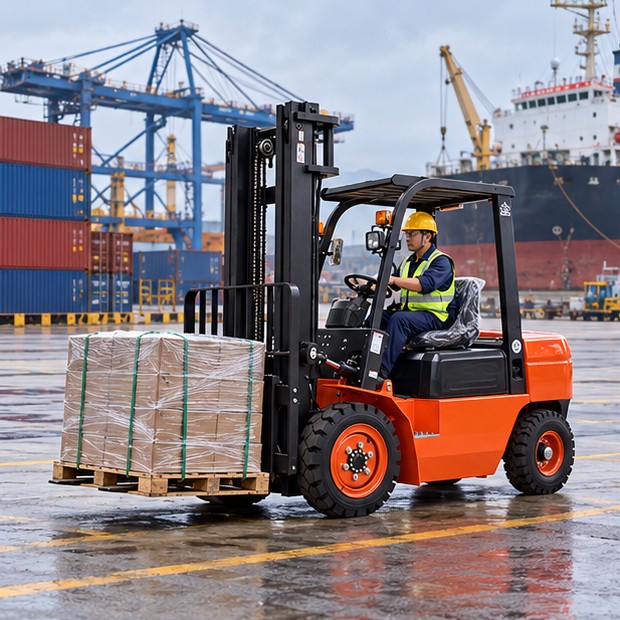
Before ordering, ask which corrosion-related options or material treatments, if any, are actually available for the quoted model and which areas they cover. Request the scope in writing: exposed fasteners, electrical connectors, chassis surfaces, mast hardware, paint finish or other specific parts. Do not assume a marketing phrase such as marine grade means every component has been treated, or that a treatment is suitable for hot, moving, friction or electrical surfaces. The product data sheet and approved options for the exact build must define the limits. If no special package is offered, plan routine inspection and storage controls rather than applying an unapproved chemical after delivery.
diesel forklift ZGFORKLIFT / MYZG
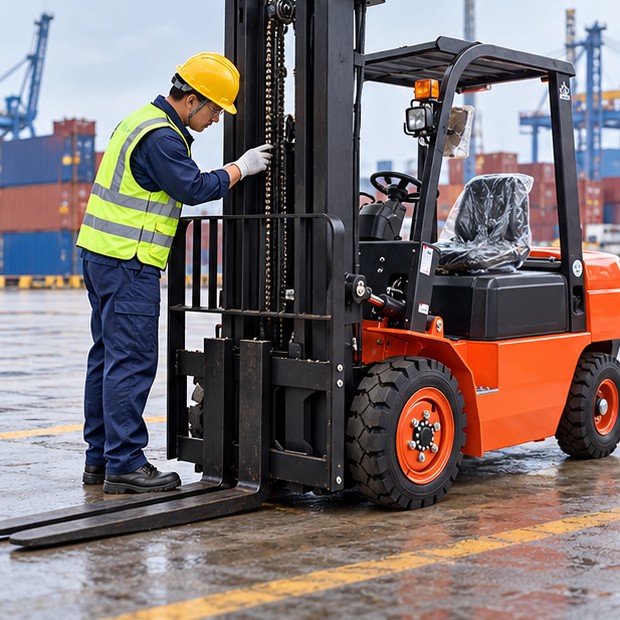
Create a repeatable visual inspection route for the operator and service team. With the forklift parked safely, forks lowered, parking brake applied and engine off where the inspection requires it, review accessible painted surfaces, weld areas, fasteners, battery and electrical connections, mast rails, chains, rollers, hose fittings, wheel hardware and the underside areas identified in the manual. Look for fresh rust, coating damage, trapped debris, salt deposits, loose hardware, cracked insulation or signs of water entry. Record location and severity with a photo and date so the team can tell a surface mark from a change that is spreading or affecting a safety-critical part.
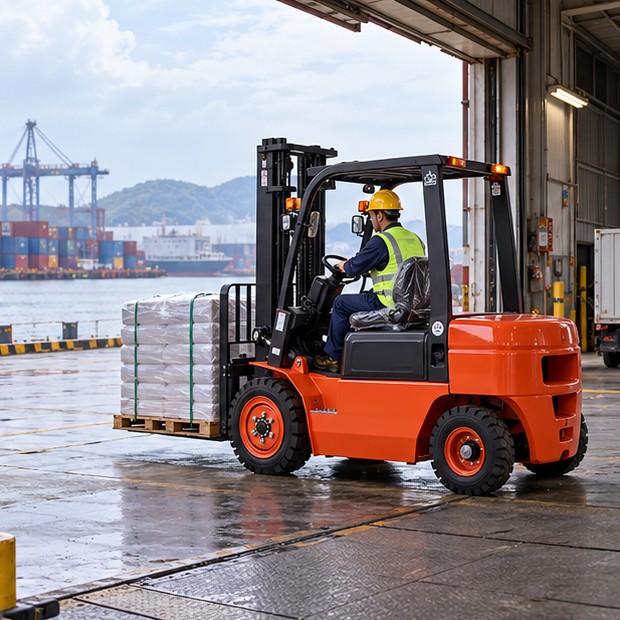
Pay special attention to the mast and load-handling components because visible corrosion or contamination there can matter beyond appearance. Follow the supplied inspection schedule for chains, rollers, carriage, forks, pins, retainers and hydraulic hoses. Do not scrape, lubricate, adjust or dismantle components unless the manual assigns that task to trained personnel and specifies the method and product. A chain with damaged links, a fork with a crack or deformation, a hose with abrasion, or a retaining device that will not secure correctly requires the truck to be removed from service and assessed by qualified staff before lifting resumes. Never treat paint over a defect as a repair.
diesel forklift ZGFORKLIFT / MYZG
Practical buyer answer
Plan cleaning around the manufacturer instructions and the actual contamination. Salt deposits may require careful removal, but high-pressure water can force moisture into bearings, connectors, seals or the air intake, and cleaning a hot engine or electrical area can create additional risk. Use only an approved method, isolate the truck as directed and allow the specified drying and inspection steps before operation. Do not spray electrical components, the instrument panel, air filter inlet, brake surfaces or hot exhaust parts. If the manual does not clearly cover the site's washdown method, ask the supplier or authorized service professional before making it part of the routine.
Storage and shift handover are part of corrosion control. A covered, ventilated parking location can reduce direct rain and salt deposition, but a cover must not obstruct cooling airflow, exhaust clearance or access to safety checks. Keep drains clear and avoid leaving the machine standing in pooled water or contaminated wash residue. At each handover, record unusual moisture, impact damage, warning lights, difficult controls, leakage or newly visible corrosion. If a defect affects steering, braking, visibility, load retention, electrical protection or structural integrity, stop using the forklift, isolate it and follow the site's qualified-service process rather than waiting for the next routine inspection.
diesel forklift ZGFORKLIFT / MYZG
Do not confuse an appearance checklist with a corrosion engineering assessment. A competent technician should determine whether a finding is superficial, needs cleaning and monitoring, or requires measurement, repair or replacement. Avoid applying grease, paint, rust converter or sealant to chains, forks, friction surfaces, safety labels, drain openings, connectors or moving joints unless the exact manual or approved service instruction says to do so. Maintain records of inspection, cleaning product, service action and parts fitted. This history helps compare performance by location and supports a realistic spare-parts plan for equipment that spends much of its life outdoors.
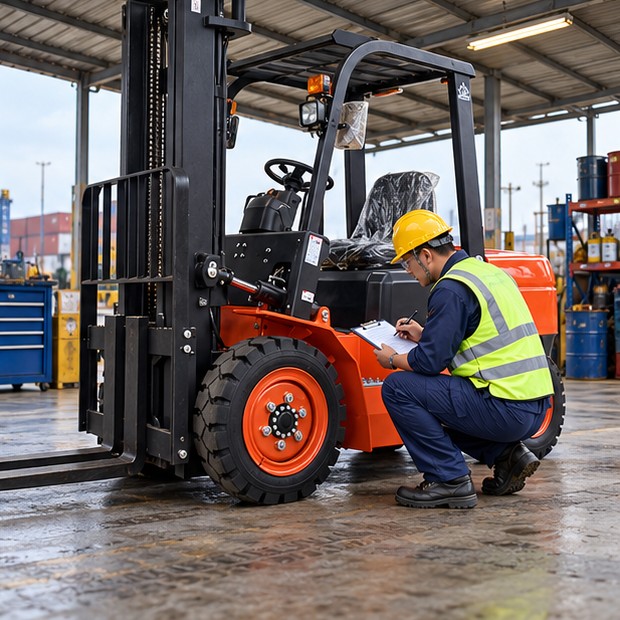
A useful purchasing review includes the machine model and serial identification, engine and emission configuration, duty hours, route photographs, storage arrangements, washdown method, coastal distance or exposure description, cleaning responsibility, inspection frequency from the manual, available service support and any requested corrosion option. The ZGFORKLIFT / MYZG diesel range includes CPC30 configurations; use the product page as a starting reference, then confirm the exact unit and approved options in the quotation. Shandong Zhuogong Machinery equipment Co.,Ltd can coordinate those configuration questions with the buyer and service team. Contact WhatsApp +86 131 7691 0558 or MYZG@my-forklift.com. This is general planning guidance, not a corrosion guarantee or a substitute for the delivered manual, local safety rules or a qualified inspection.
Shandong Zhuogong Machinery equipment Co.,Ltd
ZGFORKLIFT / MYZG
WhatsApp: +86 131 7691 0558
Email: MYZG@my-forklift.com
Website: https://www.my-forklift.com/
Post time:Oct.21.2026
