
ZGLOADER / MYZG B30 Loader for Builder-Merchant Orders and Dispatch Planning
Application planning
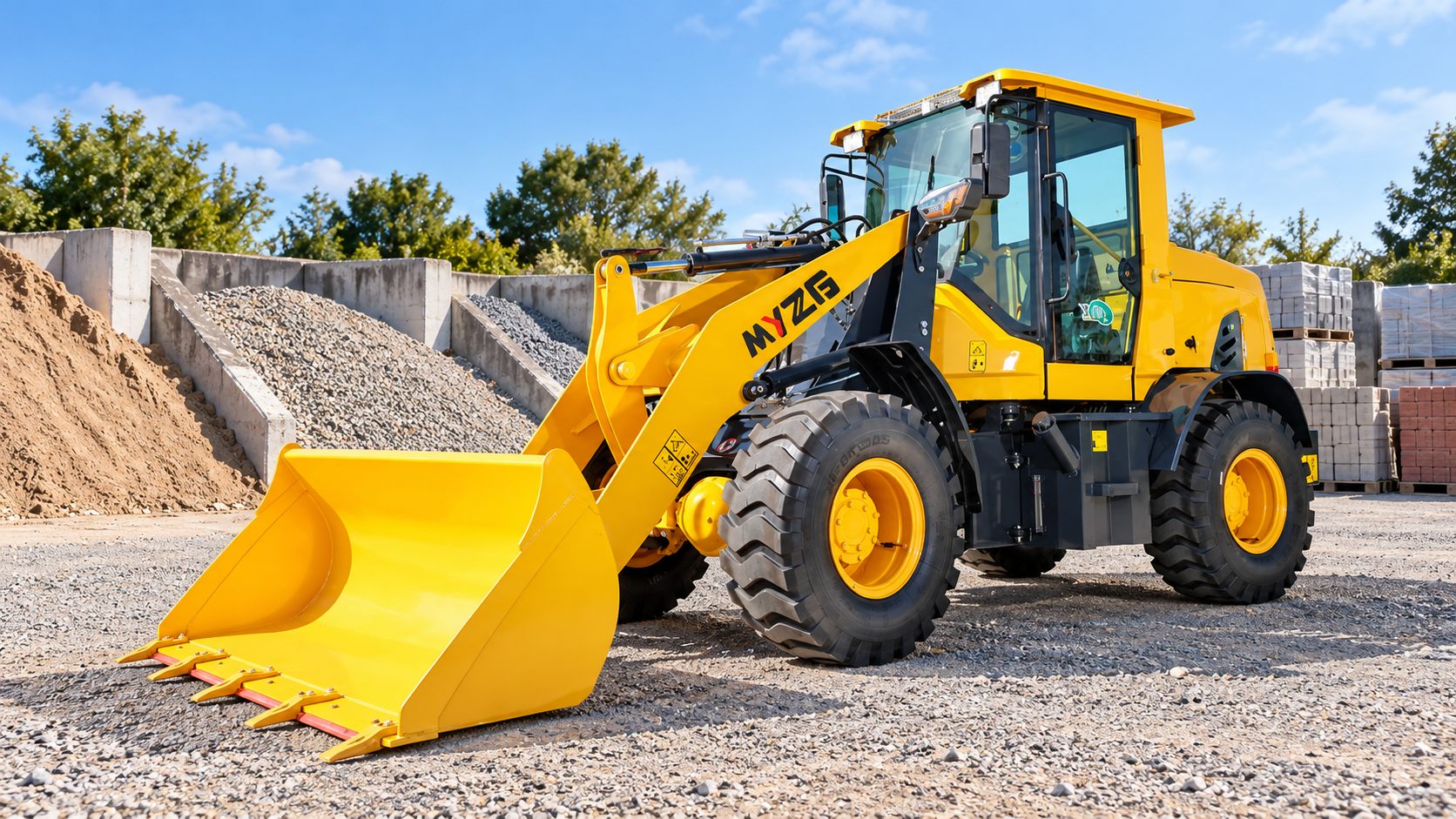
A builder merchant serving small customer orders needs more than a large bucket: the loading position, waiting vehicles, material mix and operator routine all affect dispatch. The ZGLOADER / MYZG B30 can be assessed as a compact diesel loader for this type of prepared outdoor yard. Shandong Zhuogong Machinery equipment Co.,Ltd supports configuration-based procurement so the machine, attachment and after-sales plan reflect the buyer's actual work rather than a headline specification alone.
Separate material volume from permissible mass
Prepare a simple list of the materials handled each week and record whether each is dry, damp or saturated. A bucket that is suitable for a light material may be unsuitable when filled in the same way with dense aggregate. Do not use bucket volume as a substitute for the machine's approved operating limits. Ask the supplier to review material density, attachment mass and the intended operation together. If different materials share the same tool, establish an operator procedure that remains within the approved limits for the heaviest expected condition.
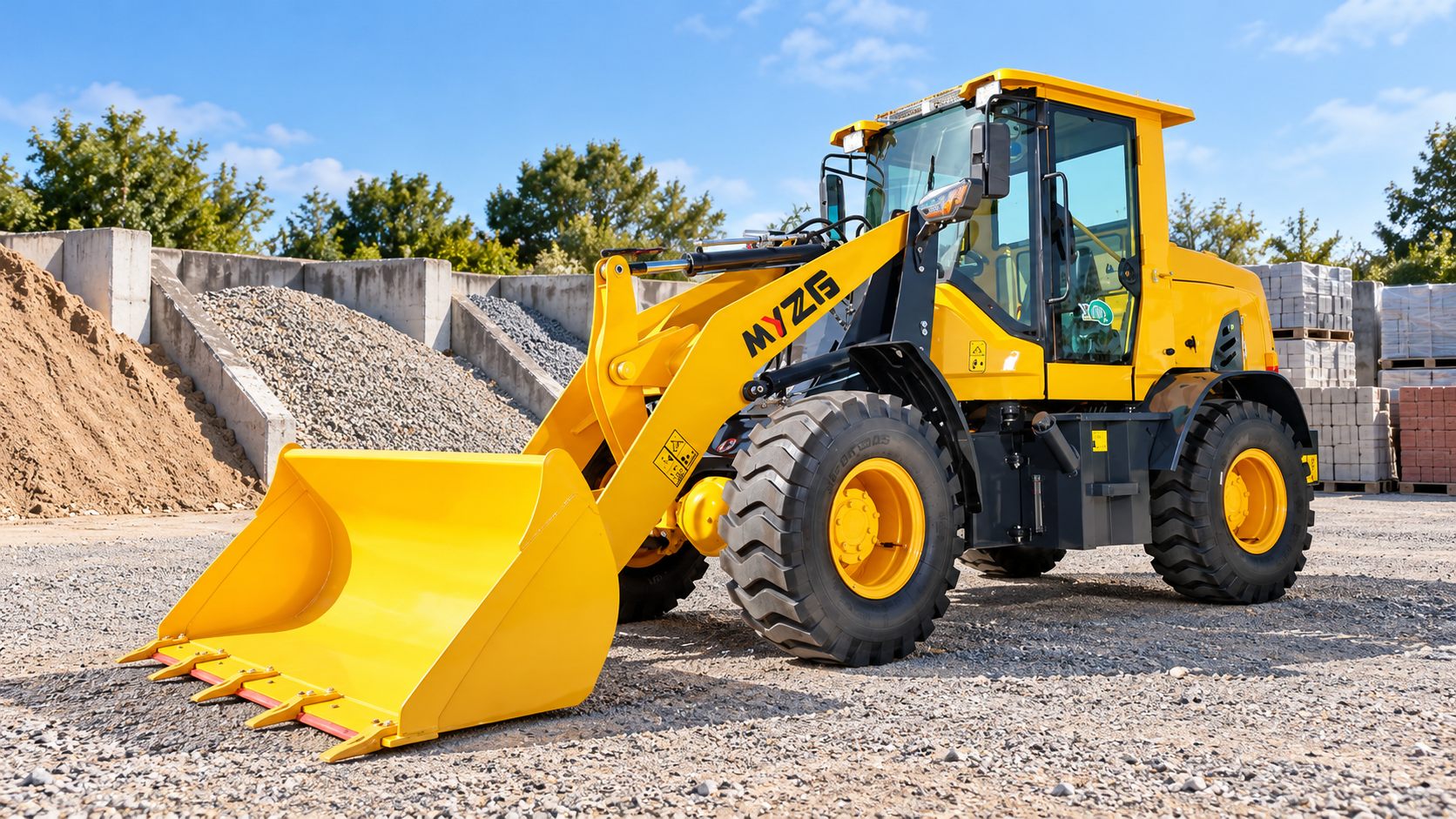
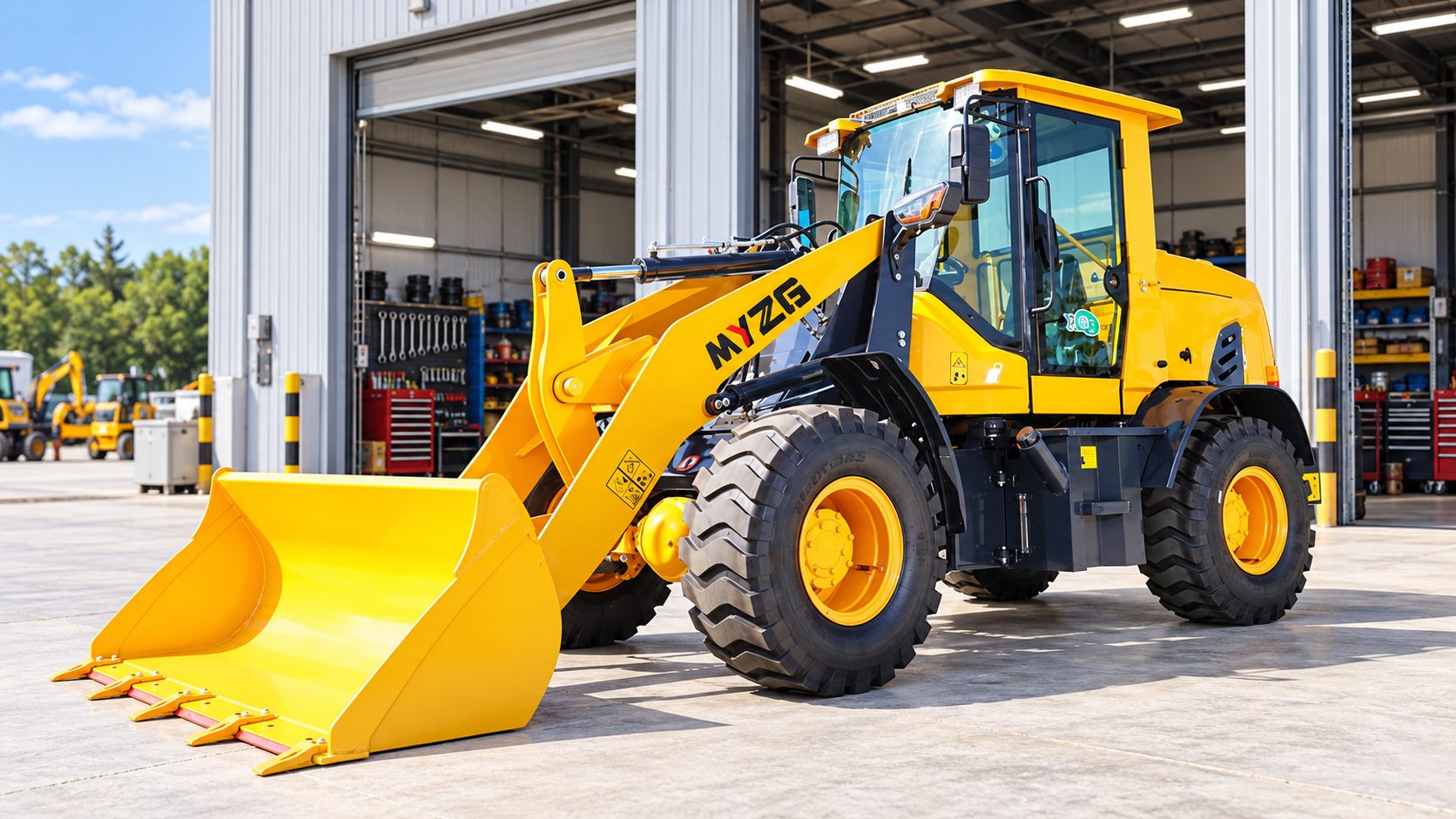
The published B30 reference lists a 1100 kg rated load, 0.4 m³ bucket, 38 kW diesel power, 2560 kg operating weight and overall dimensions of 4970 × 1655 × 2240 mm. Listed dump height is 3000 mm and dump distance is 600 mm. Engine options are described as QUANCHAI or Yunnei. Confirm the exact engine, attachment and delivered dimensions in the order; a shared power figure does not establish identical emissions documentation or service parts.
Design the route around people and receiving vehicles
Draw the stockpiles, entrances, customer waiting area and proposed loading position before comparing machines. Keep pedestrians outside the loader operating zone and maintain a clear view at reversing points. Check room for articulation and bucket movement, not only the published machine width. The receiving vehicle's side height, position and clearance must be assessed against the complete unloading geometry. Dump height alone cannot prove compatibility. Avoid building a workflow that depends on raising the load during travel or making sharp turns beside waiting customers.
Use a trial workflow instead of an unsupported output promise
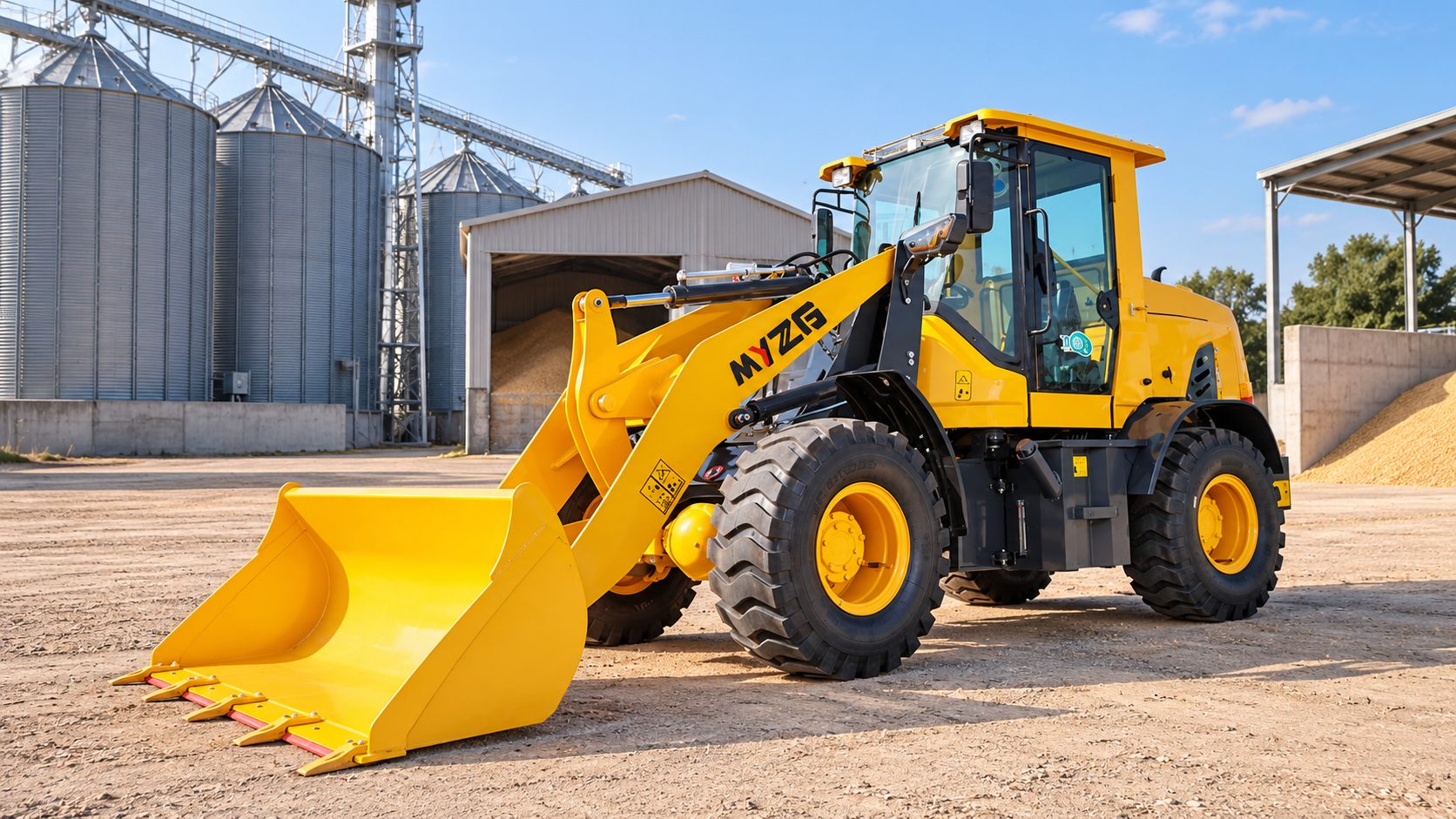
An illustrative planning exercise is to time an unloaded route on a prepared site, then review the permitted loading sequence with trained personnel and the operating manual. Separate travel, positioning, loading and waiting time. This reveals whether the main constraint is access, stockpile layout or dispatch coordination. It does not establish a guaranteed tonnes-per-hour figure. Document the assumptions and reassess them when the material, surface or receiving vehicle changes. Keep the attachment low during travel and follow the machine's instructions for every lifting and unloading operation.
Browse equipment configurations
Choose the bucket and optional tools as one package
Request the approved bucket dimensions, coupling interface and hydraulic requirements in writing. A pallet fork changes the load center and must be assessed using its own permitted load information rather than the bucket rating. If the business needs several attachments, include their weight, intended material and changeover procedure in the enquiry. Ask how locking is checked and how hoses are protected. Do not assume that an accessory pictured elsewhere in the catalogue fits the selected machine without adaptation. The purchase decision should cover compatibility and operator handover as well as price.
Prepare for the busiest season before it arrives
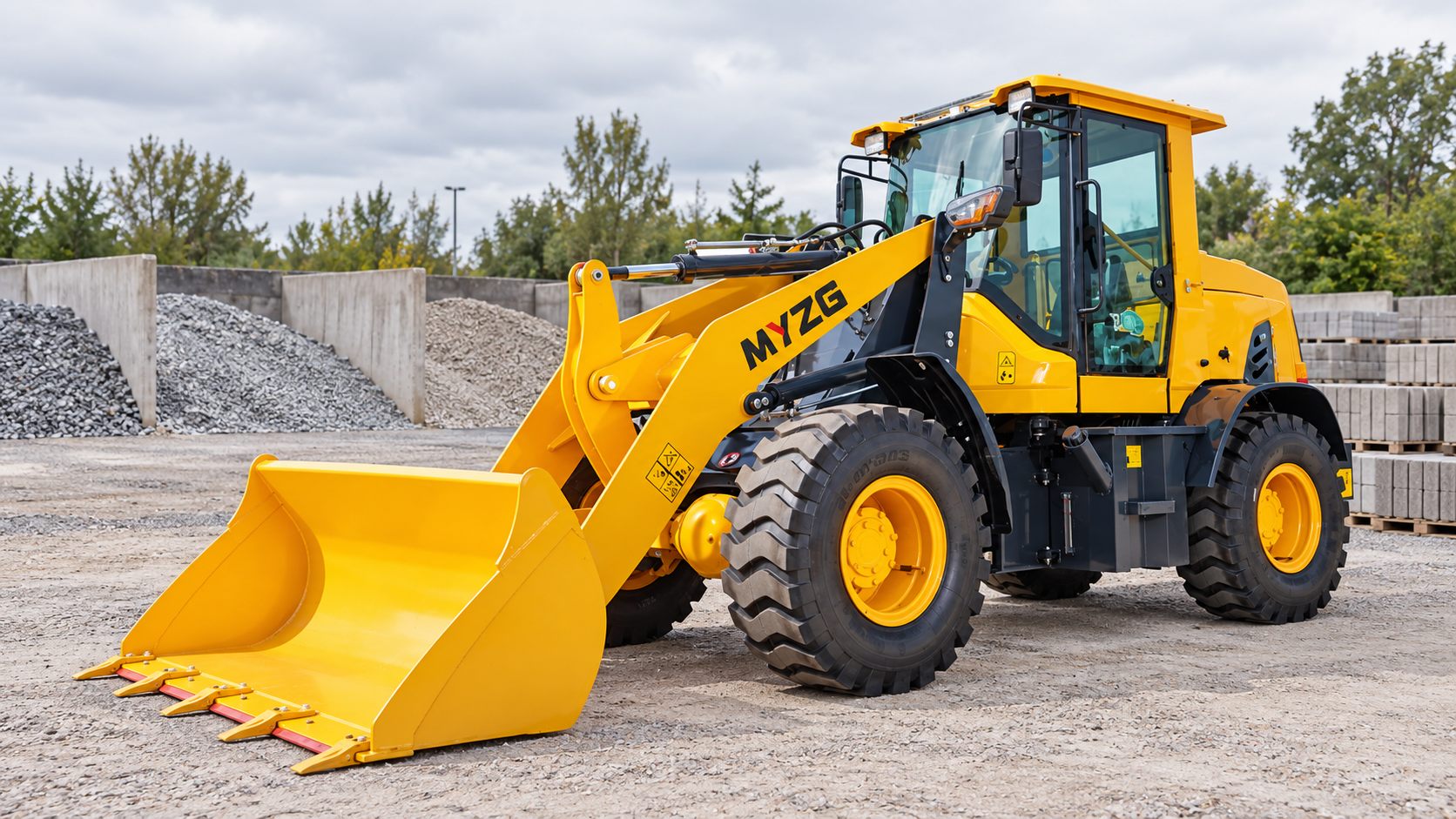
Create an inspection and service calendar using the delivered manual and actual operating hours. Record the serial number, engine version and filter references before ordering parts. Daily visual checks include leaks, tires, wheel fasteners, hoses, guards and the attachment connection. Dust and plant debris make cooling and filtration especially important. Lower the attachment, stop and isolate the machine as instructed before maintenance. Never enter an articulation pinch point or work under an unsupported raised arm. Arrange specialist assistance for faults beyond the operator's training.
Discuss attachments and service
Compare commercial support alongside the machine
For a dealer or rental business, a useful proposal identifies included equipment, optional tools, warranty terms, parts supply and responsibility for local service. Demonstrate the inspection points and explain the customer's operating limits without inventing savings figures. Export coordination can cover packing information, shipping documents and communication about the ordered configuration. CE documentation and EPA-compliant engine options apply to relevant configurations and markets; specify the required evidence for the exact version. Do not treat one document as covering every attachment or destination.
Read equipment application articles
Build a quotation that can be checked
Send site photographs, the material list, maximum intended load, route dimensions, receiving-vehicle details, working hours and desired attachments. Include the destination country, port, quantity and local service arrangements. A written comparison can then distinguish essential requirements from optional convenience features. For a fleet, discuss a consistent parts package and a clear operator handover record. The generated scene images illustrate possible settings and are not evidence of completed customer projects or a promise that every visible accessory is standard.
Quotation and service
Shandong Zhuogong Machinery equipment Co.,Ltd
ZGLOADER / MYZG
WhatsApp: +86 131 7691 0558
Email: MYZG@my-forklift.com
Products categories
-

Sunlit Powerhouse: Introducing the E20 Solar-Powered Loader with Rapid Charge and All-Day Endurance
-

CPC30SY Rough Terrain Trucks
-

ZGFORKLIFT / MYZG CPC40 4 Ton LPG Forklift
-
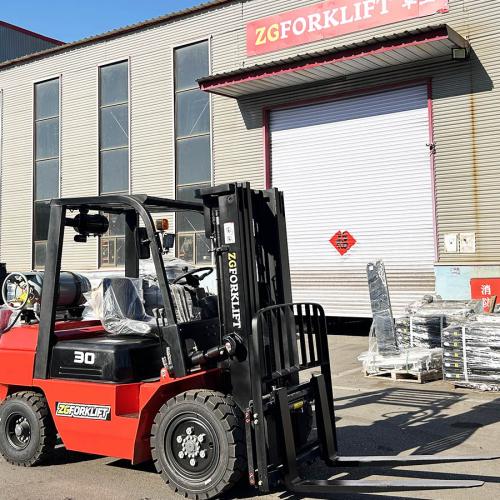
ZGFORKLIFT/SDZG CPCY35 3.5-TON DUAL-FUEL FORKLIFT
-
CPC75 Diesel Forklift | ZGFORKLIFT / MYZG
-

Kubota JC25 Compact Skid Steer Loader Redefines Efficiency with 380kg Lifting Capacity
