
The seemingly straightforward question, "What is the maximum load capacity of a standard forklift?" belies a complex and nuanced reality that is fundamental to safe and efficient material handling operations. A common misconception among those outside the field is that a forklift rated for 5,000 pounds can lift any 5,000-pound load under any circumstance, which is a dangerous and incorrect assumption. The truth is that there is no single "standard" capacity that applies universally. The maximum load capacity is a carefully engineered specification that is intrinsically tied to the specific model, design, and configuration of the forklift. Counterbalance forklifts, the most common type found in warehouses, typically have capacities ranging from 3,000 to 5,000 pounds for electric models and can exceed 50,000 pounds for heavy-duty internal combustion engine models used in shipping and heavy industry. However, this rated capacity is not a standalone figure; it is predicated on a specific set of conditions, primarily the load center. The load center is the horizontal distance from the forklift's fork face to the load's center of gravity. The industry standard for rating capacity is a 24-inch load center, meaning the capacity plate value is only valid if the load's center of gravity is exactly 24 inches from the fork face. If the load is longer, denser, or improperly positioned, shifting the center of gravity forward, the forklift's actual lifting capability diminishes dramatically due to the principles of leverage and moment force, which can lead to a catastrophic forward tip-over. Therefore, understanding that capacity is a dynamic, conditional value, not a fixed attribute, is the first and most critical step in forklift operation and management, forming the bedrock upon which all other safety and efficiency protocols are built, ensuring that every lift is conducted within the mechanical and stability limits of the machine.
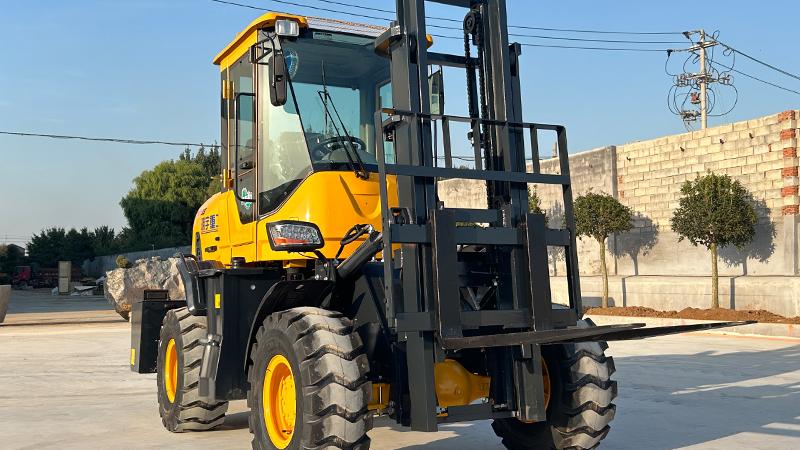
Delving deeper into the mechanics, the core reason why a forklift's capacity is not absolute lies in the fundamental physics of the "stability triangle." A three-wheel or four-wheel forklift has a defined stability triangle or pyramid, a theoretical zone within which the combined center of gravity of the truck and its load must remain for the forklift to remain stable. When a load is lifted, the moment force—the product of the load's weight and its distance from the fulcrum (the front axle)—creates a tipping force. The forklift's counterweight at the rear is designed to counteract this force, but its ability to do so is finite. As the load center increases beyond the standard 24 inches, the moment force increases proportionally, pushing the combined center of gravity toward the edge of the stability triangle. This is why a 5,000-pound capacity forklift might only safely lift 2,500 pounds if the load center extends to 48 inches, a critical calculation that every competent operator must internalize. Furthermore, lift height is another crucial, often overlooked, factor. As the mast is raised, the elevated load raises the combined center of gravity, further reducing stability. A load lifted to its maximum height is inherently less stable than the same load at a low travel height. Dynamic forces compound these risks; sudden braking, sharp turns, or traveling across uneven surfaces can generate inertial forces that easily push an already marginally stable forklift over its tipping point. Consequently, the manufacturer's capacity plate, which specifies the maximum weight for various lift heights and load centers, is the ultimate authority, and deviating from its guidelines is an invitation for disaster, emphasizing that operational safety is a continuous process of calculation and vigilance, not merely a matter of reading a single number on a spec sheet.
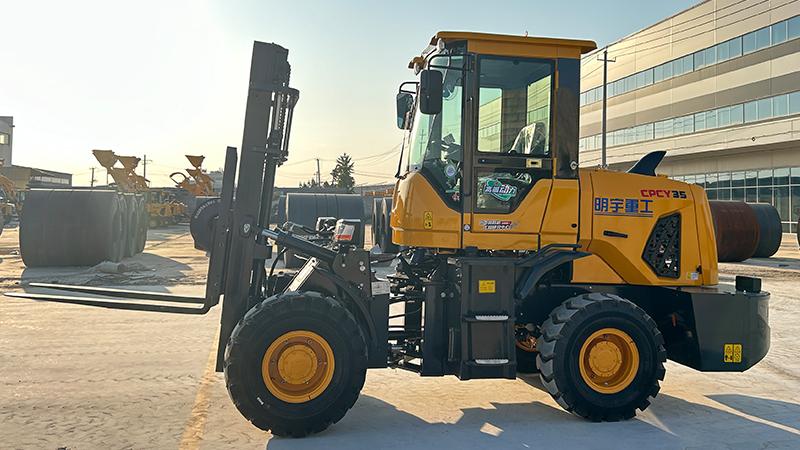
Beyond the core physics, the practical maximum load capacity in a real-world setting is further influenced by a host of operational and configurational factors, making fleet management a sophisticated discipline. The addition of any attachment to the mast, such as a side-shifter, paper-roll clamp, or rotator, fundamentally alters the forklift's dynamics. These attachments add weight forward of the front axle and often shift the load's center of gravity forward, effectively reducing the truck's nominal capacity. The capacity plate often lists derated capacities for common attachments, and it is mandatory to consult this revised data. Failure to do so is a primary cause of tip-overs and load drops. The type of tires and the condition of the forklift also play a significant role. Cushion tires, common on indoor electric forklifts, provide a lower center of gravity but less traction on uneven ground compared to pneumatic tires. Worn-out tires or forks can compromise stability and load security. From a managerial perspective, understanding these nuances is key to selecting the right forklift for the application. A warehouse handling uniform pallets requires a different truck than a facility dealing with long lumber or massive coils of steel. Proper operator training is paramount; operators must be certified to understand how to assess load weight, center of gravity, and secure the load properly before any lifting maneuver. Regular maintenance, including checks on the mast chains, hydraulic systems, and brakes, ensures that the forklift performs as engineered and does not suffer from capacity-reducing mechanical failures, thereby creating a culture of safety that permeates every level of the logistical operation.
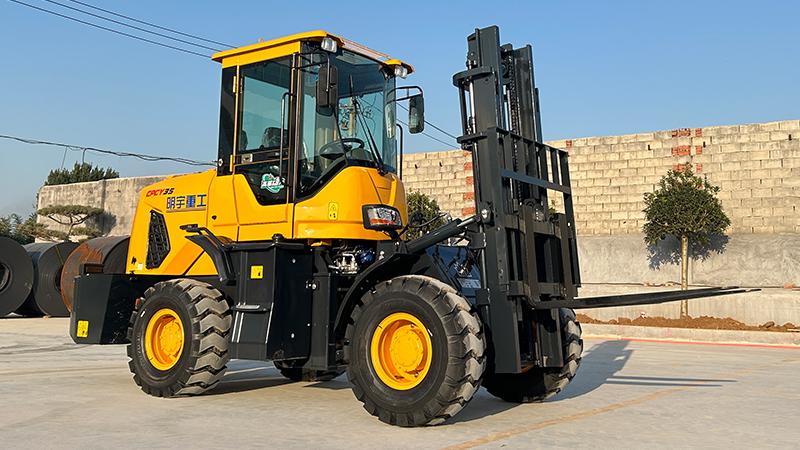
In conclusion, the query about the maximum load capacity of a standard forklift opens a portal into the intricate world of industrial safety and engineering. There is no simple, universal answer, as capacity is a variable dictated by a precise interplay of load center distance, lift height, forklift configuration, attachments, and dynamic operating conditions. The pursuit of a single number is less important than the cultivation of a deep-seated understanding of the principles that govern forklift stability. The manufacturer's capacity plate is the non-negotiable bible for daily operations, and any deviation from its specifications constitutes a severe safety violation. For businesses, investing in comprehensive operator training, meticulous fleet management, and a proactive maintenance schedule is not merely a regulatory compliance issue but a fundamental commercial imperative to protect valuable assets, prevent workplace injuries, and ensure uninterrupted operational throughput. Ultimately, respecting the engineered limits of a forklift and empowering personnel with the knowledge to navigate these limits is what transforms a simple piece of machinery into a reliable and powerful partner in the complex dance of modern supply chain and logistics, where safety and efficiency are inextricably and profoundly linked.
Post time:Nov.10.2025
