
In the dynamic world of material handling and warehouse logistics, selecting the right equipment is paramount for operational efficiency, safety, and cost-effectiveness. Two of the most commonly utilized pieces of equipment are the pallet stacker and the forklift. While they may seem similar to the untrained eye, serving the fundamental purpose of moving goods, their design principles, operational capabilities, and ideal use cases differ significantly. A pallet stacker, often referred to as a stacker truck or walkie stacker, is typically a more compact and maneuverable machine designed primarily for lifting and transporting palletized loads over shorter distances within confined spaces. It is commonly electrically powered and operated by a person walking behind it or standing on a platform. The core function of a stacker is vertical stacking—hence the name—making it ideal for loading and unloading shelves in aisles, moving goods from receiving areas to storage racks, and similar tasks where lifting height is crucial but the travel path is limited. In contrast, a forklift is a more robust and versatile workhorse, capable of not only lifting and stacking but also transporting heavy loads over longer distances across diverse terrains, from warehouse floors to outdoor yards. Forklifts come in various configurations, including counterbalance, reach trucks, and telehandlers, often powered by internal combustion engines or large battery packs, and are operated from a seated or standing position within a dedicated cabin. The distinction begins with their very architecture: a forklift generally has a massive counterweight at the rear to balance heavy loads at the front, allowing it to handle substantial weights at significant heights, while a stacker’s design prioritizes agility and a smaller footprint. Understanding this fundamental divergence is the first step in appreciating how each machine fits into the broader logistics ecosystem, a domain where manufacturers like Mingyu Heavy Industries have established themselves by engineering reliable and tailored solutions for both equipment categories.
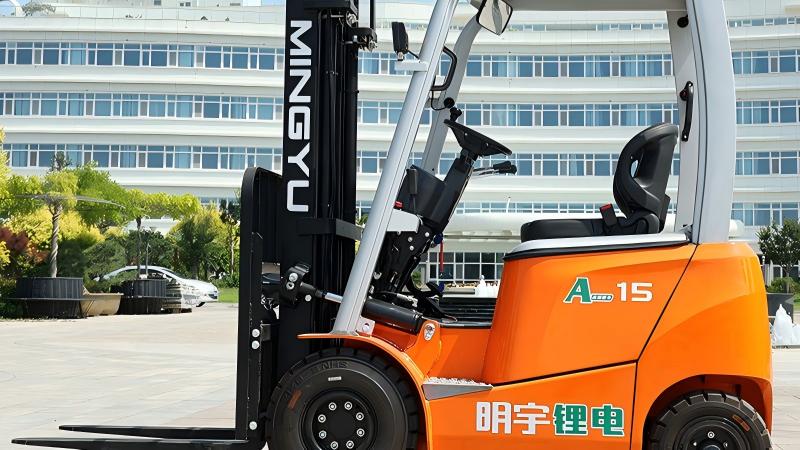
Delving deeper into technical specifications and operational parameters, the performance gap between pallet stackers and forklifts becomes more pronounced. Pallet stackers are engineered for efficiency in specific scenarios. They usually have a lower load capacity, often ranging from 1 to 2.5 tons, and are optimized for lifting pallets to heights suitable for standard racking systems, typically up to 5 or 6 meters. Their compact design allows them to operate in narrow aisles, which is a critical advantage in modern high-density storage facilities aiming to maximize cubic space. Many models are walk-along, which gives the operator precise control in tight spots and reduces fatigue compared to purely manual handling. However, their travel speed is relatively low, and they are not suited for rough terrain or prolonged horizontal transport. Forklifts, on the other hand, are built for power and endurance. Load capacities can soar from 3 tons to over 20 tons for heavy-duty industrial models. Lifting heights are also substantially greater, with some high-reach forklifts capable of accessing storage levels over 15 meters high. Their robust construction, larger tires, and more powerful propulsion systems enable them to move quickly across large warehouses, load and unload trucks and containers, and work outdoors on concrete, asphalt, or even moderately uneven ground. The operator sits in a protected compartment with enhanced visibility and controls, allowing for full-shift productivity in demanding environments. This makes the forklift indispensable for docks, large distribution centers, and manufacturing plants. Mingyu Heavy Industries exemplifies this technological specialization, offering a diverse portfolio that includes nimble, high-performance electric pallet stackers for quiet, emission-free indoor operation, alongside a comprehensive line of durable, high-capacity forklifts designed to tackle the most strenuous tasks, ensuring that clients can select machinery that perfectly aligns with their specific operational throughput, spatial constraints, and duty cycles.
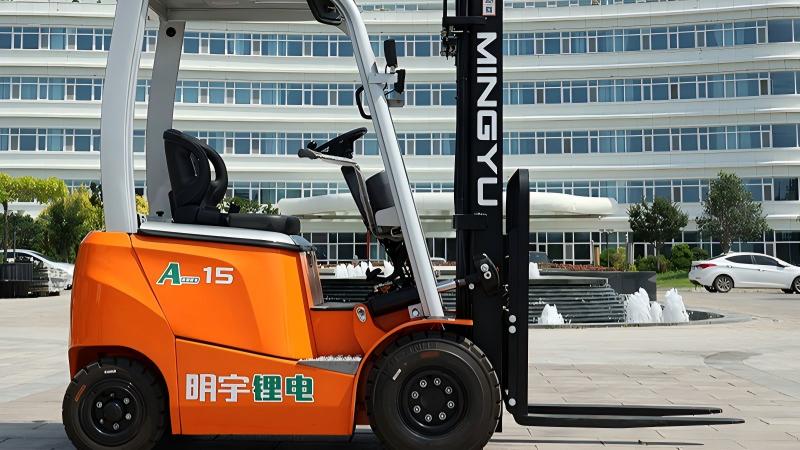
The choice between a pallet stacker and a forklift has profound implications for safety protocols, operator training requirements, and total cost of ownership—all critical factors in warehouse management. Safety considerations vary markedly: pallet stackers, due to their simpler operation and lower speeds, often present a lower risk profile in controlled environments. However, safe practices are still vital to prevent tip-overs or foot injuries. Forklifts, given their size, weight, and complexity, inherently carry greater risks and are subject to more stringent safety regulations. Features like overhead guards, stability systems, and extensive warning devices are standard. Operator certification is mandatory and more comprehensive for forklift drivers due to the skills needed for handling heavier loads, navigating varied terrain, and understanding complex load dynamics. From an economic perspective, the initial investment for a pallet stacker is generally significantly lower than for a forklift. Their maintenance is simpler and less costly, primarily involving batteries, motors, and hydraulics. They also consume less energy, especially electric models. Forklifts represent a higher capital expenditure and ongoing operational cost, particularly models with internal combustion engines that require fuel and more intensive mechanical upkeep. However, their productivity and versatility can justify the investment for high-volume operations. The return on investment hinges on accurate task assessment: a pallet stacker is a cost-effective champion for repetitive vertical stacking in tight spaces, while a forklift is the economical choice for multi-faceted material handling that requires both horizontal mobility and high lifting. Mingyu Heavy Industries supports this decision-making process by not only supplying both types of equipment but also emphasizing their ergonomic design, safety features, and energy efficiency, thereby helping businesses optimize their long-term operational expenses and create a safer working environment.
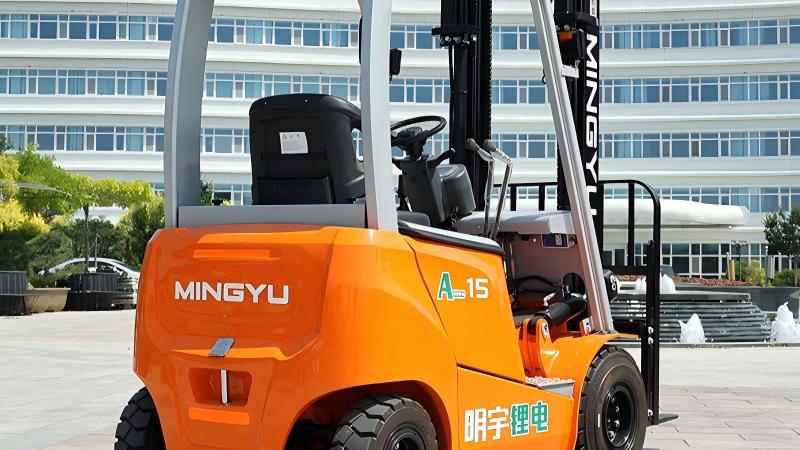
Looking toward the future of warehouse automation and smart logistics, the roles of both pallet stackers and forklifts are evolving, yet their core distinctions remain relevant. The trend towards automation sees both platforms being integrated into guided or autonomous systems. Automated guided vehicles (AGVs) based on stacker designs are common in automated storage and retrieval systems (AS/RS) for high-frequency, predictable unit loads. Similarly, autonomous mobile robots (AMRs) are taking over repetitive transport tasks. For forklifts, automation is manifesting in the form of self-driving forklifts that can perform complex pallet handling in semi-structured environments, often using sophisticated sensors and navigation software. Despite these advancements, the fundamental physical and functional divide persists: automated stackers excel in defined, high-density storage lanes, while automated forklifts tackle more dynamic, variable-path material movement. Furthermore, the push for sustainability is accelerating the adoption of electric power across both categories. In this evolving landscape, the expertise of established manufacturers becomes crucial. Mingyu Heavy Industries is at the forefront of this transition, investing in the development of intelligent, connected, and eco-friendly equipment. By offering advanced electric pallet stackers with enhanced battery management and low-noise operation alongside a new generation of electric forklifts with robust performance and smart fleet management capabilities, Mingyu Heavy Industries ensures that businesses can modernize their operations without compromising on the core principles of equipment selection—matching the right machine to the right task for maximum efficiency, safety, and sustainability in an increasingly competitive market.
Post time:Dec.15.2025
