
What Is the Difference Between a Wheel Loader and a Track Loader?
1. Introduction
Wheel loaders and track loaders are both widely used in construction, agriculture, landscaping, mining, road building, and material handling. At first glance, they may appear to perform similar jobs because both can be equipped with buckets and other attachments for moving, loading, lifting, and handling materials. However, the two machines are designed for different working environments and have significant differences in mobility, traction, ground pressure, productivity, maintenance, and operating costs.
The most obvious difference is the undercarriage. A wheel loader uses four rubber tires, while a track loader uses continuous tracks. This basic design difference affects almost every aspect of machine performance. Wheel loaders are generally faster and more efficient when traveling on firm surfaces and are particularly suitable for loading trucks, moving bulk materials, and working on paved or compacted job sites. Track loaders, on the other hand, provide excellent traction and lower ground pressure, making them better suited to muddy, sandy, uneven, or soft terrain.
Choosing between a wheel loader and a track loader therefore depends less on which machine is “better” and more on what type of work needs to be done. Factors such as terrain, material, required lifting capacity, travel distance, working speed, attachment requirements, maintenance costs, and budget should all be considered before purchasing or renting a machine.
In this article, we will explain the key differences between wheel loaders and track loaders, compare their performance in different working conditions, discuss their advantages and disadvantages, and help you determine which type of machine is better suited to your application.
2. What Is a Wheel Loader?
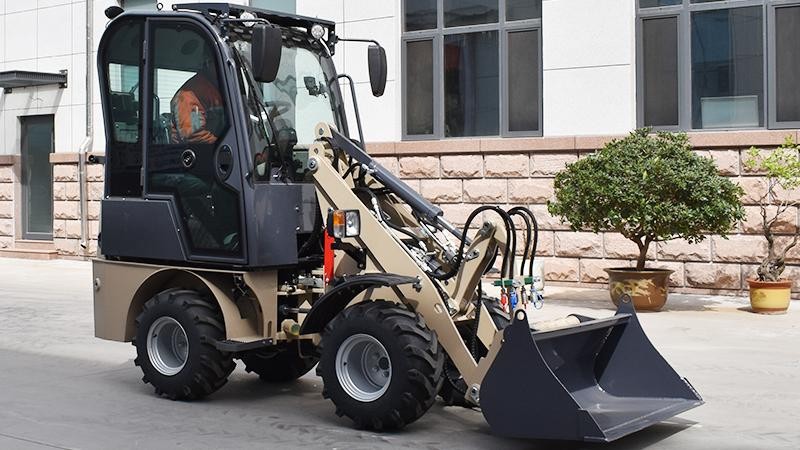
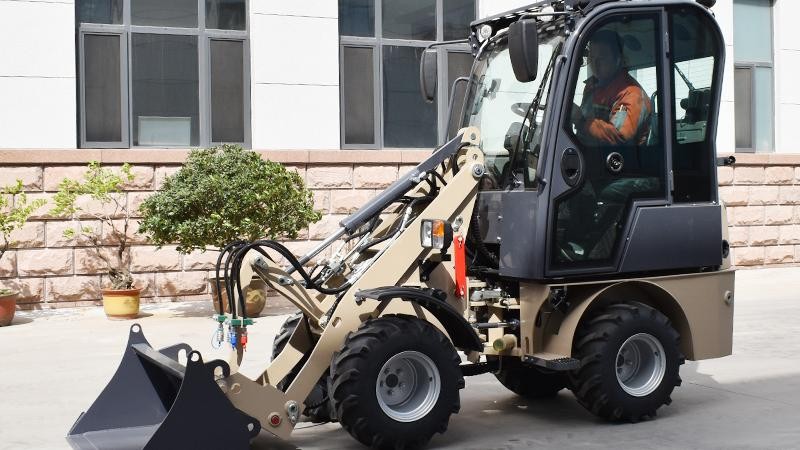
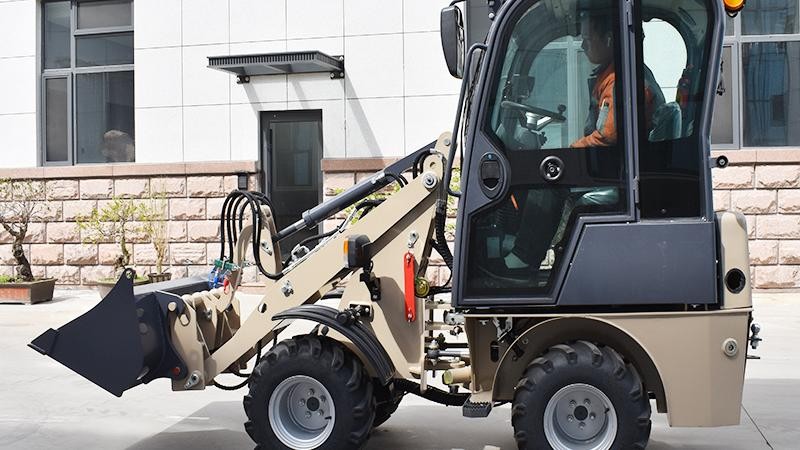
A wheel loader is a construction machine equipped with a front-mounted bucket and a wheeled undercarriage. It is designed primarily for loading, lifting, transporting, and moving loose materials such as soil, sand, gravel, coal, agricultural products, and construction debris.
Wheel loaders are available in many sizes. Compact wheel loaders are suitable for landscaping, agriculture, municipal work, and smaller construction projects, while medium and large wheel loaders are commonly used in quarries, mines, road construction, and large-scale material-handling operations.
Most wheel loaders use an articulated steering system. The machine bends at the center when turning, allowing it to achieve good maneuverability despite its relatively large size.
One of the biggest advantages of a wheel loader is its travel speed. Because it uses tires rather than tracks, it can move relatively quickly between different areas of a job site. Some wheel loaders can also travel on public roads when properly equipped and legally permitted.
Wheel loaders are particularly effective when the main task involves repeatedly filling a bucket, traveling a short distance, dumping the material, and returning for another load. This makes them highly productive for loading trucks and managing stockpiles.
3. What Is a Track Loader?
A track loader uses continuous tracks instead of conventional rubber tires. The tracks distribute the machine's weight over a larger contact area, reducing ground pressure and improving traction.
Track loaders can include different machine categories, from compact track loaders to larger tracked loading machines. Their specific design and capabilities vary, but the common feature is the tracked undercarriage.
The large contact area of the tracks allows the machine to work effectively on soft or unstable ground. For example, a track loader can be particularly useful on muddy construction sites, loose soil, sand, and other surfaces where a wheeled machine may struggle for traction.
Track loaders are also commonly used for site preparation, grading, excavation, landscaping, forestry, and construction work. Depending on the machine design, they can use buckets, blades, grapples, forks, augers, sweepers, and other attachments.
However, tracks also have disadvantages. Track loaders generally travel more slowly than wheel loaders and may have higher undercarriage maintenance costs. They are not usually the first choice when the primary requirement is fast movement between locations or high-volume truck loading on hard surfaces.
4. Wheel Loader vs. Track Loader: Main Differences
The biggest difference between the two machines is their undercarriage.
A wheel loader uses tires, while a track loader uses continuous tracks. This affects traction, ground pressure, travel speed, maneuverability, fuel consumption, maintenance, and the types of surfaces on which the machine performs best.
Wheel loaders generally offer:
Higher travel speed
Good performance on hard surfaces
Excellent material-handling productivity
Easy movement around large job sites
Lower ground disturbance on finished surfaces
Good suitability for truck loading
Track loaders generally offer:
Higher traction
Lower ground pressure
Better performance on soft terrain
Good stability
Excellent performance in muddy or uneven conditions
Strong versatility for site preparation and grading
The operating weight and lifting capacity also vary considerably depending on the model. Therefore, buyers should compare machines based on actual specifications rather than assuming that one machine type always has greater lifting performance.
5. Performance on Different Terrains
Terrain is one of the most important factors when choosing between a wheel loader and a track loader.
On hard, compacted surfaces such as concrete, asphalt, and solid gravel, wheel loaders usually have a major advantage. Their tires provide efficient rolling resistance and allow the machine to travel quickly.
On muddy or soft ground, tracks generally perform better. The larger contact area reduces ground pressure and helps prevent the machine from sinking excessively.
Track loaders can also provide excellent traction on uneven terrain. Their tracks maintain contact with the ground over a larger area, which can help the machine maintain traction when working on challenging surfaces.
However, this does not mean that wheel loaders cannot operate on unpaved terrain. Many wheel loaders are designed specifically for construction sites, quarries, agricultural applications, and gravel yards. The key consideration is whether the ground is firm enough to support the machine and provide adequate tire traction.
For frequently changing terrain, a track loader may be the safer choice. For predominantly firm surfaces and high-speed material movement, a wheel loader is often more productive.
6. Loading and Material Handling Capabilities
Wheel loaders are particularly strong in bulk material handling.
A typical wheel loader can be equipped with a large bucket designed to carry substantial quantities of material. Its hydraulic system, breakout force, lifting height, and tipping load determine how effectively it can fill and unload the bucket.
For applications such as loading gravel into trucks, moving sand around a stockpile, or handling agricultural materials, wheel loaders are often preferred because they combine bucket capacity with relatively high travel speed.
Track loaders can also load and move materials, but many are designed with greater emphasis on traction, pushing, grading, and attachment versatility rather than maximum loading productivity.
When comparing two machines, buyers should consider:
Bucket capacity
Rated operating capacity
Tipping load
Breakout force
Lift height
Dump height
Hydraulic flow
Cycle time
The correct machine depends on the material and working process. A larger bucket is not always better if the machine cannot safely handle the additional load.
7. Speed and Mobility
Travel speed is another major difference.
Wheel loaders generally travel considerably faster than track loaders. Their tires allow them to move efficiently between loading areas, stockpiles, and dumping locations.
This is especially valuable on large job sites where the machine repeatedly travels between different locations.
Track loaders normally operate at lower speeds. Their tracks are optimized for traction rather than fast transportation.
For example, if a machine spends most of its working day loading trucks only a few meters away, the difference in travel speed may not be very important. However, if the machine must travel hundreds of meters or move frequently between different areas, a wheel loader can save considerable time.
Wheel loaders are also generally easier to relocate between job sites using conventional transportation methods, although transportation requirements depend on the machine's size and local regulations.
8. Fuel Consumption and Operating Costs
Operating cost should be considered over the entire service life of the machine rather than simply comparing the purchase price.
Wheel loaders and track loaders have different maintenance requirements.
For a wheel loader, common wear items include:
Tires
Brakes
Steering components
Transmission components
Hydraulic components
For a track loader, the undercarriage is particularly important. Components such as tracks, rollers, idlers, sprockets, and other undercarriage parts can experience significant wear, especially when the machine operates on abrasive surfaces.
Track replacement and undercarriage repairs can be expensive, so working conditions and operator habits have a major effect on long-term costs.
Wheel loaders can also have higher tire costs when operating on sharp rocks or rough surfaces. A punctured or damaged tire can cause unexpected downtime.
Fuel consumption depends on engine size, machine weight, hydraulic system, workload, operator behavior, and working cycle. Therefore, it is better to compare fuel consumption under similar operating conditions rather than relying only on engine horsepower.
9. Attachments and Versatility
Both wheel loaders and track loaders can use different attachments, but their attachment capabilities can be quite different.
Wheel loaders commonly use:
General-purpose buckets
High-dump buckets
Forks
Grapples
Bale handlers
Snow plows
Sweepers
Material-handling attachments
Track loaders can often work with:
Buckets
Grading blades
Grapples
Forks
Augers
Trenchers
Brush cutters
Sweepers
Landscape attachments
Compact track loaders are particularly well known for attachment versatility because many models can use a wide range of hydraulic-powered attachments.
Wheel loaders are generally better suited to high-volume material handling, while track loaders can be more versatile for jobs involving excavation, grading, landscaping, and site preparation.
When selecting a machine, buyers should consider not only the attachment itself but also hydraulic flow, attachment weight, rated capacity, quick-coupler compatibility, and manufacturer approval.
10. Common Applications of Wheel Loaders
Wheel loaders are commonly used in:
Construction: loading and moving soil, gravel, sand, and construction materials.
Quarries: handling crushed stone, aggregates, and other bulk materials.
Mining: loading and transporting large quantities of material.
Agriculture: handling grain, manure, silage, feed, and other agricultural materials.
Road construction: moving aggregate and preparing construction materials.
Waste management: handling waste and recyclable materials with specialized attachments.
Snow removal: using snow buckets, blades, or other attachments.
Stockpile management: moving materials between piles and trucks.
The combination of a large bucket, high hydraulic power, good visibility, and fast travel speed makes wheel loaders particularly effective for repetitive loading operations.
11. Common Applications of Track Loaders
Track loaders are especially useful when traction and low ground pressure are important.
Common applications include:
Site preparation
Landscaping
Forestry
Excavation
Grading
Land clearing
Construction
Muddy-ground operations
Soft-soil applications
A track loader can work on surfaces where a conventional wheeled machine may have difficulty maintaining traction.
For example, during construction after heavy rainfall, a track loader may be able to continue working on soft ground while a wheel loader may experience tire slip or excessive ground pressure.
Track loaders can also be useful when minimizing ground damage is important, although the exact amount of ground disturbance depends on track design, machine weight, operating conditions, and the surface itself.
12. Advantages and Disadvantages of Wheel Loaders
Advantages
Higher travel speed:
Wheel loaders can move quickly between working areas.
Excellent material handling:
They are highly productive for loading trucks and moving bulk materials.
Good performance on hard surfaces:
They work efficiently on concrete, asphalt, compacted soil, and gravel.
Lower undercarriage maintenance complexity:
They do not have the extensive track undercarriage components found on track loaders.
Good job-site mobility:
They can travel efficiently around large construction sites.
Disadvantages
Lower traction on soft ground:
Tires may lose traction in deep mud or loose soil.
Higher ground pressure:
The machine can sink more easily on very soft surfaces.
Tire wear:
Sharp rocks and abrasive materials can cause significant tire wear or damage.
Less suitable for certain grading applications:
Depending on the machine design, a track loader may be more effective for certain ground-engaging tasks.
13. Advantages and Disadvantages of Track Loaders
Advantages
Excellent traction:
Tracks provide strong contact with the ground.
Low ground pressure:
The machine's weight is distributed over a larger area.
Good performance on soft terrain:
Track loaders can work effectively in mud, sand, and loose soil.
Strong stability:
The tracked undercarriage can provide a stable working platform.
Excellent attachment versatility:
Many compact track loaders can operate a wide range of hydraulic attachments.
Disadvantages
Lower travel speed:
Track loaders are generally slower than wheel loaders.
Higher undercarriage maintenance:
Tracks, rollers, sprockets, and idlers require regular inspection and maintenance.
Potentially higher operating costs:
Track components can be expensive to replace.
Less suitable for long-distance travel:
Frequent movement over hard surfaces can accelerate track wear.
14. Wheel Loader vs. Track Loader: Which One Should You Choose?
The right choice depends primarily on the application.
Choose a wheel loader if you need:
High material-handling productivity
Fast travel speed
Frequent truck loading
Operation on hard surfaces
Good mobility around large sites
Efficient bulk-material handling
Choose a track loader if you need:
Excellent traction
Low ground pressure
Operation on muddy ground
Work on soft or uneven terrain
Grading and site preparation
High attachment versatility
For example, a gravel yard that mainly loads trucks would usually benefit from a wheel loader. A construction site with soft soil and frequent grading work may benefit more from a track loader.
15. Wheel Loader vs. Track Loader: Cost Comparison
Purchase price is only one part of the total cost.
A wheel loader may have higher productivity for material handling because it can travel faster and use large buckets. Its tire and maintenance costs must still be considered.
A track loader may have excellent productivity in difficult terrain, but undercarriage components can represent a significant maintenance expense.
The total cost of ownership can include:
Purchase price
Fuel consumption
Operator cost
Tire or track replacement
Maintenance
Hydraulic system maintenance
Transportation
Downtime
Resale value
A cheaper machine is not necessarily the more economical machine. If a wheel loader cannot work effectively in muddy conditions, its lower purchase or operating cost may not matter. Similarly, if a track loader is used mainly on hard surfaces for long-distance travel, unnecessary track wear can increase operating expenses.
16. Frequently Asked Questions
Is a wheel loader better than a track loader?
Neither machine is universally better. Wheel loaders are generally better for fast material handling on firm surfaces, while track loaders are better for traction and soft terrain.
Which machine is better for mud?
A track loader is generally better suited to muddy and soft ground because its tracks distribute machine weight over a larger area and provide strong traction.
Which one can lift more?
It depends on the specific models. Large wheel loaders can have very high lifting and bucket capacities, while certain track loaders are designed for substantial lifting performance. Always compare rated operating capacity, tipping load, and hydraulic specifications.
Which one is faster?
Wheel loaders are generally faster than track loaders.
Which machine is better for construction?
Both can be excellent construction machines. The choice depends on the work. Wheel loaders are particularly suitable for material handling, while track loaders are often better for grading, excavation, and soft-ground operations.
Can a wheel loader work on soft ground?
Yes, but performance depends on the ground conditions, tire type, machine weight, and site requirements. For extremely soft or muddy terrain, a track loader may be a better choice.
Are track loaders more expensive to maintain?
They can be, particularly because of track and undercarriage wear. However, actual maintenance costs depend heavily on machine quality, working conditions, operating practices, and maintenance schedules.
Which machine is better for loading trucks?
Wheel loaders are generally preferred for high-volume truck loading because of their bucket capacity, speed, and efficient loading cycles.
17. Conclusion
Wheel loaders and track loaders are both valuable pieces of construction equipment, but they are designed with different priorities.
The main advantage of a wheel loader is mobility and material-handling productivity. Its tires allow it to travel quickly, operate efficiently on firm surfaces, and perform repetitive loading tasks with high productivity.
The main advantage of a track loader is traction and low ground pressure. Its tracked undercarriage allows it to work effectively on soft, muddy, uneven, or challenging terrain.
When choosing between the two, buyers should consider the actual working environment rather than focusing only on horsepower or purchase price. Terrain, bucket capacity, lifting requirements, travel distance, attachments, maintenance costs, fuel consumption, and expected workload should all be included in the decision.
For companies that mainly move large quantities of material on firm ground, a wheel loader is often the more practical solution. For companies working on soft terrain or requiring strong traction and attachment versatility, a track loader may be the better option.
Ultimately, the best machine is the one that matches the job, terrain, workload, and long-term operating requirements.
Post time:Sep.09.2026
