
Scissor Lift vs Boom Lift: Which Is Better for Indoor Warehouse Work?
1. Introduction
Modern warehouses have evolved far beyond simple storage facilities. Today's distribution centers, manufacturing plants, logistics hubs, and e-commerce warehouses rely on advanced equipment to maximize efficiency, safety, and productivity. One of the most important categories of equipment used in warehouse maintenance and operations is aerial work platforms (AWPs), which allow workers to safely access elevated areas for inventory management, equipment maintenance, lighting installation, cleaning, and construction tasks.
Among the most commonly used aerial work platforms are scissor lifts and boom lifts. While both machines are designed to elevate workers and materials to working heights, they differ significantly in design, functionality, cost, and suitability for specific applications. Choosing the wrong type of lift can lead to reduced productivity, increased operating costs, and even safety concerns.
Warehouse managers often face the challenge of deciding whether a scissor lift or a boom lift is the better investment. The answer depends on several factors, including warehouse layout, ceiling height, aisle width, load requirements, and the nature of the work being performed. Some tasks require a large stable platform capable of carrying multiple workers and tools, while others demand the flexibility to reach over obstacles and access difficult locations.
This article provides a detailed comparison of scissor lifts and boom lifts for indoor warehouse operations. We will examine their design differences, advantages, limitations, safety considerations, operating costs, and ideal applications to help buyers make informed purchasing decisions.
2. What Is a Scissor Lift?
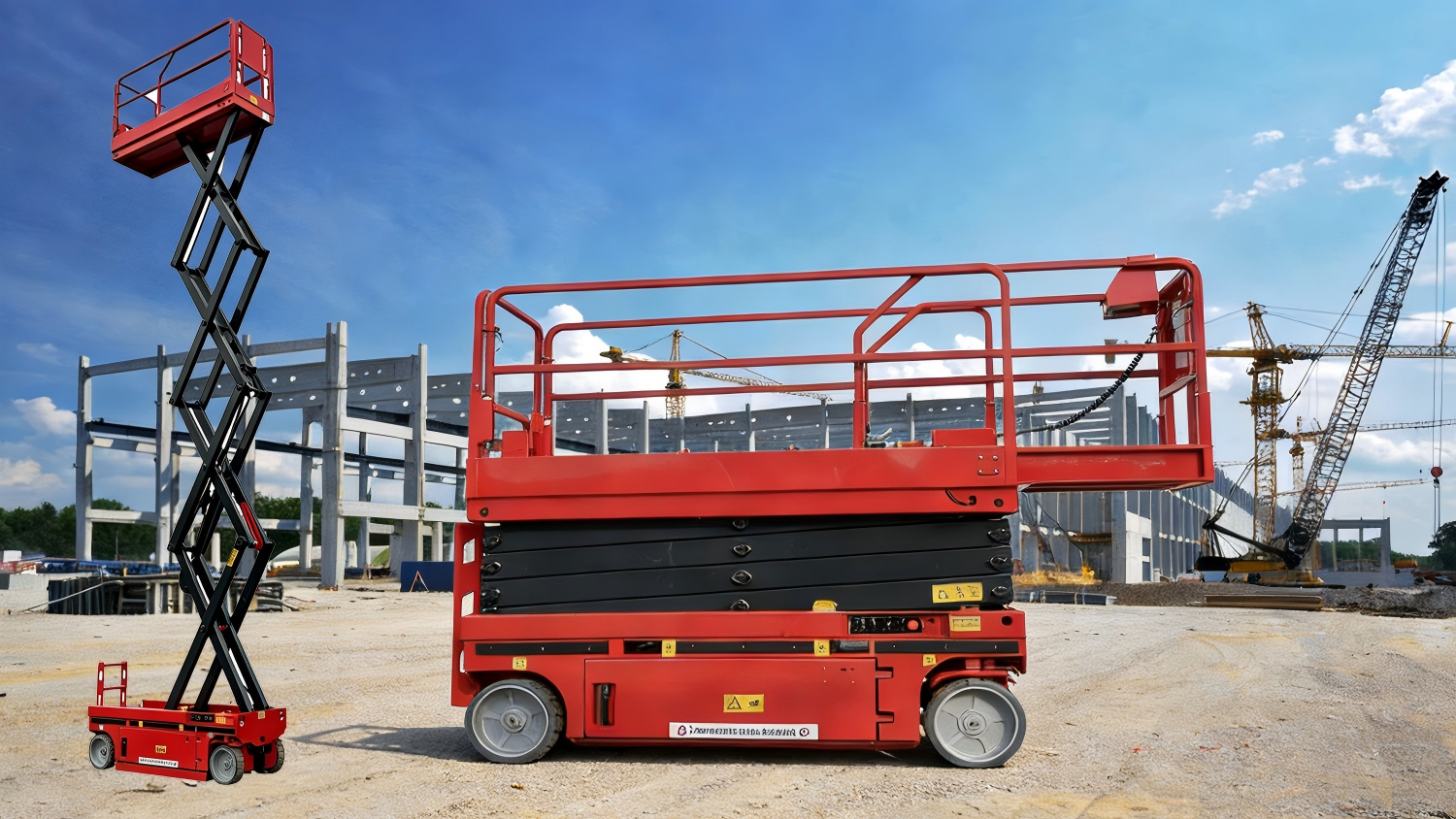
A scissor lift is an aerial work platform that raises workers vertically using a crisscrossing metal support structure known as a pantograph mechanism. As hydraulic pressure is applied, the crossed supports extend, elevating the platform directly upward while maintaining excellent stability.
Scissor lifts are among the most widely used aerial platforms in indoor warehouses because they provide a large working platform and high lifting capacity. Unlike boom lifts, they do not offer horizontal outreach, meaning the platform moves only in a straight vertical direction.
Electric scissor lifts are especially popular for indoor applications due to their zero-emission operation and quiet performance. Most warehouse scissor lifts offer working heights ranging from 6 to 18 meters, making them suitable for accessing shelving systems, lighting fixtures, HVAC equipment, and high storage racks.
One of the key advantages of scissor lifts is their ability to support multiple workers simultaneously. Many models can carry several operators along with tools, spare parts, and maintenance equipment, making them highly efficient for warehouse maintenance projects.
Because of their compact design and stable platform, scissor lifts have become a preferred choice for routine indoor warehouse operations where direct vertical access is required.
3. What Is a Boom Lift?
A boom lift is a versatile aerial work platform equipped with an extendable arm that can move both vertically and horizontally. Unlike scissor lifts, boom lifts allow operators to reach over obstacles and access difficult locations that cannot be reached directly from below.
Boom lifts are generally classified into two categories: telescopic boom lifts and articulating boom lifts. Telescopic boom lifts feature a straight extending arm designed for maximum outreach and height. Articulating boom lifts use multiple hinged sections that allow the boom to bend around obstacles and reach confined areas.
For indoor warehouse applications, electric boom lifts are commonly used because they produce no emissions and generate minimal noise. Their ability to maneuver around storage racks, conveyor systems, and machinery makes them valuable for specialized maintenance work.
Boom lifts typically offer greater working heights than scissor lifts, with some models reaching more than 20 meters indoors. They are particularly useful when workers need access to areas that are not directly above the machine's position.
Although boom lifts generally have smaller platforms and lower load capacities than scissor lifts, their superior reach and flexibility make them indispensable in certain warehouse environments.
4. Key Differences Between Scissor Lifts and Boom Lifts
The most significant difference between scissor lifts and boom lifts is movement capability. Scissor lifts move vertically only, while boom lifts provide both vertical elevation and horizontal outreach.
Platform size is another major distinction. Scissor lifts typically feature larger platforms that can accommodate multiple workers and equipment. Boom lifts usually provide space for one or two operators and a limited amount of tools.
In terms of lifting capacity, scissor lifts generally outperform boom lifts. Many warehouse scissor lifts can support loads exceeding 500 kilograms, while most boom lifts have lower platform capacities due to the design of the extending arm.
Maneuverability also differs considerably. Scissor lifts are often more compact and easier to operate in narrow warehouse aisles. Boom lifts require additional operating space because of their extending boom sections and wider turning radius.
When evaluating warehouse applications, buyers should carefully consider whether they need vertical access only or the ability to reach around obstacles. This single factor often determines which machine is the better choice.
5. Advantages of Scissor Lifts for Indoor Warehouse Work
Scissor lifts offer several important advantages for warehouse operators. Their large platform size allows multiple workers to perform tasks simultaneously, improving productivity and reducing project completion times.
The high load capacity of scissor lifts makes them ideal for carrying tools, replacement parts, lighting fixtures, and maintenance equipment. Workers can transport everything needed for a job in a single trip, minimizing downtime.
Stability is another major benefit. The wide base and vertical lifting mechanism provide excellent platform stability, which enhances operator confidence and safety when working at height.
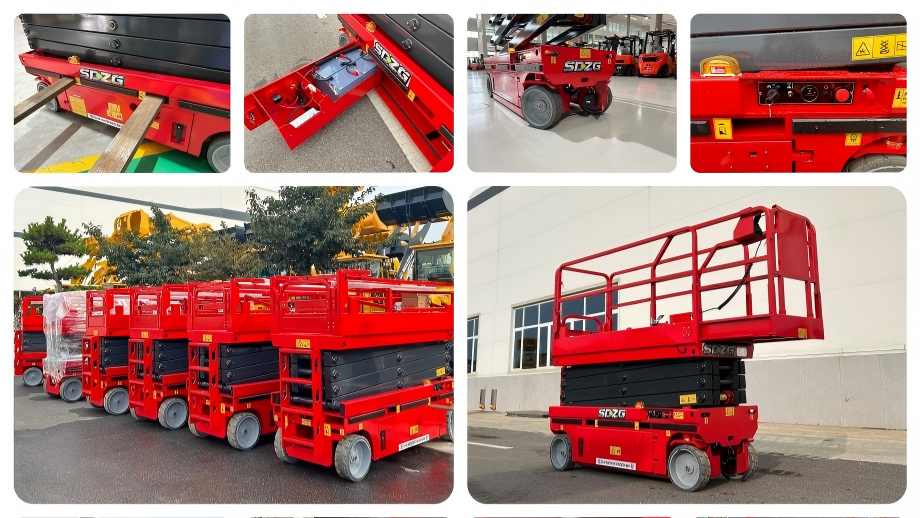
Electric scissor lifts produce no exhaust emissions, making them ideal for indoor environments where air quality is important. Their quiet operation also reduces workplace noise levels and improves employee comfort.
Cost-effectiveness is another reason for their popularity. Scissor lifts generally have lower purchase prices, simpler maintenance requirements, and lower operating costs compared to boom lifts. For warehouses that primarily require straight vertical access, a scissor lift often delivers the best return on investment.
6. Advantages of Boom Lifts for Indoor Warehouse Work
Boom lifts excel in situations where flexibility and reach are critical. Their ability to extend horizontally allows operators to access locations that cannot be reached directly from the ground.
In warehouses filled with storage racks, conveyor systems, machinery, or structural obstacles, boom lifts can position workers exactly where they are needed without requiring equipment relocation.
Articulating boom lifts are particularly useful for navigating around obstacles. Their multiple pivot points allow operators to work above, below, or around warehouse structures that would otherwise be inaccessible.
Boom lifts are also advantageous for facility maintenance tasks involving overhead piping, electrical systems, fire suppression equipment, and ceiling repairs. These applications often require workers to approach targets from angles rather than directly underneath.
Although boom lifts typically have lower platform capacities, their superior positioning capabilities can significantly increase efficiency for specialized maintenance and repair work.
7. Safety Considerations for Indoor Warehouse Applications
Safety is a critical factor when selecting any aerial work platform. Both scissor lifts and boom lifts require proper operator training and adherence to workplace safety regulations.
Warehouse floor conditions must be evaluated before operation. The floor must be capable of supporting the weight of the lift, especially when carrying personnel and equipment at maximum elevation.
Fall protection requirements vary depending on local regulations and equipment type. Many boom lift applications require personal fall arrest systems due to the increased risk associated with horizontal movement.
Operators must remain aware of overhead obstacles such as sprinkler systems, lighting fixtures, structural beams, and electrical installations. Collision risks can increase significantly when working in confined warehouse environments.
Regular inspections, preventive maintenance, and proper equipment usage are essential for ensuring safe operation. Warehouse managers should also establish traffic control procedures to prevent collisions between lifts and forklifts operating in the same area.
8. Cost Comparison: Scissor Lift vs Boom Lift
Initial purchase cost is often a major consideration for equipment buyers. In most cases, scissor lifts are significantly less expensive than boom lifts of comparable working height.
Electric scissor lifts typically cost less due to their simpler mechanical design. Boom lifts contain more complex components, including articulated arms, advanced hydraulic systems, and sophisticated control mechanisms, which increase manufacturing costs.
Operating expenses also differ. Scissor lifts generally consume less energy and require fewer maintenance procedures. Their simpler structure results in lower repair costs and reduced downtime.
Rental costs follow a similar pattern. Scissor lifts usually have lower daily and monthly rental rates, making them attractive for temporary projects and seasonal warehouse maintenance.
However, productivity should also be considered when evaluating costs. In applications requiring horizontal reach and obstacle avoidance, a boom lift may complete tasks much faster, potentially offsetting its higher purchase and operating expenses.
9. Which Lift Is Better for Indoor Warehouse Work?
The answer depends entirely on the specific requirements of the warehouse.
Scissor lifts are generally the best choice for inventory management, shelving access, lighting replacement, routine maintenance, and tasks that require workers to move straight up and down. Their stability, capacity, affordability, and ease of operation make them ideal for most warehouse environments.
Boom lifts are the preferred option when operators need to reach over obstacles, access difficult locations, or perform specialized maintenance on overhead infrastructure. Warehouses with complex layouts often benefit from the flexibility offered by articulating boom lifts.
For large logistics centers, distribution hubs, and manufacturing facilities, many companies choose to maintain both types of equipment. This approach ensures maximum operational flexibility while optimizing productivity across various maintenance and operational tasks.
Before making a purchase decision, buyers should evaluate ceiling heights, aisle widths, obstacle density, working height requirements, and budget constraints to determine which machine best meets their operational needs.
10. Frequently Asked Questions (FAQ)
Can a boom lift replace a scissor lift in a warehouse?
In some situations, yes. However, boom lifts generally have smaller platforms and lower capacities, making them less efficient for routine warehouse tasks.
Are electric boom lifts suitable for indoor use?
Yes. Electric boom lifts are specifically designed for indoor applications and produce no emissions.
Which lift has a higher platform capacity?
Scissor lifts typically offer significantly higher platform capacities than boom lifts.
Which is easier to operate?
Scissor lifts are generally simpler to operate and require less specialized training.
Which machine costs less?
Scissor lifts usually have lower purchase prices, maintenance costs, and rental rates.
Which lift is safer?
Both can be safe when used correctly. Scissor lifts generally offer greater platform stability, while boom lifts require additional attention due to their extended reach.
11. Conclusion
Both scissor lifts and boom lifts play important roles in modern warehouse operations. Scissor lifts provide excellent stability, higher load capacity, lower operating costs, and superior efficiency for vertical access tasks. Boom lifts, on the other hand, offer unmatched flexibility and outreach capabilities that make them invaluable for specialized maintenance and difficult-to-reach locations.
For the majority of indoor warehouse applications, electric scissor lifts are often the most practical and cost-effective solution. However, facilities with complex layouts, overhead obstacles, or advanced maintenance requirements may benefit significantly from the versatility of boom lifts.
Ultimately, the best choice depends on the specific operational needs of the warehouse. By carefully evaluating work requirements, facility design, and long-term operating costs, buyers can select the aerial work platform that delivers the highest productivity, safety, and return on investment.
Post time:Jun.16.2026
