
LPG Forklift Tank Orientation: Should the Pin Be Up or Down?
1. Introduction
LPG forklifts are widely used in warehouses, logistics centers, construction sites, and manufacturing plants because they offer a practical balance between power, cleanliness, and operating flexibility. Compared with diesel forklifts, LPG models produce fewer emissions, can be refueled quickly by simply swapping cylinders, and perform reliably in both indoor and outdoor environments when properly maintained.
However, one of the most common and often misunderstood topics among operators is LPG cylinder orientation—specifically whether the cylinder pin, valve, or alignment notch should face up or down during installation. Although it may look like a minor detail, incorrect installation can lead to serious consequences, including poor engine performance, fuel delivery issues, regulator damage, and in extreme cases, safety hazards such as leaks.
The key point is that LPG forklift tanks are not designed with a universal “pin up” or “pin down” rule. Instead, the correct orientation depends on the forklift’s mounting bracket design and the type of vapor withdrawal system used. Understanding this correctly is essential not only for safe operation but also for maintaining efficiency and extending equipment lifespan.
This article explains how LPG systems work, why tank orientation matters, what the correct installation practices are, and how to avoid common mistakes in the field.
2. What Is an LPG Forklift System?
2.1 Basic Working Principle
An LPG forklift uses liquefied petroleum gas stored under pressure in a cylinder. Inside the tank, LPG exists in liquid form but converts into vapor when released. The engine burns this vapor to generate power.
The fuel system is designed to ensure that only vapor enters the engine after proper pressure regulation. This makes LPG forklifts cleaner than diesel engines while still delivering strong performance.
2.2 Main Components of the LPG System
A typical LPG forklift fuel system includes:
LPG cylinder (tank)
Service valve and connector
Pressure regulator
Fuel hose
Vaporizer (on some models)
Engine fuel intake system
Safety relief valve
Each component plays a role in controlling pressure, ensuring safe gas flow, and maintaining stable combustion.
3. Understanding LPG Cylinder Design
3.1 Cylinder Structure
An LPG cylinder contains both liquid and vapor phases. The liquid sits at the bottom while vapor occupies the upper space. The system is designed so that only vapor is supplied to the engine.
Most forklift cylinders are designed for vapor withdrawal only, meaning the internal pickup tube and valve arrangement are engineered to prevent liquid LPG from entering the fuel line.
3.2 Valve and Alignment Features
LPG cylinders used on forklifts often include:
POL or quick-connect valve
Fixed orientation guide pin or notch
Pressure relief valve (PRV)
Liquid/vapor outlet design depending on model
The alignment pin is not decorative—it ensures the valve connects in the correct position so the fuel system operates safely and consistently.
4. Correct LPG Tank Orientation: Pin Up or Down?
4.1 There Is No Universal Rule
The most important fact is this: there is no universal “pin up” or “pin down” standard for all forklifts.
Instead, orientation depends on:
Forklift brand and model
Cylinder bracket design
Valve type and connection system
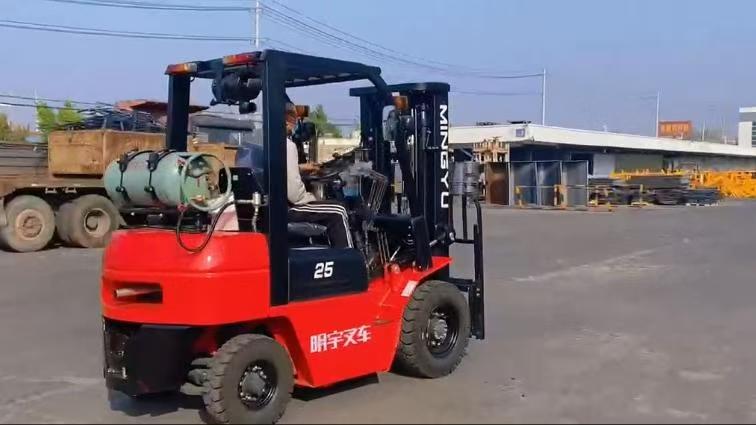
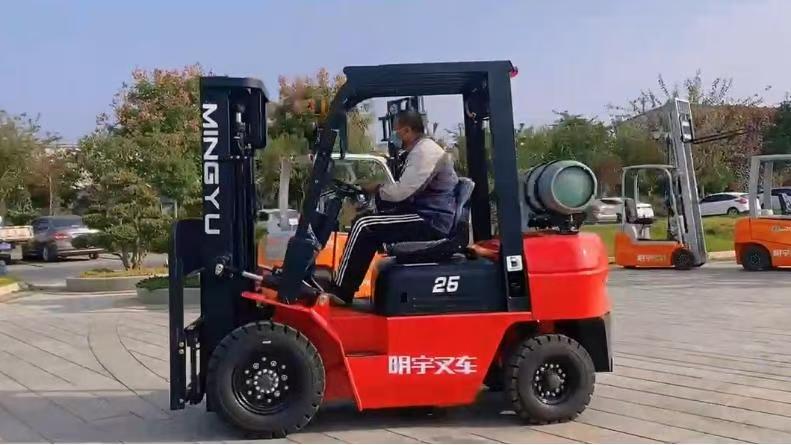
In most modern forklifts, the cylinder is installed horizontally with the valve positioned according to the bracket alignment—often around the 9 o’clock or 12 o’clock position.
4.2 Why Orientation Matters
Correct orientation ensures:
Proper vapor withdrawal from the cylinder
Stable fuel pressure to the regulator
Prevention of liquid LPG entering the engine system
Safe sealing of the connection point
If the cylinder is misaligned, the fuel system may not function correctly even if the connector “seems” attached.
4.3 Manufacturer-Specific Design Differences
Different forklift manufacturers design their mounting systems differently:
Some use pin-up alignment systems
Some use pin-down locking brackets
Some use side-lock horizontal positioning
This is why operator manuals are critical. The correct installation method is always defined by the OEM, not by general assumptions.
5. What Happens If the Tank Is Installed Incorrectly?
5.1 Engine Performance Problems
Incorrect installation can cause:
Difficulty starting the engine
Irregular idling
Loss of power under load
Engine stalling
5.2 Safety Risks
Misalignment can lead to:
LPG leakage at the connection point
Improper sealing of the valve
Excess pressure in the system
Increased fire risk in extreme cases
5.3 Fuel System Damage
Long-term incorrect use may result in:
Regulator flooding
Damaged pressure control components
Increased wear on fuel lines and seals
Higher maintenance costs
6. How the LPG Withdrawal System Works
6.1 Vapor Withdrawal Principle
Forklift LPG systems are designed for vapor withdrawal. This means:
LPG leaves the cylinder as gas (not liquid)
The regulator controls pressure reduction
The engine receives consistent vapor fuel
6.2 Role of Internal Pickup Design
The internal structure ensures that:
Liquid LPG stays inside the cylinder
Only vapor is drawn into the fuel line
The engine avoids unstable combustion conditions
6.3 Pressure Regulation Process
The system works in stages:
High-pressure LPG stored in cylinder
Controlled release through valve
Pressure reduction in regulator
Stable vapor supply to engine
7. Safe Installation Procedure for LPG Tanks
7.1 Pre-Installation Checks
Before installation:
Inspect cylinder body for damage
Check valve threads and seals
Confirm correct cylinder type for forklift model
7.2 Correct Mounting Steps
Align cylinder with bracket guide system
Ensure pin and locking mechanism fit properly
Secure cylinder firmly in place
Connect fuel line without forcing alignment
7.3 Leak Testing
After installation:
Apply soap solution to connection points
Check for bubbles indicating leaks
Start engine and confirm stable idle
8. Common Operator Mistakes
Installing cylinder in wrong orientation
Forcing connector alignment
Ignoring bracket guide pin system
Using incompatible cylinders
Skipping leak testing after installation
9. Safety Standards and Regulations
9.1 OSHA and International Guidelines
Safety regulations emphasize:
Proper LPG handling training
Safe storage and transport
Regular equipment inspection
9.2 Cylinder Certification
Cylinders must comply with:
DOT or ISO standards
Periodic inspection and requalification
9.3 Workplace Safety Practices
Store cylinders in ventilated areas
Keep away from heat sources
Ensure emergency shutoff procedures are known
10. How to Identify Correct Orientation
10.1 Visual Indicators
Alignment arrows on cylinder brackets
Notches or guide pins
Manufacturer markings
10.2 OEM Manual Guidance
Always follow:
Forklift operator manual
Model-specific installation instructions
10.3 Field Verification
Check hose alignment naturally fits without force
Confirm valve position matches bracket design
Observe stable engine performance after startup
11. Troubleshooting Orientation Issues
11.1 Symptoms of Incorrect Installation
Engine sputtering or hesitation
Weak lifting power
Fuel starvation symptoms
Unusual regulator noise
11.2 Correction Steps
Shut down forklift safely
Remove cylinder
Reinstall in correct orientation
Retest system operation
12. Best Practices for LPG Forklift Operation
Perform daily inspection before use
Train operators on correct installation
Replace damaged seals immediately
Store cylinders safely when not in use
Follow scheduled maintenance intervals
13. Cost and Efficiency Impact
Correct LPG installation helps:
Improve fuel efficiency
Reduce downtime and repairs
Extend regulator and engine life
Avoid costly safety incidents
Incorrect installation leads to:
Higher fuel consumption
Frequent maintenance issues
Unplanned equipment downtime
14. Conclusion
The question “should the LPG tank pin be up or down?” does not have a universal answer. The correct orientation depends entirely on the forklift’s design and manufacturer specifications.
What matters most is not guessing the direction, but following the engineered alignment system provided by the OEM. Proper installation ensures safe vapor flow, stable engine performance, and long equipment life.
In short, the correct rule is simple: always install the LPG cylinder according to the forklift’s designed mounting orientation—not a general pin-up or pin-down assumption.
Post time:May.18.2026
