
Is a Backhoe Loader Easy to Transport Between Job Sites?
1. Introduction
Backhoe loaders are widely used in construction, road maintenance, landscaping, agriculture, utility installation, and municipal projects because one machine can perform several tasks. A typical backhoe loader combines a front loader bucket with a rear excavating arm, allowing operators to dig, load, move materials, backfill trenches, and perform other jobs without changing to a different machine. However, contractors often need to move equipment from one project to another, so an important question is: Is a backhoe loader easy to transport between job sites?
In general, backhoe loaders are relatively practical to transport, especially compared with larger excavators and heavy construction equipment. Their wheeled design allows them to drive short distances when road conditions and local regulations permit. For longer distances, a suitable trailer can be used to move the machine safely and efficiently. However, transportation is not simply a matter of putting the machine on a trailer. Its operating weight, overall height, width, length, attachments, trailer capacity, route conditions, and local transportation regulations all need to be considered.
Understanding these factors helps contractors select the right backhoe loader and plan equipment movements more efficiently.
2. Why Backhoe Loaders Are Relatively Easy to Transport
One of the main advantages of a backhoe loader is its wheeled chassis. Unlike tracked excavators, a wheeled backhoe loader can travel on suitable paved or compacted roads without requiring a dedicated transport vehicle for every short-distance move.
Its relatively compact design is another advantage. A backhoe loader combines digging and loading functions into one machine, so contractors do not necessarily need to transport a separate excavator and wheel loader to the same project.
The actual transportability depends on the specific model. Compact backhoe loaders are generally easier to move because of their lower weight and smaller dimensions, while larger models may require specialized trailers and additional transportation planning.
The machine's configuration also matters. Different bucket sizes, tire configurations, extendable dippersticks, cabs, and optional equipment can change the overall transport dimensions.
3. Driving a Backhoe Loader Directly Between Job Sites
For nearby projects, a backhoe loader may be able to drive directly from one job site to another. This can eliminate loading and unloading time and avoid the need to arrange a transport truck.
However, this option is most suitable for relatively short distances and roads where the machine can legally and safely operate. Before driving on public roads, operators should check applicable local requirements concerning vehicle dimensions, lighting, speed, registration, road access, and other requirements.
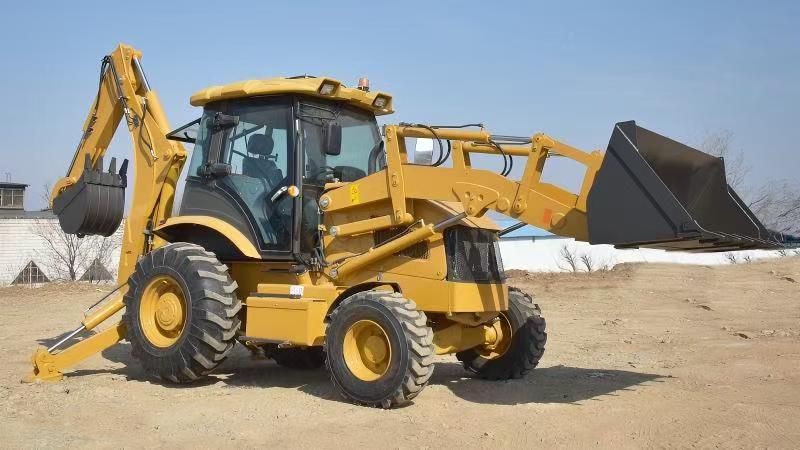
The machine should also be placed in its proper travel configuration. The front bucket should normally be positioned safely, the rear boom should be secured according to the manufacturer's instructions, and stabilizers should be fully retracted and secured.
For longer journeys, direct driving can increase travel time, fuel consumption, tire wear, and operator fatigue. In these situations, transporting the machine on a trailer may be more practical.
4. Transporting a Backhoe Loader on a Trailer
Trailer transportation is commonly used when a backhoe loader needs to travel a significant distance or when direct road travel is not practical.
The trailer must have sufficient capacity for the machine's operating weight and dimensions. Depending on the backhoe loader and transportation requirements, contractors may consider flatbed, step-deck, or low-profile equipment trailers.
Trailer height is particularly important. The total transport height is determined by the height of the machine plus the trailer deck height, not the machine's height alone. A machine that appears to fit within a particular height limit may exceed the limit once loaded onto a high-deck trailer.
The machine should also be positioned correctly on the trailer to maintain appropriate weight distribution. The transport company should receive accurate information about the backhoe loader's weight, length, width, and height before selecting a trailer.
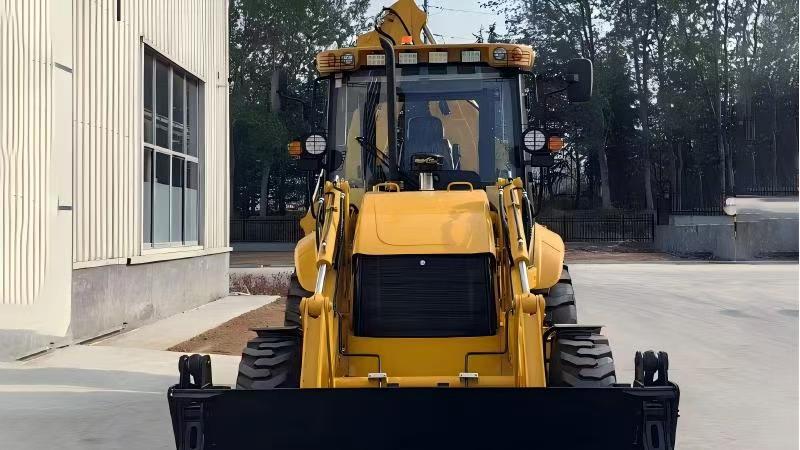
5. Preparing the Backhoe Loader for Transport
Proper preparation can make transportation safer and easier.
Before loading, the operator should generally:
Lower and secure the front loader bucket.
Place the rear excavator boom in the manufacturer's recommended transport position.
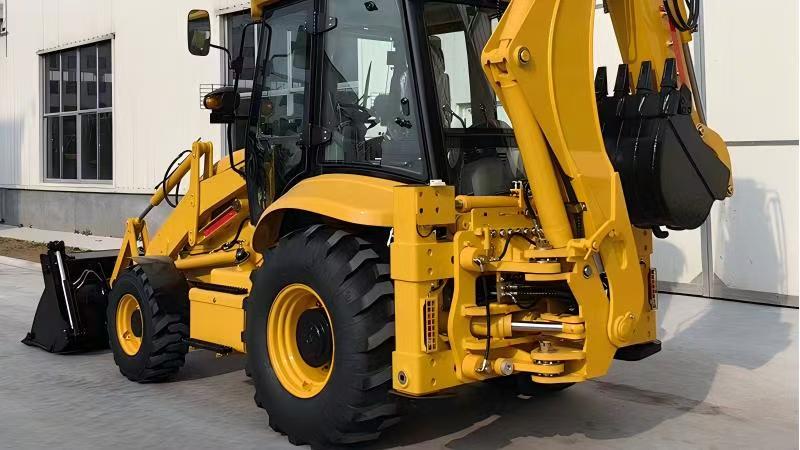
Fully retract and secure the stabilizer legs.
Use transport or hydraulic locks where provided.
Remove or secure loose equipment.
Apply the parking brake.
Shut down the engine after positioning the machine.
Inspect tires and other major components.
Clean excessive mud or debris from the machine.
The exact procedure varies by manufacturer and model, so the operator should always follow the machine's operator manual.
Preparation is particularly important because hydraulic components and attachments can move if they are not properly secured. A well-prepared machine is easier to load, easier to secure, and less likely to create problems during transportation.
6. Understanding Transport Dimensions and Weight
Before arranging transportation, four measurements are especially important: length, width, height, and weight.
The transport dimensions may differ from the machine's working dimensions. For example, the excavator boom can be folded or positioned differently for transportation. The loader bucket may also be lowered to reduce the overall height.
Optional equipment can change the dimensions as well. An extendable dipperstick, larger bucket, different tires, protective equipment, or additional hydraulic components may affect the machine's final transport configuration.
Weight is equally important. The carrier needs to know the actual operating or transport weight to select a trailer with sufficient capacity. It is better to provide the machine's exact specification rather than rely on an approximate weight.
For international shipments, these dimensions are also important when determining whether the machine can fit inside a particular container or whether break-bulk or flat-rack transportation may be required.
7. Road Regulations and Oversize Transport
Transportation regulations vary between countries and regions. A machine that can legally travel on public roads in one location may require additional permits or restrictions in another.
The overall loaded dimensions should therefore be checked before transportation. This includes the machine and trailer together.
Potential issues include:
Excessive overall width
Excessive overall height
Excessive gross weight
Axle-load restrictions
Bridge weight limits
Low bridges and tunnels
Restricted roads
Local access regulations
Oversize-load permits
Route planning is especially important for larger backhoe loaders. A route that appears suitable on a map may contain a low bridge, narrow road, weight-restricted bridge, or difficult entrance.
For commercial transportation, working with a carrier familiar with heavy equipment can help reduce these problems.
8. Loading and Securing the Machine
Loading should take place on a firm and suitable surface. The trailer must be positioned securely, and the ramps must be appropriate for the machine's weight and wheel configuration.
The backhoe loader should be driven onto the trailer slowly and carefully. Once it reaches the correct position, the operator should stop the machine and follow the manufacturer's and carrier's procedures for shutdown and securing.
Tie-down equipment must be suitable for the machine and transportation conditions. The loader bucket, rear boom, stabilizers, and other movable components should be secured according to the manufacturer's recommendations.
Before departure, the operator or transport crew should inspect all securing points. It is also good practice to recheck the load after the initial part of the journey, where applicable.
The goal is to prevent the machine from shifting during braking, acceleration, cornering, or uneven-road conditions.
9. Job-Site Access: An Often-Overlooked Challenge
Transporting the machine to a job site is only part of the process. The delivery location also needs to be suitable for the transport vehicle.
Before transportation, contractors should check:
Entrance width
Road surface
Turning radius
Available unloading space
Overhead clearance
Power lines
Trees and other obstacles
Ground conditions
Slopes and ramps
Space for the trailer to position itself
A large transport truck may need considerably more space to maneuver than the backhoe loader itself.
For example, a construction site may have a narrow entrance that is sufficient for the backhoe loader but difficult for a long equipment trailer. In such cases, delivery planning should be completed before the truck arrives.
Good communication between the contractor, machine operator, and transportation company can prevent delays.
10. How Much Does Backhoe Loader Transportation Cost?
There is no single transportation price for every backhoe loader. The cost depends on several factors.
The most important factors generally include:
Distance: Longer transportation routes normally require more fuel, driver time, and logistics planning.
Machine size and weight: Larger and heavier machines may require higher-capacity trailers or specialized transportation equipment.
Trailer type: Different trailers have different transportation costs and capabilities.
Permits: Oversize or overweight transportation may require additional permits and administrative costs.
Loading and unloading: Difficult job-site conditions can increase labor and equipment requirements.
Route conditions: Restricted routes, bridges, mountain roads, or urban delivery areas can affect transportation planning.
For short-distance moves, driving the backhoe loader directly may reduce transportation costs when legally and practically possible. For longer distances, a trailer can save machine operating hours and reduce unnecessary wear.
Contractors should compare the total cost rather than looking only at the transporter's quoted freight price.
11. Practical Checklist for Moving Between Job Sites
Before moving a backhoe loader, contractors can use the following checklist:
Confirm the machine's actual transport weight.
Measure overall length, width, and height in transport configuration.
Check the machine's operating and transport requirements.
Determine whether direct road travel is permitted.
Choose a suitable trailer when required.
Check trailer capacity and deck height.
Inspect the pickup location.
Inspect the delivery location.
Check the planned route for clearance and weight restrictions.
Arrange permits if required.
Lower and secure the loader bucket.
Secure the rear boom and stabilizers.
Position the machine correctly on the trailer.
Secure the machine using suitable tie-down equipment.
Conduct a final inspection before departure.
This checklist can help reduce transportation delays and prevent problems caused by inaccurate dimensions or inadequate preparation.
12. Conclusion
So, is a backhoe loader easy to transport between job sites? In general, yes. Its wheeled design, relatively compact configuration, and ability to travel under its own power make it practical for moving between nearby projects. For longer distances, a suitable trailer provides a convenient way to transport the machine while reducing unnecessary road travel.
However, transportation difficulty depends heavily on the machine's size, weight, configuration, route, trailer, and local regulations. Proper preparation is essential. Contractors should confirm the machine's exact dimensions and weight, select an appropriate transportation method, prepare the attachments, check the route, and make sure the loading and unloading locations are accessible.
For contractors who frequently move equipment between projects, transportability should be considered when choosing a backhoe loader. A machine that combines useful working capabilities with manageable transport dimensions can make equipment logistics more efficient and predictable.
Post time:Sep.30.2026
