
How Electric Forklifts Improve Timber Handling Efficiency?
The timber industry requires extremely efficient and reliable material handling equipment. Logs, planks, and processed timber products are usually heavy, irregular in shape, and difficult to transport, which makes forklifts one of the most important machines in timber yards and sawmills. In the past, many companies relied on diesel forklifts because they believed electric forklifts lacked the power required for heavy-duty outdoor work. However, with the rapid development of lithium-ion battery technology, modern electric forklifts are becoming powerful enough to handle demanding industrial applications. Their strong lifting capacity, stable operation, and environmentally friendly performance are gradually changing the traditional perception of electric forklifts. Today, many timber companies are beginning to replace fuel-powered forklifts with electric models because they offer lower operating costs, less maintenance, and improved efficiency.
A good example comes from a large forest farm in southern China. Two years ago, the company introduced advanced imported logging equipment to improve its harvesting process. The investment significantly increased logging efficiency by nearly 30 percent. While this upgrade boosted production, it also created a new problem that the company had not anticipated. The speed of timber harvesting increased dramatically, but the forklifts used in the workshop were unable to keep up with the growing workload. Large logs and heavy wooden planks began piling up in the processing area, and some individual logs weighed several tons. Workers had difficulty moving the timber quickly enough, which slowed down the entire production line and created congestion in the storage area. Management soon realized that improving material handling capacity was essential to maintaining smooth operations.
To address the issue, the company decided to try a Mingyu lithium-ion electric forklift. Initially, the purchase was intended as a test to evaluate whether an electric forklift could truly handle such heavy timber operations. Many operators were skeptical at first because traditional experience suggested that diesel forklifts were more powerful. However, after a short period of use, the forklift proved to be far more capable than expected. The machine demonstrated strong lifting power, smooth acceleration, and stable handling even when transporting large logs. The forklift operator quickly adapted to the new equipment and found it easier to control compared with older machines. The improved maneuverability allowed workers to stack timber more efficiently and transport materials faster between different work areas.
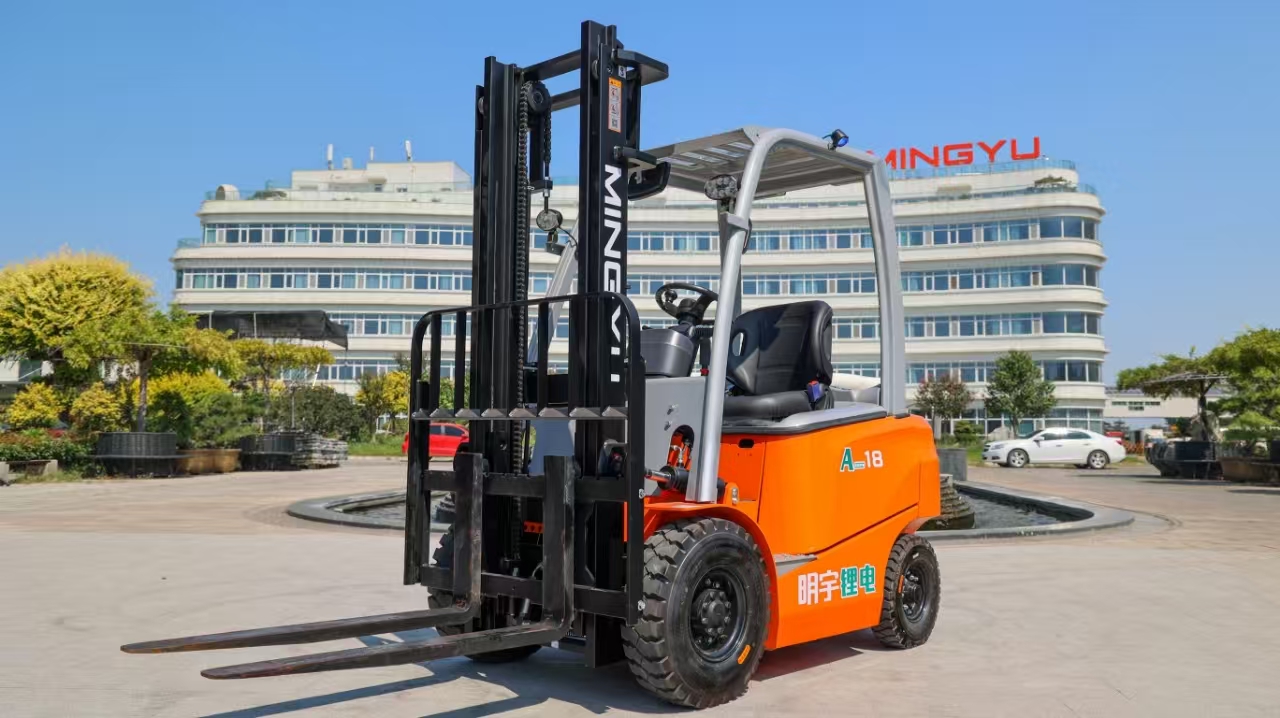
The forklift manager at the forest farm often shared his experience with visitors and colleagues from other timber companies. According to him, the performance of the Mingyu forklift exceeded expectations in several key areas. He explained that the machine could easily lift extremely heavy logs while maintaining excellent balance and stability. Even when handling irregularly shaped timber, the forklift remained steady and controlled. He also noted that the electric drive system provided very smooth lifting movements, which reduced the risk of dropping or damaging materials. Another advantage was its responsive steering and compact turning radius, which made it easier to maneuver in crowded workshops or storage yards. These improvements allowed workers to complete stacking and transportation tasks much faster than before.
One of the most useful features of Mingyu forklifts is their compatibility with a wide range of attachments. The company offers more than one hundred interchangeable attachments that allow operators to customize the forklift for different types of tasks. In the timber industry, this flexibility is extremely valuable because different materials require different handling methods. For example, when transporting loose scrap wood or irregular timber pieces, operators can install a scrap clamp attachment. This clamp firmly grips the materials and prevents them from scattering during movement. When transporting planks, boards, or wood chips, a flat clamp attachment can be used instead. This attachment tightly secures the load and ensures that the materials remain stable during lifting and transport. By switching attachments quickly, one forklift can perform multiple jobs efficiently.
Timber yards often operate in harsh outdoor environments, and road conditions are rarely ideal. Forest roads are frequently uneven, covered with mud, gravel, or debris from logging operations. After heavy rain, the ground can become extremely slippery and difficult to drive on. In many cases, ordinary forklifts struggle in these conditions. Wheels may lose traction, vehicles may get stuck, and operations may have to stop completely. However, Mingyu forklifts are designed to adapt to different working environments by offering multiple tire options. Solid tires are highly durable and resistant to punctures, making them suitable for rough terrain with sharp debris. Pneumatic tires provide better shock absorption and traction, which helps the forklift move smoothly on muddy or sloped surfaces. This flexibility allows operators to maintain stable driving even in challenging outdoor environments.

Another important advantage of Mingyu lithium-ion forklifts is their overall stability and reliability. When handling heavy timber loads, stability is critical for both safety and efficiency. These forklifts are designed with optimized chassis structures and a low center of gravity, which improves balance during lifting and turning operations. Even when carrying heavy logs at height, the forklift remains stable and easy to control. In addition to stability, the machines also require significantly less maintenance compared with traditional fuel-powered forklifts. Electric drive systems contain fewer moving parts than internal combustion engines, which means there are fewer components that can wear out or fail. As a result, companies experience fewer unexpected breakdowns and less downtime during daily operations.
Operating costs are another area where lithium-ion electric forklifts offer major advantages. Traditional diesel forklifts require regular refueling, and fuel prices can fluctuate significantly depending on market conditions. Electric forklifts, on the other hand, use rechargeable batteries that are powered by electricity, which is usually far cheaper than diesel fuel. During peak timber handling seasons, forklifts often operate for long hours each day. Under these conditions, the difference in operating costs between fuel and electricity becomes very noticeable. Lithium-ion batteries also support fast charging and opportunity charging, meaning operators can recharge the forklift during short breaks without interrupting work schedules. Over time, these savings can significantly reduce overall operating expenses for businesses.
For companies in the timber industry, profitability depends largely on operational efficiency and cost control. Equipment that improves handling speed while reducing maintenance and fuel expenses can have a major impact on productivity. Mingyu lithium-ion electric forklifts provide a practical solution by combining powerful lifting performance, flexible attachment options, strong stability, and lower operating costs. The experience of the forest farm in southern China clearly demonstrates how upgrading forklift technology can transform daily operations. By improving the speed and reliability of timber transportation, the company was able to eliminate bottlenecks and maintain a smoother production workflow. For many timber businesses today, electric forklifts are no longer just an alternative option—they are becoming an essential tool for modern, efficient material handling. And as many operators say after using one, you truly understand its value only after experiencing it in real work conditions.
Post time:Mar.06.2026
