
What Is the Average Fuel Consumption (gal/hr) of a Diesel Rough Terrain Forklift?
1. Introduction
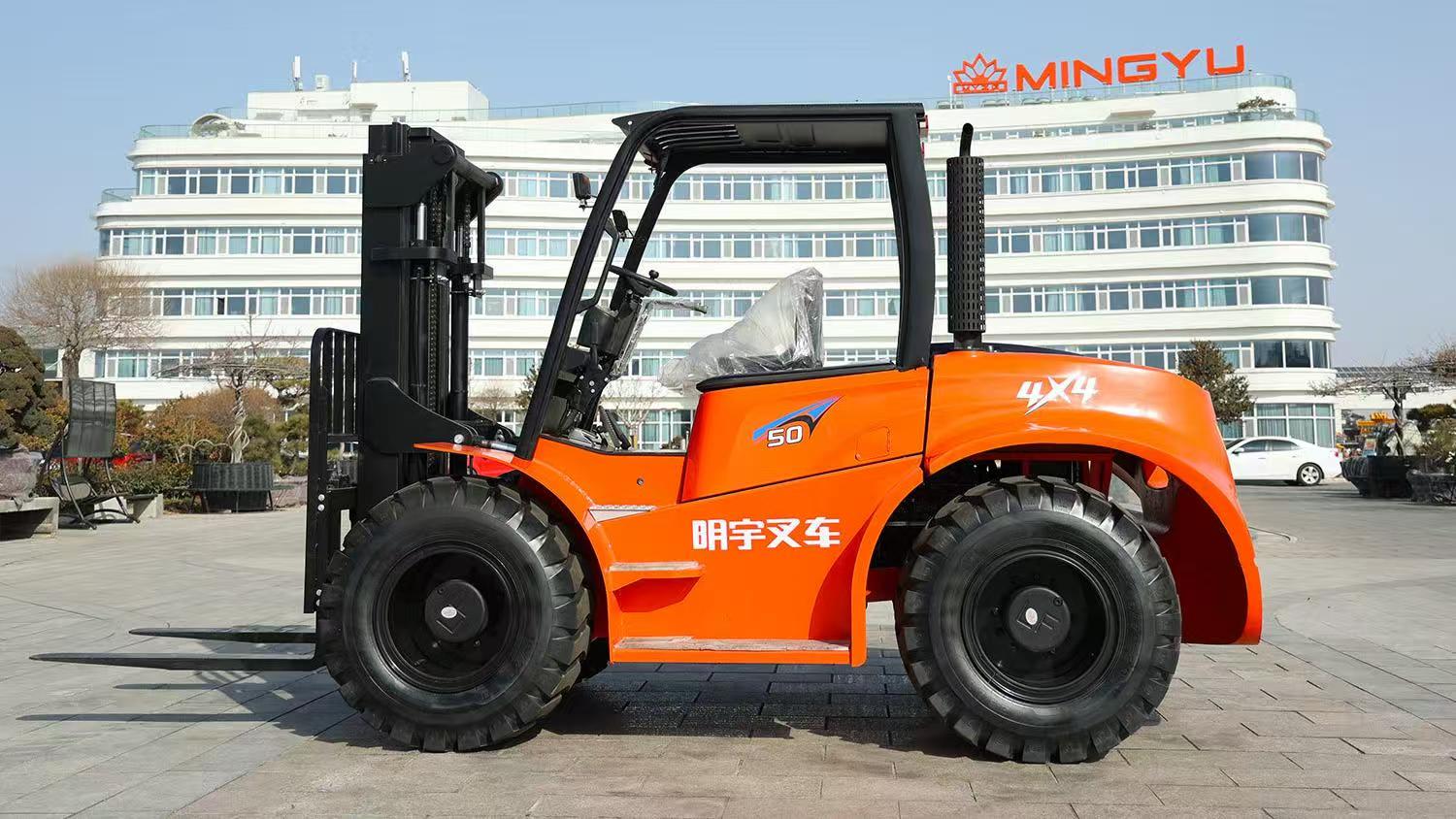
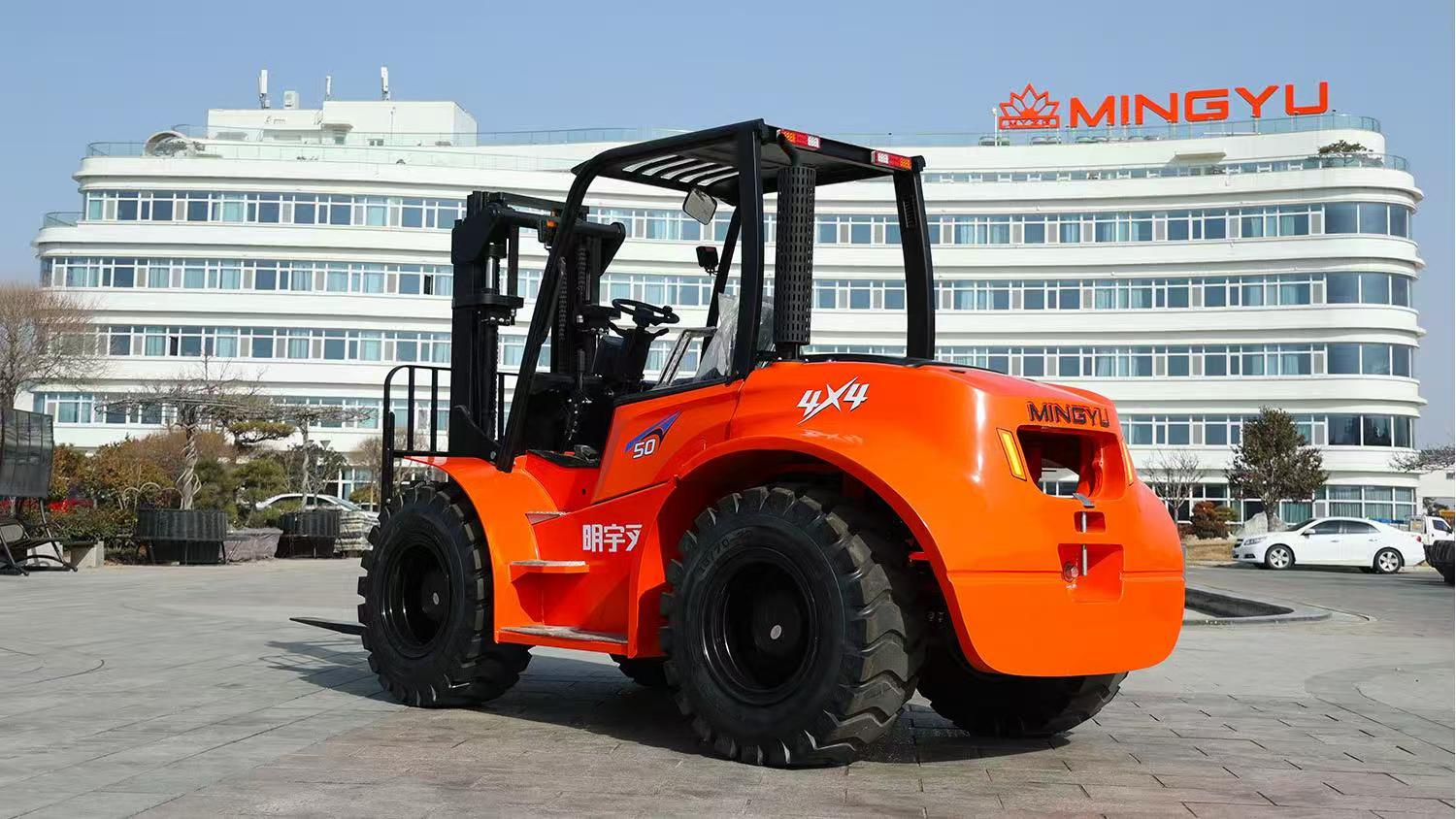
Diesel rough terrain forklifts are essential machines in industries where conventional warehouse forklifts cannot operate effectively. These powerful forklifts are specifically designed to handle challenging environments such as construction sites, lumber yards, mining operations, agricultural facilities, ports, and oil and gas projects. Equipped with large pneumatic tires, four-wheel drive systems, higher ground clearance, and powerful diesel engines, rough terrain forklifts can transport heavy loads across mud, gravel, sand, uneven ground, and steep inclines.
While lifting capacity, durability, and terrain capability are often the primary considerations when selecting a rough terrain forklift, fuel consumption is another critical factor that significantly impacts operating costs. Fuel expenses can represent a substantial portion of a fleet's total operating budget, especially for companies running multiple forklifts over extended shifts. Understanding the average fuel consumption of a diesel rough terrain forklift helps buyers estimate operating expenses, compare machine models, calculate return on investment, and identify opportunities to improve efficiency.
Fuel consumption varies considerably depending on factors such as engine size, load weight, operating conditions, terrain difficulty, maintenance practices, and operator behavior. A small 3-ton rough terrain forklift may consume only a few gallons per hour, while a large 10-ton machine working under heavy loads can burn significantly more fuel.
This article examines the average fuel consumption of diesel rough terrain forklifts, the factors influencing fuel usage, real-world operating examples, cost calculations, and practical strategies for improving fuel efficiency.
2. Understanding Fuel Consumption in Diesel Rough Terrain Forklifts
Fuel consumption is typically measured in gallons per hour (gal/hr) in the United States or liters per hour (L/hr) in many international markets. This measurement indicates how much fuel the machine consumes while operating during a one-hour period.
Unlike highway vehicles that measure fuel efficiency in miles per gallon, forklifts are generally evaluated based on hourly fuel consumption because they perform lifting, loading, and maneuvering tasks rather than traveling long distances.
The amount of fuel consumed depends on the operating condition of the machine:
Idle operation consumes the least fuel.
Light-duty operation requires moderate fuel usage.
Heavy lifting and continuous loading cycles increase fuel consumption substantially.
Driving on rough or inclined terrain places additional demands on the engine and hydraulic systems.
A diesel rough terrain forklift may spend portions of a workday idling, transporting loads, lifting materials, and maneuvering through difficult environments, causing fuel consumption to fluctuate throughout the shift.
3. Factors Affecting Fuel Efficiency
3.1 Load Weight
One of the most important factors affecting fuel consumption is the weight of the load being handled.
When lifting loads near the forklift's rated capacity, the engine and hydraulic systems must work harder. This increased workload requires more fuel to maintain power output.
For example:
A 5-ton forklift carrying a 2-ton load will consume less fuel than when lifting its full 5-ton capacity.
Frequent maximum-capacity lifts can increase fuel consumption by 20% to 40%.
3.2 Terrain Conditions
Rough terrain forklifts are specifically designed to operate in challenging environments, but difficult terrain significantly increases fuel usage.
Fuel consumption rises when operating on:
Loose gravel
Muddy surfaces
Deep sand
Rocky ground
Snow-covered sites
Steep slopes
Additional engine power is required to overcome rolling resistance and maintain traction.
3.3 Engine Size and Horsepower
Larger engines generally consume more fuel.
Typical diesel rough terrain forklifts may feature engines ranging from:
50–75 HP for compact models
75–110 HP for medium-duty machines
110–150+ HP for heavy-duty forklifts
Higher horsepower provides greater lifting capability and better performance on difficult terrain but typically results in higher fuel consumption.
3.4 Hydraulic System Demand
Hydraulic systems power the lifting, tilting, and attachment functions of a forklift.
Heavy hydraulic use can significantly increase fuel consumption, especially when operating:
Bale clamps
Rotators
Pipe handlers
Side shifters
Hydraulic grapples
The more frequently hydraulic functions are used, the more fuel the engine consumes.
3.5 Operator Behavior
Operator habits have a direct impact on fuel efficiency.
Fuel consumption increases when operators:
Accelerate aggressively
Idle excessively
Travel at unnecessary speeds
Use improper gear selection
Perform abrupt starts and stops
Experienced operators often reduce fuel consumption by 10% to 20% through efficient driving practices.
3.6 Maintenance Condition
Poor maintenance reduces efficiency and increases fuel costs.
Common issues include:
Dirty air filters
Worn injectors
Incorrect tire pressure
Contaminated fuel filters
Low-quality diesel fuel
Proper maintenance ensures optimal combustion and fuel economy.
4. Average Fuel Consumption Rates
The following ranges represent typical fuel consumption under normal operating conditions:
Small Rough Terrain Forklifts (3–5 Ton)
Idle: 0.5–0.8 gal/hr
Light operation: 1.0–1.5 gal/hr
Heavy operation: 1.5–2.5 gal/hr
Average consumption:
1.2–2.0 gal/hr
Medium Rough Terrain Forklifts (5–8 Ton)
Idle: 0.8–1.0 gal/hr
Moderate load: 1.8–2.8 gal/hr
Heavy load: 2.5–4.0 gal/hr
Average consumption:
2.0–3.5 gal/hr
Large Rough Terrain Forklifts (8–15 Ton)
Idle: 1.0–1.5 gal/hr
Normal operation: 3.0–4.5 gal/hr
Heavy-duty lifting: 4.5–6.0 gal/hr
Average consumption:
3.5–5.5 gal/hr
5. Real-World Operating Examples
Construction Site Example
A 5-ton diesel rough terrain forklift operating on a construction project:
Average load: 3 tons
Daily operation: 8 hours
Average fuel consumption: 2.2 gal/hr
Daily fuel use:
17.6 gallons
Lumber Yard Example
A 7-ton forklift moving timber products:
Moderate terrain
Continuous loading cycles
Fuel consumption: 3.0 gal/hr
Daily fuel use:
24 gallons
Mining Site Example
A 10-ton rough terrain forklift operating on steep gravel roads:
Heavy loads
Continuous operation
Fuel consumption:
5.0 gal/hr
Daily fuel use:
40 gallons
These examples demonstrate how operating conditions can significantly influence actual fuel usage.
6. How to Reduce Fuel Consumption
Several strategies can help lower fuel costs.
Minimize Idle Time
Excessive idling wastes fuel without performing productive work.
Modern fleet managers often implement automatic idle shutdown systems.
Optimize Load Planning
Reducing unnecessary trips lowers engine operating hours and fuel usage.
Maintain Proper Tire Pressure
Underinflated tires increase rolling resistance and fuel consumption.
Follow Preventive Maintenance
Regular servicing improves engine efficiency and reduces fuel waste.
Train Operators
Efficient operators use smoother acceleration, proper gear selection, and shorter idle periods.
Use High-Quality Fuel
Premium diesel fuel and approved additives can improve combustion efficiency.
7. Calculating Fuel Costs
A simple formula can estimate fuel expenses:
Fuel Cost = Fuel Consumption × Fuel Price × Operating Hours
Example:
Consumption: 3 gal/hr
Diesel price: $4.00/gal
Daily operation: 8 hours
Daily fuel cost:
3 × 4 × 8 = $96
Monthly fuel cost (22 workdays):
$96 × 22 = $2,112
Annual fuel cost:
$2,112 × 12 = $25,344
This calculation highlights why fuel efficiency is such an important purchasing consideration.
8. Emerging Technologies for Better Fuel Economy
Modern manufacturers continue improving fuel efficiency through advanced technologies.
Tier 4 Final and Stage V Engines
These engines use advanced fuel injection systems and electronic controls to reduce fuel consumption while meeting emissions regulations.
Smart Engine Management
Electronic engine controls automatically optimize fuel delivery based on operating conditions.
Telematics Systems
Fleet management software can monitor:
Fuel usage
Idle time
Operator performance
Maintenance schedules
Hybrid Technologies
Some manufacturers are exploring hybrid systems that combine diesel and electric power to improve efficiency.
9. Environmental Impact
Fuel consumption directly affects emissions.
Every gallon of diesel burned produces approximately:
22.4 pounds of CO₂
A forklift consuming 3 gal/hr during an 8-hour shift generates:
537.6 pounds of CO₂ per day
Reducing fuel consumption not only lowers costs but also helps companies meet sustainability goals and environmental regulations.
10. Conclusion
The average fuel consumption of a diesel rough terrain forklift depends on machine size, operating conditions, load weight, terrain difficulty, and maintenance practices. Most small models consume between 1.2 and 2.0 gallons per hour, medium-sized forklifts typically use 2.0 to 3.5 gal/hr, while large heavy-duty machines often consume 3.5 to 5.5 gal/hr under normal working conditions.
Although fuel costs represent a significant operating expense, proper operator training, preventive maintenance, efficient load planning, and modern engine technologies can greatly improve fuel economy. Buyers evaluating rough terrain forklifts should consider not only purchase price and lifting capacity but also long-term fuel consumption, as even small improvements in efficiency can result in substantial savings over the life of the machine.
As engine technology continues to advance, future rough terrain forklifts are expected to deliver greater productivity, lower emissions, and improved fuel efficiency, helping operators reduce costs while maintaining high levels of performance in demanding environments.

Post time:Jun.10.2026
