
The question of whether skid steers are difficult to operate does not have a simple yes or no answer. It is a nuanced topic that balances the machine's inherent power and unique control system against an operator's training, experience, and respect for the equipment. At first glance, a skid steer loader—compact, agile, and ubiquitous on construction sites, farms, and landscaping projects—can appear intimidating. Its defining characteristic, the "skid-steer" turning mechanism, is also its initial operational hurdle. Unlike a car or traditional tractor, a skid steer turns by independently varying the speed and direction of its left and right-side wheels or tracks. To execute a pivot turn, the operator moves one side forward and the opposite side backward, causing the machine to spin literally on its axis. This provides incredible maneuverability in tight spaces but feels profoundly counterintuitive to a novice. The initial experience can be one of abrupt, jerky movement and a lack of directional precision, leading many to conclude that the machine is, indeed, difficult to master. However, this initial phase is often short-lived. With focused practice in an open area, the fundamental coordination for basic movement and turning typically becomes muscle memory within a few hours. The real complexity, therefore, lies not in basic locomotion but in integrating that movement with the simultaneous and precise control of the loader arm and auxiliary hydraulic attachments.
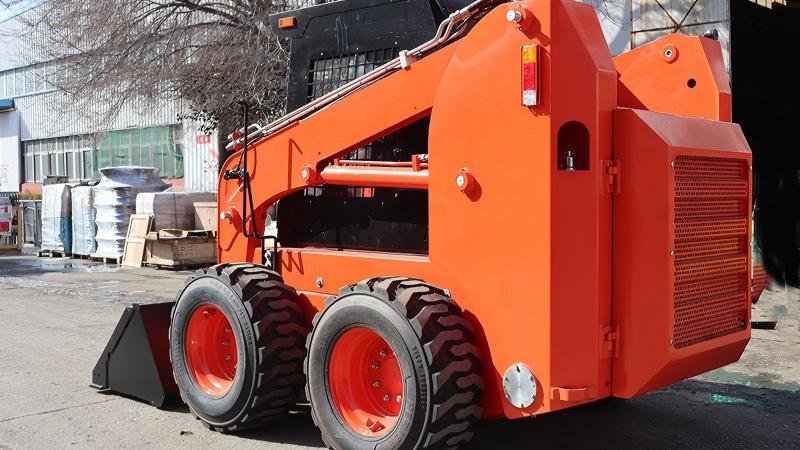
Moving beyond basic maneuvering reveals the deeper layers of skill required for proficient and safe operation. A skid steer is not merely a vehicle; it is a powerful hydraulic tool carrier. The operator's cabin is a hub of multitasking demands. While managing the drive controls with their hands (be they the standard two-lever system, the ISO pattern, or joystick controls), the operator must also manipulate foot pedals or hand controls to raise, lower, tilt, and curl the bucket. This requires a high degree of hand-foot or hand-hand coordination. Furthermore, the operator must constantly maintain spatial awareness—understanding the dimensions of the machine, the position of the lift arms, and the location of the attachment—all while often working in close proximity to obstacles, people, or unstable ground. This situational awareness is critical and separates a casual operator from a skilled one. Tasks like grading a precise slope, loading a truck efficiently without overshooting, or delicately placing material in a confined space require finesse and anticipation. The difficulty escalates when using specialized attachments like augers, trenchers, or breakers, each with its own operational characteristics and safety considerations. An operator must understand the machine's load capacity, stability parameters (especially when lifting loads to height or on slopes), and the changing center of gravity. Without this knowledge, the risk of tipping over or losing control is significant, underscoring that operational difficulty is closely tied to the risk of serious incident.
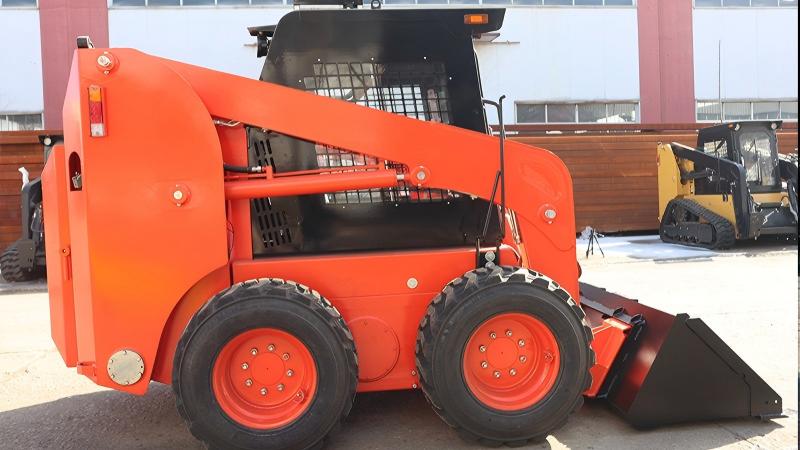
The landscape of skid steer operation has been dramatically transformed by advancements in technology and the standardization of training, which have collectively lowered the barrier to entry while raising the ceiling for safe performance. Modern skid steers increasingly feature advanced control systems, such as electronic joysticks with programmable functions and customizable response curves, making fine control more accessible. Many models now come with enhanced operator environments: improved visibility through larger glass areas and rear-view cameras, climate-controlled cabs to reduce fatigue, and significantly reduced noise and vibration. Perhaps the most impactful innovation is the widespread adoption of auxiliary hydraulic control systems with automatic attachment interfaces. These systems simplify the process of connecting and operating complex tools, reducing the room for error. Crucially, the industry's emphasis on formalized training and certification cannot be overstated. Organizations like the Occupational Safety and Health Administration (OSHA) in the United States mandate formal training for operators. Comprehensive courses cover not only control familiarization but also critical topics like pre-operation inspections, load chart interpretation, stability principles, and worksite hazard identification. This structured education demystifies the machine's complexities and provides a framework for safe practice. Therefore, while the raw mechanical challenge of operating a skid steer persists, the tools and knowledge to overcome it are more readily available than ever before, making proficient operation an achievable goal rather than an innate talent.
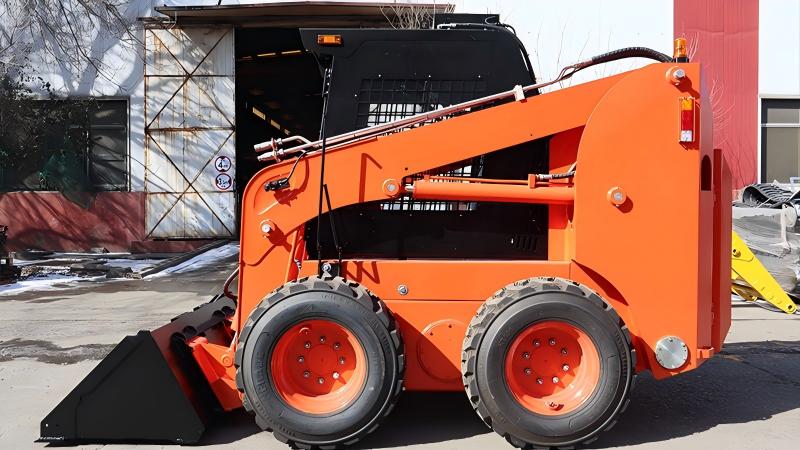
In conclusion, labeling skid steers as universally "difficult" or "easy" to operate is an oversimplification. The initial learning curve for basic control is steep but short; most individuals can learn to drive and perform simple tasks within a day or two. However, true operational mastery—the kind that encompasses efficiency, precision, and unwavering safety across diverse tasks and attachments—is a professional skill developed over time with extensive practice and ongoing education. The difficulty is not insurmountable, but it demands respect. The consequences of operational error in a skid steer are severe, including rollovers, collisions, and crushing incidents. Therefore, the perceived difficulty serves as a built-in safety reminder. For a casual user considering renting a skid steer for a weekend project, the recommendation is unequivocal: seek hands-on training from the rental outlet, start slowly in an open area, and never exceed your comfort or competency level. For those in the industry, committing to thorough certification and continuous learning is non-negotiable. Ultimately, a skid steer is a tool of tremendous capability. Its operational challenge is the gatekeeper to that capability, ensuring that those who command its power are adequately prepared to do so responsibly, transforming a potentially difficult machine into a highly productive and safe asset.
Post time:Jan.30.2026
