
ZGLOADER / MYZG E18 Electric Wheel Loader for Farmyard Duty Planning
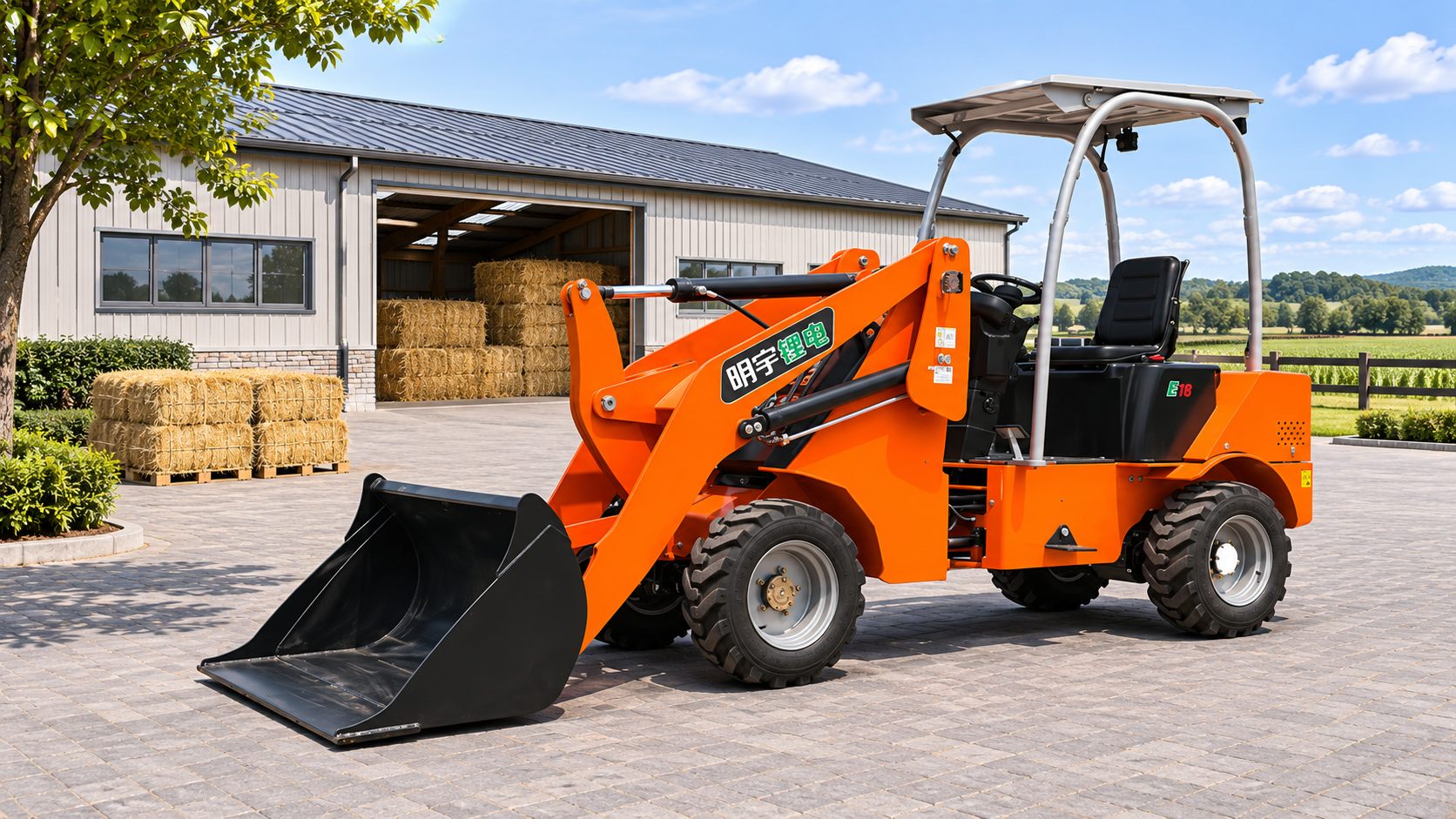
Match the machine to a scheduled task
The ZGLOADER / MYZG E18 electric wheel loader can be considered for planned farmyard material movements and grounds-maintenance duties. A suitable purchase starts with the route, material and working pattern, not a promise that every battery-powered machine will complete every shift. Identify the busiest part of the day, the time available for charging and the support needed at your location. The following guide explains how to turn those practical requirements into a clear configuration request for the E18 without assuming that model numbers represent performance ratings.

Describe the duty cycle before asking about runtime
Separate active loading, travel, waiting and parked time when describing a working day. Material density, travel distance, gradients, temperature and attachment use can change energy demand. Ask the supplier to explain the conditions behind any quoted operating-time estimate and whether the proposed battery and charger are the same as those used for that estimate. A short demonstration should reflect your intended duty, not only an unloaded drive. Record the task completed and the battery indication before and after the trial, while following the operator manual and site controls.
For the E18, describe the farmyard surfaces, the materials to be moved and whether several different tasks share the same machine. Allow for seasonal changes in the work schedule when discussing charging availability. Request the configuration sheet for the particular E18 offered and ask how service access and parts support will be provided at your destination.
Explore electric wheel loader configurations
Prepare the charging location
Before ordering, have the proposed charger input and installation requirements checked against the available electrical supply by a qualified person. Confirm the approved battery and charger combination, connection type, charging procedure and environmental limits. The parking area should allow safe access without placing cables across traffic routes. Do not assume that an ordinary socket, an improvised adapter or an unrelated charger is acceptable. Discuss the charging timetable and any permitted intermediate charging with the supplier. Solar equipment, where offered, must be specified separately and is not a guarantee of continuous operation.

Check access and the complete load combination
Measure entrances, overhead clearances, turning space and the receiving point with the intended attachment included. A compact appearance does not prove that a loader fits a particular doorway or floor. Check the actual machine weight and the site support conditions, then confirm approved attachment and load limits. Bucket volume is not a universal payload rating: wet soil and lighter mulch can place different demands on the same bucket. Fork use requires a compatible approved attachment and its applicable limits. Never infer capacity from E15 or E18, and do not use a bucket to lift people.
Compare the full equipment range
Plan a workable daily sequence
An illustrative yard plan could group similar material transfers into one work period, followed by inspection and a scheduled parking or charging period. This is a planning example, not a report of a completed customer installation. Keep pedestrians separated from machine movements and preserve visibility around stockpiles. Electric drive does not remove hazards from moving parts, hydraulic equipment, dust or the load. A lack of tailpipe exhaust also does not mean every indoor area is suitable; assess the complete workplace and follow the operating restrictions for the supplied machine.

Budget for ownership and service
Compare the total purchase scope rather than only the base machine price. Include the battery and charger supplied, approved attachments, delivery preparation, freight, local costs, commissioning arrangements and routine service items. Request written battery and machine warranty terms, including exclusions and the process for reporting faults. Energy costs depend on local tariffs and actual use, while wear parts and hydraulic maintenance still require attention. Do not assume a fixed saving or payback period. A quotation with clearly listed inclusions is easier to compare and less likely to leave important costs unplanned.
Read application and purchasing articles
Build a dealer offer around support
Dealers should agree how a customer will obtain manuals, parts identification and technical assistance after delivery. Discuss recommended consumables, availability of replacement wear parts and the route for diagnosing battery or electrical concerns. Inspection of damaged cables, unusual heat or warning indications belongs in a documented reporting process; electrical repairs should be handled by appropriately qualified personnel. Do not bypass protective functions or treat a sealed battery as a general workshop repair item. A practical local support plan can matter as much as the initial specification when customers work to daily schedules.
Discuss chargers, attachments, spare parts and your project

Confirm the order and documentation
Confirm model, battery specification, charger, attachments, packing and acceptance requirements in the order. Ask for the documents applicable to the configuration and destination, including CE conformity information where relevant; do not substitute a general marketing statement for matching documentation. EPA engine claims should not be applied automatically to an electric-drive product. Confirm export paperwork and delivery responsibilities with the supplier. Generated application images illustrate the product in possible settings and are not proof of a customer project. Final dimensions, ratings and included options must follow the agreed configuration.
Request a configuration and quotation
Shandong Zhuogong Machinery equipment Co.,Ltd
ZGLOADER / MYZG
WhatsApp: +86 131 7691 0558
Email: MYZG@my-forklift.com
Products categories
-
ZGLOADER / MYZG Q39 Diesel Wheel Loader Worksite Buying Guide
-

B26 Wheel Loader
-

New DY26 Wheel Loader Released: High Efficiency and Robust Performance for Diverse Applications
-

Power in Compact Form: Introducing the MYZG/SDZG B25 Wheel Loader
-
ZGLOADER / MYZG ZG809T Telescopic Wheel Loader Application and Ownership Guide
-

MYZG ZG-ZX14 Electric Scissor Lift Platform
