
ZGLOADER / MYZG E15 Electric Wheel Loader Application and Buying Guide
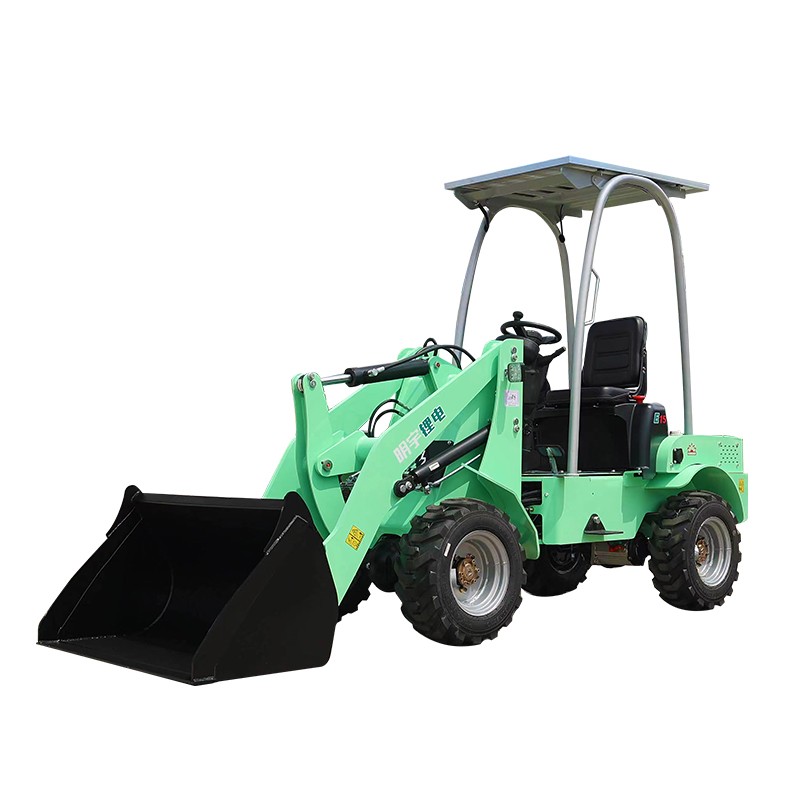
ZGLOADER / MYZG E15 Electric Wheel Loader Application and Buying Guide
The E15 is an electric wheel loader for buyers who need quiet material handling, no exhaust at the point of use and simpler daily service than a combustion machine. Shandong Zhuogong Machinery equipment Co.,Ltd supplies ZGLOADER / MYZG equipment for farms, warehouses, landscaping teams, factories, property services and compact construction. The right decision begins with the actual route, material, load, access, charging supply and daily cycles rather than a price-only comparison.
A solution defined by the work
Indoor air quality, neighborhood noise, fuel handling and short repetitive travel are common reasons to evaluate an electric loader. The E15 can reduce manual handling and support work near people, animals or stored goods, but suitability must be proved against the complete duty. Buyers should measure door width, turning space, overhead clearance, gradient, floor condition and target height, then send photographs or video for configuration review.
compare all available products
Verified reference data
The table below contains only the reference values verified from the existing E15 product record before this new page was created. It does not imply that every destination receives the same battery chemistry, charger, tyres, cab, controller, hydraulic circuit or attachment. Final specifications must be written into the quotation and confirmed for the serial-numbered unit. Unverified range, charging speed or capacity claims are intentionally excluded.
| Rated load | 600 kg |
| Rated bucket capacity | 0.2 m³ |
| Unladen weight | 1600 kg |
review the existing model reference
Application scenarios and workflow
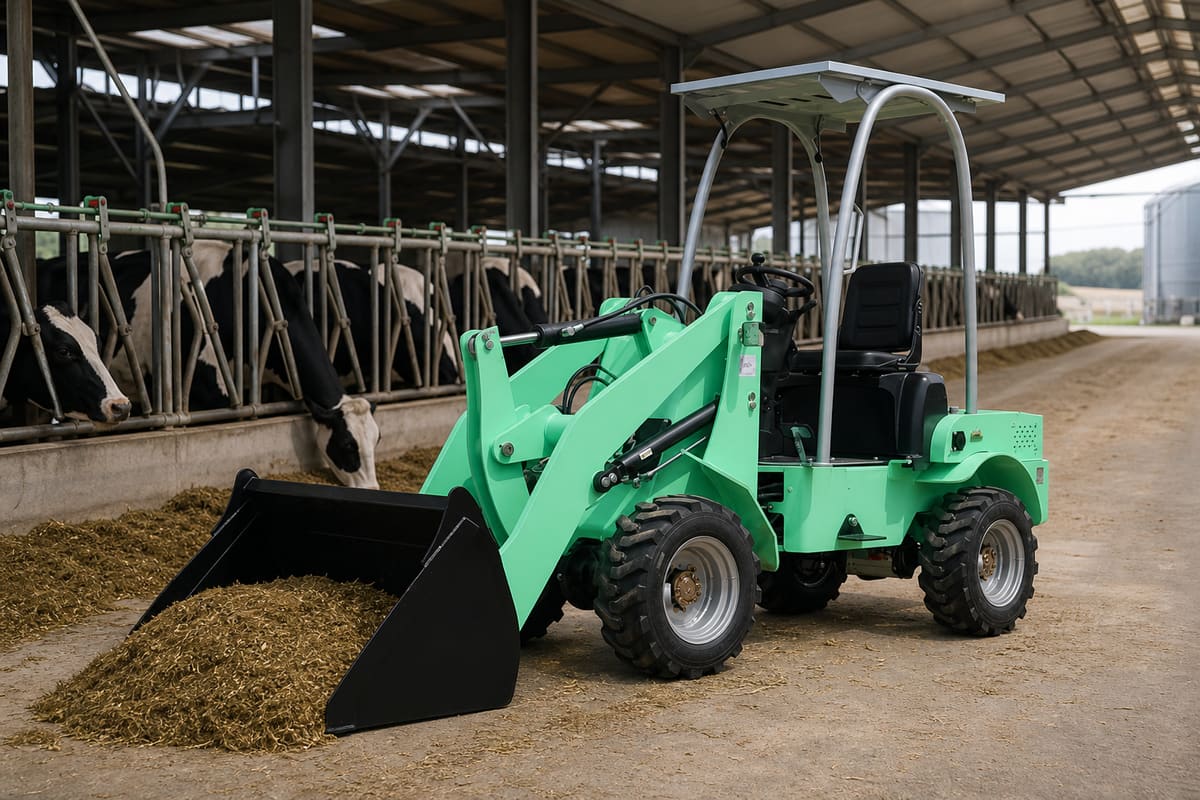
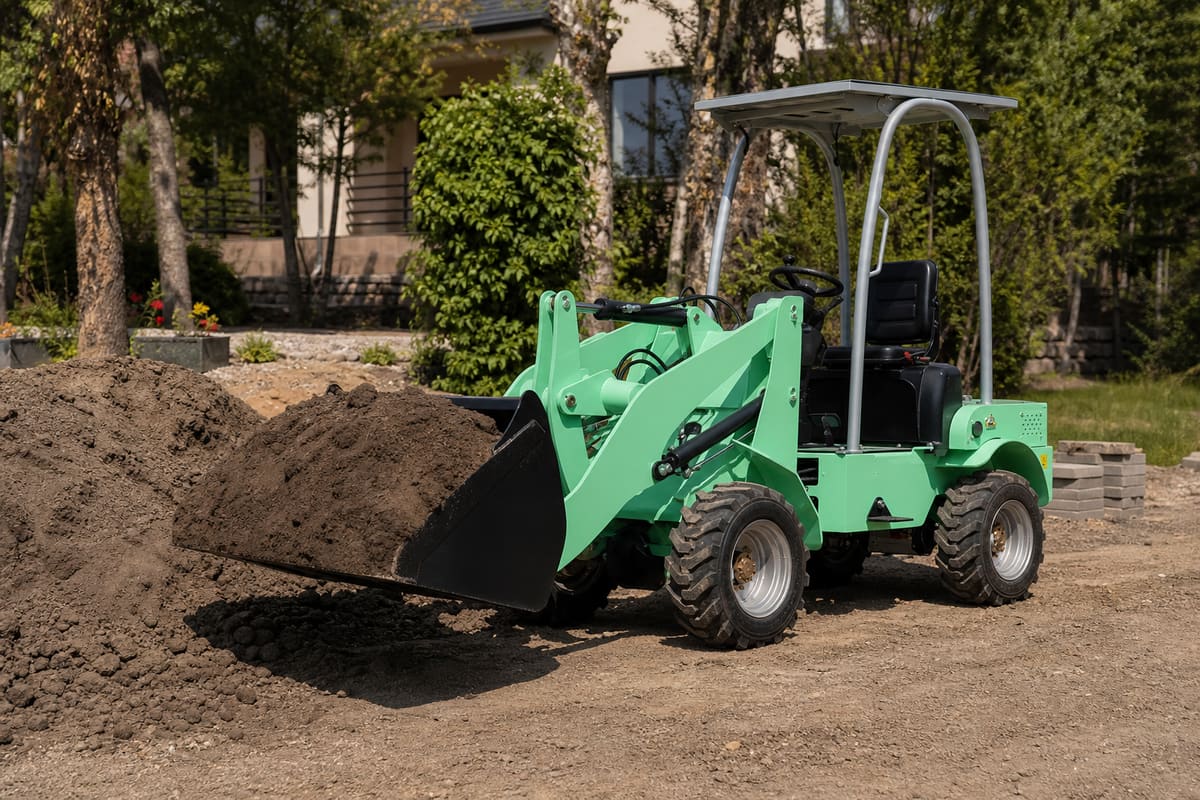
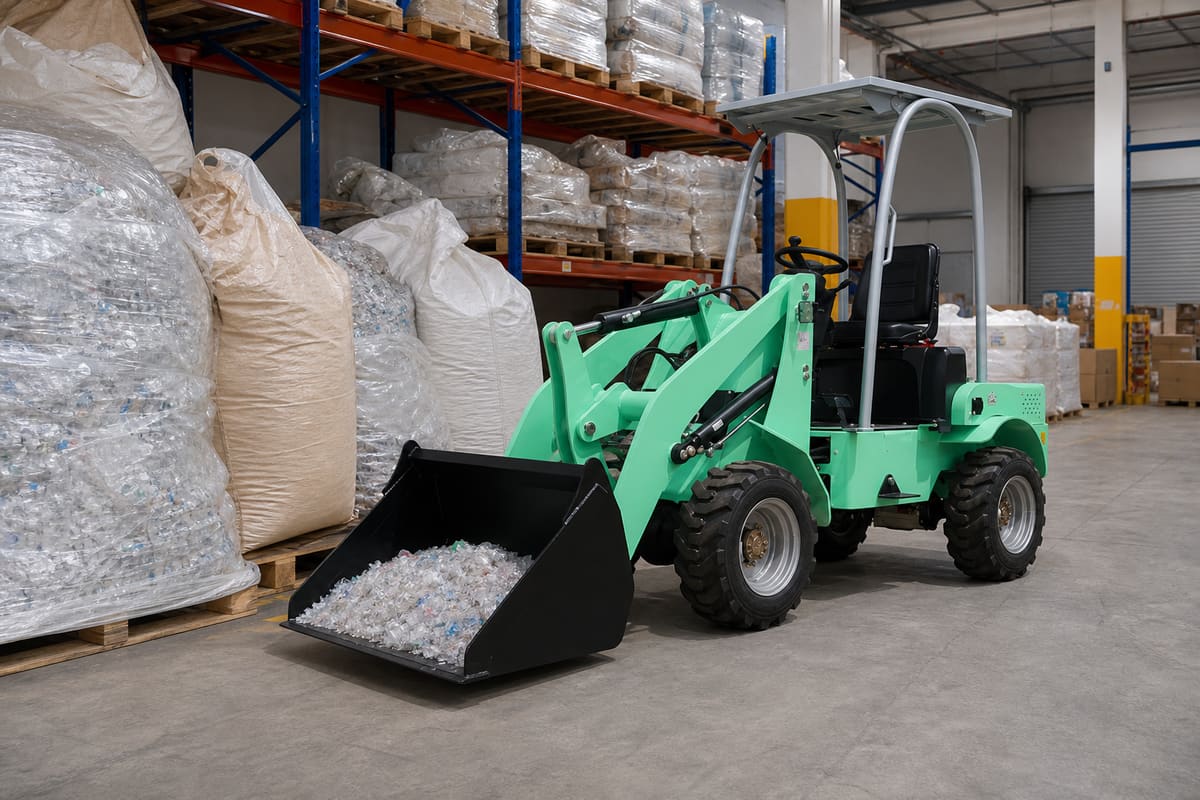
Practical applications include moving feed and bedding, handling compost and soil, cleaning enclosed work areas, carrying packaging material, serving greenhouse aisles, supporting renovation work and loading compatible containers. Quiet low-speed control can improve work around sensitive areas. Productivity still depends on material density, operator technique, travel distance, floor grip, charging windows and the approved attachment, so a realistic duty-cycle demonstration is more valuable than an empty-bucket display.
How to select the right electric loader
Selection starts with a task sheet: heaviest material, bulk density, maximum single load, bucket volume, lift or dump target, route width, surface, slope, ambient temperature, daily hours and charging opportunity. A larger machine may provide reserve but require more space, transport capacity and energy; a smaller machine may enter narrow areas but require more cycles. Choose the smallest approved configuration that completes the work with adequate stability, cooling and service margin.
Charging, battery and site readiness
Charging infrastructure is part of the machine purchase. Confirm local voltage, phase, socket, cable route, breaker protection, ventilation, weather protection and the person responsible for connection. Plan normal charging during predictable breaks rather than assuming an unverified full-shift runtime. Battery use varies with load, gradient, temperature, hydraulic demand and travel. The delivered manual and written charger specification take priority over general marketing statements.
Attachments, density and residual capacity
Bucket volume is not payload. Wet soil, gravel, grain, compost, feed and waste have different densities. Forks, grabs, sweepers, snow blades and high-dump buckets change front weight, visibility, hydraulic demand and residual capacity. Provide attachment mass, load center, oil-flow requirement and coupling details. Do not infer compatibility from a photograph; the quotation should identify the approved tool and any operating limits.
explore the electric wheel loader category
Buyer checklist and total ownership cost
A useful purchasing file includes model, verified configuration, battery and charger references, rated load, bucket, weight, dimensions, tyres, brakes, steering, protection structure, hydraulic connections, attachments, packing, manuals, spare parts and destination documents. Compare electricity, scheduled maintenance, battery care, expected downtime, training, freight and resale with the initial price. Total ownership cost is a workflow calculation, not a single universal percentage.
Safe operation and operator preparation
Before every shift inspect the attachment lock, arms, pins, hoses, cylinders, articulation joint, tyres, wheels, steering, brakes, battery condition, connectors, cables, guards, seat and warning devices. Keep pedestrians outside the operating zone, travel with the load low, slow before turns and slopes, and never lift people in the bucket. Isolate charging equipment before inspection and follow the delivered electrical safety instructions.
Maintenance and parts continuity
Maintenance planning should follow operating hours, environment and serial number. Keep cooling paths, electrical compartments and connectors clean and dry; inspect wear, leaks, cable damage, pins, bushes, tyres and fasteners. Record inspections and faults. Parts requests should include model, serial number, component plate and clear photographs. A sensible first shipment can include confirmed filters, seals, hoses, pins, bushes, cutting edges, fuses and routine service items.
Dealer and rental-fleet opportunity
Dealers and rental fleets can present the E15 through real use cases: indoor material handling, farm access, garden supply movement and compact urban work. Qualify leads by material, width, height, floor, hours, charging supply and service distance. Demonstrations should cover inspection, controls, safe travel, charging, parking and emergency response. Local parts stock and documented response procedures build trust without inventing customer names, savings or performance figures.
CE, EPA and export-document trust
CE-related documents, EPA relevance and other compliance evidence depend on the delivered configuration and destination. This page claims no certificate number. Buyers should request applicable declarations, charger documents, manuals, labels and inspection records in writing; importers confirm local electrical, registration and use rules. ZGLOADER / MYZG can support configuration review, pre-shipment inspection, export packing, loading plans, commercial documents and after-sales communication.
Frequently asked questions
Can the reference values vary?
Yes. They reproduce the verified source fields; final equipment and documents must be confirmed in writing.
How should charging be planned?
Provide the local electrical supply, daily hours and break windows so the charger and routine can be reviewed.
Can any attachment be fitted?
No. Tool mass, load center, hydraulic demand, coupling and residual capacity must be checked.
What is needed for a quote?
Send the job, load, material, route, surface, hours, charging supply, attachments, destination and compliance needs.
Request a job-matched quotation
For a useful quotation, send site photographs, access dimensions, material and density, maximum load, target height, surface, gradient, daily hours, attachments, local electrical supply, destination port and required documents. The export team can then compare configurations and prepare a job-matched offer. This approach connects product research, application planning, charging, maintenance and service support instead of relying on an unverified generic proposal.
Shandong Zhuogong Machinery equipment Co.,Ltd — ZGLOADER / MYZG
WhatsApp / Skype / WeChat: +86 13176910558 | Corporate email: MYZG@my-forklift.com
Products categories
-
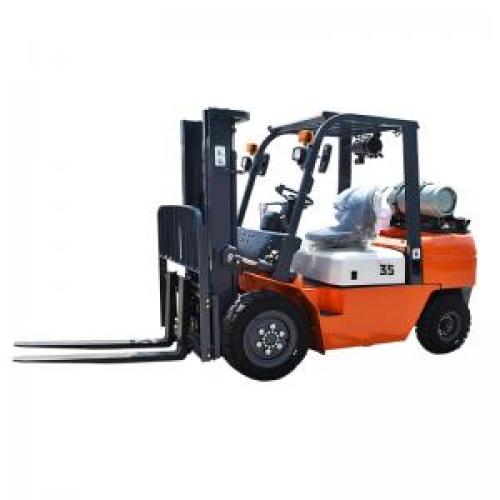
ZGLOADER / MYZG CPY35 3.5 Ton LPG Forklift Industry and Lifecycle Guide
-
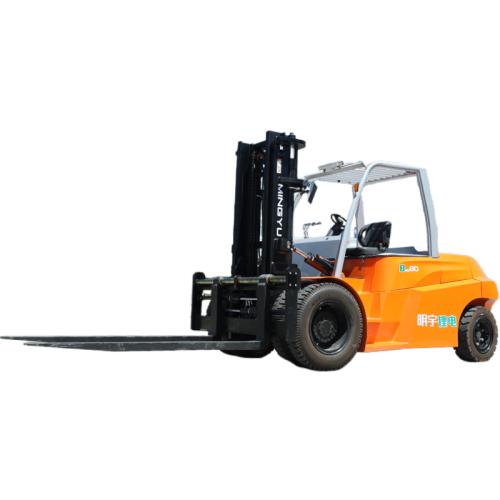
CPD80-B electric Forklift
-
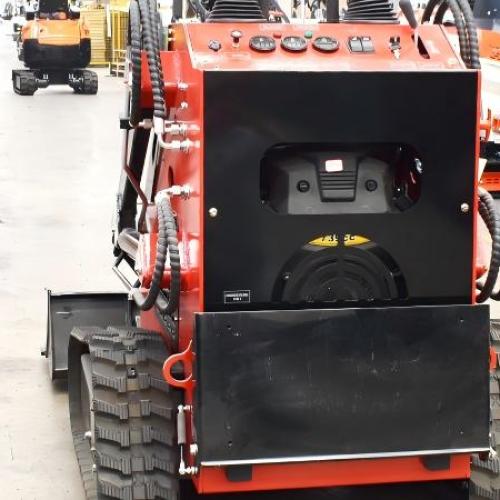
MY 380T Compact Loader: A 300kg Powerhouse Redefining Compact Material Handling
-
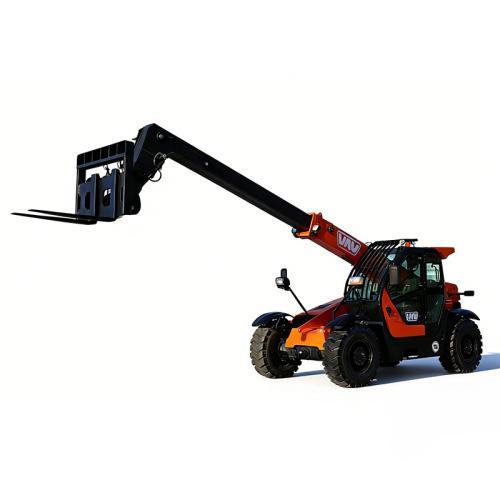
ZGFORKLIFT / MYZG MYS7035 3.5 Ton 7 m Telehandler
-
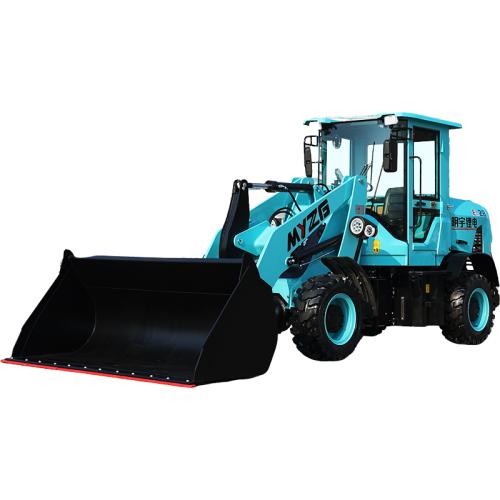
E28C Electric Wheel Loader
-
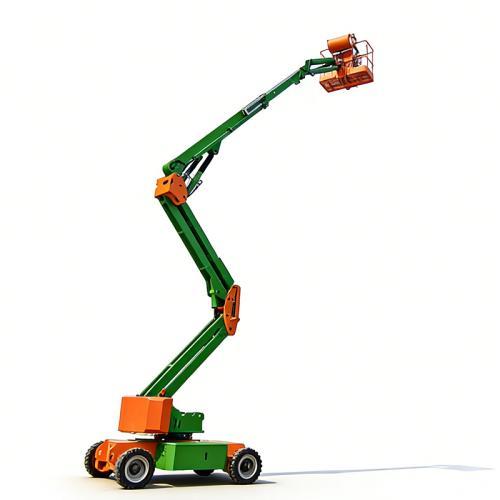
ZGFORKLIFT / MYZG ZG-QB16 Articulating Boom Lift
