
ZGLOADER / MYZG 380T Mini Track Loader for Landscape Material Planning
Start with the material journey
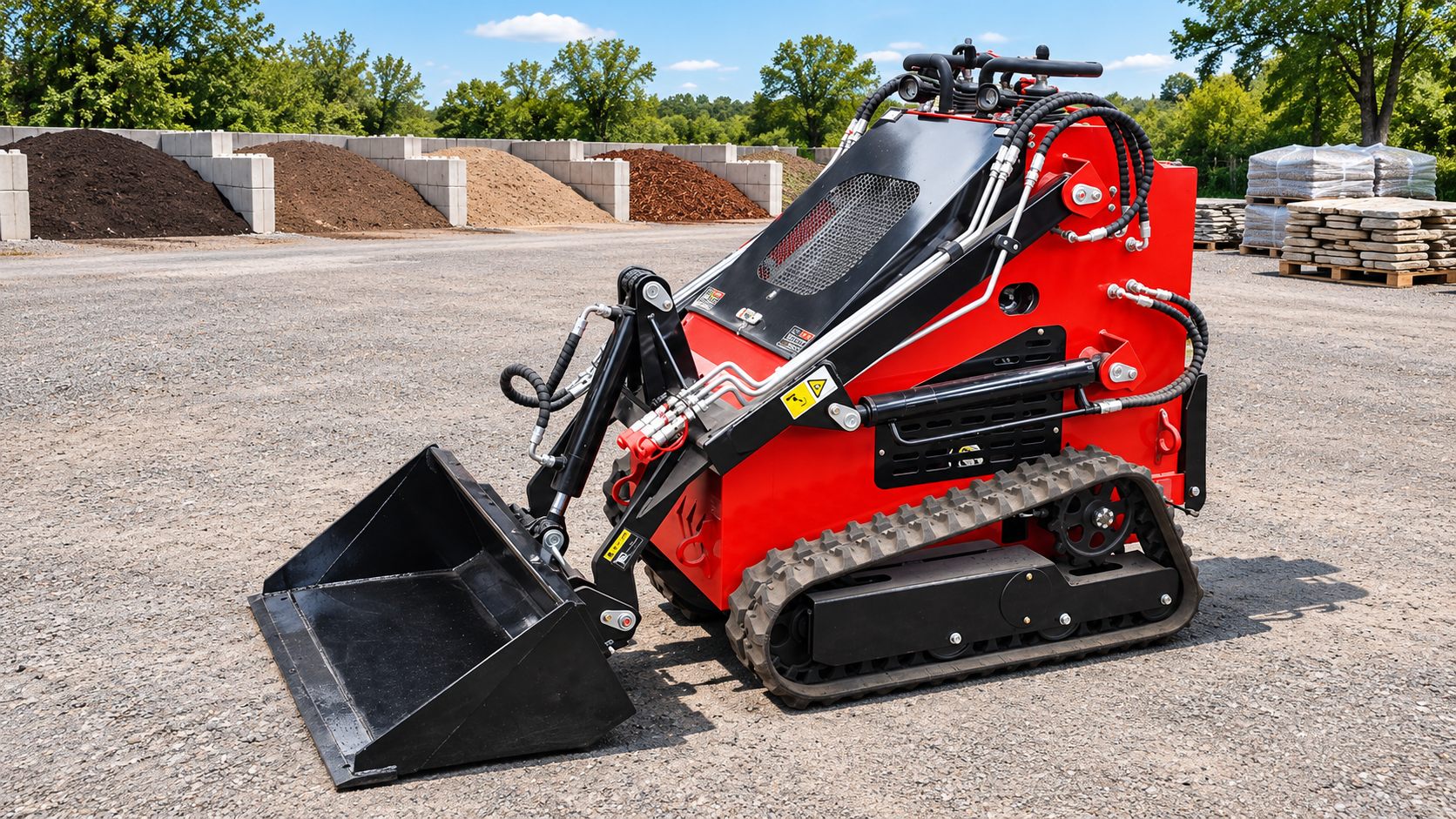
The ZGLOADER / MYZG 380T mini track loader is a product to evaluate when a landscaping team needs to move loose materials between a storage area and a prepared work zone. Its compact tracked layout deserves a practical site review rather than a decision based only on a model number. Start with the material, route and receiving point: where will soil arrive, how will the machine approach the pile, and where can the bucket be emptied without blocking other work? This guide helps buyers organize those questions before requesting a configuration and quotation.

Check access and the working surface
Measure the narrowest entrance, the turning area and the full travel route with the intended attachment fitted. Include space for the operator and a clear separation from pedestrians. Rubber tracks do not guarantee that a machine will leave every surface undamaged: tight turns, loose paving, buried services and soft edges all need assessment. Ask for the actual operating dimensions and weight of the offered configuration, then compare them with the site and transport limits. A demonstration on a suitable representative surface can help resolve uncertainty before purchase.
For the 380T, ask the supplier to identify the exact tracked chassis, bucket and control arrangement shown in the offer. Send photographs or a simple drawing of the garden access route, together with the material type and unloading location. Do not interpret 380T as a rated lifting capacity. Confirm the machine data and attachment limits separately before deciding whether this configuration suits the job.
Compare mini skid steer loader configurations
Choose a bucket around the material
Soil, bark mulch and aggregate have different bulk densities and handling characteristics. A bucket that appears modest in size can still become too heavy when filled with dense or wet material. Select the attachment using the manufacturer-approved limits for the complete machine and attachment combination, not a capacity guessed from the product name. Confirm the mounting interface, bucket width and any hydraulic requirements in writing. For powered attachments, compatibility includes flow, pressure, return requirements and controls; a matching coupler alone is not enough.

Organize a realistic landscape workflow
For a garden renovation, consider a staging area beside the delivery point and a separate receiving zone near the work. This is an illustrative planning example, not a claim about a completed customer project. Keep pedestrians outside the machine route, maintain visibility and avoid unnecessary reversing. Schedule material arrivals so they do not obstruct access. The operator must follow the supplied manual, including travel position and ground restrictions. Do not use an unapproved attachment or treat landscaping equipment as a personnel lifting platform.
Explore the full equipment range
Compare the complete ownership budget
Compare quotations on the same scope: machine configuration, approved attachments, transport preparation, freight, local charges, service items and operator training arrangements. Include the cost of cleaning, track inspection and planned maintenance as well as the purchase price. Ask what spare parts are recommended for your expected annual use and how their availability is confirmed. Productivity or fuel savings should be assessed against your own working conditions; no fixed payback period can be assumed from photographs. A clearly defined duty cycle makes supplier comparisons more meaningful.

Make maintenance part of the schedule
Build a daily inspection routine around the manual for the supplied unit. Check the visible condition of tracks, hoses, guards and attachment locking components before work. Keep cooling areas and the undercarriage clean using the approved procedure. Report leaks or unusual movement and stop using the equipment until the issue is assessed. Service beneath raised components requires the prescribed mechanical support and isolation procedure, not hydraulic pressure alone. Record maintenance dates and parts used so the owner and service team can follow the machine history.
Read equipment application and buying articles
Prepare a useful dealer quotation
A dealer enquiry should describe the intended industries, typical materials, expected use and local service arrangements. Request a configuration sheet, parts information, warranty terms and a clear process for technical questions. For nursery and landscaping customers, a demonstration plan should focus on access, material control and maintenance access rather than unsupported performance claims. Discuss which wear items should be stocked locally and which require an order. This approach helps dealers build an offer around customer needs while avoiding promises that have not been confirmed for the chosen unit.
Discuss attachments, spare parts and project requirements

Confirm configuration before ordering
Before payment, agree the exact model and configuration, included attachments, documentation, packing, delivery terms and acceptance process. Where CE conformity or EPA-related engine requirements apply, request documents that match the offered configuration and destination; neither a model name nor a brand label proves compliance. Ask about export documentation and the support arrangements available for your market. The application images are generated visual illustrations based on the product appearance, not evidence of a customer installation. Final specifications and supplied equipment must follow the confirmed quotation.
Request a project-specific quotation
Shandong Zhuogong Machinery equipment Co.,Ltd
ZGLOADER / MYZG
WhatsApp: +86 131 7691 0558
Email: MYZG@my-forklift.com
Products categories
-
ZGLOADER / MYZG 388 Backhoe Loader Project Planning Solution
-
ZGFORKLIFT / MYZG CTY Manual Hydraulic Pallet Stacker for Warehouse Selection and Service
-
ZGLOADER / MYZG ZG811T Telescopic Wheel Loader Procurement, Application and Service Guide
-
ZGLOADER / MYZG J26 Loader for Nursery Stockpiles and Seasonal Yard Planning
-
ZGLOADER / MYZG 388 Backhoe Loader Field Productivity and Lifecycle Guide
-
ZGFORKLIFT / MYZG ZG-TT1011 Self-Propelled Telescopic Mast Lift
