
Can Walkie Stackers Work Safely on Uneven Concrete Warehouse Floors?
1. Introduction
Walkie stackers have become one of the most widely used material handling machines in modern warehouses due to their compact size, affordability, and ease of operation. They are ideal for stacking pallets, transporting goods over short distances, and working in narrow aisles where larger forklifts cannot easily maneuver. Whether in retail distribution centers, manufacturing facilities, cold storage warehouses, or logistics hubs, walkie stackers help improve efficiency while reducing manual labor.
However, one question frequently asked by warehouse managers and equipment buyers is whether walkie stackers can safely operate on uneven concrete warehouse floors. While many warehouses are designed with smooth, level concrete, real-world conditions are often different. Over time, concrete floors develop cracks, settlement, expansion joints, potholes, worn surfaces, or uneven patches caused by heavy traffic, environmental conditions, and building age. These imperfections may seem minor, but they can significantly affect equipment stability, operator safety, and load security.
Unlike heavy counterbalance forklifts with large pneumatic tires, most walkie stackers are equipped with relatively small polyurethane wheels designed for smooth indoor surfaces. This design provides excellent maneuverability and low rolling resistance on flat floors but also makes the equipment more sensitive to bumps, holes, and sudden changes in floor level. Operating on unsuitable surfaces may increase the risk of tipping, unstable loads, premature component wear, and even workplace accidents.
Understanding how floor conditions influence walkie stacker performance is essential for maintaining a safe warehouse. Operators should not only know the machine's capabilities but also recognize its limitations. Many accidents involving warehouse equipment occur not because of equipment failure but because operating conditions exceed the machine's intended design.
This article explores whether walkie stackers can safely operate on uneven concrete warehouse floors. It explains the types of floor damage that present risks, examines how uneven surfaces affect stability and handling, discusses the major safety hazards, and provides practical recommendations for reducing operational risks. Finally, it compares walkie stackers with alternative equipment better suited for rougher floor conditions, helping businesses choose the safest and most efficient solution.
2. What Is Considered an Uneven Concrete Warehouse Floor?
Not every warehouse floor is perfectly flat. Even facilities that were built to high construction standards gradually develop imperfections after years of continuous operation. Understanding what qualifies as an uneven concrete floor helps operators evaluate whether conditions remain suitable for walkie stackers.
One of the most common problems is cracking. Hairline cracks are generally cosmetic and rarely affect equipment operation. However, larger cracks with noticeable height differences between the two sides can create impact loads when wheels pass over them. Repeated impacts not only reduce operator comfort but also place additional stress on the stacker's wheels, bearings, and mast.
Expansion joints are another common feature. Concrete naturally expands and contracts with temperature changes, so warehouses include expansion joints to prevent uncontrolled cracking. While well-maintained joints pose little risk, damaged or uneven joints can cause sudden jolts that destabilize elevated loads.
Settlement is often a more serious issue. When the soil beneath the concrete shifts, sections of the floor may sink unevenly. This creates slopes or abrupt level differences that affect the machine's center of gravity. Even a relatively small depression can increase the chance of instability when carrying heavy loads.
Surface spalling, where the concrete flakes or breaks apart, produces rough areas and loose debris. Besides causing vibration, these damaged sections accelerate wheel wear and reduce traction. Potholes or broken concrete are even more hazardous because the drive wheel or load wheels may suddenly drop into the depression, shifting the load unexpectedly.
Floor flatness and levelness are often measured using FF (Floor Flatness) and FL (Floor Levelness) ratings. High-quality warehouses designed for material handling equipment typically maintain strict floor tolerances to support safe forklift and stacker operation. Older warehouses with deteriorating concrete may no longer meet these standards, increasing operational risks.
Warehouse managers should regularly inspect floor conditions rather than assuming that small defects are harmless. Minor imperfections can gradually become larger hazards if ignored. Early repairs are generally far less expensive than equipment damage, product loss, or workplace injuries.
3. Can Walkie Stackers Operate Safely on Uneven Concrete?
The short answer is yes—but only within limits. Walkie stackers are designed primarily for smooth, level indoor floors. Small surface imperfections are generally acceptable, but significant unevenness falls outside the intended operating environment.
Manufacturers typically recommend operating on hard, level concrete with minimal slopes and no major obstacles. Slight variations in floor height or narrow expansion joints usually do not present serious problems when operators travel slowly and keep loads low. However, larger cracks, potholes, steep slopes, or severely damaged concrete dramatically increase safety risks.
The greatest concern arises when transporting elevated loads. As lift height increases, the machine's center of gravity rises, making it more sensitive to floor irregularities. A small bump that would have little effect when traveling with lowered forks may cause noticeable swaying when the load is raised several meters.
Dynamic forces also play an important role. A stacker moving across uneven concrete experiences sudden vertical and horizontal impacts. These forces can cause the load to shift, the mast to oscillate, and the wheels to momentarily lose full contact with the floor. The faster the travel speed, the greater these dynamic effects become.
Another important factor is load capacity. Operating close to the rated capacity leaves little safety margin. Even minor instability caused by uneven flooring can become significant when carrying maximum loads. Operators should consider reducing the working load whenever floor conditions are less than ideal.
In practice, many warehouses successfully use walkie stackers despite minor floor imperfections. Safe operation depends on proper maintenance, careful driving, regular inspections, and avoiding damaged sections whenever possible. When floor conditions deteriorate beyond acceptable limits, repairing the concrete is often safer and more cost-effective than accepting increased operational risks.
4. Main Safety Risks of Operating on Uneven Floors
Uneven concrete creates multiple hazards that affect both equipment and personnel. The most obvious risk is reduced stability. When one or more wheels lose full contact with the floor or encounter sudden height differences, the machine's balance changes. If the load is heavy or elevated, the risk of tipping increases significantly.
Load instability is another major concern. Warehouse pallets are designed to remain level during transport. Continuous vibration or sudden jolts may cause boxes to shift, stretch wrap to loosen, or products to fall. Fragile goods such as electronics, glass, chemicals, or food products are particularly vulnerable to damage.
Steering performance also declines on rough surfaces. Small polyurethane wheels provide excellent maneuverability on smooth concrete but struggle to maintain consistent contact on damaged floors. Reduced traction makes steering less predictable and increases stopping distance.
Operator safety is equally important. Constant vibration causes fatigue during long shifts, reducing concentration and increasing the likelihood of driving errors. Sudden impacts may also cause operators to lose control of the tiller arm or react unexpectedly.
Equipment wear accelerates considerably on rough floors. Drive wheels, load rollers, bearings, hydraulic components, mast rollers, and steering mechanisms experience higher impact loads. Frequent operation over damaged concrete often shortens maintenance intervals and increases repair costs.
In severe cases, uneven flooring may contribute to tip-over accidents. Although walkie stackers operate at relatively low speeds, tipping incidents can still occur if operators carry elevated loads across holes, ramps, or uneven surfaces while turning. Such accidents may result in serious injuries and expensive product losses.
5. Factors That Affect Safety on Rough Concrete
Several variables determine whether operating on uneven concrete remains reasonably safe. The first is load weight. Heavier loads create greater inertia and increase stress on both the machine and the floor. As the load approaches rated capacity, stability becomes increasingly sensitive to floor conditions.
Load height is equally critical. Keeping forks close to the ground during travel minimizes the center of gravity and greatly improves stability. Elevated loads should only be raised when the stacker is stationary and positioned correctly for stacking.
Floor slope also deserves careful attention. Walkie stackers are generally intended for level indoor surfaces rather than ramps. Even gentle inclines reduce braking efficiency and increase the risk of uncontrolled movement, especially when carrying heavy pallets.
Wheel material influences performance as well. Most walkie stackers use polyurethane wheels because they roll efficiently on smooth concrete and resist wear. However, polyurethane provides less shock absorption than pneumatic rubber tires, making rough surfaces feel much harsher.
Travel speed directly affects impact forces. Driving slowly gives the wheels more time to follow surface irregularities and reduces the severity of impacts. High-speed travel over damaged concrete greatly increases instability.
Turning technique matters too. Sharp turns while carrying elevated loads generate additional lateral forces that combine with uneven flooring to increase tipping risk. Operators should complete turns slowly and avoid abrupt steering inputs.
Finally, machine condition cannot be overlooked. Worn wheels, loose mast components, damaged bearings, weak brakes, or poor steering response all reduce the equipment's ability to handle imperfect surfaces safely. Preventive maintenance remains one of the best investments for warehouse safety.
6. How to Reduce Risks When Using Walkie Stackers
Although uneven floors cannot always be avoided, proper operating procedures greatly reduce associated risks.
Daily floor inspections should be part of warehouse safety routines. Operators should identify new cracks, loose concrete, oil spills, potholes, or damaged expansion joints before beginning work. Reporting hazards immediately allows maintenance teams to address problems before accidents occur.
Loads should always remain as low as practical during travel. Lower forks significantly improve stability and reduce mast oscillation when crossing minor imperfections.
Speed control is another essential practice. Slower travel allows operators to react more effectively to unexpected obstacles while minimizing impact forces on the machine and load.
Avoiding damaged areas whenever possible is equally important. Establishing designated travel lanes helps reduce repeated exposure to poor floor sections. Temporary barriers or warning markings should identify hazardous locations until repairs are completed.
Operators should never attempt to cross large potholes or broken concrete while carrying elevated loads. If no alternative route exists, unloading the pallet and repairing the floor should take priority over maintaining productivity.
Routine equipment maintenance also improves safety. Checking wheels, brakes, steering, hydraulic systems, forks, mast rollers, and warning devices ensures the machine remains capable of handling normal warehouse conditions safely.
Finally, operator training remains one of the most effective safety measures. Well-trained operators recognize hazardous floor conditions, understand equipment limitations, and make better decisions under changing warehouse environments.
7. When a Different Machine Is a Better Choice
Walkie stackers are excellent for smooth indoor warehouses, but they are not suitable for every application. Facilities with consistently uneven floors may require different equipment.
Electric counterbalance forklifts offer improved stability through larger wheels, wider wheelbases, and heavier construction. They perform better on moderate floor imperfections while maintaining high lifting capacity.
Reach trucks are ideal for high-density warehouses with relatively smooth floors. Although they provide excellent stacking performance, they are still sensitive to severe floor damage because of their narrow load wheels.
Rough terrain forklifts are specifically designed for construction sites, outdoor yards, gravel, and uneven ground. Large pneumatic tires, four-wheel drive, and reinforced suspension allow them to operate safely where walkie stackers cannot.
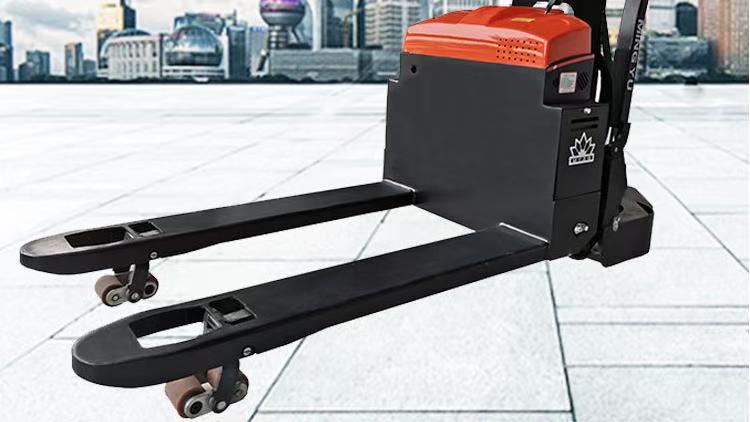
Electric pallet trucks may be a practical alternative when goods only need horizontal transportation rather than stacking. Since they keep loads very close to the ground, they generally tolerate minor floor imperfections better than elevated stackers.
Warehouse managers should evaluate floor conditions before selecting equipment. Purchasing a machine designed for the actual working environment improves safety, reduces maintenance costs, and increases long-term productivity.
8. Warehouse Floor Maintenance and Improvement
The safest solution is often improving the floor rather than changing the equipment. Well-maintained concrete benefits every type of warehouse vehicle.
Cracks should be repaired before they expand into larger structural problems. Professional epoxy injection or concrete patching restores surface integrity and reduces impact loads on equipment.
Uneven sections caused by settlement may require grinding or resurfacing to restore acceptable floor tolerances. Although repairs involve initial costs, they typically reduce long-term maintenance expenses for material handling equipment.
Regular inspections help identify developing problems early. Monthly or quarterly floor assessments allow maintenance teams to schedule repairs before damage becomes severe.
Cleaning also contributes to safety. Dust, loose concrete fragments, and debris increase wheel wear while reducing traction. Maintaining clean travel paths extends wheel life and improves operator control.
Warehouse expansion projects should consider higher concrete specifications if automated equipment, high-reach storage, or intensive forklift traffic is expected. Better floor quality supports higher operational efficiency throughout the building's lifetime.
Investing in floor maintenance not only protects equipment but also reduces product damage, improves worker safety, lowers repair costs, and increases overall warehouse productivity.
9. Conclusion
Walkie stackers can safely operate on slightly uneven concrete warehouse floors, but only when imperfections remain within reasonable limits and operators follow proper safety practices. They are designed primarily for smooth indoor surfaces, making them less suitable for heavily damaged concrete, deep cracks, potholes, or significant floor settlement.
Safety depends on multiple factors, including floor condition, load weight, lift height, travel speed, wheel condition, equipment maintenance, and operator training. Even small floor defects can become serious hazards when carrying heavy or elevated loads.
Warehouse managers should prioritize regular floor inspections, prompt repairs, preventive equipment maintenance, and comprehensive operator training. These measures significantly reduce accidents while extending the service life of both the walkie stacker and warehouse infrastructure.
If uneven concrete cannot be corrected, businesses should evaluate whether a different type of material handling equipment—such as an electric counterbalance forklift or rough terrain forklift—is better suited to the operating environment.
Ultimately, maintaining smooth warehouse floors and matching the right equipment to the right application is the most effective strategy for ensuring safe, efficient, and cost-effective material handling operations.
Post time:Jul.09.2026
