
What Safety Features Prevent Tip-Over Accidents on High-Lift Stackers?
1. Introduction
High-lift stackers have become indispensable material handling equipment in warehouses, distribution centers, manufacturing plants, retail storage facilities, and logistics hubs. Designed to lift pallets to significant heights while maintaining a compact footprint, these machines help businesses maximize vertical storage space, improve inventory organization, and increase operational efficiency. Electric walkie stackers, ride-on stackers, and counterbalance stackers are now widely used because they offer an economical alternative to larger forklifts in many indoor applications.
Despite their advantages, operating a high-lift stacker involves inherent risks. One of the most serious hazards is a tip-over accident, which can result in damaged goods, equipment failure, costly downtime, and severe injuries to operators or nearby workers. As the lifting height increases, the machine's center of gravity shifts, making stability more challenging. Even experienced operators can encounter dangerous situations if the stacker is overloaded, driven on uneven surfaces, or operated improperly.
To address these risks, manufacturers have developed a wide range of advanced safety features that actively monitor machine stability and assist operators during daily operations. Modern high-lift stackers are equipped with intelligent electronic control systems, overload protection devices, automatic travel speed reduction, reinforced mast structures, emergency braking systems, and ergonomic safety controls. These technologies work together to minimize human error while maintaining productivity.
However, even the most advanced safety systems cannot replace proper operator training and routine equipment maintenance. Understanding how these safety features function allows warehouse managers and operators to make better purchasing decisions, improve workplace safety, and reduce the likelihood of costly accidents. This article explores the most important safety features found on modern high-lift stackers and explains how each one helps prevent tip-over accidents while ensuring efficient and reliable material handling operations.
2. Why Do High-Lift Stackers Tip Over?
Understanding why tip-over accidents occur is the first step toward preventing them. A high-lift stacker is engineered to remain stable within specific operating limits. When those limits are exceeded, the risk of instability increases dramatically.
One of the leading causes of tip-over accidents is overloading. Every stacker is assigned a rated lifting capacity based on its design, lifting height, and load center. Exceeding this capacity shifts the combined center of gravity beyond the machine's stability zone, making it easier for the stacker to overturn. Operators sometimes underestimate pallet weight or attempt to lift oversized loads, creating unsafe operating conditions.
Another common factor is traveling with the forks raised. Although it may seem convenient to move quickly between storage locations with an elevated load, doing so significantly raises the center of gravity. The higher the load, the greater the leverage acting on the stacker during acceleration, braking, or turning. Even a small steering correction can generate enough force to destabilize the machine.
Uneven floors also contribute to many accidents. Small bumps, floor joints, potholes, ramps, or debris may appear insignificant when traveling with empty forks but become dangerous when carrying elevated loads. Any tilt in the floor changes the distribution of weight across the wheels and can quickly reduce stability.
Improper load placement presents another serious hazard. Loads that are off-center, loosely wrapped, or poorly balanced create uneven weight distribution. Damaged pallets or broken pallet boards can also fail during lifting, causing sudden shifts in weight that may lead to a tip-over.
Operator behavior plays a significant role as well. Excessive speed, sharp cornering, sudden braking, distraction, fatigue, and inadequate training all increase accident risk. In addition, poor maintenance—including worn wheels, leaking hydraulics, damaged masts, or faulty brakes—can compromise the stacker's stability and overall safety.
At the heart of stacker stability is the concept of the stability triangle. The machine remains stable only while the combined center of gravity of the stacker and its load stays within this triangular area formed by the wheels. As lift height increases, the center of gravity moves upward and forward, reducing the safety margin. Modern safety technologies are specifically designed to help keep the machine operating within these stable limits.
3. Electronic Stability Control Systems
Modern high-lift stackers increasingly incorporate electronic stability control systems that continuously monitor operating conditions and automatically intervene when instability is detected. These intelligent systems use sensors to measure travel speed, steering angle, lifting height, mast tilt (where applicable), load weight, and acceleration. By analyzing this data in real time, the control unit can determine whether the machine is approaching an unsafe operating condition.
One of the most valuable functions is automatic travel speed reduction. As the forks rise higher, the system gradually limits the maximum driving speed. This reduces the momentum generated during movement and gives the operator more time to react to obstacles or changes in direction. Lower travel speeds also minimize the side forces that occur during turns, helping keep the center of gravity within the stability zone.
Electronic stability systems also regulate lifting and lowering speeds. Heavy loads may be raised more slowly than lighter ones, ensuring smoother operation and reducing mast sway. During lowering, controlled hydraulic movement prevents sudden drops that could shift the load or destabilize the machine.
Some premium stackers feature dynamic stability algorithms that constantly adjust machine performance based on operating conditions. If the system detects rapid steering input, excessive acceleration, or a combination of high lift and high speed, it can temporarily reduce power or limit travel until the stacker returns to a safer operating state.
Electronic monitoring also provides diagnostic information. Operators receive warnings through LCD displays, indicator lights, or audible alarms whenever operating conditions approach safety limits. This immediate feedback encourages safer operating habits and helps prevent accidents before they occur.
By reducing reliance on operator judgment alone, electronic stability control significantly lowers the risk of tip-over accidents while improving confidence, productivity, and overall workplace safety.
4. Load Capacity Monitoring and Overload Protection
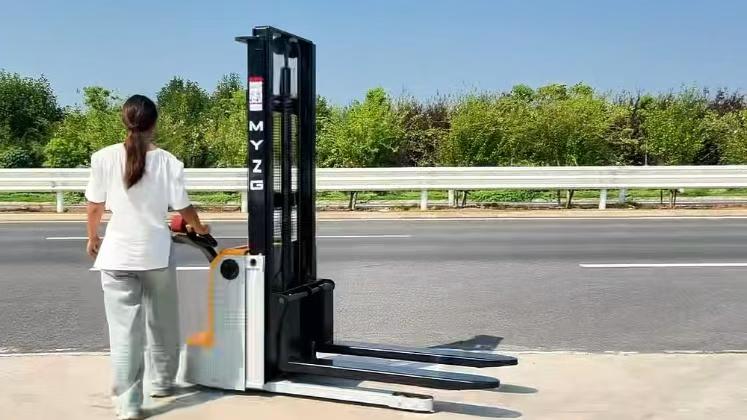
Overloading is one of the fastest ways to compromise the stability of a high-lift stacker. To address this risk, modern machines are equipped with sophisticated load capacity monitoring and overload protection systems that continuously evaluate lifting conditions.
Many stackers use hydraulic pressure sensors to estimate the weight being lifted. As the forks engage a pallet, the system measures the hydraulic force required to raise the load and compares it with the machine's rated capacity. More advanced models combine hydraulic sensing with electronic load cells for even greater accuracy.
When the detected weight approaches the allowable limit, the operator receives visual warnings on the control display. Audible alarms may also sound to draw immediate attention. If the rated capacity is exceeded, the system can automatically prevent further lifting while still allowing the operator to safely lower the load.
Some intelligent systems also calculate the effective capacity based on lifting height and load center. A stacker capable of lifting 1,500 kg at a lower height may have a significantly lower safe capacity when the mast is fully extended. By considering these variables, the system provides more accurate protection than simple weight measurement alone.
Overload protection not only prevents tip-over accidents but also reduces structural stress on the mast, hydraulic cylinders, chains, forks, and chassis. Consistently operating within design limits extends equipment lifespan, lowers maintenance costs, and reduces unexpected downtime.
For warehouse managers, these systems provide additional peace of mind by minimizing the likelihood of costly operator mistakes. Combined with proper training, load monitoring technology serves as an essential safeguard against one of the most common causes of stacker instability.
5. Mast Design and Low Center of Gravity Engineering
Mechanical design is just as important as electronic technology in preventing tip-over accidents. Manufacturers devote significant engineering effort to ensuring that high-lift stackers remain stable throughout their operating range.
The mast is one of the most critical structural components. High-strength steel sections, reinforced welds, and precision manufacturing techniques create a rigid lifting structure capable of supporting heavy loads with minimal flexing. Reduced mast deflection means less load sway, improving stability at maximum lift heights.
A wide chassis further enhances stability by increasing the machine's support base. The greater the distance between the wheels, the more resistant the stacker becomes to sideways tipping forces during turns or uneven loading.
Electric stackers gain another advantage from battery placement. The heavy battery pack is usually installed low within the chassis, lowering the overall center of gravity. This design naturally increases stability without adding unnecessary counterweights.
Manufacturers also optimize weight distribution throughout the frame. Components such as motors, hydraulic pumps, and drive systems are positioned strategically to maintain balanced weight across all wheels. This careful engineering ensures predictable handling even when carrying heavy loads.
Finite element analysis and computer simulations allow engineers to evaluate structural performance under thousands of loading scenarios before production begins. As a result, modern stackers offer significantly improved stability compared with earlier generations while maintaining compact dimensions suitable for narrow aisles.
6. Automatic Speed Reduction at Height
Travel speed has a direct impact on stacker stability. Even when operating within rated capacity, excessive speed with elevated forks can create dangerous momentum that increases the likelihood of a tip-over.
To reduce this risk, many high-lift stackers automatically decrease maximum travel speed as lifting height increases. The control system continuously monitors fork height and adjusts motor output accordingly. When the forks are near ground level, operators can travel at normal speeds for efficient warehouse movement. As the load rises, travel speed gradually decreases to maintain stability.
This automatic adjustment offers several advantages. Reduced speed lowers stopping distance, minimizes load sway, decreases centrifugal force during turns, and improves steering precision. Operators are less likely to make sudden corrections that could shift the center of gravity outside the stability triangle.
Acceleration and deceleration are also electronically controlled. Smooth starts prevent loads from rocking backward, while gradual braking avoids abrupt forward weight transfer. Together, these features create predictable handling characteristics that enhance both safety and productivity.
Warehouse operators often appreciate these automatic systems because they remove much of the guesswork associated with elevated travel. Instead of relying solely on experience, the machine actively assists in maintaining safe operating conditions.
7. Intelligent Braking and Anti-Rollback Systems
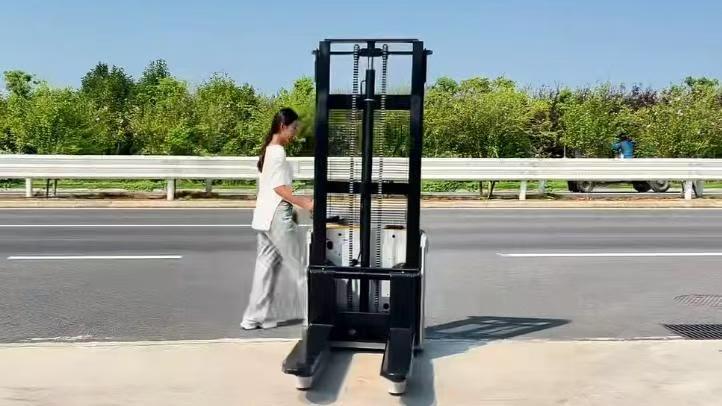
Reliable braking is essential for preventing uncontrolled movement that could lead to tip-over accidents. Modern stackers incorporate several complementary braking technologies designed to improve stability under various operating conditions.
Electromagnetic brakes engage automatically whenever power is removed or the operator releases the travel controls. This ensures the stacker stops safely without requiring additional operator input.
Many electric stackers also use regenerative braking, where the drive motor acts as a generator during deceleration. Besides recovering energy for the battery, regenerative braking provides smooth, controlled slowing that minimizes load movement.
Automatic parking brakes prevent unintended rolling whenever the machine is stationary. This feature is particularly valuable on loading docks or slight inclines where gravity could otherwise cause dangerous movement.
Anti-rollback systems further improve safety when operating on ramps. These systems temporarily hold the stacker in place as the operator transitions between braking and acceleration, preventing backward movement that could destabilize the load.
Emergency braking functions activate immediately when safety switches are triggered or abnormal operating conditions are detected. Combined, these braking technologies provide multiple layers of protection against uncontrolled motion and significantly reduce accident risk.
8. Operator Safety Systems and Ergonomic Controls
Even the safest machine depends on the operator. For this reason, manufacturers design modern high-lift stackers with numerous features that promote safe and comfortable operation.
Emergency stop buttons allow immediate shutdown during hazardous situations. Dead-man switches ensure the stacker moves only while the operator maintains proper control. If the operator releases the control handle unexpectedly, travel and lifting functions stop automatically.
Ergonomic tiller handles reduce operator fatigue during extended shifts. Intuitive button placement allows simultaneous steering, lifting, lowering, and travel control without awkward hand movements. Proportional hydraulic controls provide smooth and precise lifting, minimizing sudden load shifts.
Clear visibility is another important safety factor. Slim mast profiles, optimized chain routing, and well-positioned operator controls improve the view of both the load and surrounding work area, reducing collision risks.
Modern LCD displays present essential information, including battery status, travel direction, fault codes, maintenance reminders, and overload warnings. Audible alarms and flashing indicators further assist operators in recognizing unsafe conditions quickly.
However, these features are only effective when combined with proper training. Operators should understand rated capacities, safe travel procedures, daily inspections, emergency response protocols, and correct load handling techniques. Continuous refresher training reinforces safe habits and ensures that safety technologies are used to their full potential.
9. Best Practices to Further Prevent Tip-Over Accidents
While advanced safety technologies dramatically reduce risks, daily operating practices remain equally important. Every shift should begin with a thorough pre-operation inspection. Operators should examine wheels for excessive wear, inspect hydraulic hoses for leaks, verify chain tension, test brakes and steering, ensure warning devices function properly, and confirm that forks and mast components show no signs of damage.
Loads should always remain within the manufacturer's rated capacity and be positioned evenly on the forks. Damaged pallets should never be lifted, as broken boards or unstable cargo can shift unexpectedly during elevation. Travel with forks lowered whenever possible, raising the load only after reaching the storage location.
Operators should reduce speed before entering corners, avoid sudden acceleration or braking, and maintain a safe distance from pedestrians and other equipment. High-lift stackers should only operate on stable, level surfaces unless specifically designed for incline use.
Routine preventive maintenance is equally important. Scheduled inspections of hydraulic systems, electrical components, batteries, drive motors, brakes, bearings, and mast assemblies help identify small issues before they become major safety hazards.
When purchasing new equipment, businesses should prioritize stackers equipped with electronic stability control, overload protection, automatic speed reduction, regenerative braking, ergonomic controls, and internationally recognized safety certifications. Although these models may require a higher initial investment, they often reduce accident costs, improve productivity, lower maintenance expenses, and provide a safer working environment over the equipment's lifetime.
By combining advanced engineering, intelligent electronic systems, regular maintenance, and comprehensive operator training, companies can significantly reduce the likelihood of tip-over accidents while maximizing the performance and longevity of their high-lift stackers.
Conclusion
Tip-over accidents are among the most serious hazards associated with high-lift stackers, but they are also among the most preventable. Modern stackers are equipped with an impressive range of safety features, including electronic stability control, overload protection, intelligent speed management, reinforced mast construction, low-center-of-gravity designs, regenerative braking, anti-rollback systems, and ergonomic operator controls. Together, these technologies actively monitor operating conditions, reduce human error, and help maintain stability throughout every lifting cycle.
Nevertheless, technology alone cannot guarantee a safe workplace. Operators must receive proper training, follow manufacturer guidelines, conduct daily inspections, and operate the equipment responsibly. Warehouse managers should also establish preventive maintenance programs and encourage a strong safety culture where employees understand the importance of working within the machine's design limits.
Investing in high-quality high-lift stackers with comprehensive safety systems is not merely a matter of regulatory compliance—it is a strategic decision that protects employees, reduces equipment damage, minimizes downtime, and improves operational efficiency. As warehouse automation and material handling technology continue to evolve, these intelligent safety features will play an increasingly important role in creating safer, more productive logistics operations for businesses of every size.
Post time:Jul.13.2026
