
What Attachments Fit a Standard Wheel Loader Bucket?
1. Introduction
A wheel loader is one of the most versatile pieces of heavy equipment used across construction, agriculture, mining, landscaping, forestry, recycling, and municipal maintenance. While its primary purpose is loading and transporting loose materials, the true value of a wheel loader lies in its ability to perform dozens of different jobs simply by changing attachments. Instead of purchasing multiple specialized machines, contractors can equip a single wheel loader with various tools that dramatically expand its capabilities.
Modern quick coupler systems have made attachment changes faster and easier than ever. In many cases, operators can switch from a standard bucket to pallet forks, a grapple, a snow blade, or a hydraulic broom within just a few minutes. This flexibility saves time, reduces equipment investment, minimizes labor costs, and increases overall jobsite productivity.
However, not every attachment fits every wheel loader. Compatibility depends on several factors, including bucket size, coupler type, hydraulic capacity, lifting performance, and the intended application. Choosing the wrong attachment may reduce efficiency, overload the machine, or even create safety risks.
This guide explains the most common wheel loader bucket attachments, their applications, compatibility considerations, and maintenance tips to help buyers maximize the return on their equipment investment.
2. Understanding Standard Wheel Loader Bucket Compatibility
Before purchasing any attachment, it is important to understand how wheel loader buckets are designed and what determines compatibility.
A standard wheel loader bucket is typically used for moving materials such as soil, gravel, sand, coal, crushed stone, or construction debris. Depending on machine size, bucket capacities generally range from 0.5 cubic meters on compact loaders to over 6 cubic meters on large mining machines.
Several factors determine whether an attachment will fit your loader.
Quick Coupler or Pin-On System
Modern loaders usually use one of two connection systems:
Pin-on bucket
Quick coupler (quick hitch)
Quick couplers have become the industry standard because they allow operators to change attachments rapidly without removing multiple pins manually.
Popular coupler standards include:
ISO quick couplers
Volvo coupler
JRB coupler
CAT Fusion coupler
Euro hitch
Skid steer adapter systems
When ordering attachments, manufacturers usually ask which coupler your loader uses.
Hydraulic Requirements
Some attachments require only mechanical connection, while others require hydraulic power.
Examples requiring hydraulics include:
Grapple buckets
Hydraulic breakers
Snow blowers
Rotary brooms
Screening buckets
Crusher buckets
The loader must provide sufficient:
Hydraulic flow (L/min)
Hydraulic pressure (bar or psi)
Auxiliary hydraulic valves
Lift Capacity
Attachments add extra weight before any payload is lifted.
For example:
Standard bucket: 450 kg
Grapple bucket: 720 kg
Hydraulic breaker: 900 kg
The heavier the attachment, the lower the remaining lifting capacity becomes.
Machine Size
Compact wheel loaders typically use smaller attachments than medium or large loaders.
Matching attachment size to loader size helps maintain:
Stability
Fuel efficiency
Hydraulic performance
Tire life
Operator safety
3. General-Purpose Bucket Attachments
Many attachments are designed to improve the performance of the standard bucket rather than replace it completely.
Bolt-On Cutting Edges
These hardened steel edges reduce bucket wear while improving digging performance.
Advantages include:
Easy replacement
Lower maintenance cost
Better penetration
Longer bucket life
Ideal for:
Sand
Gravel
Soil
Asphalt
Bucket Teeth
Bucket teeth increase digging power by concentrating force into smaller contact points.
Common applications include:
Hard clay
Rocky soil
Frozen ground
Quarry operations
Different tooth profiles are available for different materials.
Tooth Adapters
Adapters allow worn teeth to be replaced without replacing the entire bucket lip.
Benefits include:
Lower repair costs
Faster maintenance
Longer bucket lifespan
Side Cutters
Side cutters protect bucket edges against abrasion while increasing bucket width slightly.
Common in:
Quarry work
Mining
Road construction
Wear Plates
Wear plates reinforce areas that experience heavy abrasion.
They reduce:
Bucket deformation
Cracking
Repair frequency
Spill Guards
Spill guards extend the upper edge of the bucket to prevent loose material from falling backward toward the loader arms.
Useful when transporting:
Grain
Mulch
Compost
Snow
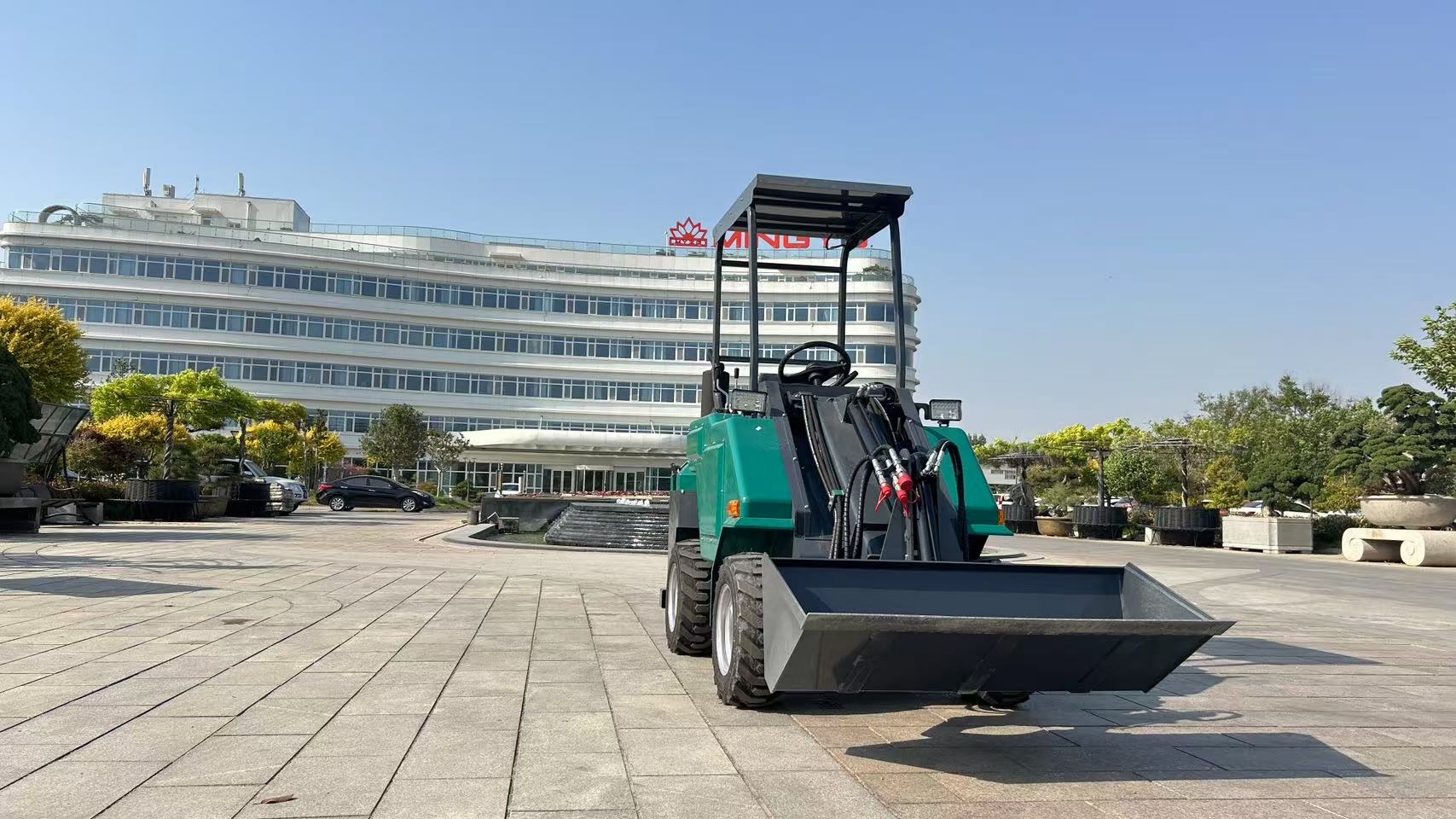
Bucket Extensions
Bolt-on bucket extensions increase material volume without replacing the entire bucket.
Best suited for:
Wood chips
Fertilizer
Sawdust
Biomass
4. Material Handling Attachments
Wheel loaders often replace forklifts or telehandlers in rough terrain by using specialized material handling attachments.
Pallet Forks
One of the most popular attachments.
Applications include:
Warehouses
Construction sites
Brick transport
Lumber yards
Equipment loading
Benefits:
Fast pallet handling
Excellent visibility
High lifting efficiency
High-Capacity Light Material Buckets
These buckets carry lightweight but bulky materials.
Examples:
Wood chips
Coal
Snow
Cotton
Silage
Their larger volume significantly improves productivity.
Grapple Buckets
Hydraulic grapples securely hold irregular materials.
Common uses:
Demolition debris
Tree branches
Scrap metal
Construction waste
Recyclables
Dual-cylinder grapples provide stronger clamping force.
Bale Spears
Widely used on farms.
Suitable for:
Round hay bales
Square bales
Straw stacks
Benefits include simple construction and low maintenance.
Bale Clamps
Unlike spears, clamps avoid puncturing wrapped silage bales.
Ideal for:
Dairy farms
Livestock operations
Silage handling
Lumber Forks
Longer and wider than pallet forks, lumber forks safely transport:
Timber
Steel beams
Pipes
Building materials
Push Frames
Used in warehouses and recycling plants to push large quantities of material without lifting them.
Applications include:
Paper recycling
Packaging waste
Agricultural storage
5. Construction and Demolition Attachments
Construction sites often require specialized tools beyond the standard bucket.
Hydraulic Breakers
Hydraulic breakers transform loaders into demolition machines.
Suitable for:
Concrete removal
Rock breaking
Pavement demolition
Foundation work
Concrete Mixing Buckets
These attachments mix concrete directly on-site.
Advantages:
Eliminates separate mixers
Saves labor
Reduces transport costs
Improves efficiency for small projects
Rock Buckets
Designed with reinforced structures and larger openings.
They separate:
Rocks
Soil
Debris
Ideal for quarry operations.
Screening Buckets
Screening buckets separate materials by size.
Common uses:
Compost production
Soil screening
Aggregate processing
Recycling
Crusher Buckets
Crusher buckets crush concrete and masonry into reusable aggregate.
Benefits include:
Lower disposal costs
Reduced material purchases
Sustainable construction
Rippers
Single-tooth rippers loosen compacted ground before excavation.
Useful for:
Frozen soil
Hard clay
Asphalt removal
Demolition Grapples
Hydraulic grapples handle large demolition materials safely.
Commonly used for:
Steel structures
Concrete debris
Tree removal
Scrap yards
6. Agriculture and Forestry Attachments
Wheel loaders are increasingly popular in agriculture due to their lifting capacity and versatility.
Silage Buckets
Large-capacity buckets designed for handling:
Corn silage
Grass silage
Animal feed
Their smooth interiors minimize material loss.
Manure Forks
Open-frame designs allow liquids to drain while transporting manure.
Advantages include:
Faster cleaning
Lower attachment weight
Easy washing
Hay Grapples
Hydraulic clamps securely hold hay without excessive compression.
Suitable for:
Loose hay
Round bales
Straw
Log Grapples
Forestry operators rely on grapples for loading logs quickly.
Features include:
Heavy-duty steel
Powerful hydraulic cylinders
Wide jaw opening
Timber Forks
Designed specifically for transporting multiple logs safely.
Used by:
Logging companies
Sawmills
Timber yards
Brush Grapples
Excellent for land clearing projects.
Capable of handling:
Branches
Bushes
Roots
Storm debris
Feed Pushers
Large dairy farms use feed pushers to move feed closer to livestock efficiently.
7. Snow Removal and Road Maintenance Attachments
Municipalities frequently use wheel loaders throughout winter.
Snow Blades
Available in:
Straight blade
Angle blade
Hydraulic blade
Excellent for clearing roads and parking lots.
V-Plows
The adjustable blade configuration handles deep snow more effectively.
Ideal for:
Highways
Airports
Industrial facilities
Snow Blowers
Hydraulically powered snow blowers throw snow far from cleared areas.
Useful where snow storage space is limited.
Rotary Brooms
Hydraulic brooms sweep:
Dirt
Sand
Leaves
Gravel
Common after road construction.
Salt and Sand Spreaders
These attachments improve road safety during winter by distributing de-icing materials evenly.
Asphalt Buckets
Specialized buckets designed for transporting and placing hot asphalt.
Often used in municipal road maintenance.
8. How to Choose the Right Attachment
Choosing the right attachment involves more than simply finding one that fits physically.
Match the Job
Identify your primary workload.
Examples:
Pallets → Forks
Logs → Grapple
Snow → Blade
Demolition → Breaker
Agriculture → Bale clamp
One attachment rarely performs every task efficiently.
Check Machine Specifications
Always compare:
Rated operating capacity
Hydraulic flow
Lift height
Breakout force
Tipping load
Using oversized attachments may reduce safety and productivity.
Consider Hydraulic Capacity
Hydraulic attachments require sufficient oil flow.
Insufficient flow leads to:
Slow operation
Poor performance
Increased wear
Think About Productivity
Although specialized attachments cost more initially, they often reduce labor and project completion time, resulting in a faster return on investment.
OEM vs. Aftermarket
OEM attachments generally provide:
Better fit
Higher reliability
Warranty support
High-quality aftermarket attachments may offer competitive performance at lower prices, provided they meet the loader's specifications.
Safety First
Always inspect:
Coupler locks
Hydraulic hoses
Pins
Cylinders
Safety latches
Never exceed the loader's rated lifting capacity.
9. Maintenance, Safety, and Final Buying Advice
Proper maintenance extends the service life of both the loader and its attachments.
Inspect attachments daily for cracks, loose bolts, bent components, excessive wear, or hydraulic leaks. Lubricate all grease points according to the manufacturer's maintenance schedule to reduce friction and premature wear. Hydraulic hoses, fittings, and quick couplers should be checked regularly for signs of leakage or damage, as hydraulic failures can quickly affect both safety and productivity.
When attachments are not in use, store them on stable, level ground in a clean, dry environment. Protect exposed hydraulic couplings with dust caps to prevent contamination, and repaint worn metal surfaces when necessary to reduce corrosion.
Operator training is equally important. Every attachment changes the machine's weight distribution, lifting characteristics, and visibility. Operators should understand the specific handling requirements for each attachment, especially when lifting heavy or uneven loads. Following proper operating procedures helps prevent equipment damage and workplace accidents.
Finally, evaluate attachments based on total value rather than purchase price alone. A well-matched attachment can significantly improve productivity, reduce labor requirements, minimize machine downtime, and eliminate the need for additional equipment. Over time, these benefits often outweigh the initial investment.
A standard wheel loader becomes far more than a material-loading machine when equipped with the right attachments. Whether you work in construction, agriculture, forestry, recycling, mining, or municipal maintenance, selecting compatible, high-quality attachments allows one machine to perform a wide range of specialized tasks efficiently. By understanding compatibility requirements, choosing attachments that match your applications, and maintaining them properly, you can maximize equipment utilization, lower operating costs, and achieve a higher return on your investment for years to come.
Post time:Jul.10.2026
