
Is Buying a Used Forklift Worth the Savings vs a New Unit?
1. Introduction
Forklifts are essential machines in warehouses, factories, construction sites, ports, and logistics centers around the world. They improve material handling efficiency, reduce manual labor, and help businesses move goods safely and quickly. Whether loading trucks, stacking pallets, or transporting heavy materials, forklifts play a critical role in daily operations across countless industries.
When purchasing a forklift, one of the first questions buyers face is whether to invest in a brand-new machine or save money by purchasing a used one. At first glance, a used forklift may appear to be the more economical choice because of its significantly lower purchase price. However, the true cost of ownership extends far beyond the initial investment. Maintenance expenses, repair frequency, fuel or electricity consumption, downtime, resale value, and equipment reliability all contribute to the long-term financial impact.
For some businesses, a well-maintained used forklift can provide excellent value and years of dependable service. For others, especially companies operating multiple shifts or handling heavy workloads, a new forklift may deliver greater productivity and lower operating costs over its lifetime despite the higher purchase price.
The right decision depends on many factors, including budget, operating hours, application, maintenance capabilities, and long-term business plans. Choosing based solely on purchase price can often result in higher costs later.
This article compares used and new forklifts in detail, covering purchase costs, performance, maintenance, safety, technology, inspection procedures, and long-term ownership costs to help buyers determine which option offers the best overall value.
2. Comparing the Initial Purchase Cost
The most obvious advantage of buying a used forklift is the lower upfront cost. Depending on the age, brand, capacity, operating hours, and condition of the machine, a used forklift may cost anywhere from 30% to 70% less than a comparable new model.
For example, a new 3-ton diesel forklift may cost between USD 18,000 and USD 30,000, while a five-year-old model in good condition might sell for USD 8,000 to USD 15,000. Electric forklifts often maintain higher resale values because electric drive systems typically experience less mechanical wear than internal combustion engines.
Several factors influence the price of a used forklift, including:
Brand reputation
Manufacturing year
Operating hours
Maintenance history
Engine condition
Battery condition (electric models)
Tire wear
Mast configuration
Attachments
Local market demand
Depreciation also plays an important role. Like automobiles, forklifts lose value rapidly during their first few years. Buyers of used equipment often benefit from this depreciation because much of the initial value loss has already occurred.
Financing options should also be considered. New forklifts are generally easier to finance through manufacturers or dealers with attractive interest rates and warranty packages. Financing for used equipment may involve higher interest rates or shorter loan terms.
For businesses with limited capital or temporary projects, the lower purchase price of a used forklift can free up cash for other operational investments.
3. Performance, Reliability, and Productivity
Performance differences between new and used forklifts depend largely on equipment condition rather than age alone. A properly maintained used forklift may still provide reliable service, while a neglected machine can become a constant source of downtime.
Engine performance is one of the most important considerations for diesel or LPG forklifts. Compression, fuel injection systems, cooling systems, and transmissions naturally wear over time. Reduced engine efficiency may increase fuel consumption and decrease lifting performance.
For electric forklifts, battery condition is often the determining factor. Battery replacement can represent one of the largest ownership expenses. Buyers should verify battery age, charging history, remaining capacity, and charging cycles before purchasing.
Hydraulic performance should also be evaluated. Slow lifting speed, excessive hydraulic noise, leaking cylinders, or weak lifting power may indicate expensive repairs in the near future.
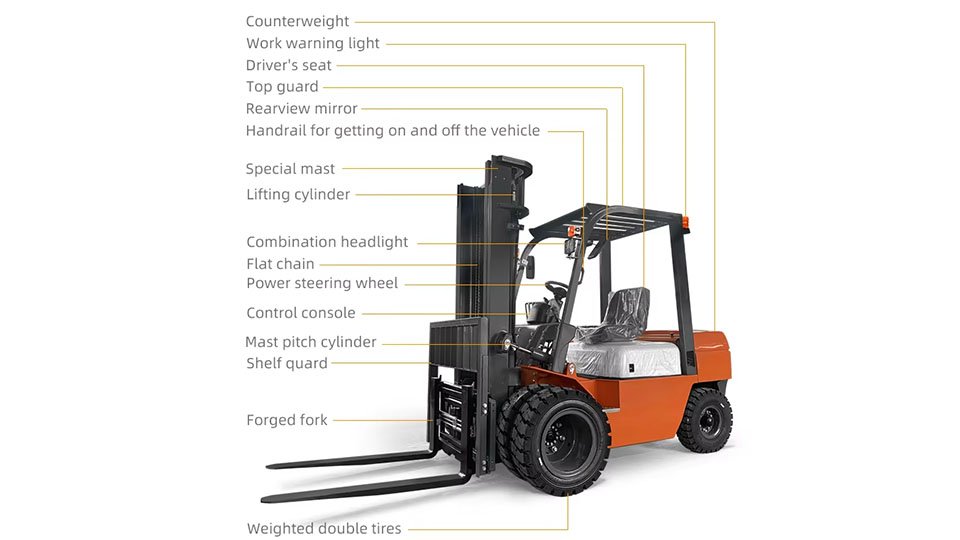
The mast assembly, forks, chains, and carriage should operate smoothly without excessive play or abnormal movement.
New forklifts typically offer improved reliability because all components begin their service life at full performance. Manufacturers also conduct extensive quality testing before delivery, reducing the likelihood of early failures.
Higher reliability directly translates into greater productivity. Fewer breakdowns mean fewer interruptions, better workflow efficiency, and improved customer satisfaction.
4. Maintenance and Operating Costs
Although used forklifts cost less initially, maintenance expenses often increase as equipment ages.
Routine maintenance includes:
Engine oil changes
Hydraulic oil replacement
Filter replacement
Brake inspection
Tire replacement
Chain lubrication
Cooling system maintenance
Battery maintenance
As forklifts accumulate operating hours, wear components require replacement more frequently. Hydraulic seals, bearings, steering components, transmission parts, electrical connectors, and hoses all experience gradual wear.
Unexpected repairs are another consideration. Older forklifts may require replacement of expensive components such as transmissions, hydraulic pumps, controllers, motors, or engines.
Fuel efficiency also changes over time. Older diesel engines generally consume more fuel than newer models designed with improved combustion technology and lower emissions.
Electric forklifts equipped with modern lithium-ion batteries often provide lower operating costs than older lead-acid battery systems due to reduced maintenance requirements and higher charging efficiency.
Spare parts availability should not be overlooked. Common brands typically have better global parts support, while discontinued models may require longer lead times and higher repair costs.
Buyers should always request complete service records before purchasing a used forklift. A documented maintenance history provides valuable insight into how well the machine has been maintained.
5. Safety Features and Technology Differences
Forklift safety has improved significantly over the past decade. New forklifts often include advanced safety technologies that may not be available on older models.
Modern safety features include:
Automatic speed reduction while turning
Operator presence systems
Seat belt interlocks
Electronic stability control
Load weight indicators
Reverse cameras
LED lighting systems
Automatic parking brakes
Mast lowering speed control
Newer forklifts also offer improved ergonomics. Adjustable suspension seats, larger displays, reduced vibration, lower noise levels, and better visibility help reduce operator fatigue during long shifts.
Electronic diagnostic systems simplify maintenance by identifying faults before they develop into major failures.
Emission regulations have also become stricter. New diesel forklifts often comply with Tier 4 Final, Stage V, or other regional emission standards, reducing fuel consumption and environmental impact.
Businesses operating under strict workplace safety regulations may find newer forklifts better suited to current compliance requirements.
6. How to Evaluate a Used Forklift Before Buying
Careful inspection is essential before purchasing any used forklift.
Begin by checking the hour meter. While operating hours alone do not determine condition, extremely high hours generally indicate greater wear.
Inspect the mast carefully for cracks, bent sections, worn rollers, damaged chains, or excessive side movement.
Examine the forks for uneven wear, cracks, bends, or excessive heel wear.
Check hydraulic cylinders for oil leaks, scored rods, or damaged seals.
Operate the steering system at low speed to ensure smooth response without excessive free play.
Test the transmission by driving forward and reverse under load.
For electric forklifts, inspect the battery thoroughly. Review battery manufacturing date, charging records, voltage consistency, and remaining capacity.
Inspect tires for uneven wear, cuts, chunking, or flat spots.
Verify all safety devices operate correctly, including lights, horn, brakes, parking brake, emergency switches, and warning indicators.
Finally, perform a complete operational test under actual working conditions whenever possible.
7. When Buying a Used Forklift Is the Better Choice
A used forklift can be an excellent investment under the right circumstances.
Small businesses with limited budgets often benefit from lower capital investment.
Companies requiring occasional forklift use rather than continuous daily operation may not fully utilize the advantages of new equipment.
Seasonal businesses such as agricultural operations may only require forklifts during harvest periods.
Used forklifts also make excellent backup machines for companies that already operate newer fleets.
Businesses experiencing temporary warehouse expansion may prefer purchasing used equipment rather than making large long-term investments.
Light-duty applications involving relatively few operating hours each day often allow used forklifts to provide many years of reliable service.
Purchasing from reputable dealers who inspect, repair, and certify used forklifts significantly reduces buying risk.
8. When a New Forklift Is the Better Investment
New forklifts generally provide better value for businesses operating under demanding conditions.
Warehouses running multiple shifts every day require maximum reliability and minimal downtime.
Manufacturing plants with continuous production schedules often cannot afford unexpected equipment failures.
Heavy-duty applications involving long operating hours place significant stress on engines, hydraulic systems, transmissions, and drive components.
New forklifts offer full manufacturer warranties, reducing repair costs during the early years of ownership.
Modern fuel-efficient engines and advanced electric drive systems can significantly reduce operating costs over several years.
Businesses planning to keep equipment for ten years or more often achieve lower total ownership costs with new forklifts due to reduced repairs and higher productivity.
New equipment also enhances company image when customers visit facilities.
9. Conclusion: How to Choose Between a Used and New Forklift
Choosing between a used and a new forklift should never be based solely on purchase price. The true value of a forklift lies in its total cost of ownership, including maintenance, repairs, fuel or electricity consumption, downtime, productivity, resale value, and service life.
A well-maintained used forklift can provide excellent value for companies with limited budgets, seasonal operations, light-duty applications, or temporary equipment needs. However, buyers should carefully inspect the machine, review its maintenance history, and purchase from a reputable dealer whenever possible.
A new forklift is generally the better choice for businesses that rely on continuous operation, high productivity, and maximum equipment reliability. Although the initial investment is higher, lower maintenance costs, improved fuel efficiency, enhanced safety features, and manufacturer warranty coverage often result in lower lifetime operating costs.
Before making a purchase, buyers should evaluate their daily operating hours, load requirements, maintenance capabilities, available budget, and long-term business objectives. Comparing total ownership costs rather than purchase price alone leads to better investment decisions.
Ultimately, whether buying new or used, selecting a reliable supplier with strong after-sales service, readily available spare parts, and professional technical support is just as important as choosing the right forklift itself. A trusted supplier helps ensure that the equipment delivers safe, efficient, and cost-effective performance throughout its entire service life.
Post time:Jul.07.2026
