
How Much Does It Cost to Rent a Pallet Stacker Per Day/Week?
Pallet stackers are widely used material-handling machines in warehouses, factories, retail stockrooms, and logistics centers. They serve as a practical alternative to forklifts by providing vertical lifting capability in a compact and affordable design. Many businesses choose to rent pallet stackers instead of purchasing them because renting reduces upfront investment, provides flexibility for short-term projects, and avoids long-term maintenance costs. However, rental prices can vary significantly depending on the type of pallet stacker, rental duration, and location. Understanding how much it costs to rent a pallet stacker per day or per week helps companies budget more accurately and select the most cost-effective solution for their operations.
The type of pallet stacker has the greatest impact on rental cost. Manual pallet stackers are the most economical option because they rely on hydraulic pumping and do not require batteries or motors. Semi-electric pallet stackers use electric power for lifting while movement remains manual, offering a balance between affordability and productivity. Fully electric pallet stackers, which are powered for both lifting and driving, provide the highest efficiency and lowest operator fatigue but also command the highest rental prices. In addition, straddle stackers generally cost less than counterbalance stackers, since counterbalance models can handle closed-bottom pallets and require heavier construction and more complex engineering.
Average rental prices for pallet stackers can be grouped into daily and weekly rates. Manual pallet stackers typically rent for about 30 to 60 dollars per day and 120 to 250 dollars per week. Semi-electric pallet stackers usually cost between 50 and 90 dollars per day and 200 to 350 dollars per week. Fully electric pallet stackers are the most expensive, with daily rates ranging from 80 to 150 dollars and weekly rates from 300 to 600 dollars. These figures are general estimates and may vary depending on supplier, region, and machine condition, but they provide a useful benchmark for planning rental budgets.
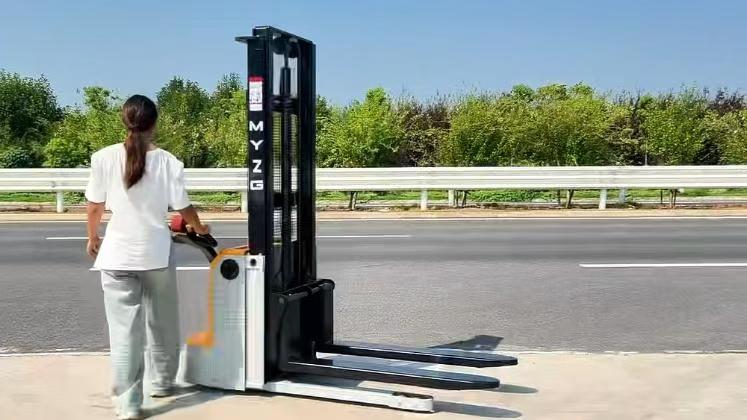
Several technical factors influence pallet stacker rental pricing. Load capacity is a major consideration, as higher-capacity machines require stronger frames and more powerful motors, increasing their rental cost. Lift height also affects price, since standard models with lift heights of two to three meters cost less than high-lift versions that reach four or five meters. Battery type plays a role as well, with lead-acid batteries typically being cheaper than lithium-ion batteries, although lithium batteries offer longer operating times and faster charging. Newer models and well-known brands may also carry higher rental rates due to improved reliability and features.
Environmental and regional factors further affect rental costs. Pallet stackers designed for indoor use are generally cheaper than outdoor-capable models, which require larger wheels and better weather resistance. Urban and industrial areas with higher demand for material-handling equipment usually have higher rental prices than rural regions. Seasonal demand can also influence pricing, with peak periods such as holiday warehousing seasons or construction booms leading to increased rates. These external factors mean that rental prices can fluctuate even for the same type of machine.
In addition to base rental fees, businesses should consider extra charges and hidden costs. Delivery and pickup fees commonly range from 50 to 200 dollars each way, depending on distance and machine size. Some rental companies charge separately for battery chargers or spare batteries, adding an additional daily or weekly fee. Insurance or damage waiver coverage may increase the total cost by five to fifteen percent. Late return penalties can quickly raise expenses if the equipment is kept beyond the agreed rental period, while misuse or damage may result in repair charges.
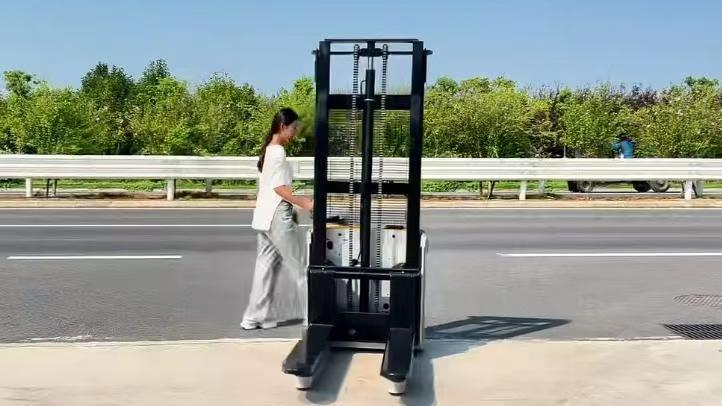
Rental duration has a strong influence on overall cost efficiency. One-day rentals are suitable for emergency replacements or very short tasks, but they have the highest cost per day. Weekly rentals are often used for inventory counts, warehouse reorganizations, or temporary labor surges and provide better value than daily rates. Monthly or long-term rentals usually offer the lowest daily cost, often reducing per-day expenses by forty to sixty percent compared to short-term rentals. When equipment is needed continuously for several months, purchasing a pallet stacker may become more economical than renting.
Different industries experience different rental needs and costs. Warehouses commonly rent pallet stackers for loading and unloading operations, typically choosing electric or semi-electric models for efficiency. Manufacturing plants use stackers to transport components or finished goods, with costs varying according to load weight and lift height. Retail businesses often rent manual or semi-electric stackers for short-term stockroom use, while construction sites require more rugged equipment and therefore face higher rental costs. Seasonal businesses benefit the most from renting, as they can scale equipment usage up or down without long-term ownership expenses.
Overall, renting a pallet stacker generally costs between 30 and 150 dollars per day or 120 to 600 dollars per week, depending on machine type, specifications, and location. To control costs, businesses should choose the smallest capacity and lift height that meet their needs, compare multiple rental providers, and favor weekly or monthly rentals over daily contracts whenever possible. It is also important to read rental agreements carefully and understand all additional fees before signing. By selecting the right pallet stacker and rental plan, companies can achieve reliable material-handling performance while keeping operating expenses under control.
Hora de publicación: 25 de septiembre de 2020
